Archive for the ‘Communication is about relationship’ Category
Your Product: Light of My Life
You Complete Me.
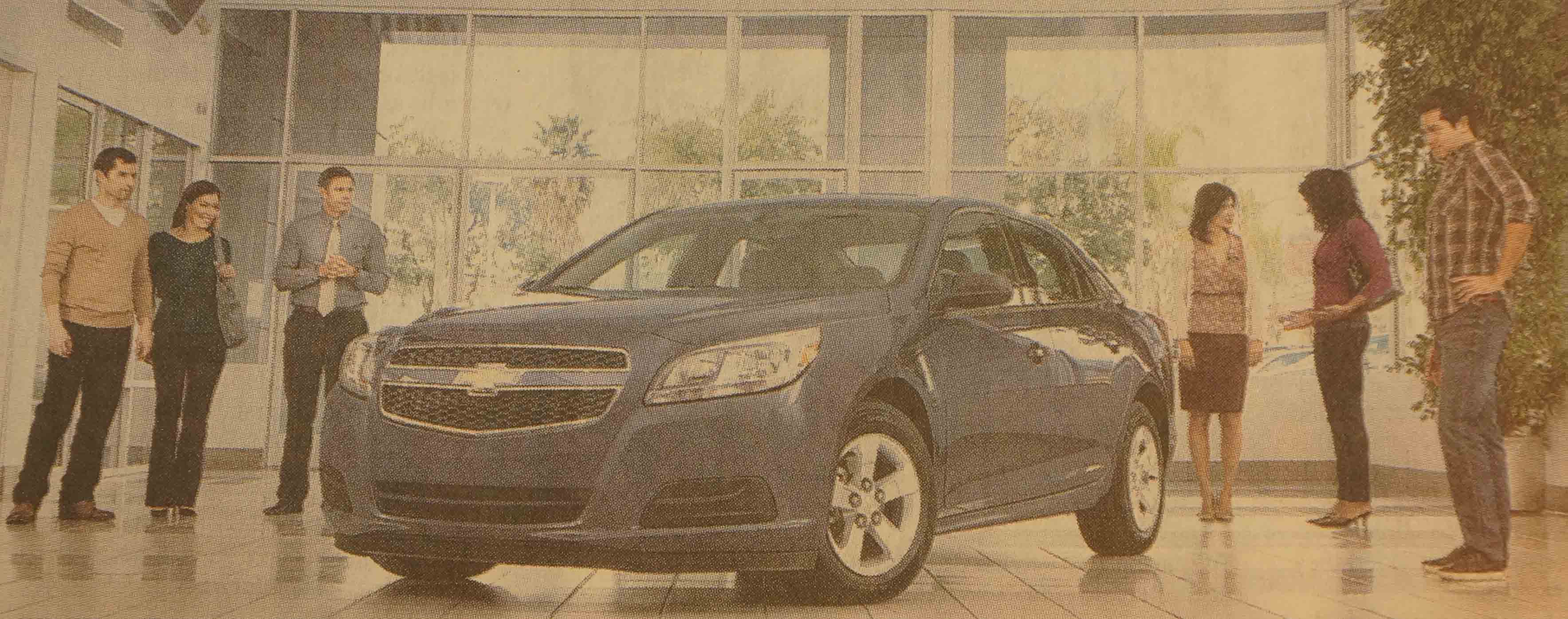 Am I right? The magnetic power to draw citizens off the street. The hushed tones in the presence of greatness. The loving gaze. This car will change your life—perhaps it already has?
The fawning devotee image is standard fare in our media diet. Models perpetually doing homage to the product at the focus of all attention. Chevy, Toyota, Cadillac—who doesn’t make ads like this? Product as hero. Forever. We see this everywhere.
Somersby recently turned the Apple experience on its head by grabbing the dead-earnest communication style to appropriately ridiculous ends. It is perfectly reasonable to poke fun at the high places certain brands have taken in our lives.
Can we get beyond product as instrument of life change? True: it is possible that some consumers (that is, those who have already chosen to purchase a car/beer/computer/whatever) may look with unbridled lust toward their purchase, this object of their desire. But is it possible to promote a product without making the (thoroughly ridiculous) promise that it will indeed change your life?
Maybe not. Because quickening desire has always been at the heart of selling, and nothing quickens desire (and loosens the wallet) like showing the person you will be once you buy this car/beer/computer/whatever.
Maybe so—and this may be what is behind the eventual victory of online advertising: product messages that follow our search patterns and interrupt us with the key to what we’ve already been seeking.
Maybe both. Because desire follows a need or want. And we want what promises to make us different. Better. Smarter. Hipper. Advertising will always make these promises and will find ever new ways to get the message to us. And because we self-identify as “consumers” we’ll probably never run out of the optimism that buying stuff will change our life
It’s just that the loving magnetism of the Chevy image seems, well, juvenile. It’s a credibility issue.
###
When Did I Learn People Don’t Matter?
Jesus and Mr. Levinas show a different way
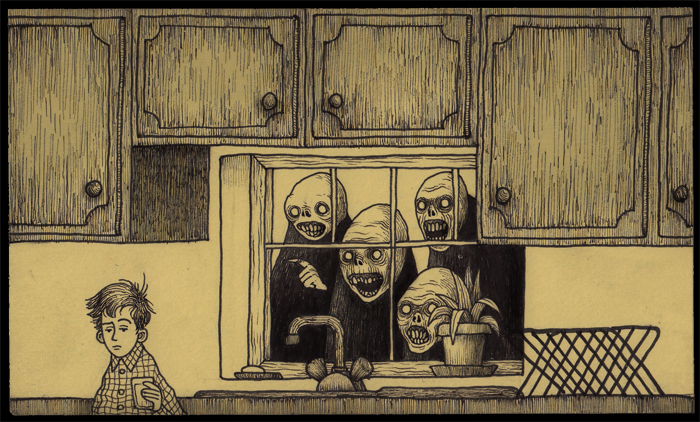
I’m scanning back through my childhood to remember when it was I picked up this notion that people don’t matter. I cannot blame my parents or my early religious communities or the packs of feral boys I ran with. It wasn’t at Riley Elementary School, and certainly not from my first grade teacher Mrs. Buck.
But somewhere along the line I got in my mind that I could turn and walk away from people and relationships. Somewhere I learned a kind of arrogance that made me think I alone knew what was right, had all the answers, knew the best way. This thinking meant I didn’t need to listen, though sometimes I could condescend to pretend interest. Looking back, it’s hard to imagine why I ever thought this way.
Maybe it’s our get-the-checklist-done culture. Maybe it was the arrogance of my 18-year-old self who knew everything without the slightest inkling how wide the world was. And yet that arrogance persists in the odd niche and behind unopened doors in my life.
I’ve taken to dwelling with a dead philosopher whose writing remains quite lively to me. Emmanuel Levinas is not the model of clarity, but even in his glorious obscurity he says things that make me pause. I recently asked [the long dead] Mr. Levinas to comment on that inaugural address Jesus delivered up on the mountaintop. Mr. Levinas, not exactly a Jesus-follower though he respected the Torah, has a lot to say about the intrinsic worth of people and even hints that others have authority over us in the sense that we owe them attention. From the get-go.
I started to find a lot of agreement between Mr. Levinas and Jesus. Mr. Levinas insisted on the priority that the Other holds in our lives. Jesus reframed the Old Testament law by putting treatment of people up near the top of what it means to be right with God. For instance: Jesus talked about forgiving, even loving, as the alternative to getting even. This has huge implications. Not because we have so many enemies, but because we naturally harbor and nourish each slight done to us.
My philosopher friends from the Analytic tradition (most of the philosophers in this country, judging by the academic programs available), get all twitchy when I mention the Continental tradition of philosophy, which is where Mr. Levinas hangs out. Analytics have a lot of suspicion about how Continentals assemble their arguments. And lots of smart people think Mr. Levinas goes too far. But I think not. In fact there is something in Mr. Levinas that brings Jesus’ inaugural speech back in focus for me.
Mr. Levinas is helping me reconsider the notion that Jesus was not speaking hyperbole. That he really wanted his listeners to give priority to others—even those who had hurt them. This is revolutionary stuff and not at all easy. And it must be understood in the larger context of Jesus’ inaugural address and the way he walked it out later.
Still.
Giving people priority in our lives is neither a recipe for madness nor sycophancy. In fact it may be at the heart of our humaneness and our mental health.
###
Image credit: John Kenn via 2headedsnake
When Talking with the Queen: Do You Avoid Conversation Because of Social Status?
Have you had this experience?
Tell me in a comment (I won’t make it public unless you grant permission)
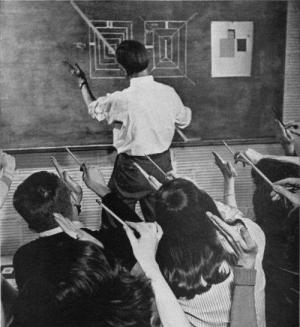 Consider the lowly species of a short, thin 7th grade boy. This particular boy wants to ask a girl to the school dance. As a 7th grader, he is on the lowest end of the social structure: 8th– and 9th-grade boys cherry-pick the pretty and popular girls and have no problem asking out the 7th grade girls out. This particular 7th grader has his eye on a brown-haired girl he likes. She is pretty and popular and funny—and also very much out of his league. She seems to exist in an alternate universe at the center of activity and power in his 7th grade class. To even speak with this lovely being would be a huge, baffling step. How to accomplish such a feat from his place of dwelling in weakness?
This is one of the problems of conversation. We sometimes find ourselves tongue-tied around people we perceive as having higher social status. Talking with the teacher or principal or Queen or CEO or chief cardiologist or the pretty, popular girl can bring to mind our inadequacies. And with those neon inadequacies before us, we lose all semblance of ordered thought and advance toward becoming the tittering sycophant.
When our kids were in middle school and high school I sometimes tried to convince them that social structures and cliques were all enculturated figments of the collective imagination. Some people seemed more popular, some people seemed at the center of things, but if you asked them, nearly everyone felt alienated and isolated.
“Pretend power is the nature of our schools,” I would say. “Any school.”
Social structure is all make-believe: blow through it. Talk to whomever you like.
But then I would remember my own high school experience where cliques were both fiction and real and ruled the place—somehow the student body agreed on who the cool people were. How did that happen? And then I remembered the same unwitting agreement happened in other organizations. In fact, get a group together and there always seems to be some popular person at the center. And then there is everyone else.
But today: do you ever avoid conversations because you feel less powerful or less popular than the person you would speak with? And how do you overcome that? Do those feelings still exist in the adult world and if so, how do they hold you back?
###
Image credit: queataquemasgratuito via 2headedsnake
Stuffing Spinach and How Engagement Takes a Lifetime
Not page hits or likes, though comments get closer to true engagement

Anybody who has tried to communicate a message knows it takes time, effort and budget. Or if not budget, patience and persistence. But budget helps.
Our writers know this. Louise Erdrich in a recent talk at Concordia University about her National Book Award-winning “The Roundhouse” talked about how she incorporated themes that were important to her in a way that would still be read by readers:
“As a writer, I want to get this message across. But I’ll only do it if it is a suspense novel. I wanted to make a book that you could not put down.”
“And then I would stuff in the jurisdictional legal issues like spinach in a sandwich.”
Spinach stuffed in so you hardly realize it’s there. To get her message across, she had to write a story so compelling that a reader would willingly read on.
Today we talk constantly about apps and software and sites and techniques that allow a brand to engage with consumers. Paul Dunay writing for Forbes wonders if engagement advertising is the future of brand advertising. He thinks we are approaching a fundamental shift in brands talking with, not just at consumers. Dunay named innovative companies already pursuing dialogue over monologue using mobile platforms. Of course, we’ve been thinking about dialogue over monologue for quite a few years, but just now we’re starting to see technology that enables monologue with more ease and simplicity.
But it’s more than technology, of course. It is a firm’s willingness to listen. Listening is on the uptick. Listening is the new thing (which is so absurd it makes me laugh). It’s new because companies realize they left money on the table by constant monologue.
But getting people to care about the stuff you think is important: it’s the writer’s problem. It’s the brand’s problem. Both want to engage to such an extent that one actually takes action. Erdrich wants her readers to do something. Dunay wants to make it easier for all of us to buy the stuff we are thinking of right now.
I argue engagement takes a lifetime.
No brand manager wants to hear this, but writers in it for the long haul know this instinctively. They know they have to write to engage and inform, but engagement comes first. Teachers know this as well. Brands and their managers have yet to learn this. That’s because most engagement strategies still put the brand first, not what’s best for the consumer (though consumer need and desire rank high in engagement messaging). Those brands that have begun to succeed are learning to well, shut up and stuff the spinach inside.
###
Image credit: Street art by Nuxuno Xan via 2headedsnake
Standing at Intersections
Opportunity stops before it starts.

Again and again I notice friends and colleagues are motivated at interstitial places: those places between things. Between projects. Between jobs. Sometimes between spouses. Between highs and between lows. These are the spaces where reflection has a natural grip, before busyness kicks in again. These are the spaces that open the opportunity to go a different direction, because in that space there is a kind of seeking.
Motivation rises at an intersection, direction is questioned and a brand new openness to a different way can suddenly rise out of seemingly nowhere. Sometimes it can feel completely unplanned, but it is often the space itself, with the psychological or economic pressures on either side that suddenly make a new path seem right.
I encourage loitering at those intersections, because that is where people seek help. I’m a copywriter: I like helping organizations locate and move in that new direction. I like working up the words and ideas that frame the problem or the solution or the intersection itself. And beyond that, I’m a human with faith who likes to help people move forward—maybe only because I’ve been helped forward by so many.
Being available at an intersection makes it quite likely you’ll say something that has the power to illuminate someone else’s choices. And it’s likely your words or theirs will open up the intersection before you, too, the one you didn’t know was there.
Who knows what engine will be fired up by your conversation at an intersection?
###
Image credit: johnny-cool via 2headedsnake
Chuck Hagel: Rogue Defense Conversationalist?
Quick: Put this guy in charge before he goes back on script

Phil Stewart writing for Reuters today caught the newly confirmed Secretary of Defense in an unguarded moment. In that moment—behold—candor:
“We can’t dictate to the world. But we must engage the world. We must lead with our allies,” Hagel said in what appeared to be unscripted remarks.
It sounds like Stewart was caught off-guard as well, but maybe he should not have been, given Hagel’s record and further comments quoted.
This seems like a positive development to me. Let’s quickly put Hagel to work before he reads and signs on to our usual defense script—maybe he can work out that dialogue before anyone realizes what’s going on.
###
Image credit: Reuters
Bending HIPAA Toward Spontaneity—Just for the Health of It
What if our propensity for over-sharing helped us get healthy?
 Writing for Fast Company, Jennifer Miller reported on a study that showed the amazing stickiness of Facebook status feeds over other literature. Miller queued up the notion as “mind-ready content,” which is a pithy way of getting at the heart of the study. It seems the immediacy and poor spelling and bad grammar we expect in status updates all have a way of indicating spontaneity. And one of the study experiments suggested:
…the remarkable memory for microblogs is also not due to their completeness or simply their topic, but may be a more general phenomenon of their being the largely spontaneous and natural emanations of the human mind. (Major memory for microblogs abstract: Mickes L, Darby RS, Hwe V, et al.)
We’ve been witnessing the rise of social media to help people lose weight, get exercise, eat right, among a sea of many other activities. It is the telling and the reading—all on a fairly spontaneous level—that has great persuasive powers. Not to belabor this point, but it is not just reading about others’ success that can motivate behavior change. It is when we ourselves record our progress (and lack thereof) (in public and not) that also motivates change. If you’ve ever recorded the calories you eat in a day or the money you spent in a day, you know how awareness jumps to high alert.
Can these facts about human motivation and memory be harnessed by physicians? Should healthcare have a social component…generally? Privacy on the web—always a moving target—would seem to have hit the immovable object of what the US considers protected health information: those rules the medical community follows to ensure medical records stay private. But encouraging patients to share what they are comfortable sharing, is there a possible positive health outcome in that? Maybe. Maybe not. Who is itching to read about their friend’s infection (sorry: bad word choice)? I have no desire to read colonoscopy stories. But on the other side, will we start to see spontaneous-ish declarations from our friend the corporate doctor/robot that encourage us toward healthful habits—based on our Facebook feeds?
One wonders.
###
Image credit: Ben Giles via 2headedsnake
How did you become a philosopher?
Claude Lefort on Meeting Maurice Merleau-Ponty

The questions with which Merleau-Ponty was dealing made me feel that they had existed within me before I discovered them. And he himself had a strange way of questioning: he seemed to make up his thoughts as he spoke, rather than merely acquainting us with what he already knew. It was an unusual and disturbing spectacle.
— From “How did you become a philosopher?” by Claude Lefort, translated by Lorna Scott Fox in Philosophy in France Today (Cambridge: Cambridge University Press, 1983) 98
###
Image credit: Jonathan Zawanda via 2headedsnake
“It’s time for your enema.”
Robot & Frank & Listening to Your Machine
 That’s my favorite line from this melancholy film. Frank, the retired jewel thief in decline, doesn’t want the robot his son brought as a caretaker. Frank considers it an appliance with a voice and wants nothing to do with it. But Franks starts to warm to the robot when he realizes he can put Robot to nefarious ends under the guise of a “project.” Robot’s caretaker program takes priority over moral logic and Frank is back in business and seems to self-reboot as he plans minor heists.
“It’s time for your enema” is delivered by Robot after Frank starts to be OK with Robot’s scheduling of Frank’s day and the healthy vegetarian lunches Robot prepared. Just when Frank was thinking this may work.
It’s not the enema that attracts me to the story (despite this Florida couple who swears by coffee enemas four times a day). But it is the realization that the voice of a machine can have a profound impact on a human. My example is the treadmill I run on. Despite being voiceless, it tells me a truth (I’m still not sure it is entirely accurate) about the speed and calories consumed when running. And it helps me hold myself to a higher standard than when I run outside. There is an objectivity about it that I like, that isn’t swayed by my pleas to slow down.
In the end Robot & Frank is a downer. If you have anyone in your life with Alzheimer’s, the movie leaves you with a feeling of inevitability about the human condition, no matter what machines we employ.
###
CEOs Who Blog
Training your CEO to blog
 Not every CEO is a born monologuist—but many are cut from that cloth. Training your CEO to blog means helping her or him get comfortable with the notion she or he will be joining a conversation, not delivering a sermon.
- In a conversation, self-revelation is the norm. We tell things about ourselves as a way to foster relationship.
- In a conversation, we tell what is remarkable. We talk about those things that catch our attention because we think the people we are in conversation with might also find it interesting.
That’s the tone your CEO needs when blogging: a personal voice connecting bigger things that are going on out in the world, bigger things that say something about the mission of your company or organization, but delivered in a personal tone.
This takes time. For many if not most CEOs, it takes too much time to blog. But the potential benefits are that customers and potential customers will join into the relationship building. Authentic relationship building will be a big part of commerce going forward—so it is worth your CEO’s attention.
###
Image credit: via 2headedsnake

 conversation is an engine