Archive for the ‘curiosities’ Category
The World Needs You—Ms./Mr. Verbal Processor—Annoying As You Are
Silence can be nice sometimes, too
I know a few people who process life verbally. I’m not naming names, but to be with them is to sit before an open window through which you hear internal debates, sharp intakes of breath in response to a new stimulus, and general narration about turning left or standing up or “I think I’ll eat a jelly bean.”
People process life in all sorts of ways, of course. I don’t know what I think until I write it down. Others might sketch a response to a life event. Others process a life event over the course of a three-hour bicycle ride. James Thurber could hold 1000 words in his head as his eyesight failed, processing and editing in his brain-pan and seeming to spit out a fully-formed essay or story.
And some talk it out: declaring boldly and then backing up to change direction. And then boldly declaring the opposite. They settle on a position over time (often). Sometimes it’s fun to engage in their internal debate. Sometimes it is maddening to witness the ebb and flow.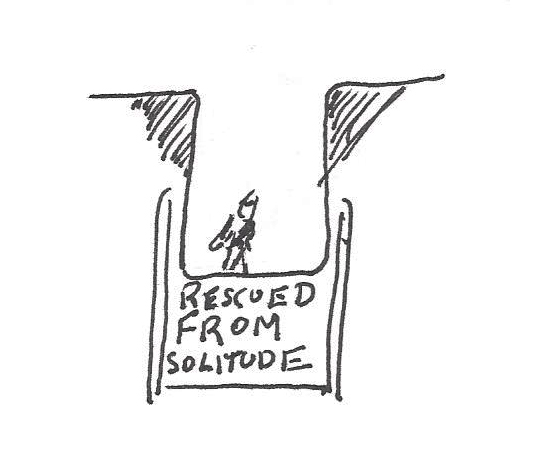
The ways we process life are not mutually exclusive, we might each do all of the above to figure out what is going on. It may take many conversations and many bike rides and many sketches to, say, process a larger than expected tax refund (ha), or a job loss. Or a death.
But the verbal processor plays a unique role among us. They are the ones who quickly spout a response to a question. They tend to be more comfortable in a group, or , perhaps this: for the groups they are comfortable in, they are even more verbal. The things they say become a sort of conversational/processing rudder against which we agree or disagree. But it is something nearly tangible (as tangible as words ever get) we can react to. The verbal processor does everyone a service by putting something out there for the rest of us to respond to. Their initial, fast response is a word that can rescue us from our solitude. Their quick work can help us avoid sitting passively while inside we are furiously yelling to get our heads around some new situation.
Kudos to the verbal processor.
Their out-flowing attempts to sort things pull the rest of us in as well.
###
Dumb sketch: Kirk Livingston
God-Talk and Other BS
Do Communication and Spirituality Connect?
I say “Yes.”
And I say it manifests in the ordinary conversations of everyday life.
Let me prove it: deep down in your brain-pan, where you instantly recoil from people who snap at you; back down there where your inner child says snarky, politically incorrect, frankly obscene, stuff that your adult, outer-self edits and translates to “Hmm. I see….”
Deep down there in the hidden recesses—that’s part of the connection.
Your immediate responses to the stuff of everyday life can tip you off that things are not right—deep down in the soul. Yes—I’m talking about weird stuff. But you have an inner life, right? A place where no one visits but you.

If that inner place is full of doubt, while your outer self—the adult self in tie and loafers, who edits and translates the inner child’s voice so the rest of the world remains unaware what a low-life that kid is—if that outer self proclaims stable faith in God and corporation and the upright institutions (ha ha) that surround us—that’s where the cognitive dissonance starts. That’s the precise locus of hypocrisy.
Mind you: I’m big on doubt. Questions are good. Questioning institutions and the quick answers to life’s hard questions—I’m all for that. Talking unbelief to God makes perfect sense to me (Just read Job, my patron saint of doubt honestly-processed).
It’s the saying one thing while believing another I’m not for. It is that very place where God-talk becomes BS. And I believe most of us have sixth-sense/BS detector that goes off when outer words don’t match inner life—even if we cannot put our finger on exactly why. I am most certainly talking to myself here as well.
We need to process our bouts of cognitive dissonance together to keep our God-talk from becoming BS—rudderless words without the ballast of belief and action a life-lived.
If you don’t have a friend to be honest with, find one.
This is important.
Today is Good Friday—a day when the Christian Church celebrates (is that even the right word?) Jesus’ death. Three days later we celebrate that this dead guy is dead no longer.
I appreciate this time of year for processing doubts together with others. Quite often we come away rejoicing. And somehow more whole.
###
Image credit: Kirk Livingston
By the way: I’ve written ListenTalk: Is Conversation an Act of God? to explore this connection. Pre-order here.
Fie on You, Toilet-Writer
Don’t Be This Writer

At least try your recommendation before declaring so boldly.
###
Colorless Teletubbies & a Punk Soundtrack
What’s not to love?
Thank you, Werner Twertzog
###
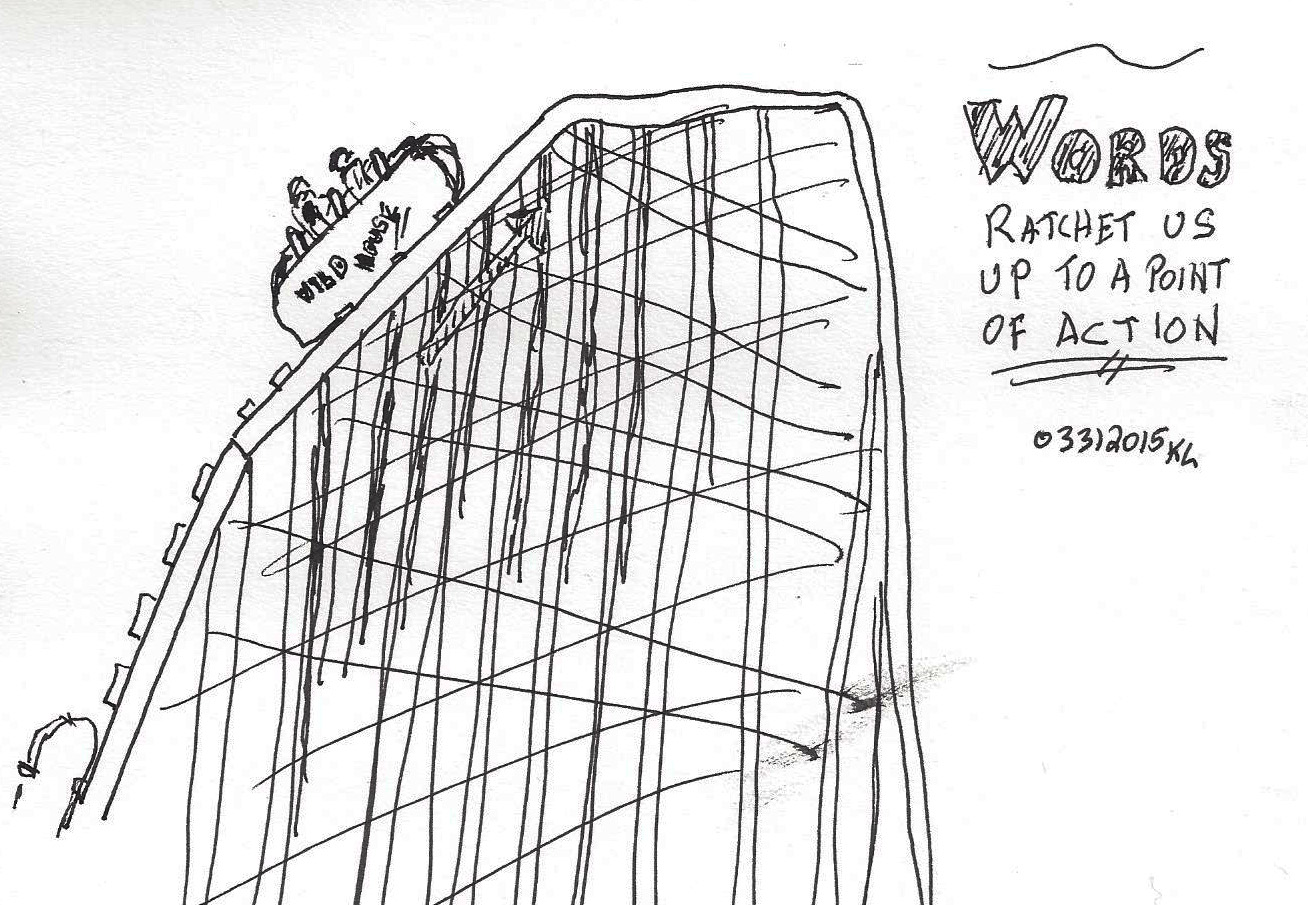
Let’s Talk: Will You Fly This Plane into a Mountain?
Listening-Rhetoric and Public Conversations Gone Private
To the casual news-reader, it’s looking more like the German copilot purposely flew into the side of a mountain. Given that, it’s not hard to imagine last week’s conversations between airline human resource vice-presidents and corporate lawyers:
- How do we screen for lethal depression?
- Let’s get serious about that two-people-in-the-cockpit rule.
- Is there an intention-detector we can employ before anyone—pilots included—steps into an airplane?
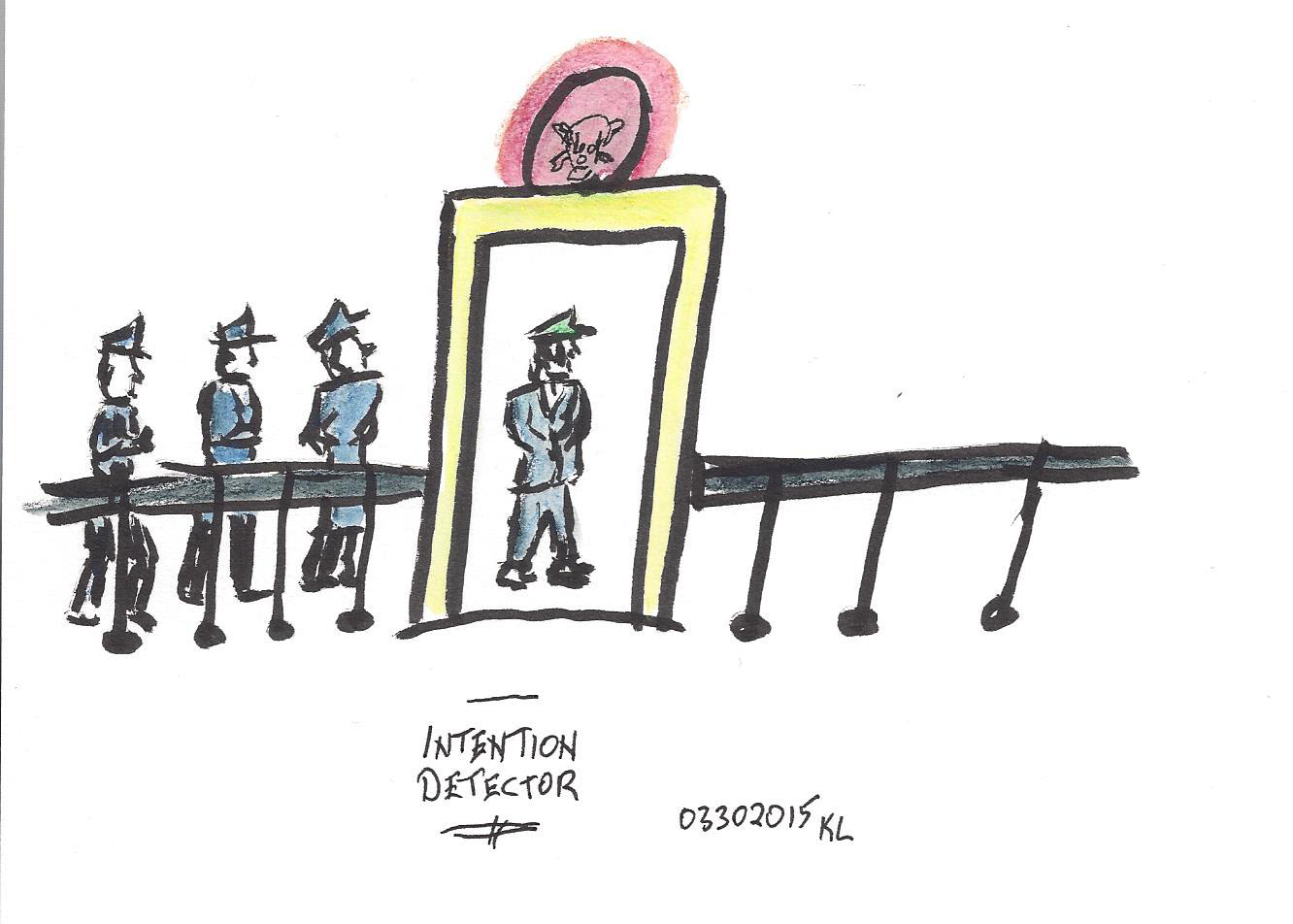
Intentions frame how we talk and how we listen. Wayne Booth posited that sometimes we come into a conversation with the intent to win—to bash our conversation partner into submission with whatever way we can. Sometimes we come with the intent to bargain, and so we are ready with a list of conciliations. Sometimes we come to listen and learn. Booth called that “listening-rhetoric” and recommended it as an antidote for stupidity, partisanship and as a way to “pursue truth behind our differences.”
People will speculate for a long time on the pilot’s intentions and actions—which we will never fully know. But as lawyers and HR talk I hope they will also examine the role of relationship-building conversation as an antidote to isolated suffering. Suffering that may become lethal.
###
Dumb Sketch: Kirk Livingston
Libero: Football Dancing
Maybe I can dance after all.
Oh. Wait. I don’t play the (so-called) football either.
###
Via Adfreak
Dubious Conversation Skills: Skepticism and Fault-Finding
Pivot Your Conversation on Some Fresh Hope
One dubious skill I learned early in corporate life was that skeptics and fault-finders earn respect at a conference table. If you are not presenting the idea (and thus less invested in making it work), you’ll win experience-points with others by blowing holes in whatever the group is discussing. Finding fault won’t cost you much and could win you a more exalted place in the world of that organization. Plus: you need know next-to-nothing about the idea or context to find some loose thread to pull and hope for collapse.

Please walk this way
Yesterday I sat around a conference table with a group of skilled, opinionated, driven people who had a brand new idea. All around the table were invested because they had been working different parts of the idea for some time. The hero directing the conversation skillfully wove a bit of verbal fabric above us by hinting at how these disparate work groups were—quite possibly—creating some brand new category. I’ll not be more specific because of non-disclosure agreements, but what was remarkable to me was the intent of the verbal dreaming and the way it resonated with a group that could have been contentious.
Yesterday’s meeting reminded me that fresh hope is a disarming thing to bring to a group of seasoned people.
By the way, my book ListenTalk: Is Conversation an Act of God? is moving through the publisher’s proofreading department toward an actual physical presence. Chapter 2, “Intent Changes How We Act Together” highlights the work of the late University of Chicago rhetorician, Wayne Booth, who showed three different ways our intentions derail conversations. He ended up developing a way of talking that could unite conversation partners—much like the hero in my story above. You can put your name on a list [here] to be notified when the book is available.
Randomized, double-blind studies indicate that people who put their name on that list live happier, more thoughtful lives. I just made that up. But you can–and probably should–put your name on that list.
###
Image credit: Kirk Livingston
The Academy of Cliche (Canadian Film Festival)
“If I can’t see it coming, I already don’t like it.”
Many of us have studied here far too long.
###
Via Adland.TV

 conversation is an engine