Archive for the ‘curiosities’ Category


Obviously.
To spell out the obvious is often to call it into question.
–Eric Hoffer

Though “obviously” can never be rehabilitated.
###
Image credit: Kirk Livingston

Of Course Money Is Speech
More money = More articulation = More influence
As I read Dollarocracy by John Nichols and Robert W. McChesney, I cannot help but think about the biases we bring to any topic or any text.
The authors make no bones about their stand on the free flow of money into our political system and the corrosive effects for everyone touching that money. The authors are also clear about how our media is complicit in helping form story arcs and shaping mythic-sounding conflicts that might just serve the media best by training viewers to stay tuned. Fox News has not cornered the marketing on training viewers to panic—it seems to be the purpose of most news shows these days. And why not? Advertisers love those vulnerable audiences and there are fortunes to be made, after all.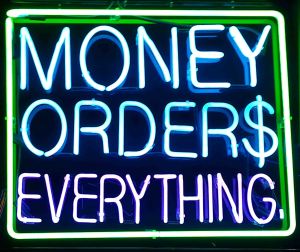
I cannot yet agree with the authors that our representatives are simply “bought” by Super PACs and big lobbying firms and corporate interests. I think there are connections between the money they need for reelection and the ways they vote. But I’m not sure it is a one-to-one correspondence. It’s more complicated and nuanced, but common sense tells me that if some set of powerful organizations has contributed millions of dollars to a reelection campaign, the person seeking reelection will vote favorably to the interests of those organizations.
That is the nature of gifts.
That’s why I like OpenSecrets.Org: they try to trace where the money comes from and where it goes. Especially dark money, which is typically hidden for a reason. Because money is not given to political campaigns out of altruism. People buy influence with what seems to be a gift.
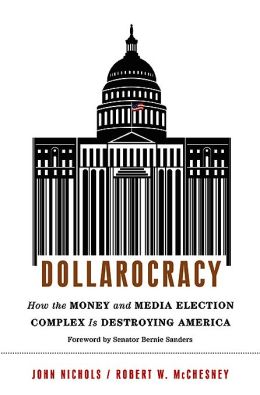 Nichols and McChesney bring a bias to their writing of expecting to see our representatives being bought by corporate interests. I don’t blame them—they’ve written several books on the topic and have seen what they have seen. For myself, I just want to begin to train my eyes to turn from entertainments once in a while to see which of our representatives are being influenced by which Super PAC/lobbying firm/corporation.
We cannot end the flow of money into our political system. But we must become aware of what that money is buying—and what it is costing the citizenry.
Best if we could say out loud to each other where we’ve seen influence purchased.
###
Image credit: Kirk Livingston. Neon by Patrick Martinez via Public Functionary


John Green: On the American Dream & Inequality of Opportunity
John Green: Makes complicated stuff…a bit less complicated…or at least worth talking about.
John Green: just fun to watch.
###
Please Read Dave Eggers: The Circle
In a world where everyone sees everything…
If you’ve ever wondered where complete transparency might lead—as I have—consider reading Dave Eggers’ excellent novel The Circle.
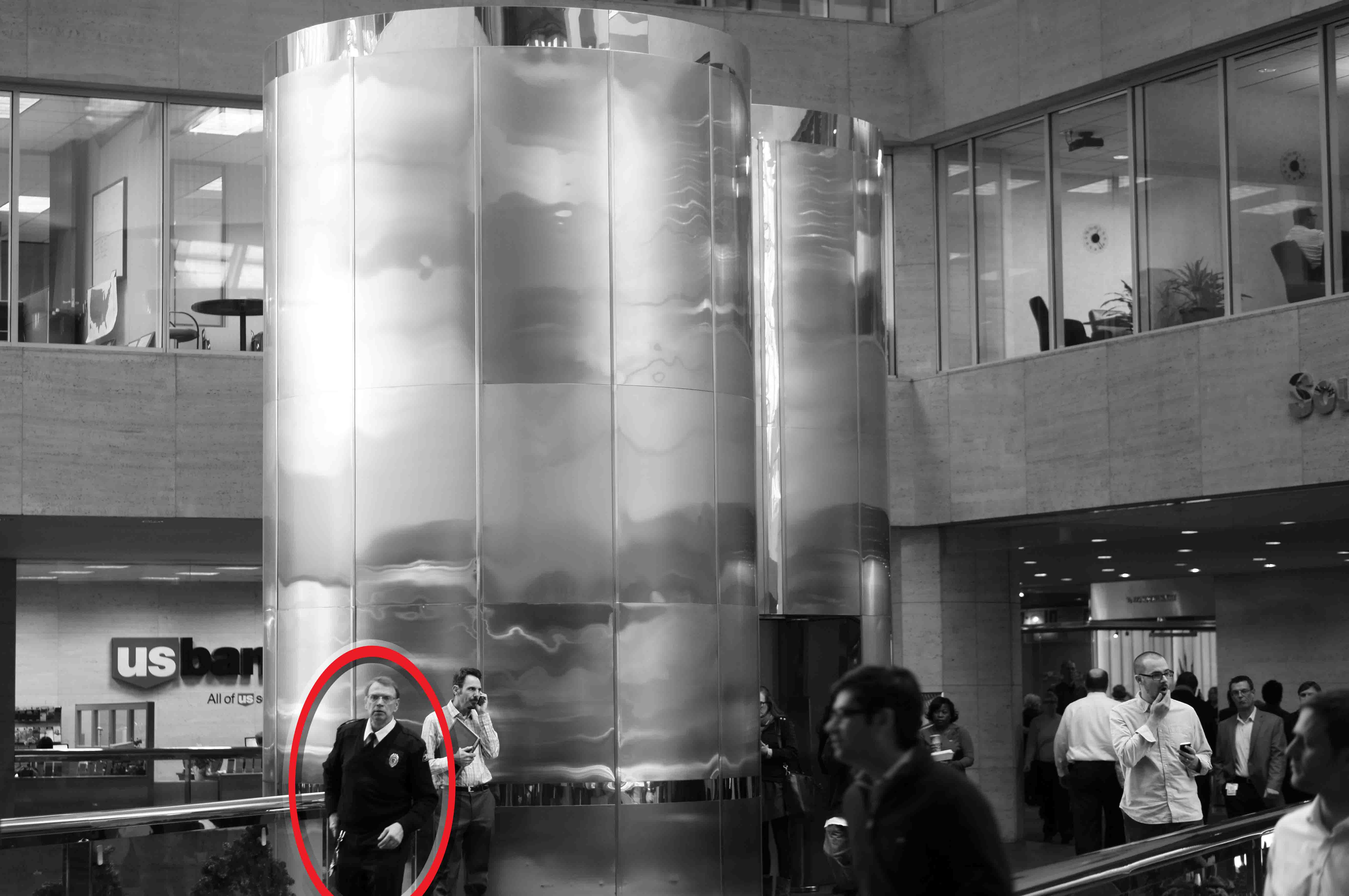
Don’t worry–no one’s watching.
Mr. Eggers has created a very comfortable world (for some) of deep collaboration, where everything is provided to those lucky enough to work for the Circle. The Circle, the corporation at the center of the story, looks more than a bit like our most celebrated high-tech companies brimming with smarts, cash and outsized ambition. Think Google or Apple or what Microsoft once was—and then add in a cast of characters each with an overweening and boundary-less high EQ—and you’ve got a world that is totally supportive—as long as you move in the same direction. The novel traces the story of Mae Holland as she “zings” (tweets) and “smiles” (likes) her way from outsider to the inner circle.
The story gets uncomfortable at times, especially when it shows the intent behind the use of social media and the social pressures applied. Especially when you start to recognize product placement on a very, very personal level.
Mr. Eggers has me rethinking my eagerness for employees up and down the corporate ladder to use their outside voice. I’ve been advocating, among my clients and when teaching Social Media Marketing, that helping employees reveal their work to interested outsiders is a move toward a new kind of marketing that looks less like selling and more like a conversation among interested parties. I still think that is a good move, but Mr. Eggers has explored the boundaries of that notion, and it is a bit, well, totalitarian.
I will consider using The Circle as a supplemental text for my next class on Social Media marketing. Well-written and consistently engaging, Mr. Eggers’ book is well worth your time.
###
Image Credit: Kirk Livingston, just before a recitation of photography rules within a non-public space

 conversation is an engine