Archive for the ‘curiosities’ Category
Dallas Willard: If I wake up dead, please someone tell me.
Dallas Albert Willard (September 4, 1935 – May 8, 2013)
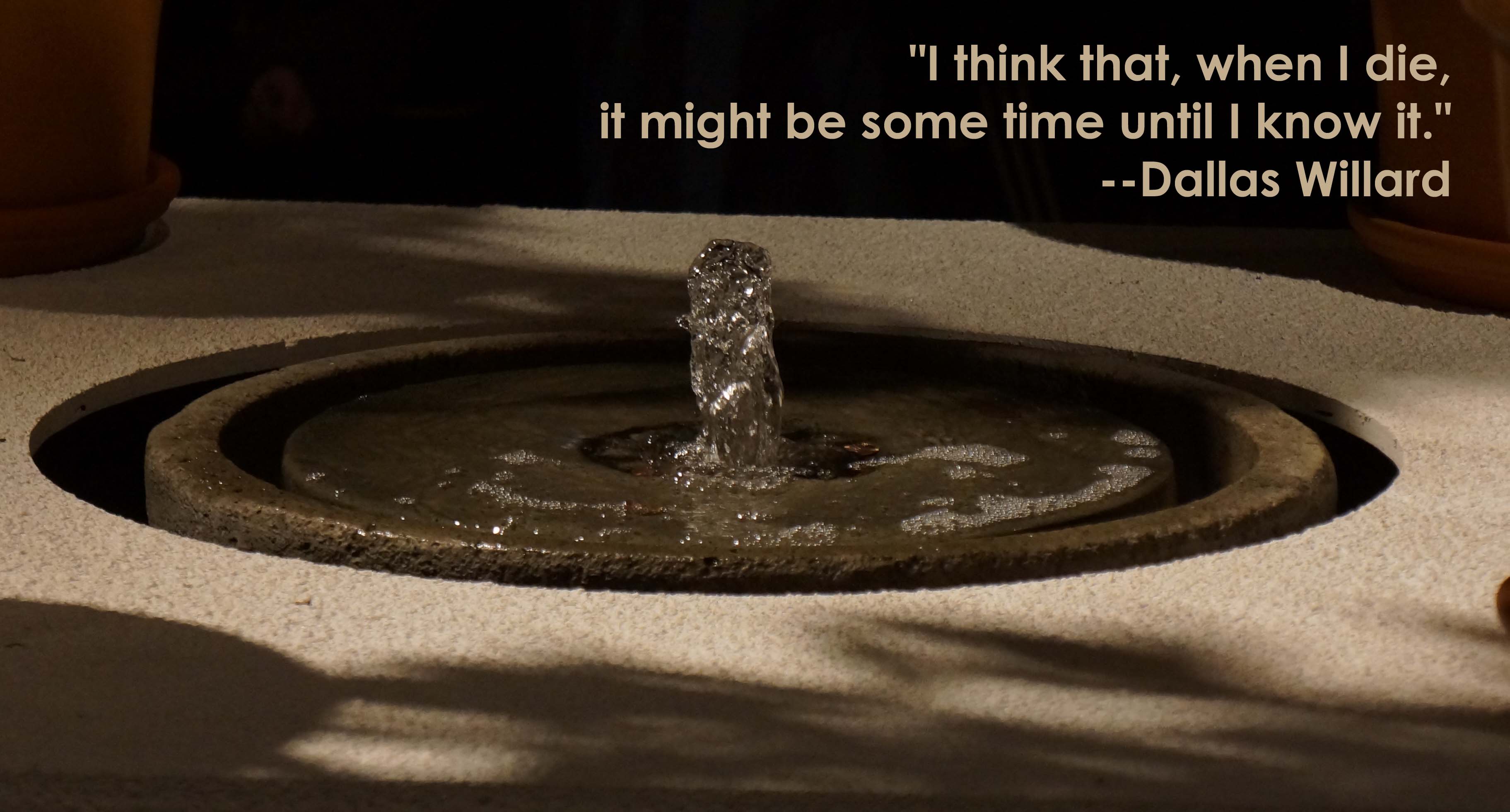 He was an improbable thinker: crazy about Jesus the Christ and a well-regarded professor of philosophy at USC. An expert in Edmund Husserl (father of phenomenology) and yet a very clear writer (despite phenomenology, which is notoriously difficult reading). Willard’s The Divine Conspiracy was a key text for me in learning about spiritual formation. His writing continues to bubble through my brain pan.
Dr. Willard combined the many unlikely things I love best. I never knew him personally, but I miss him already. John Ortberg’s tribute was perfect.
###
Care Guides: In Praise of Knowing Nothing
The better to listen
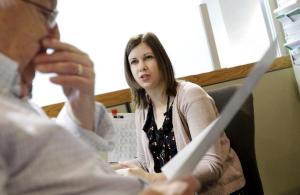 Allina employs people to work the space between a physician’s prescriptives and the patient’s adherence to said advice and prescriptions. (May 6 StarTribune: Care Guides show another face of health reform)
Maura Lerner’s story shows a comical side to healthcare that should surprise no one. The comedy is not that hospital systems would employ people with little to no medical training (that makes good sense to me). The comedy is how many patients and physicians have learned all sorts of dysfunctional ways of interacting and not listening to each other.
Betsy Snyder, 23, never wears a white coat on the job. She wouldn’t want her patients to get the wrong idea.
Care guides make sense because they feed corporate efficiency objectives of moving physicians quickly from patient to patient, which serves to maximize those costly human assets. And certainly care guides will try hard to work within their contractual obligation to not practice medicine not matter how hard the kindly older woman pushes for such advice (especially since they’ll quickly be out of a job if they do).
The key common-sensical notion here is that the care guide becomes another interpreter of the physician instructions. And as they discuss prescriptions and compliance with the patient, they are another voice advocating for improvement. And since they arrive without the baggage of years of training they are free to listen.
And listening is the key. Listening and talking—such simple things—but these are the missing ingredients in treatment. Just because a physician prescribes doesn’t mean a patient complies. But talking it through, why, maybe it is actually a kind of therapy trigger.
Care Guides are a positive development as healthcare corporations try to relate to humans and their conditions.
###
Image credit: Courtney Perry via StarTribune
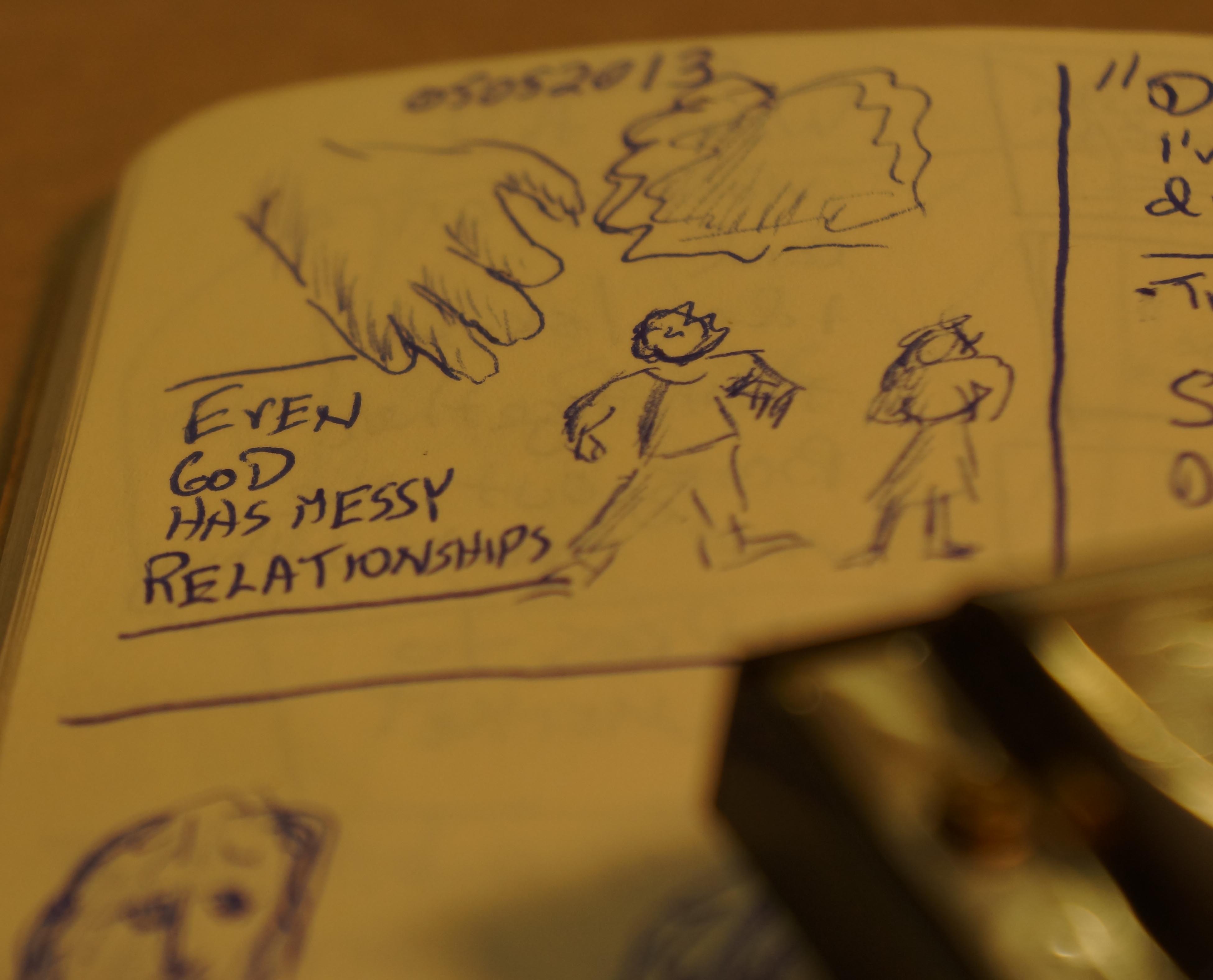

Day Jobs of the Poets
What’s that? You plan on writing poetry for a living?

###
Image credit: Grant Snider via this isn’t happiness
Glen Stubbe: “I did this thing. Let me show you.” (Shop Talk #7)
When Photojournalists Gather: MNPA Shop Talk
I’d like to see more. And better.
Photography, like sketching, is another way of interacting with what is right before us. Both photography and sketching present opportunities to see differently—both are a kind of active seeing. As a writer, I have an ongoing project of learning to see more and better and differently. Seeing better helps me write better.

Glen Stubbe Photography [@gspphoto]
That desire prompted me to show up at the Minnesota News Photographers Association last Saturday at Murphy Hall at the University of Minnesota. I wanted to hear how news photographers talked about—and thought about—their work.
What I heard was talk of technique: details about exposure and how to layer different exposures in a single photo, when to wait and when to move when stalking the photo they have already seen in their mind. Several times I heard how photographs were once merely an accompaniment to the article and how that is quickly changing. Glen Stubbe cited an example of his photo of Michelle Bachman escaping a pointed question went on to start a national story thread.
The photographers were exactly right about this last point: as we move to a post-literate culture, visual content moves to the primary spot. How long do stories stick around in any media you consume without some compelling visual anchor? Not long. I’ve often thought readers either fear blocks of copy or simply find them off-putting. But this is nothing new, we’ve know this for some time. As a writer, visual storytelling is a must.
The photojournalists talked about the increasing role of social media and the blurred lines between reporter and photographer. But three things stood out from the panel between Ben Garvin (Pioneer Press), Glen Stubbe (StarTribune) and Jeffrey Thompson (MPR):
- “Tweet Every Assignment.” Ben Garvin said this and I think it could be true for anyone finding their way into social media. Whatever your work (or vocation or avocation), those things that are top of mind are the very things of (potential) interest to others. The premium here is on immediacy.
- Develop and Feed a Personal Vision. There are some things (photos, thoughts, words, quotes) that land outside of our daily work. There is a place for that top-of-mind content—a public place. Ben Garvin feeds that vision at his blog. For Glen Stubbe , it’s his Instagram account. I believe this personal vision is the necessary counterweight to daily work. My respect for the people I work with and read grows as I see the parameters of their thinking outside their primary work.
- Share what is remarkable. It was Glen Stubbe’s quote that helped me see the emotive content that makes something remarkable—a question I’ve wondered for some time. Something is remarkable when it makes us step out of our routine and remark, out loud, to someone else. To Mr. Stubbe, it was photographs he just had to share. The making and sharing of the photos remains a prime driver for him. What amazes us is the very stuff we share with our spouse, our kids, our friends, total strangers. It is good when we can capture what amazes us.

Ben Garvin [@bengarvin]
###
Image credit: Glen Stubbe, Ben Garvin
Secretary of State Kerry: Please Send Dennis Rodman to North Korea to Sing This Song
It’s too late, baby, now it’s too late.
I doubt any of the Kim Jong’s have ever been “light and breezy,” though Un may be so with Mr. Rodman. But certainly they have just stopped trying.
Is it time to call North Korea’s bluff?

[Click to play]
Of course, the inbred regime may actually believe the rhetoric they spout—that is the danger. Un may well be unhinged enough to push the button—no one really knows.
On the other hand, is there a way to keep pressure while allowing them a face-saving out. Some way to move toward dialogue while not giving in?
###
Illegal Inscriber: We Are Brothers
Warning: NSFL Image (Not Safe for Librarians)
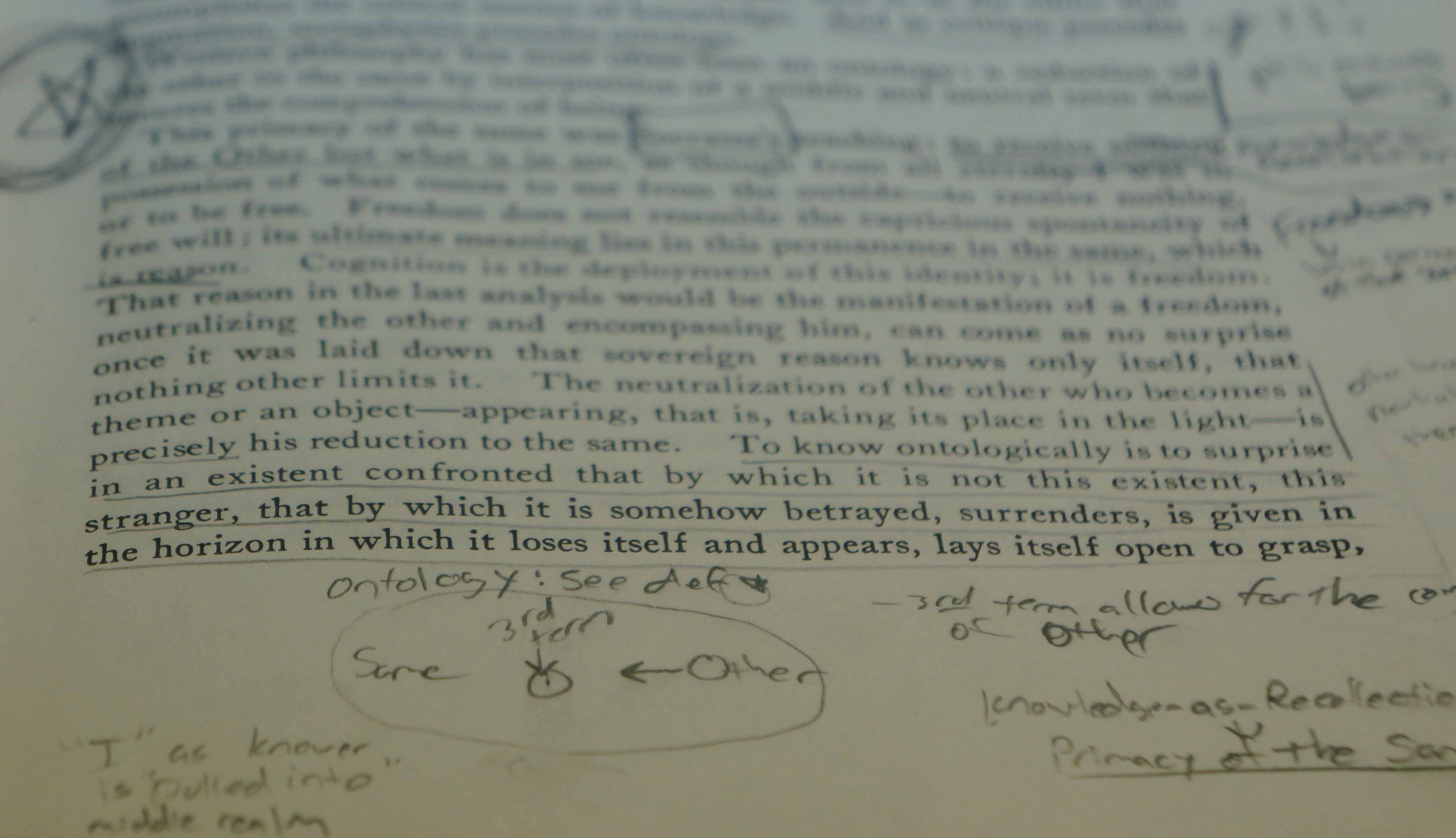 Sometimes Ramsey County goes far afield to procure my desired book through their interlibrary loan system. Not so long ago a book about Levinas written by Sean Hand made its way to me all the way from Janesville, Wisconsin. I had not thought of that working community as a hot spot for continental philosophy, but life is full of surprises.
This copy of Levinas’ Totality and Infinity came from St. John’s University in Collegeville, Minnesota. And somebody there did his thinking on paper. I say “his” because this scrawling looks like it was made with a masculine hand. I would like to buy this thinker a cup of coffee—his processing of the text is spectacular. He outlined sections of Levinas’ thought, he responded with gusto (exclamation points and double/triple underlines) to the sometimes obscure Levinasian sentences. His notations in the margins show him connecting Levinas to Hegel, Nietzsche, Sartre and Descartes. He is surprised when he finds “another way!” He offers a sad face upon realizing “the state is a totality.”
In fact the first 1/3 of the book is full of his incidental reactions and understandings, all scrawled in remarkably clear pencil in the margins. By half way through the book his interest seems to wane. The latter half of the book is free from all pencil inscriptions. Did he fall asleep in the library and miss his deadline? Did he finish his paper based “the same and the other” without ever getting to “exteriority and the face?”
I suspect so.
Even so, I’d like to have a chat with this illegal scribbler. This person has a lively mind, reaching out to make mental connections even as he reached out with graphite to record those firing synapses. Maybe this guy was even considering the poor dolt (this next other) who would pick up the text next—showing a kind of mercy on him.
I think the Ramsey County Librarian would also like to meet this scribbler. She wrote (for the tiny but loopy handwriting on the transfer label looks like a feminine hand to me) —wryly, to my mind: “pencil marks noted.”
###

 conversation is an engine