Archive for the ‘curiosities’ Category
Ken Kellenberg (1940-2013): Thoughtful Mentor
What’s The Impact of One Life?
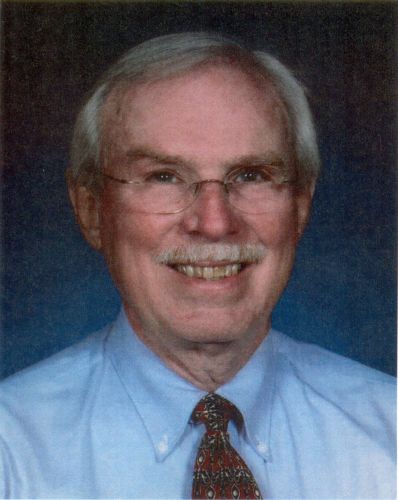 Different people stand out at different times in your life. Ken Kellenberg was one of those stand-out people for me, at a specific time when I was making all sorts of life choices. Ken died last Sunday.
I met Ken in college. He was the founder of a free-form church on the edge of the University of Wisconsin—Madison campus. Faith Community Church was just beginning to shape-shift and every Sunday looked different from the previous. Some days the gathering was raucous. Some days quiet. Some days a theme bubbled up through the words and prayers and thoughts shared. But every week was unscripted and very different from the previous week. There was no formula.
Every week was unforgettable—and quite possibly poisoned me for the many feeble prescriptive gatherings I’ve been part of since.
Ken and I met a few times toward the end of my undergrad days and he offered advice about jobs and faith and relationships. Ken also performed the ceremony that united Mrs. Kirkistan and I in marriage (Behold: 27+ years ago).
Once Mrs. Kirkistan and I we were passing through London on the way to or from somewhere and stopped to talk with Ken and Natalie. They were characteristically open about reservations with the particular organization with which they were working. I had some experience with the organization so we had a rich and memorable conversation.
It was Ken’s openness that retained my attention. The sharing of doubts and questions, the refusal to set out a formula. The desire to be present in the relationship and situation and to listen and to pray—these are things I learned from Ken.
Over at Men of Hope they are talking about people who have influenced them. I hope they don’t wait until their influencer has died to consider the full story.
Ken, I wish I could have said good-bye.
You’ve meant a lot, friend.
###
Dummy’s Guide to Conversation #14: Please Say More
How To Be A Verbal Philanthropist
 I always like it in the classroom when the professor says to the student, “Please say more about….” It is a sign of active listening, a phrase which pulls the reluctant student further into the conversation.
“Please say more” is irresistible in its eagerness to hear more of a person’s thinking or reaction or opinion. It is also a demonstration that people and their thoughts and ideas are important. And it is a crazy generous way to engage in conversation. Generous because by nature we rush to fill the space between someone else’s words with our own thoughts.
When someone says to me “Please say more” I feel honored and free and engaged—almost like having been given a gift.
Being a verbal philanthropist doesn’t cost much—just your attention.
###
Image credit: Neil Swaab via 2headedsnake
You might also like:
- Listen Up: #2 in the Dummy’s Guide to Conversation
- Listen to Other People’s Stuff:: #6 in the Dummy’s Guide to Conversation
“Today I Choose to Wear Clothing.”
You have more choices than you think
 Shirt? Yes. Pants? Why not?
Just like every day.
Just like most people.
Except for the odd nudist colony, most people clothe themselves without becoming embroiled in internal debate. Appearing clothed is one of those basic understandings we share. Being clothed is not the question. What that clothing looks like is, of course, the question that drives multi-billion dollar industries.
I’ve been thinking about the boundaries that circle our lives. Or maybe I’ll call them norms. There are expectations out there we follow without thinking. And that’s a good thing, because we might become paralyzed by all the choices before us if we did not have these norms our culture expects of us. And we also have these well-worn ways of acting that help us avoid constantly choosing. We always shower before breakfast. We always drive this route to work. We always park on this side of the lot. We always say “Yo, James” to the receptionist. These are the things we do.
But nothing says we must do it that way.
Nearly every corporate job I’ve had has involved colleagues complaining bitterly about the boss or the manager or director or the CEO. Mondays seemed to foster these discussions. Maybe we cited “golden handcuffs” or likened ourselves to wage slaves in those discussions. But in truth, we’ve been surrounded all along by truckloads, trainloads, barges full of options. An unprecedented wealth of options. But we didn’t see them because we followed the script of our workplace or culture. We didn’t see our choices because the script didn’t let on that there were choices.
I’ve been reading Wendell Berry and Jonathan Sacks—both of whom saw choices that were outside the script: pursuing contentment rather than fame or honoring the stranger. That poet-warrior-king wrote his own set of scripts that were bathed in gratefulness rather than ambition. That inveterate letter writer Paul went off script by weighing the choice of death and life for himself. Of course, Jesus the Christ guy lived the king of all scripts—something we’re still sorting out 2000 years later.
What script are you following today?
What choices are hidden from you because of that script?
###
Image credit: Gervasio Gallardo via 2headedsnake
Guns and Talk: Is It Possible for the U.S. to Become Self-Aware?
Our Home-Grown Version of the Mohammed Cartoon
Not so many years ago a Danish newspaper took on a critique of Islam and self-censorship. It accomplished this with a set of 12 editorial cartoons, which enraged many—so much so that riots erupted across the globe. Cartoon depictions of Mohammed are considered blasphemous by many.
In the US, we tend to applaud most any exercise of free speech. It is a right we cherish. Except when it comes to guns. When The Journal News recently published data locating pistol permit holders in two counties in New York, the sound of lock and load replaced the applause.
So the publisher of The Journal News hired armed guards. Janet Hasson told the New York Times, “The safety of my staff is my top priority.”
To any who laughed off the Jyllands-Posten Muhammad cartoons controversy saying it could not happen here, think again.
When will talk become unsafe in this country? When will the second amendment take aim at the first?
###
Image credit: The Journal News
Vanishing Letters and Muscle Memory
My life without “L” and “M”
 Literally: L and M are gone. K is nearly gone. I have no period.
A few days ago I pointed Conversation is an Engine toward Coracle Journeys for a wonderful poem celebrating frailty. Today I realize my keyboard letters are going away.
I’m OK as long as I don’t look. But if I look down—right now—at y keyboard to ocate y issing etters—I can’t because they are not there. I must depend on muscle memory.
Is this what aging looks like?
Though I am a constant note taker (I like writing stuff down), there’s little need of these reminders as much of life is a been-there/done-that proposition. Writing, talking, eating—lots of our daily activities we’ve done hundreds of times. Driving to the gas station or school or to the grocer: did that x1000. We depend on muscle memory for a lot of daily living.
Muscle memory came up again and again in my family over the holidays. My brother-in-law and I talked about how practicing the piano and guitar had a lot to do with training fingers in certain reaches and movements from chord to chord. And my sister-in-law told how she intended to drive a friend and instead ended up at her home. Why? Muscle memory. These things get burned into our muscles through repetition.
Much of life works this way, which is blessing and curse. Maybe that’s why the NRA responds to murder with a call for more guns—muscle memory. Maybe that’s why Republicans want to shield the rich from reasonable taxation and why Fox News invents a war on Christmas every year—muscle memory. Maybe that’s why anything bad that happens results in focused media frenzy, a search for the guilty (or anyone with a photo), and a call for more laws. Muscle memory.
I can buy a new keyboard, but I’m not likely to try to look at it more often. My fingers already know that route. And while I want to grow muscle memory for the chords and notes on my guitar fretboard, I also want to pay more attention in 2013. Because muscle memory is not the answer to every question in life. Some things deserve a fresh look from a different perspective.
###
Image credit: Elisabet Sienstra via 2headedsnake
(Worth Reading) Through Thickets of Darkness: Solstice Thoughts
Judith Hougen, over at Coracle Journeys, did a good job of celebrating human frailty.
Her post is worth reading.
###
Peace for the Promiscuous Reader
Coming to grips with one’s naughty habits
 By my favorite, well-lit chair are stacks of books. Actually five stacks. Why stacks of books? It’s a quirk of borrowing—one library allows me three weeks (six when I renew, which I usually do). Another library allows me three months or so (an amazing primary joy of teaching at a college, for which I am daily thankful).
In the past I’ve felt guilty for all these books lying around partially read. But yesterday I realized, “No, this might be what my reading life looks like. Maybe reform is not possible.” (Maybe reform is not needed?)
I currently adhere to the discipline of reading one book (at a time) straight through, from cover to cover. Right now I’m reading “The Dignity of Difference” by Jonathan Sacks which is an amazing, readable argument for why anyone should care about the outsider. I am completely intrigued by how Sacks pits Moses against Plato in a knock-down, drag out fight on purity vs. practicality. OK, yes, I’m also reading Wendell Berry’s Jayber Crow on the fiction side of the equation.
“Adhere to the discipline” because it is easy to fool myself into thinking I’m reading them all from cover to cover. I’m not. Many are there for research on this notion of the Other (Levinas) and various philosophical/theological tangents arising from an easily distracted mind. Some are there because of something I want to learn about or to try to backfill one of the many holes in my education. But with the cover-to-cover book, I also try to finish at least a chapter at each sitting.
So I read one fiction/non-fiction book from cover to cover as I sample from many. And then I pick the next cover-to-cover book from those I am sampling.
And I’m OK with that.
I’m OK with that because of a tweet from John Wilson (@jwilson1812) about his reading habits. As editor of Books & Culture, I imagine his office and home (Garage? Car? Boat? Scooter?) awash in tidal waves of book stacks. And that makes me feel not so bad.
But, well, judge me if you must.
###
When You Know Too Much
You should shut up
 Sometimes you are in a meeting and you know more than most people in the room. I’m not writing about an ego trip here or an exalted view of self. I’m writing about a function of age and experience. You personally have wrestled with the three topics circling the meeting’s agenda. And most of that wrestling was two decades ago. You know the people and stories and ethos the leader is referring to from deep study of your own—and you reached your own conclusions about five years ago. You’ve been there. And you’ve done that. I’m sounding like an old guy.
That’s the time to take action: Shut up.
Not entirely, but show some restraint. Why? It’s tempting to say you should shut up to hide what a cranky old codger you are. It’s also tempting to say “Shut up” to give the neophytes an opportunity to make their own mess of things. But neither of those tell the whole story.
In a meeting yesterday a group of us talked about a set of communication (and theological) issues revolving around reaching out to a growing population of immigrants to the Twin Cities. I said too much—I realized this on the slick, snowy drive home. But then I realized: no, honest discussion is exactly the give and take, the push and pull, the misunderstanding followed by dawning group understanding. That is the way of human communication. It’s mostly messy.
Here’s the point: every communication event is fresh. Even cranky old geezers who know too much can learn, because the players are different and the times are different and frankly, new stuff is happening. All. The. Time.
So: bring your experience to the table, by all means. And steel yourself: results will vary.
###
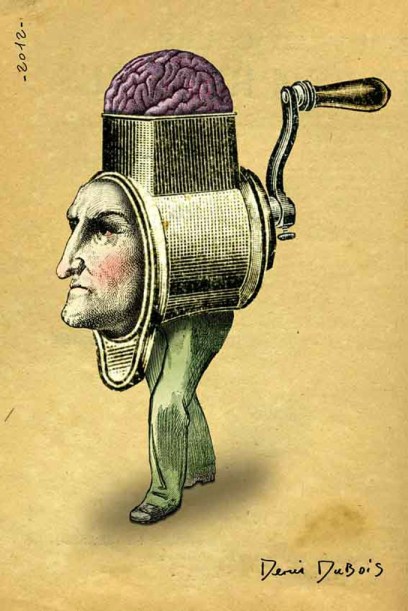
Image credit: Denis Dubois via 2headedsnake
If I Had a Parking Lot (The Parking Lot Movie)
That’s Fecund Ground for a Philosopher
If I told you there was a documentary about a parking lot and that you would not be able to stop watching it, you might disbelieve me. And yet. There is. And you can’t. It’s called, The Parking Lot Movie.
You can’t stop watching because of the cast of characters who each take their turn tending the unheated little hut that serves as the outpost for payment. They charge people 40 cents, or a dollar, or eight bucks and the world of the parking lot revolves around this simple transaction. The attendants are students, and recent grads and grad students. They are philosophers and professors and musicians and slackers and bikers and skateboarders. What they share in common is lots of reflection about the transactions they have with the public. These guys have lots of time to think.
This overeducated bunch connects the dots of culture from the seeming-lowest point on the food chain of work. They think about how people park and about how the car make and model and even the license plate reflect on the driver. They think about the irony of having to pay to park that lumbering, expensive SUV. They think about what it means to be a parking lot attendant, mostly. And the camera catches these comments, along with the transactions and events that drive them to the comments.
The only way to get this parking lot attendant job at the Corner Parking Lot across from the University of Virginia is to know somebody. And that fact is one key to the whole interesting film: it’s the little community of irrepressible attendants trying to sort out life together that turns a mundane job into a joyous window on life. But more than that, the guy who owns the Corner Parking Lot—Chris Farina—has a way of working with people, mentoring actually, that helps each attendant grow into the person they are meant to be. He’s boss, but he’s a parking lot visionary who has figured out how to help each attendant have ownership over the parking lot. And maybe their life.
This is a great film on its own. But I can imagine using it in a class when talking about collaboration or community—it’s a perfect illustration of both. And with the shop talk caught on camera and in context, it is a delightful and an all-too-quick 74 minutes.
###
On This 1st Day, Consider the 7th
How can freshly-sliced time call to you?
 It’s Monday and that is bummer enough. But take a minute and think with me about how time works—it may make a difference for next weekend. We’ll do this by looking at The Sabbath by Abraham Joshua Heschel.
Heschel’s The Sabbath feels like an old book though the first printing was only in 1951. (Some of you will say, “Yeah: old.”) But the thoughts, the pacing and even the language mark it as something way older and way more out of sync with our current urgencies. In this case, the medium mirrors well the topic, which is a day set apart—a day out of time. [One note: My understanding is that the Jewish observance of Shabbat extends from Friday sundown to Saturday evening. The Christian observance of Sabbath is a Sunday. It’s not the exact time I want to look at, but the concept.]
There is no end to the mystery Rabbi Heschel presented as he talked about the observance of the seventh day as a day of rest. Many of us innately understand the point of Sabbath though few of us practice it. We get that a day away from work is a good thing. We can be convinced that not working for a time makes us sharper for when we are working. For us—especially in the U.S. around Christmas—the Sabbath is a useful day for practicing our American religion of acquisition. But maybe there was some wisdom in those old out-of-sync rules that forced merchants to close for a day.
The heart of Heschel’s book is a quote from the Torah, where God rested from all his work on the seventh day and called that day “holy.” Many of us associate that word with church and religion and boring sentimental stuff. But Heschel’s first interesting point is that it was a day that was holy. Not a place. Not a thing. Not a people. But a day. And that day recurred. Every week or so. (Well, every week).
That a slice of time would be separate and somehow different is a wildly different way of looking at life. Especially as we push toward always-on-24/7/365 connection. It raises the expectation that something different can/should/will happen in that time slice devoted to rest. Heschel does a heartening job of building out the possibilities—indeed, that is his point: time devoted to, well, transcendence. But with a God-shaped denouement.
The second interesting thing Heschel said is that rather than seeing the day of rest as a reward for a week of hard work, this freshly-sliced time becomes an anticipated climax to the week. All of our thinking, our relating and collaborating, all the working pieces of life somehow move toward this festive laying down of the keyboard/pen/steering wheel/hand truck in rest. So…not a reward for a week’s work but the week’s work serving to outline the great difference of a day set apart to contemplate and celebrate relationships.
There’s lots more to this, of course. And generations of smart people have written volumes on the topic. But just laying a different story arc on this week’s work may make this Monday different.
###
Image credit: laurabfernandez via 2headedsnake

 conversation is an engine