Archive for the ‘curiosities’ Category
The Decline of Fact in Our National Conversation (and How to Avoid Despair)
Louder Preaching is Not the Answer
It seems wrong to call it a national conversation when we mostly monologue at each other. And most of our monologues are meant only to reinforce the already-believers listening. Republican Paul Ryan’s recent string of verbal deceptions was a stunningly brazen example of half-facts delivered with full-on force—but both sides are equally guilty. That both Democrats and Republican play loose with facts is neither a surprise nor anything new. So it has always been: we persuade each other by twisting facts in our favor and choosing not to reveal the truths that would balance our cherry-picked facts.
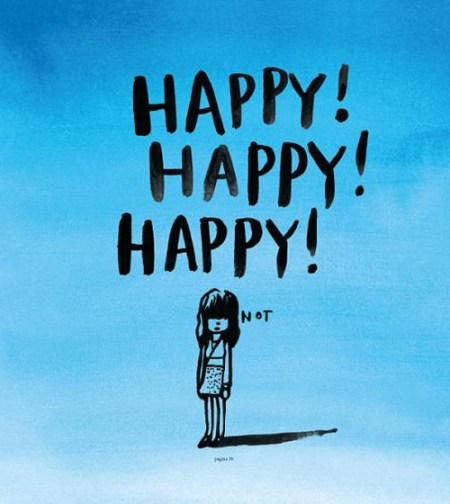 It is natural (though not necessary) to become cynical about our national exchange of monologues. Recognizing that any speaker is likely persuading you with only half the relevant facts is probably not a bad strategy to adopt for the next three months—or the next 30 years. It is also easy to see how this strategy only accelerates skepticism about the official word of any authority. And so “Question Authority” returns as a relevant bumper sticker, several decades later. Or was it ever out of style?
How to Avoid Despair and Reject Cynicism
Remaining skeptical of facts presented as truth is a good starting point. And perhaps seeking a generous spirit that questions facts even while looking behind the facts to ask what broader point the monologist is making. But we must speak up and expect dialogue rather than more indoctrination.
More preaching will not do.
###
Image Credit: Volkskrant Magazine via coverjunkie/thisisnthappiness
Encounters with Silence
Where does insight come from?
Only knowledge gained through experience, the fruit of living and suffering, fills the heart with the wisdom of love, instead of crushing it with the disappointment of boredom and final oblivion. It is not the results of our own speculation, but the golden harvest of what we have lived through and suffered through, that has power to enrich the heart and nourish the spirit.
–Karl Rahner, Encounters with Silence (Westminster, Maryland: Newman Press, 1965. 30)
###
Image Credit: Via 2headedsnake
Americans: Large Mass. Small Memory.
Hey Media: That’s not the Bill Clinton I remember
 Is this we’ll how we’ll be remembered? The people who enjoyed the fat of the land but couldn’t remember what happened from year to year? If anyone reads through our newspapers in 100 years, surely that will be their conclusion.
Even before Bill Clinton’s celebrated speech last night (I have yet to listen to it, but I will—Bill Clinton is a great speaker), we learned from various media outlets that he was a popular president and how both Democrats and Republicans remember fondly his tenure.
Really?
I remember him as the president known for oral sex with an intern. Who then lied about it on camera. I remember him as the president who allowed me to explain oral sex to our kids innocently listening to the radio news. He is the man who was impeached and a national disgrace. The man who was a running joke for late night comedians for several years.
I’m all for grace and fresh starts. And I’ve got my problems—I’m not judging, only remembering.
Bill Clinton a popular president? Yes, for the media and comedians. Maybe today if you look only at the economy during his time in office. But for me: my memory is decidedly mixed. At best.
###
Image Credit: Keith1437 via 2headedsnake
Dedication to Craft: Jiro Dreams of Sushi
There’s hardly a more fitting reminder of dedication to craft than the 2011 David Gelb documentary Jiro Dreams of Sushi. The film follow’s 85-year old Jiro in his daily routine of preparing sushi. From buying fresh tuna and squid at the market every morning to massaging the octopus (that’s right for 45 minutes) to talking with the rice vendor who refuses to sell rice to someone just because they ask for it. One of Jiro’s biggest fans is a local food writer who we follow into the restaurant again and again as he articulates the surprise that happens with every meal.
Jiro’s shop (“Sukiyabashi Jiro”) is extremely clean but modest. Located in a Tokyo subway station, it has only ten seats and serves only sushi. Jiro sets up two rounds of meals a day: lunch and dinner—which sounds like he serves 20 people a day. And yet sushi lovers from around the world reserve up to a year in advance (if my memory serves). Jiro is the only sushi chef to receive a three-star Michelin Guide.
The film is a meditation on craft, just as the copy says. Beautifully filmed with long shots of Tokyo life and the chefs’ concentration on their craft, including a mesmerizing classical soundtrack. The film is primarily about Jiro’s compulsion to learn all there is to know about making sushi. But along the way he influences his sons and seems to have changed the way sushi is prepared. In the end, both Mrs. Kirkistan and I felt we wanted to put heart and soul into our respective crafts.
For copywriters and writers, the parallels are clear. Several times in the film, Jiro says he is happiest when he is making sushi. Even at 85 years old, he continues to make a mark and continues to be mesmerized. In fact, there seems to be a push-pull between his work and the rest of his life. Craft is almost the reason he gets up. But it also is his main worry. Hearing what craft looks like from his sons’ perspective and the up and coming chefs that move through the restaurant.
Thanks to Scott Berkun for the recommendation.
###
Who can see the wind? You can.
Great story packed into 124 seconds.
We need more people like the guy on the park bench.
Copyranter says this won a bunch of awards in 2007-2008.
I see why.
###
Via Copyranter
How do your tools shape you and your customer?
We work with tools. Tools work back.

Current Tools Train Us to Expect Collaboration
It is not precisely true that our tools train us. More to the point: our tools sometimes wake dormant skills. Our tools help us exercise muscles we’ve not used so much: for instance, my running shoes help me exercise a different set of muscle than my bicycle typically requires. I know this because I have different pains after using each. An axe requires differing coordination skills than a hammer, which is also different from a ratchet.
Current social media tools exercise our collaboration muscles. From Facebook and Twitter we began to see that collaborating is fun. And we start to look forward to working together. It now feels good use those muscles and skills. It feels productive.
So when we require each other to sit silently in a long meeting, well, that doesn’t feel so good anymore. Or when we tell our employees or our congregation to go do this thing without asking for their input and experience—that just won’t fly anymore. And if we expect our customers to buy whatever we sell with no questions, well, that model has been dead for some time (the cult of Apple comes to mind as one exception).
David Straus in his practical and interesting How to Make Collaboration Work (San Francisco: Berrett-Kohler Publishers, 2002) rightly labels this a matter of human dignity: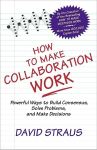
People who are directly affected by an issue deserve to be able to express their opinions about it and have a hand in formulating a solution. (46)
How are the current tools changing the expectations of your client, customer or congregation?
###
Image Credit: Inkdrips via thisisnthappiness
Gay Marriage and the Desperate Times/Desperate Measures Argument
People of faith can do better
 Amy Bergquist’s powerful editorial (“This man shouldn’t get the last word on gay marriage”) in today’s StarTribune makes a strong argument about treating people as adults. Read the comments (59 as of 10:10am, 135 as of 2:50pm) and you’ll be reminded of what a lightning rod issue this is for our culture. Setting aside the lightning and the working parts of Christian conviction in a multi-religious nation for a moment, I believe Ms. Bergquist is exactly right about Frank Schuber/Schubert (The Strib printed his name both ways) methods:
Running emotion-driven ads at the last minute does not give room to debate, discuss or even engage one’s mind. It’s all visceral. It’s all knee-jerk reaction—which is the point: We all know that every institution and cause, from the Axis to AIDS, has played on emotion to move people to action. We each tune out countless of these messages every day.
As a copywriter and a student of persuasion and a Christian, I question Mr. Schuber/Schubert’s tactics: while his ads may move the vote, they do not promote transformation. Transformation happens as people engage with an issue and think it through and talk it through (and pray it through). On a personal level, it is one-on-one conversation that makes things happen. The notion of ambush communication tactics may give short-term gains in Jerry Falwell’s culture wars while leaving the nation’s current inhabitant’s thumbing their fact-checkers as they walk away.
I know these tactics well as a copywriter. But anyone can see that advertising and marketing communications are moving away from the trick-you-into-buying mentality. The marketplace is much more conversational and becoming more so every day.
As a sometime faculty member at Northwestern College where Mr. Schuber/Schubert was interviewed weaving his emotional magic, I wonder if the faith community that supports the college can call for better, more mature, truly Christian communication. I doubt the college sanctioned Schuber/Schubert’s particular work, though clearly the marriage amendment would have a lot of support from the evangelical-minded folks aligned with Northwestern College. But I would challenge the community to find ways to engage people in conversation—sort of like Jesus and Paul did—rather than supporting more rapid-fire emotional outbursts.
Let’s grow up.
Together.
###
Image Credit: Famous Movie Quotes via thisisnthappiness

 conversation is an engine