Archive for the ‘curiosities’ Category
A Road Trip May Just Unspool Your Secrets and Hopes and Fears
What Sidetracks These Conversations?

Is there a shortcut to those conversations that happen toward the middle of a five day canoe trip in the Boundary Waters? Is there a quicker way to those moments of insight that happen after camping together for two weeks? Is it possible that the drive itself, from Wisconsin to New York City, actually played a starring role in the kind of conversations we had all along the way—plus all that happened after?
No. And Yes.
No, there is no shortcut and Yes there are other ways and Yes those conversations play pivotal roles in our lives.
I was reminded of this during a weekend drive to that hotspot of the Midwest— Decatur, Illinois. Eight + hours in the car has a way of unspooling topics as the miles pass. Topics you were never even thinking of—until you realized you actually had something to say about them.
This is one reason Mrs. ConversationIsAnEngine and I like those long drives. Enormous strips of time laid out lengthwise where you talk about anything and everything as landscapes pass. Are you with me? You’ve had these conversations. Maybe you’ve had with your then future spouse. Or college buddies. Or people you didn’t know from Eve before the trip.
But in daily life? Forget it. I’m too busy social-media-ing and texting and Netflixing to let those topics unspool. Plus—I’m not ready. You’ll judge me. Amazingly, simply spending a lot of time (and I mean a lot of time) with someone breaks down these questions and fears. It happens on a car trip. And it happens as you run the craft room at the summer camp. Or when you show up yet again to stand side-by-side gutting a 100 year old house. And amazingly, it can also happen when working cubicle-by-cubicle with work colleagues—but the key is the small open windows of insight we give each other over time. Those small windows can add up to real insight and relationship building.
So—a Monday resolution: resolve to not waste this week complaining and gossiping again about the director or your boss or the arses in accounting. That talk just slams windows shut and puts nails through the sill. There’s nothing expansive or unspooling about it.
###
Image Credit: Stiknord
“Funny You Say That”
How to recognize an awake moment and what to do about it

I heard this again the other day. Clearly this points to a glitch in The Matrix.
I was talking with a friend from a company we both worked at a lifetime ago. I mentioned a client I had been working with and he said, “It’s funny you say that.” He had just had a conversation with someone at the company and the firm had been on his mind.
“Not so strange,” you counter. “You both worked at the same company, it’s likely you had similar work trajectories.” Agreed. That is likely.
But it happens often: you mention something you read or see or hear. Or someone you know or talked with. And the person you are talking with makes a connection with something they recently heard or thought, or with someone they recently talked with. There is a leap of awareness and understanding. And out of that emerges a way forward.
Maybe it is just like what Trinity said about déjà vu: it’s an indicator something is changing. That sounds reasonable to me. In this blog I’ve been tracking how our conversations affect us in the most unwitting and unexpected ways. I wonder if “it’s funny you say that” is something of an open door through which we actually indicate we are consider/reconsidering/rethinking something. Or that we’re open to any of the above. And there is the possibility something much larger is happening behind the language we so easily pick from the moving racks of words in our heads.
Something to think about.
###
From Watergate to the Arab Spring to Votes in Mexico: Our Views on Authority Keep Changing
Approach Authority with Grace and Questions
 It’s been just over 40 years since the Watergate break-in. Nixon’s long gone. Colson’s newly gone. Woodward and Bernstein still don’t know who ordered the break-in. I was a kid back then and Watergate was my first taste of big authority gone terribly wrong. Since then, those in authority continue to take advantage of their positions with breathtaking hubris. Every day shines the spotlight on yet another leader: a few weeks back it was the investment bankers tilting the Facebook IPO in favor of their friends. Yesterday it was the Barclays CEO Bob Diamond resigning over manipulating loans.
And globally the despots are disappearing and sometimes returning: Tunisia’s Ben Ali gone. Egypt’s Mubarak gone/jailed/hospitalized. Libya and Yemen, gone and gone. Syria’s Assad holds on but his well-publicized homicidal sprees among his own people make him the latest Hitler wannabe. Putin is hard pressed to control the growing awareness and unrest in Russia. And yet in Mexico, the PRI party that ruled corruptly for much of the 20th century is…back? The student movement in Mexico promises to keep shining light—just in case that group has not changed its ways.
Shining light is the key. Smart reporting that shines light on wrongdoing has played a huge role in getting rid of the bad guys. I believe social media has also opened a way for people to share information outside of heavily regulated state channels controlled to the interests of the leaders.
Are all authorities corrupt? No. Authorities all over the world continue to create order and move groups toward larger goals. It’s just that when a corrupt leader gets payback, it becomes an irresistible story to us commoners.
How should we respond to leadership and authority? With grace and questions. Grace because leadership and authority takes its toll on the leader. Sacrifice is involved. That old dead letter writer Paul had it right when he wrote that authorities are placed on purpose and in the end are subject to the Creator’s command. Questions because we all need the benefit of each other’s wisdom. Some leaders and authorities just don’t yet realize it.
This is why it remains important for me and you and the employees of United Health Group and Target to regularly read about how CEOs like United Health Groups Hemsley or Target’s Steinhafel are rewarded like robber barons for their role at the top of the pyramid. A bit of light helps us formulate questions.
###
Image Credit: Olga Ziemska via 2headedsnake
Just How Bad Were You?
 When I was a kid going to church, there was a lot of excitement generated around the story of how you came to faith. Being a good kid (in the generalized sense of comparison to people, but not in comparison to God, you understand), I didn’t have much of a story. In conversation with friends once, we lamented not having amazing from-the-pit-of-hell stories. We were convinced that was the whole essence of Christianity—that story of how you were a junkie/homicidal maniac/generalized ass but now you are a teetotaler/upright citizen/polite human of seeming different coinage.
It wasn’t until years later I realized that conversion story was only one small story that became a kind of exploded view in my church culture. We encouraged it to show the difference our faith made—sort of like baiting the hook. Our church was constantly inviting others in and we thought this was why they would come. But once in—then what? Life as usual, I guess. We seemed to drop the topic or just worked on becoming more polite and avoiding being a self-righteous ass. (I generally failed at this).
We seemed not to know what to do beyond inviting and converting. There was no place in our theology for the wisdom of God to penetrate into our work relationships or to investigate story-telling in art and theater and music. Those were off-base tools of the dark lord. I never heard about boldly moving forward in faithful work.
I thought of this after reading the Coracle Journeys post on beauty and seeing again that old emphasis on witnessing. I’m not against witness, in fact I’d like to take the word to rehab along with fellowship and strategy. But life is a fully-orbed thing, not a single set of words that when uttered complete you. Life is full of gifts to give away out of crazy chesed to any and all—just like God does it.
Think about that as you go to church today, and step out of the straight jacket and into the sprinkler.
###
Image Credit: marina molares via 2headedsnake
11 Things to Remember when Walking Your Daughter Down this Long Aisle to Marry the Tall Gentleman at the Other End
Tomorrow Tess and Nick Get Married.
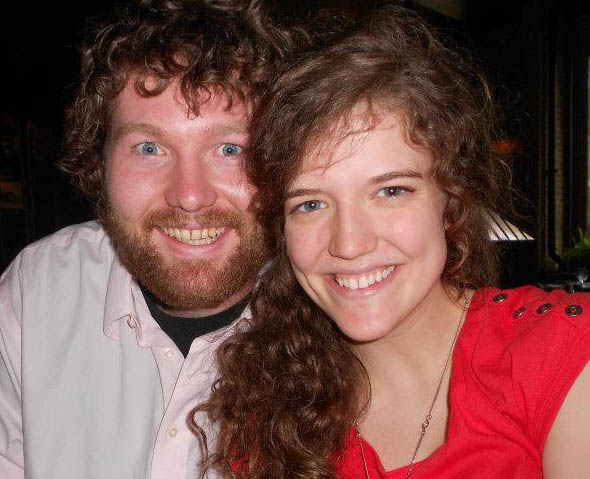 Kris and I could not be happier. Still, it is a bit of a queasy threshold, not something I’ve crossed before. So—a few reminders to help me get through the ceremonies, rituals and (self-inflicted) awkward moments:
- Check your fly. It’s up. Right?
- Breathe.
- The world changed dramatically the week Tess was born. Maybe it was because the Berlin Wall came down. Maybe because Tess showed up. I think the latter. But let’s just stay in the moment, shall we?
- Step forward.
- And again.
- Forget the four pages of detailed notes about life. These two are jotting their own notes now.
- Did I check my fly?
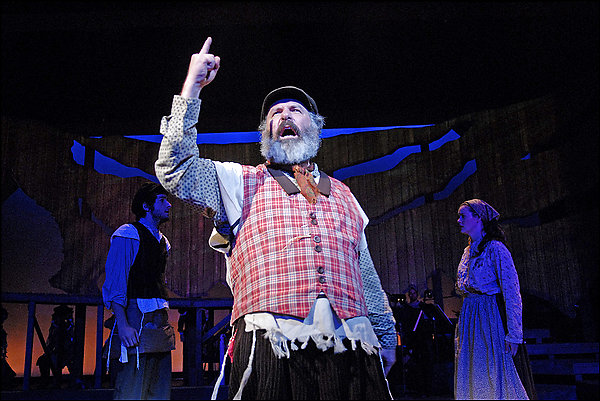
- Don’t stop mid-stride—Tevye-like—to sing out all the options. Others have a hard time holding their pose while I do that.

- Remember that something much larger is at work here, right before my eyes.
- Breathe.
- Wait—what’s that breeze?
Congratulations Tess and Nick!
###
Image Credit: Tradition Fiddler On The Roof
The Trap of Telling All You Know
The Benefits of Version 1.0

My Ignite experience reminds me that the goal of speaking is engagement, even above conveying information. Looking back, I tried too hard to say too much.
I have a much deeper appreciation for people who can pull off a compelling talk. And I realize these people work hard to be compelling. Preparation is much more about editing then writing. Then again, conveying excitement to an audience–could it be something of a gift? Maybe a gift that grows through practice.
But as Greg Flanagan said in his wonderful talk “Make Mistakes,” I’ll call this version 1.0.
###
Image Credit: via 2headedsnake
Livestream Ignite Minneapolis Tonight Starting at 7pm
I have an idea but just barely the guts to step on stage.
 I’m doing it anyway. Watch Ignite Minneapolis here starting at 7pm today (24 May 21012).
I just hope the Mighty Wurlitzer doesn’t rise from the depths before I get to Side 20.
Going to Church Today? Consider This.

expect a conversation that will help sort things
Probably someone will speak to the group—that’s typically what happens. And there will be singing. Prayers will be offered. You’ll shake a few hands. Maybe you’ll learn something new. Maybe you heart will be lightened. Your load lifted.
If heart-lightening or load-lifting happens, stop and think why. Was it because of magic words spoken from the pulpit? Not likely, as there are no magic words. But there are words that find a home in a person’s conscious thought and get absorbed there to do some work. One of the tests the old church fathers used to determine if a letter or text should be included in the Canon (our Bible today) was whether it had the power to change people—did the text speak with authority into a people’s lives? Did something happen because of hearing the text? When those old words get uttered from the pulpit today—they are not magic—but their truthiness has sticking power.
Just as likely: you meet someone who says something that affects you. Makes you think. Makes you reconsider an impending decision. And perhaps that same heart-lightening or load-lifting occurs. Sometimes we meet people who speak truth and it has the same effect.
And consider this: perhaps you go into that time expecting to hear something. What I mean is, sometimes we move into a situation actually expecting to hear something that could have the power to change how we think or act. You might call this listening. Or attentive listening. Or attenuated listening. Or listening on steroids. But whatever you call it, this is the most productive penultimate approach: listening with expectation. Then you pick up the tasty truthiness from any source.
###
Image credit: Douglas Smith via 2headedsnake
Is it Time You Wrote Your Autobiography?
I’m not writing one. Then again, who isn’t adding to their autobiographical material daily, whether with words or deeds?

but surely I am king of something
I’ve been reading the autobiography of R.G Collingwood, an Oxford philosophy professor of the last century. He set out to trace the outline of how he came to think—a kind of personal intellectual history. Early on in his life (at 8 years old) he found himself sitting with a philosophy text (Kant’s Theory of Ethics). And while he did not understand it, he felt an intense excitement as he read it. “I felt that things of the highest importance were being said about matters of the utmost urgency: things which at all costs I must understand.” (3) That reading set one course for his life.
One thing that makes this book worth reading is his notion of how questions and answers frame our production of knowledge. Collingwood said he “revolted against the current logical theories.” (30) He rebelled against the tyranny of propositions, judgments and statements as basic units of knowledge. He thought that you cannot come to understand what another person means by simply studying his or her spoken or written words. Instead, you need to know what question that person was asking. Because what that person speaks or writes will be directly related to the question she or he has in mind. This is incredibly useful when studying ancient texts—like a letter from the Apostle Paul, for instance. It’s also incredibly useful when listening to one’s wife (ahem), or a student or to anyone we come in contact with.
Another thing that recommends this book is hearing him tell about his main hobby: archaeology. Collingwood was the opposite of a couch potato. He spent a lot of times in digs around the UK, unearthing old Roman structures and then writing about them. Here too, he explained that while some archaeologists just set out to dig, he only set out to dig when he had formed a precise question to answer. His digging (tools, methods, approach) were all shaped by this question. By starting with a question, he came to very specific answers and, of course, other brand new questions.
Questions begat answers. And more questions.
What question is your life answering?
###
Image credit: J-J. Grandville via OBI Scrapbook Blog

 conversation is an engine
