Archive for the ‘Dumb Sketch’ Category
Why Work Out Loud?
Living out loud—even at work
Way back when our first child was born (lo these many years ago), back before there was language, when crying and inchoate grunts were the sum total of signals this small being could muster (along with unblinking stares), a strange communication pattern emerged in our household: narration.
Mrs. Kirkistan and I both found ourselves narrating in real-time to this youngster. His wide eyes and (relative) silence seemed enough to make us think he was curious about, well, whatever. We narrated pacing the floor at 2am (“We’re walking back and forth because someone is crying. But we’re not pointing fingers. No sir.”). We narrated cooking and cleaning. We talked about sitting on the couch and driving in the car. We told the story of outside—every window had a story.
It seemed to work if only because it was met with silence which we took for interest. Eventually he started narrating back at us.

Thank you, Veterans.
I’m reminded of this as I read John Stepper’s blog and anticipate his book, Working Out Loud: How to build a better network, career & life (Due Feb, 2015). Mr. Stepper makes the case that we do ourselves a favor when we “work in an open, generous, connected way.” The benefit is to ourselves and to others. Check out his “5 elements of working out loud.”
Lately I find myself talking more with clients about how they communicate internally and externally. I continue to see the emphasis wrought by free and open social venues (Twitter, bloggery, Facebook) working their way backwards into the way organizations conduct business. I predict more collaborative encounters and less monologue from a guy with a tie and a pen to sign your paycheck.
Stepper’s “working out loud” codifies some of that collaborative energy that rises like Spring sap with honest and open communication. I think of it as another perspective on the “dumb sketch” approach to life.
Narrating our day, asking for input, remarking on a remarkable idea—it’s all part of human contact and cannot be separated from the business of making meaning.
###
Image credit: Kirk Livingston
Five days ago I killed someone. I had to.
Lessons Learned: 9000 Words into NaNoWriMo

- She took her own life, which shocked me. Maybe it was the best thing to generate all sorts of electricity in the people around her. For instance, I’m learning Irvina was fierce, respected and disciplined. She was a steady, planful presence. She was empathetic, maybe because of her failed first marriage and potential underworld connections. And now my characters are starting to wonder: is she really dead?
- Dialogue makes stuff happen. It also uses a lot of words, which is perfect for keeping up with the 1667 word daily goal. As Tim and Philip talk, I’m seeing the fierce loyalty they have to each other, their business, and to the woman who (potentially? maybe?) died. I was surprised to find out that Philip was an entitled SOB, but still likable. Who knew?
- The way forward is already present. Even with only 9000 words on the page, potential story arcs are presenting themselves. I’m seeing the whole thing laid out, and it remains interesting.
- Someone stuck an oracle into a fold of my story. Franklin Delano Sjogren showed up as a calm, deep presence. Where did this guy come from? I really want to sit at his feet and learn from him. I sure hope he circles back into the narrative.
Most of my usual writing is essay: persuasive, informative, educational. My work writing for clients is generally marketing copy for ad agencies, the medical device industry and other industrial clients, along with thought pieces and book chapters.
So writing a story for National Novel Writing Month is a new thing for me. So far so fun—but I hope Irvina survived.
Where can I find 1000 words before midnight?
###
Image credit: Kirk Livingston
Making It Up Daily: 1667 Words at a Time
Do You NaNoWriMo?
It’s funny that those stories we’ve lived in since childhood were written by someone. Made up, one word at a time.
Books. Movies. Plays.
All made up.
By someone.
Writing.
Game of Thrones. Lord of the Rings. The Great Gatsby. Even Burt Dow, Deep-Water Man. All made up. Maybe they carried pieces of older stories, but someone composed them. We know the names of the authors.
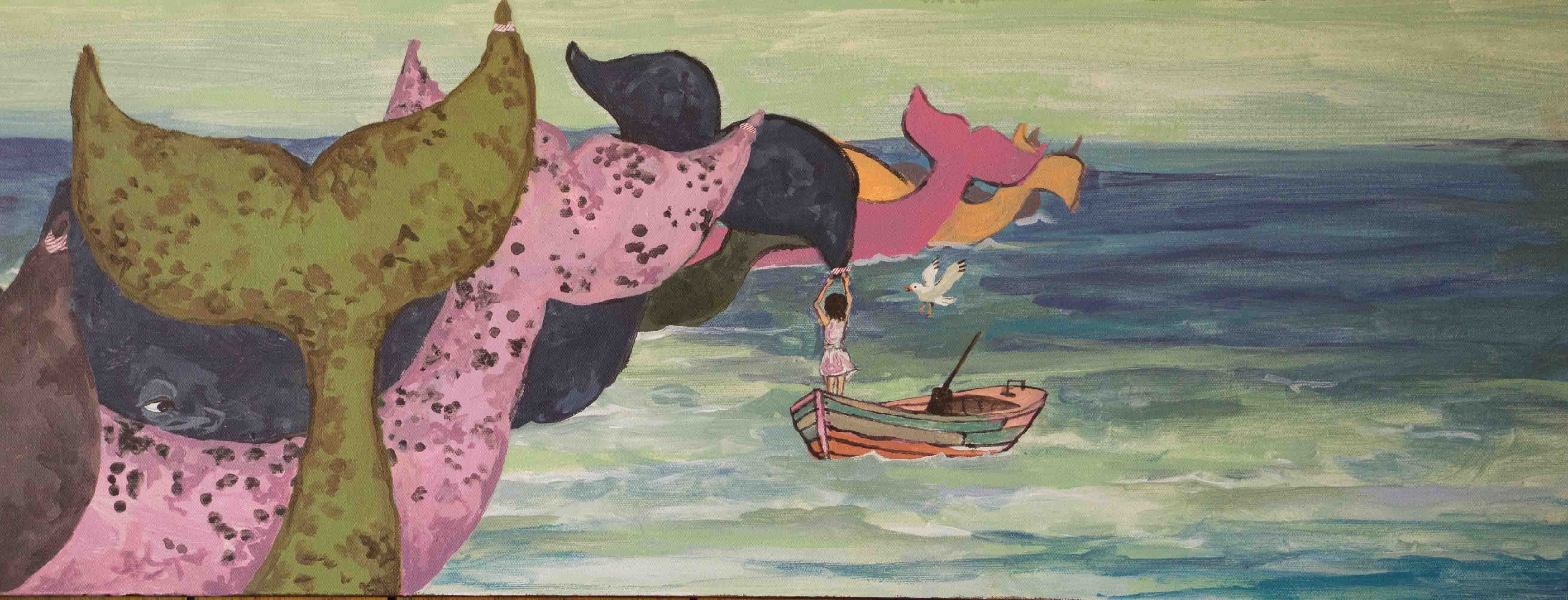
At some point in life I realized these very complete little worlds that seemed so alive were actually fiction. Funny that something made up could prove so real for so long. So concrete. But I had to pull back the curtain to realize this.
At some point—a bit later—I realized there was actually quite a lot made up: much of human interaction is made up (we call it “culture”). Oh sure, it presents as concrete reality, but behind the scenes people were literally making things up every day.
Business is a great example. Walk into a brick and mortar superstore and it seems like it’s been there forever. But we know they huge multi-million dollar inventories come and go. Same with banks. Same with restaurants—especially restaurants. Even the big institutions that are the pillars of our communities are making it up as they go. Sure, the rules of the game are there and seem to be unchanging as if handed down on stone tablets. But nothing is certain about business.
If you’ve ever been in a start-up company you’ll know that making it up as you go is expected. We need more folks willing to leap into the void of making it up. I believe making it up on paper translates to words which translates to action.
National Novel Writing Month is upon us again. And I’m joining in. It’s likely this blog will suffer inattention. But the challenge of creating a story from nothing (or more likely, from the disjointed and broken story-bits laying about in my mind and yours) is too great to resist.
National Novel Writing Month is a relatively painless way to try to produce a coherent story. Or, if not coherent, than at least something that has 50,000 words.
Where are you exercising your make-it-up muscle these days?
###
Image credit: Alli Livingston. Photo: Kirk Livingston
Should a Doctor Blog?
Only if they want to grow their practice. Or connect with other physicians. Or with patients. Or provide thought-leadership.
Greg Matthews, author of Missing the Forest for the Trees, has been studying the online presence of physicians for years. He’s found that the credibility of their position and the connections within that position can translate to large and devoted followings today.
But all that was counter-intuitive in 2007.
Back when Mr. Matthews was formulating his questions about physicians online.

Back then he was sure—we all were sure—that talking about health information online would never fly. It’s just too personal. What kind of nut would diagnose and prescribe in public/online?
Plus, well, HIPAA.
But some physicians found a way to talk with regular folks (that is, us non-experts who live on the web) about pressing topics. Diagnosis and prescribing on the web was a non-starter, but presenting topics in a way that made sense to regular people did happen. And as we all took to the web to sort our maladies, these authoritative, personal voices became trusted sources of information.
According to Mr. Matthews, today 61% of physicians access social media weekly, 5000 physicians post daily to blogs and Twitter, and 50 physicians are followed each by more than 500 other physicians. Some physicians even feel “ethically obligated” to share on the web. Download Mr. Matthews PDF for more stats.
In this blog (conversation is an engine) we talk about conversation. We’ve noted how conversation is a two-way street: not just in words exchanged, but actually causing conversation partners to go and do different stuff. We leave our best conversations changed and with new resolve for the most important things facing us. It’s a sort of speech-act theory for anyone willing to take a dumb-sketch approach to life.
And even physicians and even patients can gain from this. And what they both gain is far more than mere information.
It makes me wonder what paths might open for collaborative conversations in lots of different work settings.
###
Don’t Bother Me. I’m on Fire.
Too Busy: 4 Takes
- My contact is too busy to talk about collaboration: “Too many deliverables, scheduled too tightly.”
- Another colleague laments the lack of time to think ahead about the broader picture. She chides the constant race to get stuff done.
- A friend observing the inner-workings of a logistics department 2000 miles from where he was trained could identify key process components missing. The very components that created the immediate chaos the team waded through each day.


We earn our keep by being busy. None of us want the boss to wander by and say, “Fire up that keyboard/drill press/classroom/spreadsheet and get to work.”
Busy is always good.
There are no exceptions.
And yet:
- We lament “busy” but secretly get a buzz from opening the adrenalin spigot.
- Busy looks productive. But looks can deceive. We easily deceive ourselves with busyness.
- When taken out of action (for instance, when downsized/right-sized/laid-off/fired), we suddenly have time to ask:
- “Where am I?” and
- “What (the heck) am I doing?” and maybe
- “What was I thinking?”
- No one likes the off-balance, adrenalin-free stance of waiting, watching, knocking and waiting. Are we genetically predisposed to seek action? After all, aren’t verbs the action-heroes in our favorite writing?
It’s hard work to look at the bigger picture and make difficult choices about direction, use of resources, usefulness. And yet those are the very questions that help us move forward. As the wheel of seasons grind toward winter in Minnesota, we might take a page from the farmer’s playbook and let snowy fields lie.
Even on purpose: the fallow field may allow us productive time to consider what it means to be productive.
Versus just busy.
###
Dumb sketch credit: Kirk Livingston
Beware the Information Hoarders in Your Office
Collaboration opens as the sharing economy pushes back into your organization
Old-School Corporate Climbers held information and doled it out on a need-to-know basis. Knowing secrets was their key to moving up and sometimes they purposely withheld information so you might fail/they might succeed.
Maybe you know someone like this.
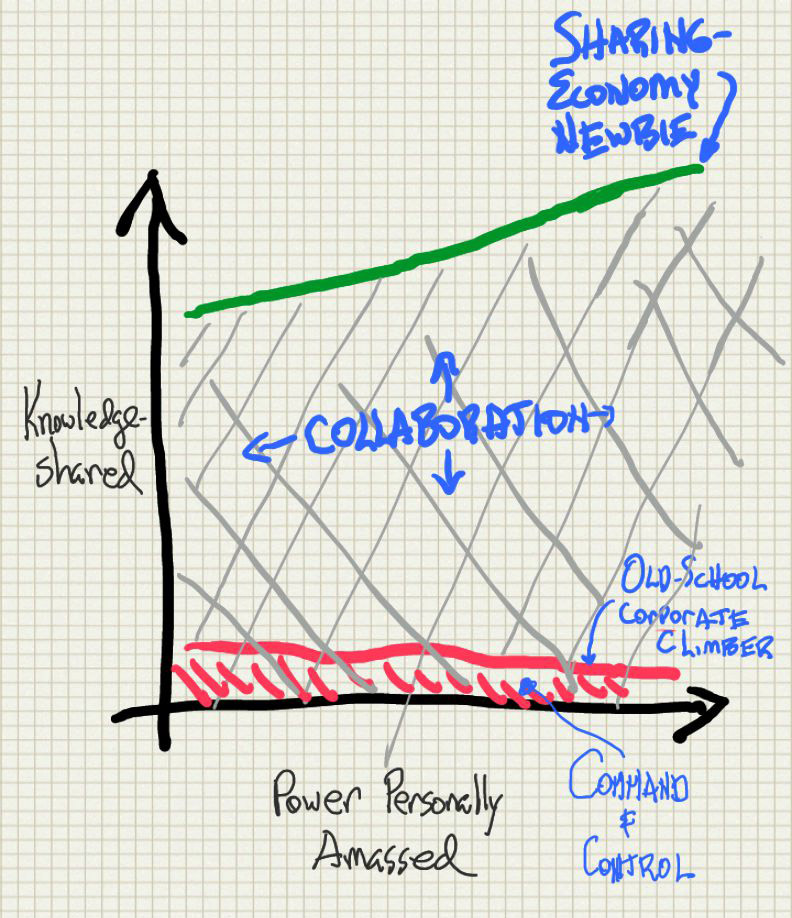
But as we watch the sharing economy slip free of social media venues and push back into organizations (simultaneously raising the expectation of being heard), I expect we’ll see another kind of corporate operative: the sharer. Maybe I’ll call that person the Sharing-Economy Newbie. In this new world of sharing information, the Sharing-Economy Newbie shares information freely and in a way that allows others to collaborate. The power the surrounds them will not be command-and-control power, it will be the power that invites participation.
Then again, human nature being what it is, there will always be information hoarders. Old-School Corporate Climbers will always find their way. But if we intentionally build cultures that reward information sharing and collaboration, the organization, its mission, and humanity are the big winners.
Maybe there are some who prefer a command-and-control culture of being told what to do at every turn, but there will be fewer and fewer every year.
###
Dumb sketch credit: Kirk Livingston
How to Make Your Message Permanent
A tip from a prehistoric consultant
First: Forget about it. Nothing is permanent—at least not in the way advertising mavens augur.
Second: OK—if you insist—make your message about someone else. Make your message give back more than it takes in. “GE” branded on a rock would never last. Even the Apple logo will be chiseled away by Microsoft rebels. But a man with jointed wings, well, who can resist that story?
![Who can resist the story about the “Thunder Being”?]](https://conversationisanengine.space/wp-content/uploads/2014/10/birdman-2-10022014.jpg)
Who can resist the story about the “Thunder Being”?
Prehistoric peoples stopped by these ancient rocks to tell their version of the human condition. So they carved/picked/incised/abraded their messages into the exposed Sioux quartzite outside Comfrey, Minnesota long before there was a Comfrey or a Minnesota or a U.S. of A. Maybe before the pyramids and Stonehenge. Ancients left messages here to direct and entertain passers-by.
Why make your message permanent? We understand marketing communications for companies—it’s about keeping the wheels of commerce turning. But you personally—what messages do you have to communicate? And why would you make them permanent? I argue that your take on the human condition comes out in the way you do your work, the way you interact with family, friends, colleagues, and even the way you see/refuse to see the homeless guy at the end of the exit ramp. And all these daily interactions amount to a carving and incising that is far more permanent than any of us imagine.

The Jeffers Petroglyphs tell a story that became a destination.
Our conversations have an enormous (cumulative) effect on the people around us. An effect that may move through generations.
What exactly is your message, anyway?
###
Image credit: Kirk Livingston
Your Office Needs More “Yes, and…” Men and Women
How to Grow Collaborators 1-2-3
- Share your first thoughts as if they were dumb sketches.
- Wait for—look for—and welcome reactions.
- Then say “Yes, and ….”
- Rinse & repeat.

Clear a space for your team.
You model commitment to collaboration by sharing your first thoughts. This dumb sketch approach to life makes you vulnerable and open to criticism. And there will be criticism. But vulnerability + time creates serious ballast around the notion of getting full engagement from all those around.
Your “Yes, and…” is the other shoe that drops to indicate you are also taking your colleagues seriously. It doesn’t matter whether your colleagues are bosses or employees, “Yes, and…” works up and down the corporate food chain. “Yes, and…” is your go-to reaction to ideas. People will gradually come to understand you think the world needs more ideas with legs and feet, ideas that accomplish stuff.
As kids we taunted each other with how sticks and stones break bones but words, well…you know. But it turns out words have a more complicated existence. In many respects, words have far more power than we ever guessed. And in this growing of collaborators, our words can make stuff happen out in the world (a “speech-act,” one might say). It only takes one committed collaborant (I think I just made up a word or re-purposed a French word) to begin to clear a safe space for collaboration. That space will invite collaborators, who become a nucleus to change a team, a group, an organization—and more.
How will you encourage collaboration today?
###
Image credit: Kirk Livingston
Young and Dumb Rocks!
The Case for Not Knowin’ Nothin’
Pity the expert: the Ph.D. who knows everything there is to know about a certain insect that preys on a certain crop. If she finds the right academic position—fantastic. But there are only three such positions in the U.S. and only one of those (tenured) people is close to death. So…a waiting game.

Feel sorry for the writer whose first novel got rave reviews or the artist who sold a massive installation on their first go-round. Expectations are steep for the next project and the pressure is on.
In conversation with a friend at work, I heard my younger self admit to a life-goal of wanting to, finally, know something. But knowing with certainty becomes harder with every book read and every conversation you have. In fact, the more you read any philosophy or wisdom literature, the more you get the sense of “knowing” as a shy and elusive pot of gold at the end of a rainbow.
That’s why it’s good to attempt the impossible while still young, before you realize it is, in fact, impossible. Quick—try that thing you want to do before someone sets you down and sets you straight about how ridiculous it is you are even considering it.
Another alternative is to cultivate a young and dumb attitude no matter what your age in dog years. Even the Ph.D. is a beginner at something. The beginner just wants to try it for themselves.
Let’s cultivate the joy of a small hand with a big fat crayon, exploring the world.
###
Image credit: Kirk Livingston
Mind-reading and the Perfectionist’s Dilemma
“Come here, you big, beautiful rough draft.”
You know what needs to be done.
You know how to do it.
But—given your schedule—you simply cannot attend the details. What you want is to jump to editing the rough draft—but who’s got time to create that rough draft?
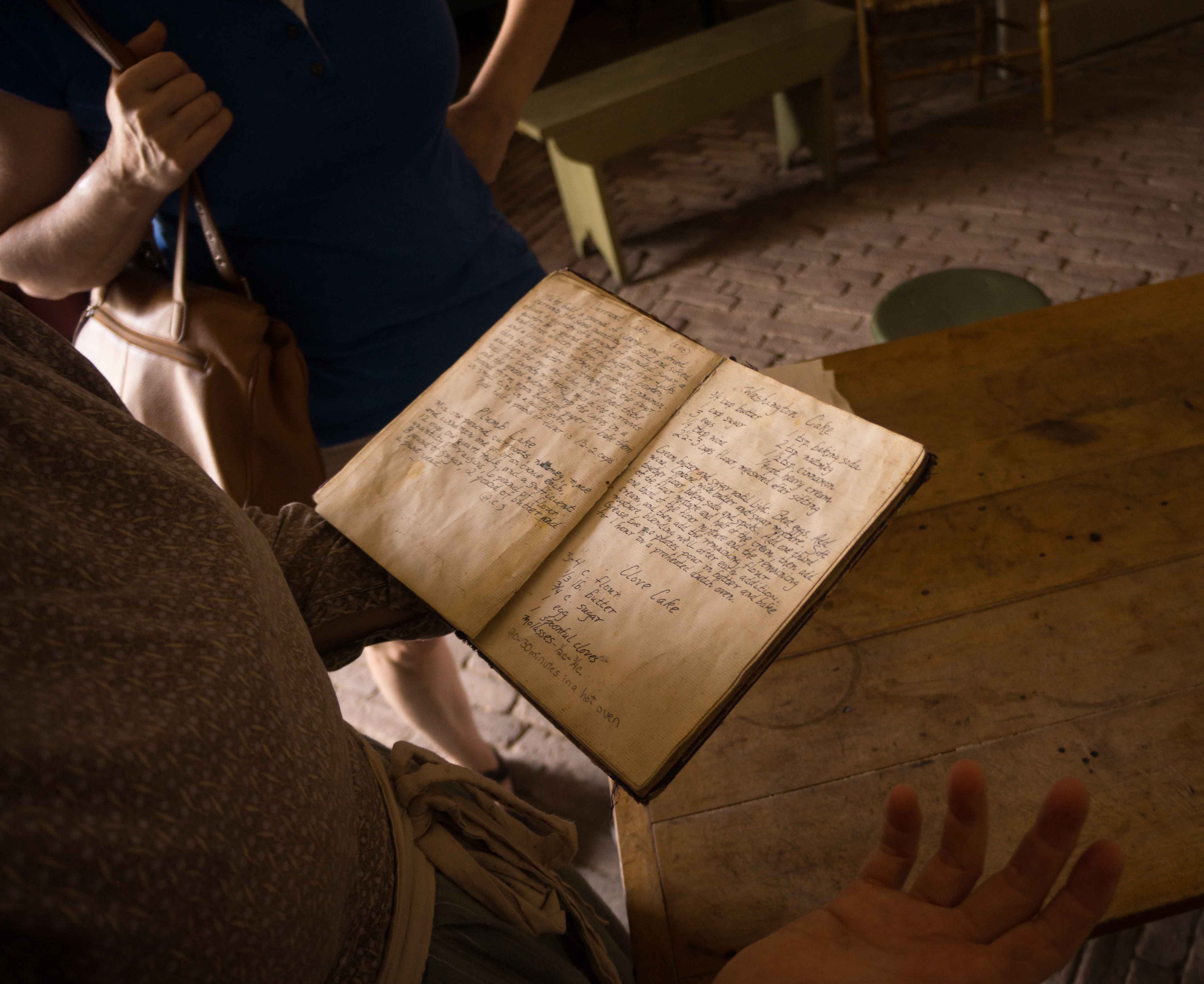
This is what I’m thinking….
We could be talking about drafting an email, an article or a chapter. We could be talking about a curriculum for a class or a seminar. We could be talking about writing a memo to employees or a letter to partners or a speech to stakeholders—anything that requires focused attention for a time so you can spin out and organize the details. We’re talking about anything you need to create from scratch to deliver to others. Any communication that solves a problem you’ve noticed.
Now is when you need an assistant who can move forward without hand-holding. Now is when you need someone who knows what you know without you telling them. Now is when you need a mind-reader.
But there are no mind-readers.
Are there no mind-readers?
I won’t say copywriters are mind-readers. I will say I find myself in situations every week where my client has provided 15-25% of the details but expects our project to organize 100% of the content in a coherent, compelling fashion.
Sometimes I wonder if our close friends, colleagues and collaborators serve as near-mind-readers. With them we feel free to spit out the raw bits of what we know. And as we say it, we realize what we need to do next. To tell someone what is on our mind is the first step to accomplishing a task. Those conversations are a kind of verbal rough draft.
Don’t be intimidated by the blank page. Embrace the notion of doing something mostly wrong and partly right, which is to say, embrace the rough draft.
It is much easier to change words on a page than it is to put words on a page.
###
Image credit: Kirk Livingston

 conversation is an engine