Archive for the ‘Dumb Sketch’ Category
Garry Trudeau Writes Essays. His Essays Look Like Comics.
Garry Trudeau Writes Essays That Get Read.
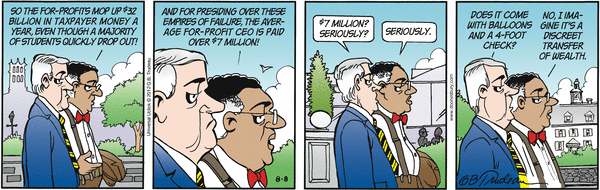 Garry Trudeau has been writing essays for as long as I’ve been reading comics. His essays get read because they are peopled with, well people. Characters. Hand-drawn characters. We call his essays a comic strip. Comic strips are easy to read. Essays are hard to read and boring—unless they are comic strips.
His current essays on for-profit colleges make me want to run out and check facts, though the tone resonates with what I’ve seen. But Trudeau is a master at breaking facts (and innuendo) into panel-sized chunks. How I could do that with my essays is worth thinking about.
###
Via Slate
Never Say This To Your Boss On A Monday
“Easy, Peterson. We’re in mixed company.”
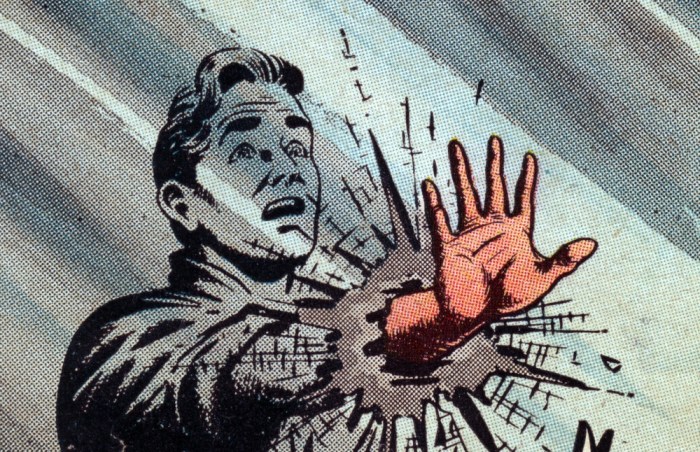
Unless your employee figures “Why” for themselves
Certain words and phrases race from useful to cliché within an hour-long meeting. Just check out this list of 89 clichés, many of which you’ll likely hear today. Other words carry so much heavy baggage that when your VP says them, the air in the room suddenly seems carbon monoxide-heavy and people start to drift.
This word is among those problematic words.
It’s a common word. So common, in fact, that when uttered aloud it brings to mind exactly…nothing. This word is invisible.
“Strategy.”
Three of us have been talking about why it is so many clients see strategy as something hammered out by a few bosses in the back room—or simply as a complete waste of time. These organizations reward a “bias toward action,” which looks like lots of activity, lots of people staying late, lots of emails on Saturday and Sunday, without lots of results. Too often all that activity is at cross-purposes across an entire organization eager to prove their bias toward action.
The three of us would like to rehab the concept, but not the word itself. Our rehab efforts consist of breaking the concept into component parts that become as sticky as a five-year-old’s wonderment: What? Why? How? Simple stuff. But when approached directly, these words become profoundly effective tools for guiding teams and organizations and, especially brands. Incredibly useful words not just for giving instructions, but for engaging someone’s emotion and intellect. The first order of rehab is to include all three components. The second order of rehab is tell the straight story about each—without cliché, with clear endpoints. And that means end points that others can see if they get done (or not).
We’re starting to believe that managers who major on the “What” or “How” without telling “Why” are getting employees to feel OK running about on impulse drive without ever taking their work to warp speed. Of course, it is possible the manager still feels knowledge is power and to withhold the “Why” is a way to maintain that power. Impulse drive is all they’ll ever get.
Unless.
Unless their employee figures out the “Why” for themselves. Unless the employee finds a way to put meaning into their work on their own. Unless the employee learns to engage in the kind of dialogue that helps a group move forward.
I hope to write more about this. The topic includes lots of working parts: leading from anywhere in an organization, learning to help a boss ask the bigger questions without disappearing down the rabbit hole of industrial strength strategy/BS sessions, helping each other grow into people who care and do our best. And many more.
Oh—and the third, most important order of rehab: courage. The whole thing needs to be stirred up by people willing to share their dumb ideas. Because sometimes dumb ideas produce solid, cogent, meaningful results, despite the awkward moments along the way.
###
Image Credit: 4CP via thisisnthappiness
Copywriting Tip #3: Words + Images (Think Visually)
How To Think Visually?
Exhaust your brain with mad thinking not lazy searching
Thinking visually and combining words and images is something of a kaleidoscope experience. Especially for the English major. These folks love words and regularly ask them to leap and dance and bite and romance. English majors have been going steady with words for years. I’m asking these people to see others—but it’s not about two-timing your fascinating Helvetica friends. Just add an image to the mix and step back: did the image just comment on the words—or vice versa? Did the words explain the image? Or did the words supply a subtle subtext that subverted the image? Or vice-versa? Now we’re spinning the kaleidoscope and it is all sorts of (kinda nerdy) fun.
Hint: Don’t Start With The Google Machine.
The temptation is to type your first thought into the search bar and see what images pop. This lazy approach will be at least mildly amusing and completely distracting for the next 73 minutes. There is a more productive way to begin: pen and paper. Any number of artists and writers will tell you that working through potential ideas in the isolation of a blank page helps you focus. The drill is to do it again and again. Page after page. Hour after hour. Until you can’t stand it anymore. From all that terrible, worthless dreck that you would never show your mother let alone the cute human in your Classics class, pick the two or possibly three that don’t make you wretch. That are kinda ok. Google those.
The key is to get your brain working and keep it working long enough that your subconscious takes up the project, freeing you to walk around the lake or pull a prank on your roommate.
You will produce something in this manner.
Try it and tell me if it worked.
###
Image credit: Maximum stacks/Creative Review via thisisn’thappiness
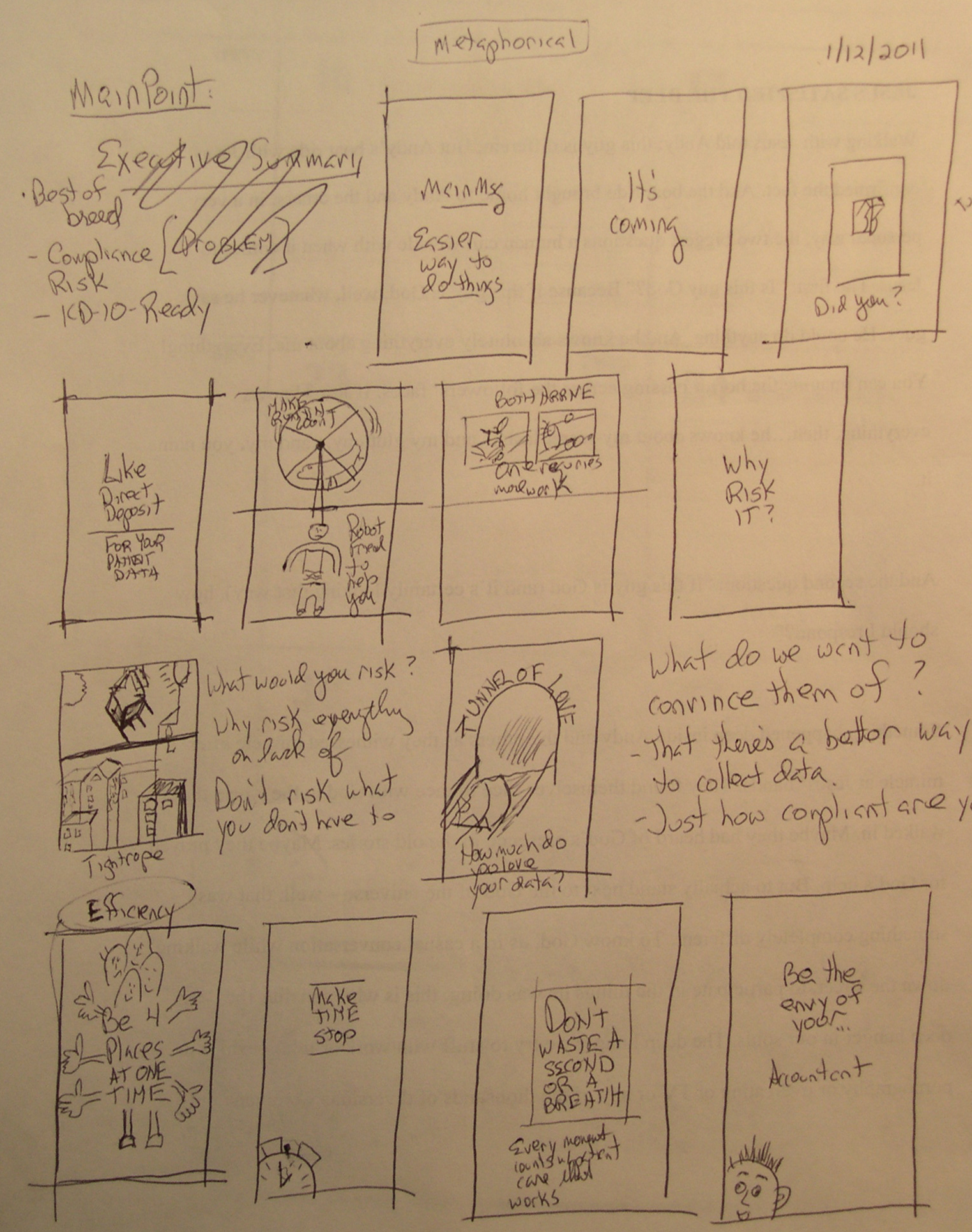
Below: dreck. Maybe an ad came from it. Maybe not.
David Bohm: When is Empty Talk Full?

Someone may be home.
Some time ago there was an anthropologist who lived for a long while with a North American tribe. It was a small group of about fifty people. The hunter-gatherers have typically lived in groups of twenty to forty. Agricultural group units are much larger . Now, from time to time that tribe met like this in a circle. They just talked and talked and talked, apparently to no purpose. They made no decisions. There was no leader. And everybody could participate. There may have been wise men or wise women who were listened to a bit more–the older ones–but everybody could talk. The meeting went on, until it finally seemed to stop for no reason at all and the group dispersed. Yet after that, everybody seemed to know what to do, because they understood each other so well. Then they could get together in smaller groups and do something or decide things.”
—Bohm, On Dialogue (p. 19)
###
Image Credit: 2headedsnake, jeremie decalf
All Things Awesome
 In the realm of how we talk with each other, Wayne Booth saw three options: convincing someone of our position, bargaining for concessions or listening to “pursue the truth behind our differences.” But what if we knew something even more stunning than the ingredients of Hahn beer? That would be an example of reconciliation-rhetoric: listening + naming what’s awesome. ( Via Adland TV )
###
David Lynch, Creepy Coffee and the Power of Suggestion
Your slowest four minutes today
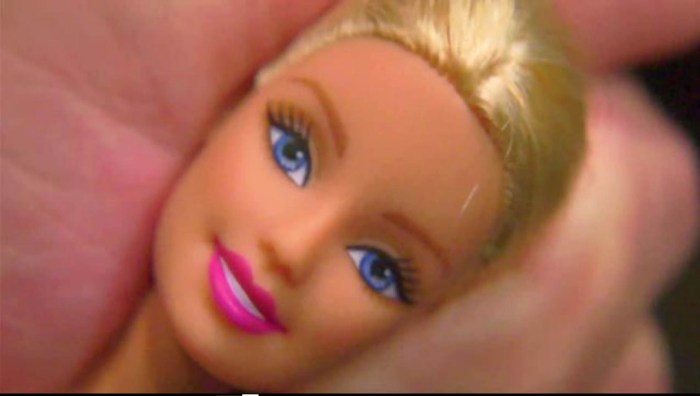
Just stand me in a cup, please.
David Lynch, as famous for swearing off marketing (literally!) as he is for making powerfully unsettling films, has his own coffee brand. His marketing is, well, unsettling. But it is marketing (proof: I’m passing it on. Oy! I’ve fallen for his demented plan.)
A couple days ago I wrote about how the power of suggestion helps my audience show me mercy as I show them my dumb sketches even as they fill in the blanks with their own story. It’s the power of suggestion: we cannot help but begin a story with every image we see. Writers have known this for years: using certain words and phrases that hint at something much more ominous (or much more glorious) without actually saying it. Copywriters love this tool.
In this slow-moving commercial, listen for the pauses even as you listen for the words. I found myself remembering from the video how much Barbie seemed to like me (especially ~ 1:50). Then I remembered BARBIE IS A DISEMBODIED HEAD WITH DAVID LYNCH’S VOICE.
Where and how have you been affected by the power of suggestion?
###
Do a Dumb Sketch Today
Magnetize Eyeballs with Your Dumb Sketch
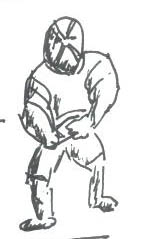 As a copywriter, I’ve always prefaced my art or design-related comments with, “I’m no designer, but….” I read a number of design blogs because the discipline fascinates me and I hope for a happy marriage between my words and their graphical setting as they set off into the world.
But artists and designers don’t own art. And I’m starting to wonder why I accede such authority to experts. Mind you, I’m no expert, but just like in the best, most engaged conversations, something sorta magical happens in a dumb sketch. Sometimes words shivering alone on a white page just don’t cut it. Especially when they gang up in dozens and scores and crowd onto a PowerPoint slide in an attempt to muscle their way into a client’s or colleague’s consciousness. Sometimes my words lack immediacy. Sometimes they don’t punch people in the gut like I want them to.
A dumb sketch can do what words cannot.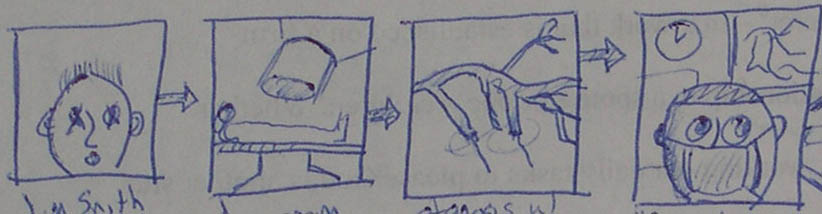
I’ve come to enjoy sketching lately. Not because I’m a good artist (I’m not). Not because I have a knack for capturing things on paper. I don’t. I like sketching for two reasons:
- Drawing a sketch uses an entirely different part of my brain. Or so it seems. The blank page with a pencil and an idea of a drawing is very different from a blank page and an idea soon to be fitted with a set of words. Sketching seems inherently more fun than writing (remember, I write for a living, so I’m completely in love with words, too). Sketching feels like playing. That sense of play has a way of working itself out—even for as bad an artist as I am. It’s that sense of play that brings along the second reason to sketch.
- Sketches are unparalleled communication tools. It’s true. Talking about a picture with someone is far more interesting than sitting and watching someone read a sentence. Which is boring. Even a very bad sketch, presented to a table of colleagues or clients, can make people laugh and so serve to lighten the mood. Even the worst sketches carry an emotional tinge. People love to see sketches. Even obstinate, ornery colleagues are drawn into the intent of the sketch, so much so that their minds begin filling in the blanks (without them realizing!) and so are drawn into what was supposed to happen with the drawing. The mind cannot help but fill in the blanks.
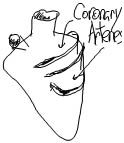
The best part of a dumb sketch is what happens when it is shown to a group. In a recent client meeting I pulled out my dumb sketches to make a particular point about how this product should be positioned in the market. I could not quite hear it, but I had the sense of a collective sigh around the conference table as they saw pictures rather than yet another wordy PowerPoint slide. In fact, contrary to the forced attention a wordy PowerPoint slide demands, my sketch pulled people in with a magnetism. Even though ugly, it still pulled. Amazing.
###

 conversation is an engine