Archive for the ‘Opportunity’ Category
Try “Yes, and…” Today
Let there be a Science of Deep Collaboration
When I hand out a group project in my writing class I hear audible groans.
It’s because we’re trained to work at things on our own—that’s how scholarship and schoolwork and academics have worked for a long time. The groans come from all the extra work of communicating and all the expectations around not knowing if others in the group will keep their end of the group-work bargain. The groans come from the anxieties that hover around roles and responsibilities and knowing you’ll have to sell your ideas.
I am eager for new and deeper research into collaboration. Let’s call it a Science of Collaboration. Maybe it is a social science. People like Keith Sawyer and Edgar Schein are moving this science forward—along with many others. I am fond of the work Patricia Ryan Madson has done around Improv, which seems the perfect gateway for anyone to learn the fun of collaboration. And Keith Johnstone seems to have spawned many thinkers along these lines.
 I’d like for this science to do (at least) two things:
- Invite people in who have been working alone for forever. But gently, and independent of the introvert/extrovert divide. I want the invitation to show the fun of the process. I want that invitation to promise more aha moments and then to quickly deliver on that promise.
- Show next steps to working together. What can an ad hoc team do to quickly get grounded enough to toss ideas that build on each other? There are techniques out there, certainly, but I’d like this to be second nature, part of our emotional intelligence, something we come to expect. Something we’ve grown up with.
“Yes, and…” seems a perfect place to start. This is the old improv notion of building directly on what the last person just said. And quickly, without lots of deliberation. It requires a certain fearlessness.
What if “Yes, and…” was built into our educational DNA from grade school up?
###
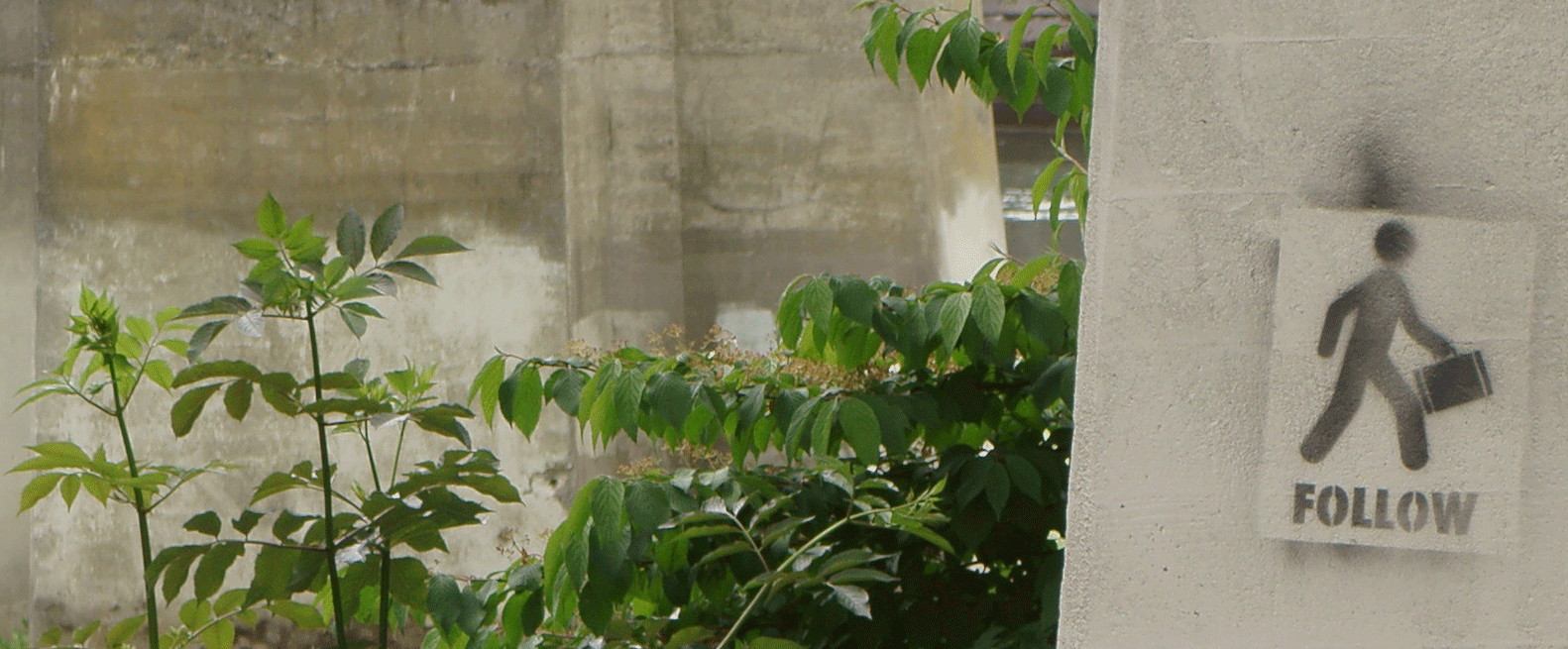
Image credit: Kirk Livingston
Writing finds its own audience
Except: Even God had a hard time holding an audience for long
My cousin is a big cheese in the world of women’s studies. She’s published a number of books and teaches some pretty astute, high-level stuff to aspiring Ph.Ds. Once we talked about why anyone would write and what’s the point, after all, since fewer and fewer read. (By the way: I always say this to my classes, that even a paragraph of copy scares many of us. All those words, they’re just, well, so much work.)
My cousin said something to the effect that you’ve got to believe your writing will find its own audience. That is a perceptive statement and I’ve wrestled with it since. I think it is true. I hope it is true. And I know it is false—at least immediately.

Meh. Another Sunset.
Social technologies and search let more of us find our long-lost cousins and brothers and tribesmen—the ones we never knew existed. We find them because they speak our language, possibly with our own words. And we know them because they are passionate about our topics—the stuff we think on constantly. (“You write about garlic butter too? You are my brother!”)
It’s just that it may take a long, long time for that audience to co-locate to your web address or your part of the bookshelf. Of course we hear and read stories of the overnight success folks, who start a blog on Saturday and by Tuesday they are talking with Oprah. But for more of us, we tell our stories and organize our arguments and spin them out into silence. But we must continue on with diligence, continuing to tell the story, as if keeping the porch light on, waiting for that audience to show.
There’s an old story about God giving his words to a guy and telling him to say the words. But know that no one will listen—you’ll be banging your head against a brick wall most of the time. And it’s all going to end badly. But those words will take root. And those words will blossom.
Eventually.
And over time the audience did show up.
And we’re still reading those words today, lo, these thousands of years later.
###
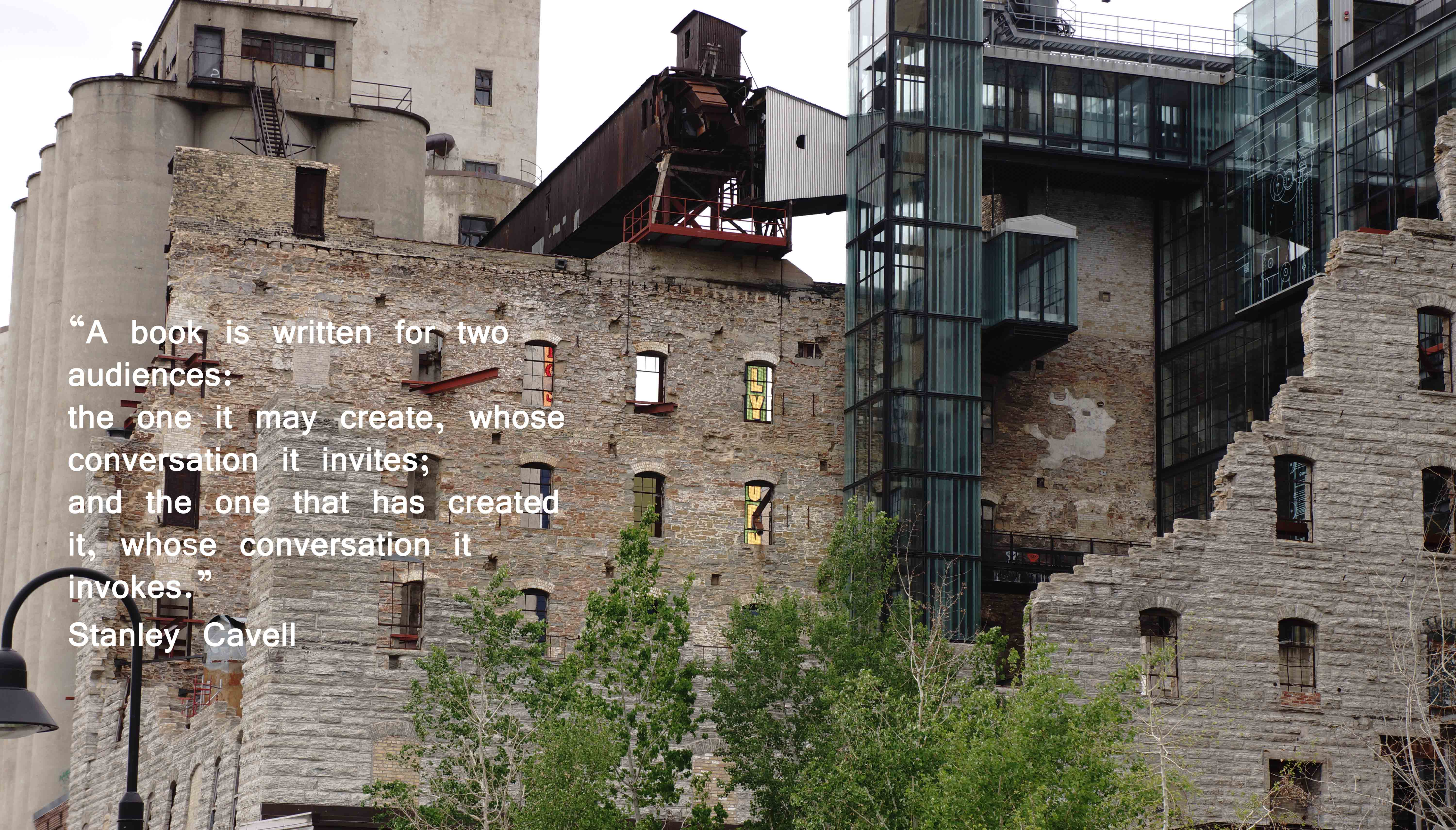
Image credit: Kirk Livingston
Listening has an Ugly Step-Sister: Waiting
Surprise: She Has a Lot to Say
The problem with listening has always been the other person talking. When will they stop talking so I can talk about myself and my interests? You know—the important stuff.
And so we wait.

Turns out there are lots of opportunities to wait in life. Beyond waiting for our turn to talk or the sheets to dry, there are lines at the grocer, lines for on-ramps, waiting for Netflix to load, waiting to get a job/spouse/house/liver/reprieve/break/two-bedroom spot in the nursing home.
What we do while we wait—that’s key. Some say stay busy. Some say pray (seems a good strategy to me). Some say stay curious. Some say pursue your passion.
And then there is listening
Listening while you wait.
Intently.
Deep in the spinning cogs and meshed gear-works of waiting there is a mechanism that also tunes interest. If I listen intently I may just see my desire shift ever so slightly. I scraped and saved for years for a new car but when I had the money, I realized desire shifted: I didn’t want to spend it on the new car. A used car does fine, and I’ll spend that savings for the other thing that became important in the meantime.
Is this partly how prayer works: deep desire and constant asking followed by shifts in desire and asking that turns to listening?
When we wait we are ripe for deep listening.
What are you hearing while you wait?
###
Image credit: Kirk Livingston
Keith Sawyer: Surprising Questions Emerge
Where will you find transformative creativity?
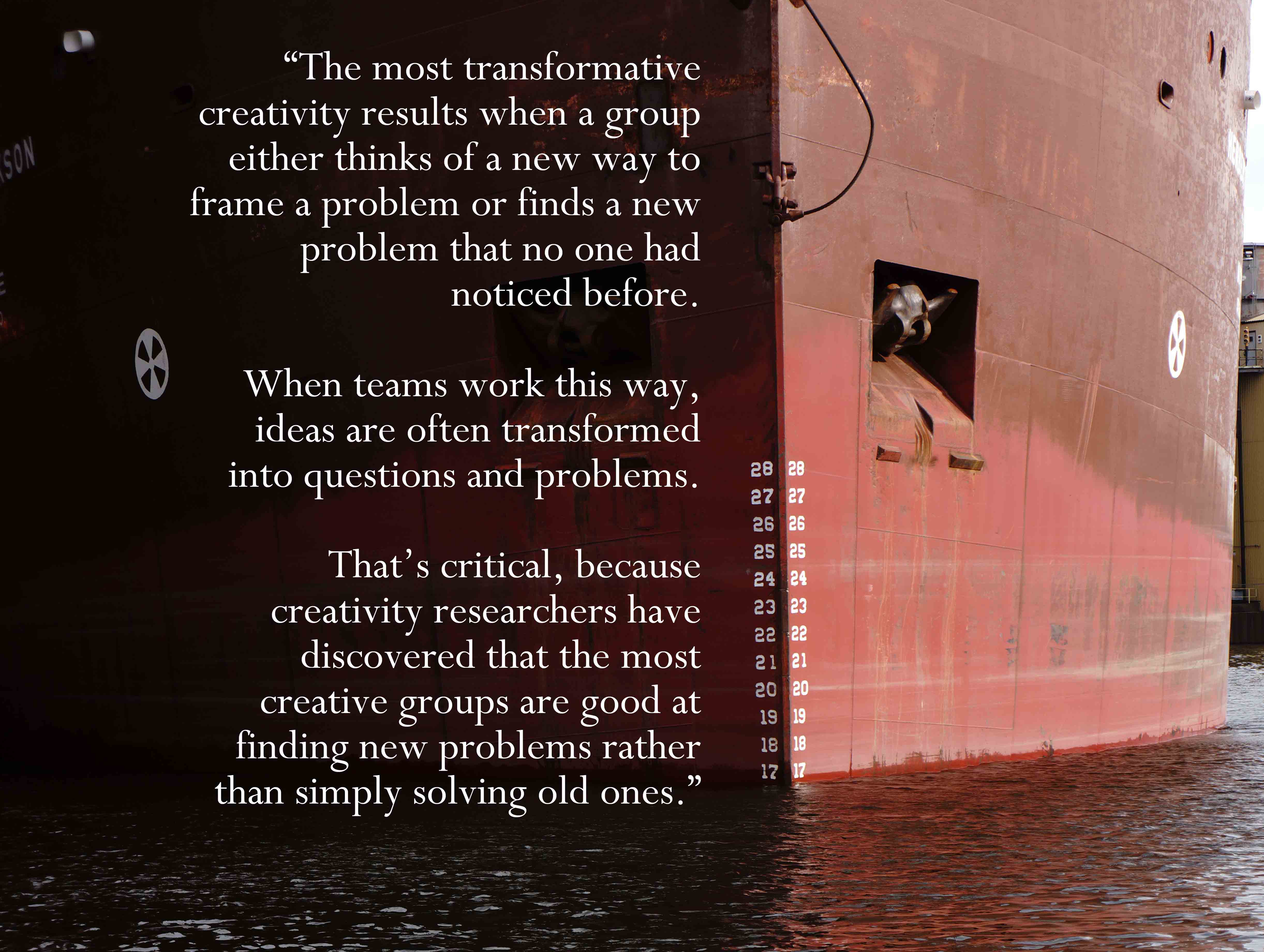
–Keith Sawyer, Group Genius: the Creative Power of Collaboration (NY: Basic Books, 2007) 16
###
Image Credit: Kirk Livingston
Planning for Moments Vs. Mapping a Strategy
The 5-year plan is dead. Long live the 5-year direction.
Once upon a time teams of corporate lackeys spent months writing strategies for one-, two-, and five-year plans. They smoked unfiltered Camels and crunched numbers and drank stale coffee to help guess about future sales, using only the flimsiest of data points. They produced thick binders full of prose and charts and graphs and tables of numbers that anticipated revenue and profit. It’s quite possible someone even read those binders. More likely: those in the C-suite who ordered it all just listened to the executive summary and nodded in agreement.
As one does.
 Those binders went on to live rich, full lives on sacred shelves. Silently wise and knowing. Until, over time, the strategies gradually got it wrong more often than getting it right (had anyone read them to notice). Predictions have never been a strong suit for ephemeral beings like humans. Especially today when technology seems to refresh every few months—complete with a new set of expectations and parameters. Especially as the economy rises and falls like sea swells.
Where does that leave strategy today? It is impossible to see into the future so we got good at guessing. And we told ourselves to make the future the way we wanted it—as best we can. To step toward the future we’d like and maybe that future will meet us halfway.
Today there are far fewer teams guessing what will happen in five years. But those organizations doing well have taken the forward-looking aspect of planning and planted it as a direction. Given our direction of travel, what moments may arise that we can take advantage of?
Today our smart friends are planning for moments that occur along the path they’ve penciled in. Everything subject to change, of course. But if all goes well: this is where we want to be.
Today we must plan for serendipity.
###
Image credit: Kirk Livingston

 conversation is an engine