Archive for the ‘photography’ Category
What Did You Forget Today?
Welcome to Monday—what brings you here?
On your way to work—whether by train, plane or automobile (or stairs)—your mind raced ahead to anticipate the tasks needing attention. You passed by and through spaces not dedicated to the work you do: the incidental scenery along the way. Liminal spaces. Preoccupied with your onerous task (the meeting to conduct, the performance review, the estimate/report/files due by 11am), you may not have noticed those places. Anyway: aren’t they just the ugly, industrial infrastructure or detritus required to make the big commerce machine run?

Not really worth attention.
But those spaces have a way of releasing you and possibly preparing you for the very work you are doing just now. Those spaces—so regularly ignored as to become invisible—help your mind and body make the leap to the world of productivity. Moving forward through those spaces you shed thoughts and instincts from the weekend so you can adhere to hierarchy and care again about what your company cares about. Maybe those quickly-passing-spaces even erase the resolve and wonder built up over the weekend.
And welcome to Monday.
But it’s not good to forget lessons learned from the quiet of the weekend. Even hard-partying readers—I hope—found margin for reflection. Don’t leave those reflections and fresh understandings at home on the kitchen table. Bring them with you.
For me, a long conversation with this poet/psalmist has created a specific resolve that I hope will flow through this week. A boat-ride in the September sun and a story about a daughter in a far-away land cooking a Minnesota meal for the nationals—all these have a sort of sustaining power.
I’m eager to bring these with me into the week, right through the liminal spaces of my transit. In fact, now I wonder if the liminal spaces of experience are the very stuff of a full life.
###
Image credit: Kirk Livingston
Just a Cow. But a Focused Cow.
Clearly ruminating on the existence of mini-donuts–something we all wonder at.

###
Image Credit: Kirk Livingston
Doing Versus Planning To Do
Stay close to the work

Man is after all a finite being in capacities and powers of doing actual work. But when it comes to planning, one mind can in a few hours think out enough work to keep a thousand men employed for years.
McCullough, David. The Great Bridge (NY: Simon and Schuster, 1983), 381. Quoted in Berkun, Scott. The Year Without Pants (San Francisco: Jossey-Bass, 2013), 67.
###
Image Credit: Kirk Livingston
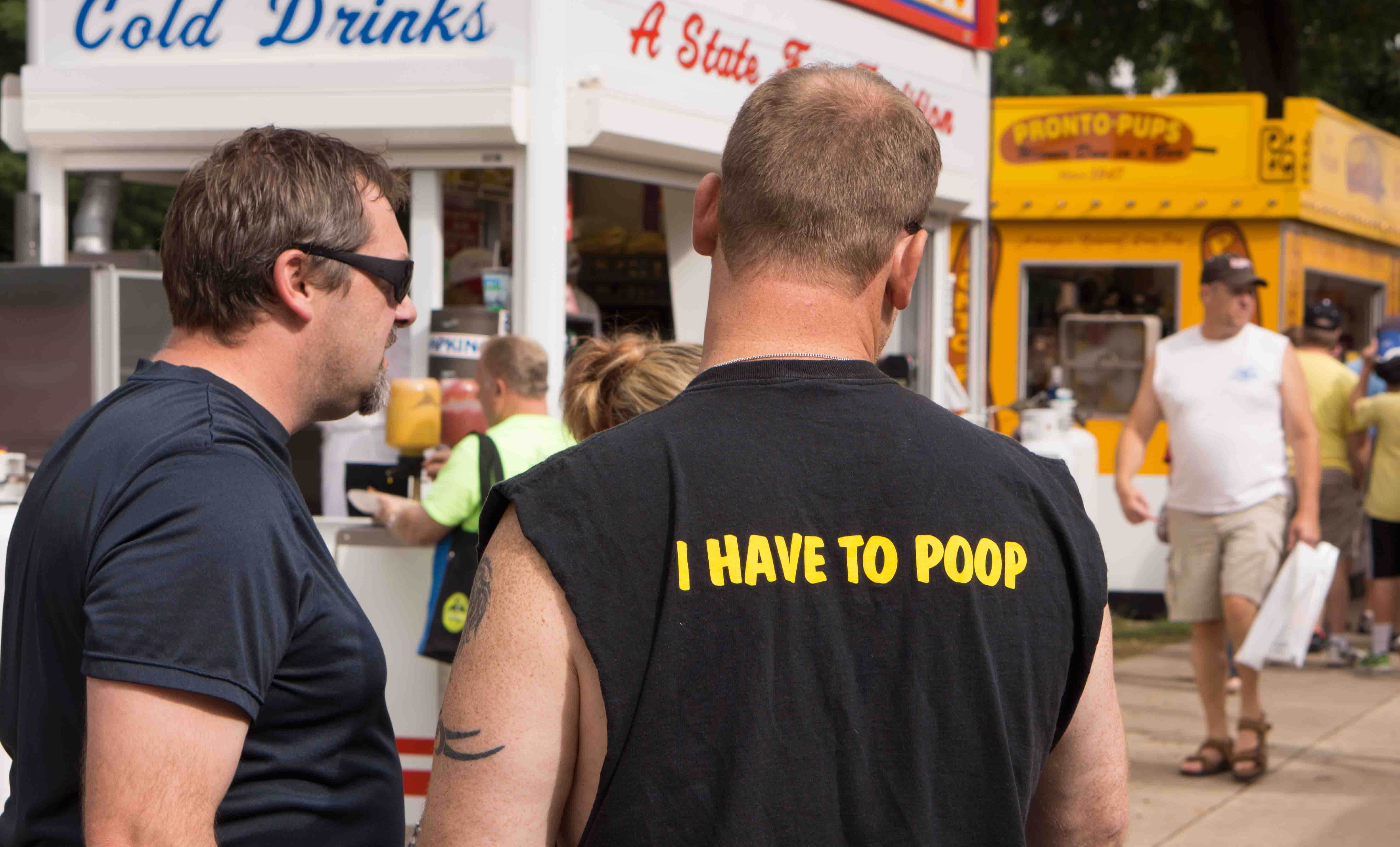
Who Said Minnesotans Hold Things in?
Thanks for (over) sharing.
###
Image Credit: Kirk Livingston
The Post Office is Closed Today
And yet labor continues.
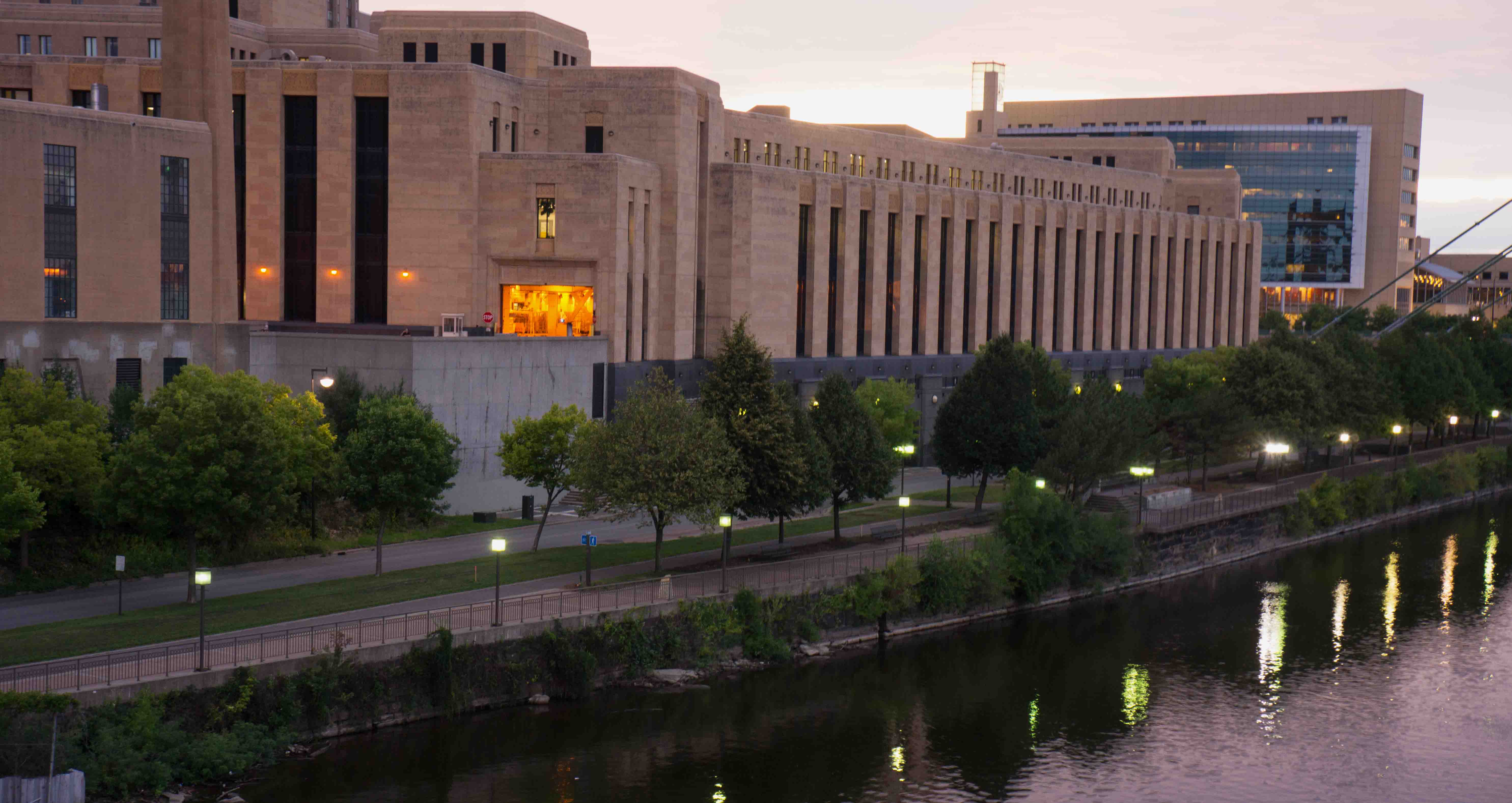
Ministry of Mail
###
Image Credit: Kirk Livingston

Young and Dumb Rocks!
The Case for Not Knowin’ Nothin’
Pity the expert: the Ph.D. who knows everything there is to know about a certain insect that preys on a certain crop. If she finds the right academic position—fantastic. But there are only three such positions in the U.S. and only one of those (tenured) people is close to death. So…a waiting game.

Feel sorry for the writer whose first novel got rave reviews or the artist who sold a massive installation on their first go-round. Expectations are steep for the next project and the pressure is on.
In conversation with a friend at work, I heard my younger self admit to a life-goal of wanting to, finally, know something. But knowing with certainty becomes harder with every book read and every conversation you have. In fact, the more you read any philosophy or wisdom literature, the more you get the sense of “knowing” as a shy and elusive pot of gold at the end of a rainbow.
That’s why it’s good to attempt the impossible while still young, before you realize it is, in fact, impossible. Quick—try that thing you want to do before someone sets you down and sets you straight about how ridiculous it is you are even considering it.
Another alternative is to cultivate a young and dumb attitude no matter what your age in dog years. Even the Ph.D. is a beginner at something. The beginner just wants to try it for themselves.
Let’s cultivate the joy of a small hand with a big fat crayon, exploring the world.
###
Image credit: Kirk Livingston
Getting Things Done: Better Call Agent 007-0827
Or should we call a prayer meeting?
“Agency” is a word for getting something done. In a philosophical sense, it is the capacity to act in the world. It has to do with choice-making and accomplishment and focus—especially focus. We hire an advertising agency when we need to offload some critical marketing element and make sure it happens. That agency accepts the mission and acts. And so we pay their fee.
Why hire agency? Because we don’t have the capacity to do it ourselves, whether that means talent or headcount or time or interest or focus or all of the above. But the critical thing needs to be done and must be done. So we get someone we can trust to do it. There is an entire industry set up around the notion of getting things done. Time management is always a hot topic for any gender in business or academia and in the rest of life.
But agency has a tricky theological side. Even non-theists debate determinism versus free will. And Christians, well—we’ll kill each other over our views of how the world works. Just find an Anabaptist and ask how their minority voice was received by their determinist rulers, way back when.
Why bring in theology when talking about getting things done in real life? Isn’t theology the useless opposite of getting things done here on earth?
Yes.
And, No.
Because while we can accomplish much with our time-management techniques, there is much outside our ability. Like changing someone’s mind. Or opening long-closed doors. Or protecting oppressed people from their brutal dictator. Or helping a nation care about all its citizens (versus just the privileged ones).
What the time-management industry does not answer and cannot answer is how to work with these very large questions that deal with agency in the larger world. So we back off and shut down and feel guilty.
Can we pursue agency that sees and acts on larger things? Some of my heroes are doing this and their agency consists of some combination of prayer and action and faith and presence.
###
Image credit: Kirk Livingston
Let’s Get Liminal: How to be a Co–Laborer/Co-Thinker/Co-Contributor
Show up to explore the space between
My friend helps researchers at his Midwestern university organize their thoughts for publication. He also helps them apply for grants to fund their research—a function many universities are increasingly focused on.
To do this work, my friend has found ways to walk alongside new professors as they form their research interests. By staying beside them over time (years, even), he is able to help identify places where the work can go forward and also begin to locate potential funding sources. That’s when the hard work begins of explaining the research to a funding committee.

Approaches to Minneapolis
This space between—where the research shows particular promise but is still unformed—this is where a conversation can bear fruit. Maybe even the goal itself is starting to take shape, along with possible routes to that desired end. Sometimes it is the conversations surrounding the goal and routes to the goal that open it for exploration.
Michael Banning is an observer and painter of liminal spaces—those spaces and places that we typically don’t even see:
I am interested in the liminal spaces found at the edges of the inner city. Amid the trucks, weeds and railroad tracks of those often post-industrial surroundings, one can find compelling views of the distant skyline as well as a sense of peace and quiet uncommon in the urban experience.
–“Parking Lot near Train Tracks,” by Michael Banning, label from James J. Hill House Gallery
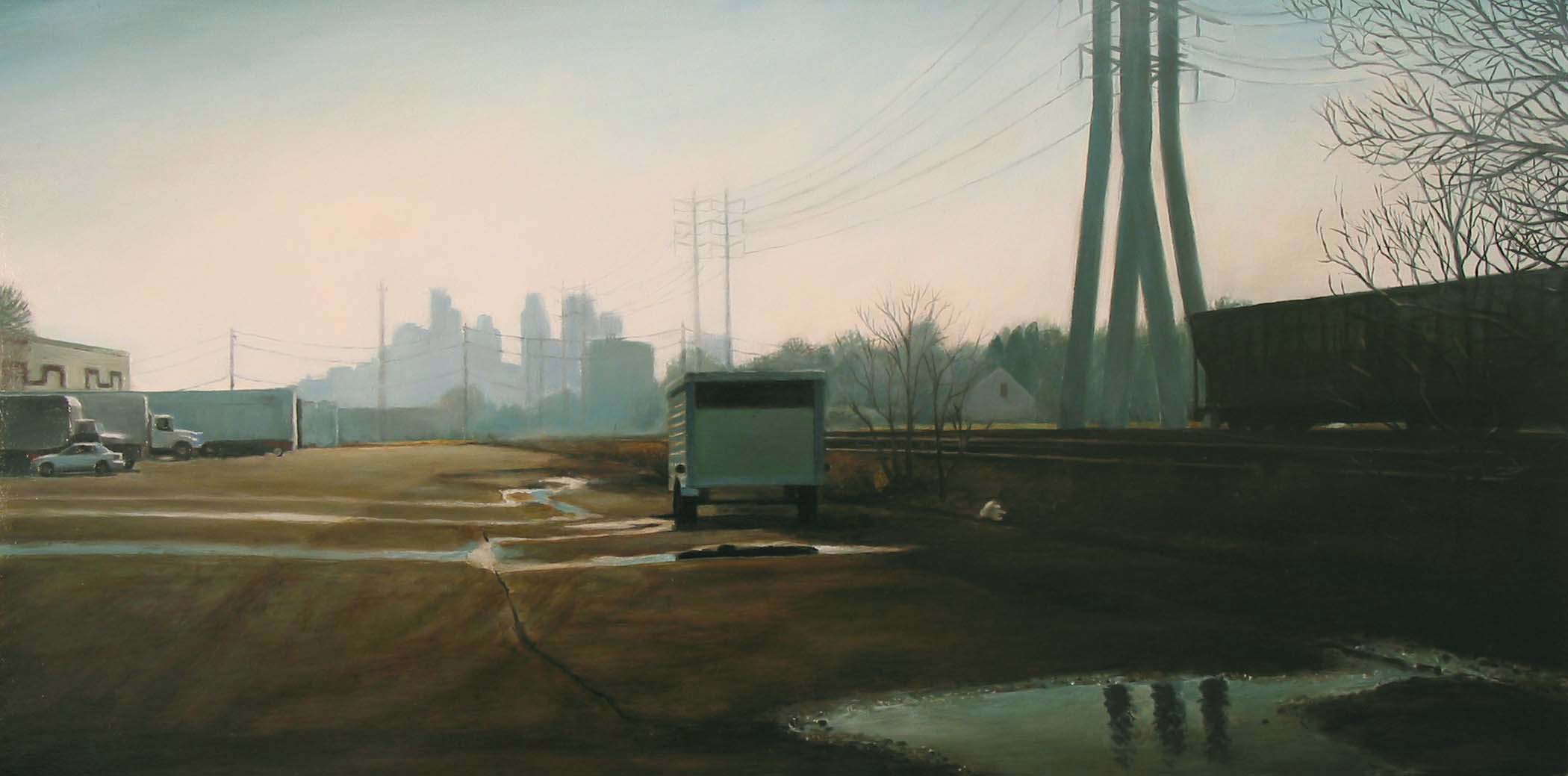
Parking Lot near Train Tracks (Photo courtesy Michael Banning)
See Michael Banning’s work here.
When we are lucky enough to find ourselves talking about these liminal spaces with each other, we might be collaborating in a particularly effective way. Typically we don’t have a clue when we’ve entered such a verbal space. Years later we might identify a conversation that was a turning point. Perhaps the best we can do is to remain open to entertaining each other’s unformed thoughts.
Who knows what might result?
###
Image credit: Kirk Livingston
Steven Woodward: Dictionary, 2005
How did you think of that?

Apart from [extensive world] traveling and reading, the majority of my adult life has been spent alone in a very larger room, imagining what I wanted to see and how to create it.
Read more about sculptor Steven Woodward here and the James J. Hill House Gallery here.
###
Image credit: Kirk Livingston

 conversation is an engine