Archive for the ‘photography’ Category
The Lies We Love
How to Believe the Preacher’s Story
Let us now name this category of lie: The Preacher’s Story.
We’ve all been here: sitting in church or a political meeting or even in class. The preacher/politician/professor behind the lectern tells a story that illustrates her or his point perfectly.
Too perfectly. And we think:
Wait-that sounds almost too good to be true. So then it must be… false. But who cares? I agree with the point and I’m in agreement with that way of looking at the world. I’ll just check the “true” box for that story.

The Preacher’s Story is a quasi-factual tale the congregation wants to believe and will believe. The point of the story isn’t whether or not it is true, but whether the story advances our cause. We’ve gathered to stoke our fires and that semi-truthy story works just fine for that purpose.
I’m putting most Trump talk in the category of “The Preacher’s Story”: though demonstrably false, still believed because it stokes the tribe’s purposes. Trump’s not alone in this, of course, his preacher’s stories are just the most recent potent poison.
Writers continue to try to make sense of evangelical support for Trump. The last few days have produced several articles citing similarities between the current batch of authoritarian presidential candidates and the authoritarian leadership style many megachurch pastors exhibit (for instance, Katelyn Beaty’s opinion piece from The New York Times). Authoritarian leaders depend on the willing to turn off their fact-meters as they absorb the preacher’s stories. Evangelicals are possibly more willing because of close familiarity with this rhetorical tool.
Can we now name the downside of “The Preacher’s Story”? It appears we’ve been groomed to be gullible.
###
Image credit: Kirk Livingston
On Creating: “Hello Problem, Please Sit with Me”
From Distraction to Focus
We stare at the problem until we can’t think straight. And when blood runs from our ears, then we have just begun.
This quote from a Minneapolis copywriter describes the creative process that drives his role in the industry. What does it take to come up with a creative solution that is beyond the first 5, 10 or 20 thoughts that pop into anyone’s head? What is creativity, anyway, and why should I care?
- First the bad news: creativity requires deep focus.
- And now the good news: you are capable of deep focus.

“Look Again: Expanding Feminist Possibilities,” Groot Gallery, St. Olaf College
In our age of near constant distraction, how does anyone slip into the focus-cave? How does anyone keep distraction at bay, apply sustained attention, and lose track of time in the process? It turns out there are solid answers to those questions. Those answers arrive from a mix of personal experience from people who create regularly, from a bit of theory, and then from experimentation with what works for you.
One thing is certain about focus: it can bring a healing wholeness with it. Just ask any person who regularly creates, and hear them talk about “flow” or the zone or getting into that space of just doing it.
Creating is not for the faint of heart. Because to create is to dwell with ambiguity: could be this. Could be that. If you change this piece—or flip the entire story or image—everything looks different and maybe even makes more sense. Very little is defined when creating and, in fact, you are doing your own defining
A group of students and I have turned a corner this week. We’ve gone from feeding the internet with content that builds communities to feeding creativity that can solve real-world problems. And just like when we work different muscles with cardiovascular versus weight training, this move from rapid creation to deep problem-solving wants a different set of brainwaves. We’re moving from intense listening and rapid creation to sitting with a problem and iterating our way out.
One of our bigger tasks is to train ourselves not be satisfied with the first, easy solution. We’ll learn how to bend time and write fast while you still know nothing, and how to lift and separate and how to map your way around a problem and how to start at the top again and again. And how to grind through to get to a better solution.
But all that needs focus.
And focus means not picking your phone up for 60 minutes.
And that is a struggle.
###
Image credit: Kirk Livingston
On Writing: Is This Where The Magic Happens?
“…and then a cascade of miracles occurs…”
Yesterday I heard myself spinning a tall-tale to a quiet cluster of skeptical students.

as if
I told them of a magical place they can go were writing connects the dots in a mysterious and inexplicable fashion. It is a place you arrive mostly clueless about what will happen next. But then you begin marking a blank page and words form into sentences and dots arrive and connect. The not-knowing of this place takes a bit of courage to sit with, but the payoff of processing your not-knowing is immense.
These were writing students, so many regularly visit this place. Some nodded in agreement. Some stared back blankly, though I suspect this tall-tale was their own experience as well. Some stared blankly refusing to participate no matter what—which is, of course, that great student default-setting.
John Cleese spends his retirement talking about this place (try here or here. And especially here). He characterizes it as more of a time than a place—which I completely agree with. A time away, which becomes a space bordered by time limits. I use timers to get to that place. This place where the magic happens is also called “flow” or “in the zone.” I’m certain you’ve experienced it as well.
For the working writer, I’m convinced that this place is bordered on one side by strategy and analysis and research. And on the other side is marketing or talking to an editor or pushing “Send.” But in between: this magic layer where creation happens. It’s a place equally daunting and exhilarating.
Is there really such a place?
I believe so—see for yourself.
###
Image credit: Kirk Livingston
Is it Better to Sound Smart or to Communicate?
Please stop me before I commit an act of literature.
We had this discussion in class. A literature student was talking about how writing for social media was different than, say, literature. Popular writing—so our discussion went—is aimed at a different audience (here we picked our way around classist terms), and is not as, well, interesting, as literature. All her other classes required a compacting of ideas into sentences that grew rather long. Sentences that required a fair amount of attention. Sentences that required grappling with theologically heavy terms, or the whimsy of philosophers who felt compelled to make up words for their new ideas. Or writers who committed acts of literature in the most tortured fashion.

I maintain that writing for social media requires that we let go of jargon and the complex sentences that shout “College!” or “Graduate School!” At our best, our writing is nearly transparent: leading right into the topic without stopping to say “Look at me.” Does that mean we use dumbed down ideas and language? I’ve said no to this several times. Erasing our jargon so smart people from different disciplines can understand us is not the same as dumbing down. And, in fact, when we do the work of translating our tribe’s jargon into regular English, we are poised to find a certain elegance and cadence that sounds more human, more fresh and less like the forced and predictable tribal language.
Respecting the reader is central to this project of communication—this bridge-building activity. If you think the reader is an arse, that comes through in your word choice. If you think the reader cannot be trusted, that shows. If you think the reader is intelligent and can handle the topic in words any human would understand, your reader will know.
One irony of the discussion is that many of the writers we celebrate as having written literature were themselves seeking for the simplest way to say things. Countless writers talk about kill your darlings and omit needless words and how nearly anyone can write to confuse. But the real artist takes a meaningful notion and makes it clear to someone else. And this: we are more likely to say something memorable and possibly even elegant the farther we get from our tribe’s insider language.
Will you commit an act of communication today?
###
Image credit: Kirk Livingston
How to be an Object of Pity
Hint: Grow a gray beard and present folding-money
Twice now young women have bought me coffee at the coffee shop on the campus where I teach. Just standing in line like everyone else—minding my own business—I pull out my $2 (cash-money) and the young woman in line behind me says, “Just put it on my card.”
I resist: “No! I wouldn’t hear of it,” I say. “You can’t. You must look after yourself with that—or at least spend it on your friends.”
I went on in that vein, until the cashier reached past my $2 (cash-money) for the woman’s card.
“She’s not going to spend it all anyway,” said the cashier, repeating what the woman said.
So. Free coffee. Thanks profusely offered.
Yesterday: same thing. I pull out my $2 (cash-money) and the young woman behind me says, “Just put it on my card.”
I resisted. This time with less velocity. Free coffee. Thanks profusely offered.
 I’ve puzzled over this phenomenon. What I know for certain is that the students here are some of the kindest people you’d ever hope to meet. And earnest. Looking around I also see that I have landed from the planet “old guy.” Though I know even recent grads feel that way when revisiting their alma mater. Still, it’s been a long time since I was an undergrad.
But I think it’s the folding money that triggers the pity. What kind of a person uses cash-money on campus? Clearly someone in need and, frankly a bit out-of-touch. We all use cards.
You must not be from around here.
“Let me help you.”
The other day a student reflected on her community-building work in our social media marketing class:
“It’s also important to create a presence that encourages interaction,” she said.
I can’t get her comment out of my mind, partly because of getting two free coffees and partly because of the riddle of how to write in a slightly-unfinished, slightly-needy way.  Like how Columbo conducted investigations: you pity the unkempt, needy fellow until you realize he is canny like a fox.
I’ve long puzzled over the magnetism of a dumb sketch. Stepping up to the white board and drawing something badly as a way of explaining an idea is a sure-fire way to invite others in. And they step up—not to correct, just to collaborate. Because it’s sorta fun to draw badly and without the pressure to create art. And it can be fun to think together. And, like presenting folding-money in debit card economy, you clearly need help.
What are you willing to leave unfinished to draw others in?
###
Image credit: Kirk Livingston, The-Toast.Net
Abscence
Teaching season is in full swing.
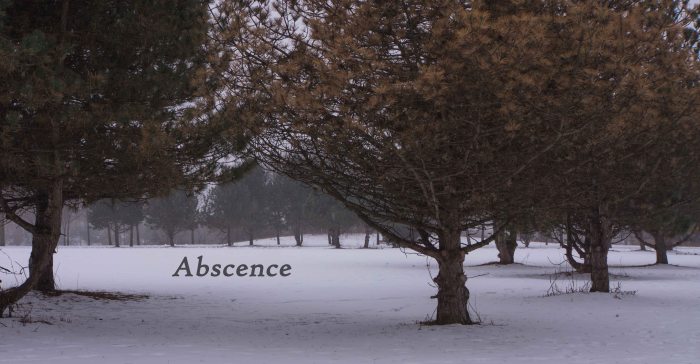
And all my words are going toward the course.
I’ll be back.
The Alchemy of a Thought Remembered
Follow the Instinct to Say Again
We talk endlessly about the question “What is remarkable?” in my social media class. I am convinced that the bits of life that we remember to tell someone else are the very things that make for great conversations. It is that instinct that also powers engaging social media.

Say I run into an old friend and remember I finally read that book she told me about two years ago. Why did I wait so long? “The chapter about the train ride through the Alps was unbelievable and may have changed my life,” I say. I just remembered all this when I saw my friend and she said “train.” I can see that she is happy I read and enjoyed the book—one of her favorites.
Curiously, it is the running into the friend that pulls the trigger on the remembered thought. That instinct to pull from memory a thought stored for a particular person is one to follow. But maybe I did not store a thought for a person. Maybe I just registered a reaction to the book and I’ve been telling anyone who will listen—simply because I think they might find it interesting
Three things about this instinct to remark:
- We often remember for someone—we know they will like this thing and so we tell them.
- In a simple remark, we break complex thoughts into pieces and parts that can be verbalized. We want to be heard so we anticipate the questions our friend will say and pepper our talk on the fly with the answers they seek.
- The connection powers the thought and the communication. And so this memory or thought that becomes a remark goes on to cheer or enlighten or delight our friend.
The answer to “What is remarkable?” has its roots in a mystical intersection of connection, remembering and communicating. We might wish for such connection in our social media practice. The model for true connection is our plain old remarks to friends.
###
Image credit: Kirk Livingston
“What Will I Be When I Grow Up?”
Start Your Process Early to Answer Life’s Recurring Question
This question will not go unanswered.
As a kid you quickly volunteer answers: firefighter, ballerina, basketball player, scientist, pilot. It’s right that action-jobs attract kids. You may defer answering it as a college senior. You may say, “I’m not sure. We’ll see what comes up.” You find yourself saying it in your first job, hinting that “This is OK, but it’s not quite the right fit.” In fact, you may think it through a career.
I’ve had two different conversations recently with people suddenly seeing the horizon of retirement off in the distance. Both said some variation of “I’m not sure what I want to be when I grow up.”

The question is tricky because it sounds like an all or nothing deal: you do this or you do that. Binary. One or the other. But the truth is more like life is filled with all sorts of opportunities that are concurrent. You must pick. You must choose. If you don’t pick and choose, chances are good you’ll simply slide into being entertained. That’s not bad, it’s just that being entertained generally pacifies the urge to create.
And yes, I am talking about creating. Because one assumption behind the “What will I be?” question is “How will I take action in the world?” I argue that the sooner we find ways to address that question, the better off we’ll be at every stage of life. One old model of retirement was that you put in your time for 30-40 years (at something you hate or just tolerate), and then head to the golf course in Florida or Arizona to be entertained until you tip over into the grave. Today people approaching retirement are looking for ways to keep making a difference. The lucky ones have both their health and some sense of the art or craft or service they simply cannot live without doing.
I’m thinking about this today because one central piece to my social media marketing class asks students to pursue their passion publicly using every social media avenue open to them. This is a difficult question and commitment for these students to make. I like the exercise because it forces them toward the larger life question. I like the exercise because it initiates a process that, if they follow it, will begin to answer that question.
Locating that thing we are passionate about involves experimentation, of course. And if your work does not leave any time for locating your art/craft/serve/tribe, is it possible that in 30 years you might still be asking, “What will I be when I grow up?”
I hope not.
###
Image credit: Kirk Livingston
Does Faith Make You Stupid?
Given current national examples, one wonders.
I want to say “No.”
As a person of faith, I want to think that trust in God does not make a person stupid. My own experience is that faith in God opens a world of possibility for thoughtful responses to life. Faith can be a platform for reading and testing and trying and understanding. Though more often faith is portrayed as a ridiculous intellectual straight-jacket; that half-truth is not the whole truth. I’m no historian, but I think I could find examples through history of people motivated by faith who moved us forward.

I get that lots of Christian churches don’t make a place for questions. I get that lots of people of faith don’t want to apply logic and reason to their scriptures and their faith, though logic and reason remain our primary tools for dealing with life on this planet.
I am also comfortable with the leaps of faith that defy logic—especially when we recognize when we are leaping. Still. Our leaps of faith must be informed by and grappling with and in tension with logic and reason. It cannot be otherwise and we cannot turn off one part of our brains and still expect to move forward. Knee-jerk, automatic responses, especially those that cater to our national fears, they simply don’t have a place in a thoughtful life. Automatic responses don’t help with seeking truth. Maybe it is the automatic responses and pat answers that make people of faith look stupid.
I resonate with Lynnell Mickelsen’s recent commentary about rigid, calcified thinking that stands as a barrier to forward movement. Mickelsen wrote of her fundamentalist upbringing and brought her experience to bear on current education hurdles. She was able to note that progress halts when we hold to a party line rather than continue to seek truth.
But…does faith make you stupid? Again: No. Some of the smartest people I know have a deep faith commitment. Accomplished people: physicians and professors and philosophers and writers and engineers and builders and mechanics and teachers and makers and organizers—all sorts of people. Smart, aware people. People who seek truth and have their listening-antennae raised quite high indeed.
Does faith make you stupid?
Not necessarily: but don’t look to the media (and especially the presidential race) for counter-examples.
###
Image credit: Kirk Livingston
First Person Tooter
Let others pull philosophy out of your story
It turns out the story of a person’s life is interesting in a way that we have a hard time looking away from.
- How they got to where they are.
- Who were their influences?
- What were the shaping forces that drove them: poverty as a child? Loneliness? Were they ostracized or bullied?
- What was behind their particular quest?
All of this is story.

We each tell our stories in different ways.
I’m reading Louis L’Amour’s Education of a Wandering Man despite myself.
I’m not a particular fan of L’Amour’s writing. I have no great interest in cowboys and western shoot-em-up stuff, still I cannot put down his biography. It’s how his personal story unfolds and his depiction of the times he lived that are so gripping. And because I know where it all leads—at least to some degree. L’Amour’s education consisted of working on migrant fields across the U.S., and the merchant marine, and boxing and in reading whatever little blue books he could lay his hands on. He listened to hobo stories and seamen stories and drinking stories and murder stories. He also wrote very clearly—so that I almost don’t even realize I am reading.
This strikes me because much of what I read calls attention to itself in thousands of ways, from pedantic language to detailed concepts that demand rapt attention to self-indulgent fluff to the simply boring. And I’ll confess to committing some of those very language sins myself on pages.
But what if a philosophy book told a story rather than parsing dry doctrines and tentative tenets? In fact, that is exactly what stories and novels and films do: package thought into a compelling narrative.
Story keeps pulling us back in.
###
Image credit: Kirk Livingston

 conversation is an engine