Archive for the ‘photography’ Category
Drill or Disperse?
Teachers Know: Why stop to tell what you are doing?
Researchers just want to research. Inborn curiosity drives that desire, though other incentives likely add to curiosity. The research is the key work and the satisfaction of curiosity is its own reward.

So why would anyone stop to tell about their research? Why not just keep at it? What reward is there in stopping? And if there is financial reward for research, there is even less reason to stop and talk about it.
I’m working on a few thought pieces with a client: small, pointed communication tools that paint a picture of a particular bit of knowledge they are expanding. These smart people have a particular niche and they want to let others know so they can move faster into collaboration with their customers and partners. But the people with the detailed smarts don’t want to stop to communicate because they are busy inventing and satisfying their curiosity. Plus, they are likely paid to invent, not to talk about their inventing.
In a smaller, less acute way, I feel the inventor’s pain. Writing ListenTalk opened new ground for me and answered questions I did not know enough to ask, even as it unearthed entirely new categories of questions. I’m not alone in this: writer friends and artist friends (and wood-working friends and welding friends and mechanic friends) just want to push forward with their projects. Why talk about it when you can do it? You may face this dilemma too: you don’t want to explain what you are doing. You just want to keep at it.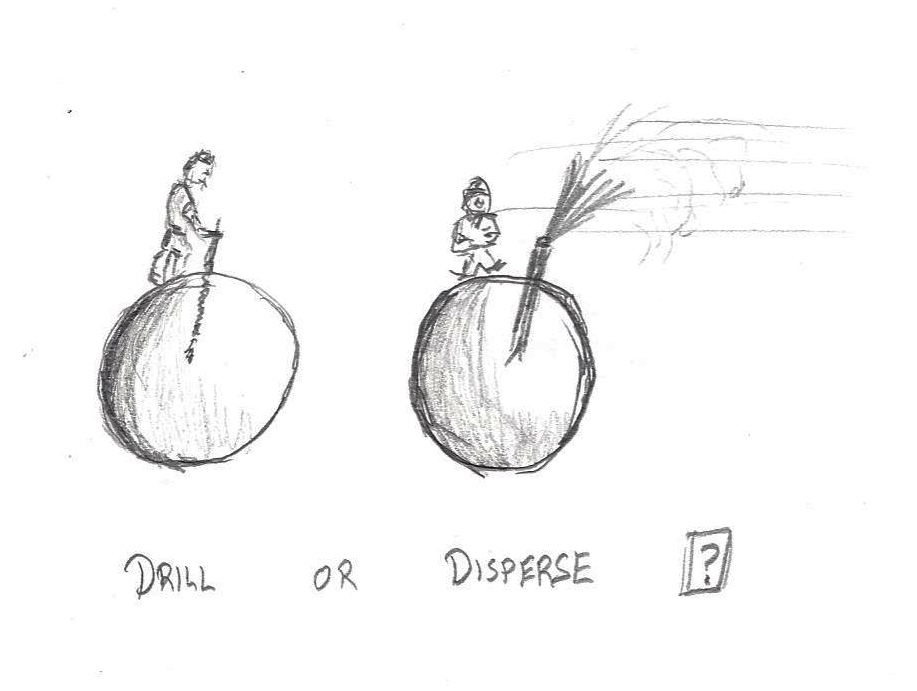
I get that.
But do we push forward in a slightly new way as we stop to tell others? I wonder. Teachers and professors understand this—especially those teachers and professors who are also practitioners of their art and craft. In stopping to explain, we suddenly realize some brand new thing. We realize something we would never have come up with on our own, sitting at our keyboard/bench/laboratory. It’s the interaction with another that stimulates that.
John Stepper gets this in his notion of Working Out Loud. Social media offers an opportunity for this. It turns out that customers and communities and friends and colleagues and collaborators—even academics—respond to sharing of insights.
What would happen today if you shared an insight or two with someone tuned in to that question? Not present. Not monologue. Not preach–just share it.
###
Image & Dumb Sketch credit: Kirk Livingston
That moment when you’ve realize you’ve been doing it wrong all these years
Father Jacob and Question #4: “Where Does My Ladder Lean?”
The blind old priest in rural Finland hired an ex-con to read his mail. Maybe she was a murderer. Maybe she was innocent. Whatever the case, she brought enough real-world cynicism to her reading job to sway the old man.
Letters came. People wanted help with this and that: Sickness. Poverty. Death Troubles with the law. More sickness. They wanted God-help and the priest’s duty or calling or reputation was that he prayed and stuff happened in the real world. So the ex-con read the letters and the priest prayed. Except the ex-con’s readings, which included critical questions for the priest, gradually exposed his shaky foundations.
What a fool I’ve been, all these years.
The Finnish film “Letters to Father Jacob” continues with a twist, but the question “How have I spent my life and what do I have to show for it?” is central to all that happens next.

What do you desire?
Seven critical questions help frame how we progress in our quest to balance work, art and economics in real life. One of those questions has to do with where we aim all our efforts: “Where does my ladder lean?” Common assumptions about work include the notion that you want the corner office and the big stock options that come with the high-octane positions. Of course you do: money and power are on everyone’s radar. Writers and artists want fame and money. Athletes want wins and fat contracts. Televangelists want souls with wallets. We all aim at something because that’s how we motivate ourselves.
It’s worth asking again and again what it is we are aiming at. At any point on the ladder it makes sense to stop and consider our end-goal. Especially because our work or art exacts a price from us. We’re used to the notion of the corporate executive who sacrifices family life and interpersonal relationships in his or her climb. But the craftsman or artist also pays a price: maybe relationships. But for certain the crafter or artist pays a price of looking at the world in a particular way. They move through the world with that bit of art or craft as a centerpiece—their own tool set for processing the world. Or perhaps the ladder is a ladder of faith and suddenly you wonder if it leans against, well, anything.
Anything at all.
This is not a rant against aggressive career movement. It is not a diatribe against capitalistic acquisition. It is a lament that there are not more Father Jacobs out there with an existential intelligence and a passion for listening and, well, seeking help for others. And maybe this is a plea for some to keep on seeking and to keep on waiting.
Perhaps there are unseen things worth desiring.
###
Image credit: Kirk Livingston
7 Questions that Shape Your Art/Work Life
Please Write this Book: The Freelancer’s Attitude Kit
I’m working out new ways to present the freelance life to college writing students. They are interested in this independent life but not clear about all it entails. They wonder: is there more to it than sitting around in your underwear all day?

I’d like to present them with a textbook that answers these seven questions. Because these are seven questions that freelancers and other independents continually ask and occasionally even answer. These questions are useful for anyone trying to figure out the relationships between work, craft, art and employment.
- How do I balance art, craft and economics? Is it even possible? Because there is stuff I want to do that has no audience. There is stuff I’m less interested in that has a larger audience. And there is stuff I can do to pay the bills, which frankly doesn’t engage me much. I feel less fulfilled when I do that third category of stuff. Then again, I feel pretty fulfilled when I cash the check from that third category. Part of the answer has to do with what your time in life allows. Part of the answer has to do with the economic choices you make.
- Is it me or is it you? What does it mean to care for others with my work? Is it possible to use my art or craft or skill to truly look after the needs of another—or perhaps to look after the needs of an organization? One point I’ve made repeatedly to students is that while introspection is one way to sort out who you are—and our creative lore pegs introspection as the main work of writers and artists—there is another way. And that way is finding places and people to work alongside and, well, serve. Sometimes we begin to sort out who we are as we seek to help others. Sometimes our collaborator and our collaborative processes reveal more than we could ever sort when isolated at our desk or easel.
- What unseen forces are at work? I am a copywriter who also believes that God answers prayer. I am a copywriter who is also comfortable with artists who say the universe provides. My point is that the independent person has a better perspective when convinced there is more going on than what they can muster on their own. For example: every client I called last week said “No.” But then two new calls came in from completely unexpected sources. And these calls said “Yes.” Coincidence? Faith of one kind or another plays a role in this life—especially if a spouse/children/mortgage are part of the picture.
- Where does my ladder lean? Aiming for the approval of your boss is not bad, just limited. Bosses change—and sometimes very quickly. Better to climb toward a larger goal. In corporate life, we climb toward this position or that responsibility. In freelance, we climb toward this kind of project or that kind of project. Freelance does not have titles and offices that automatically designate how important you are. Are you ready for that? Freelance depends on intrinsic motivation—the stuff that bubbles out from inside. In fact—it turns out—that corporate life does too. The intrinsically-motivated colleagues are far and away the happiest, because they do the work out of willingness and mission. Just like freelancers.
- What do I look like, an entrepreneur? In fact you do, if you are someone who sees a need and starts to figure ways to meet that need. One textbook defines entrepreneur this way:

Entrepreneurship is the process of identifying opportunities for which marketable needs exist and assuming the risk of creating an organization to satisfy them.
–Hatten, Timothy S. Small Business Management, Entrepreneurship and Beyond (New York: Houghton Mifflin Company, 2003)
There is risk with the approach: you might fail. It might take a long, long time. This approach requires turning that intrinsic motivation into an engine that chugs along every single day. That can be exhausting, especially when met with a daily chorus of “No.”
- What’s sharing go to do with it? Today artists and writers and crafters and tribe members find each other online. Not exclusively, but frequently. Part of the independent life has to do with finding generous ways to talk about your passion. This is not shilling for work, this is giving away good stuff. Good stuff that people can use. It turns out that clients just might find you this way as well
- What if people knew how weird I was? That’s right, you are strange. Really strange. But everyone is. Freelance capitalizes on weird by you doing what you do in the way you do it. Freelance is the opposite of cookie-cutter. It is niche-building with much of your weirdness intact (not all, people will run from you).
That’s the book I want to use as a text. Some books I’ve read come close.
What questions shape your work life? Tell me if you’ve read this book.
###
Image and dumb sketch credit: Kirk Livingston
Story Beats Monologue
Why, again, do we elevate didactic talking points?
I hear “story” a lot these days.
Clients are looking for stories because stories show how something—their product, for instance—works in real life. A story is engaging. There is some tension in a story. There is a human factor in a story—we get to know some character. There is specificity that perks our attention. This is all story stuff.
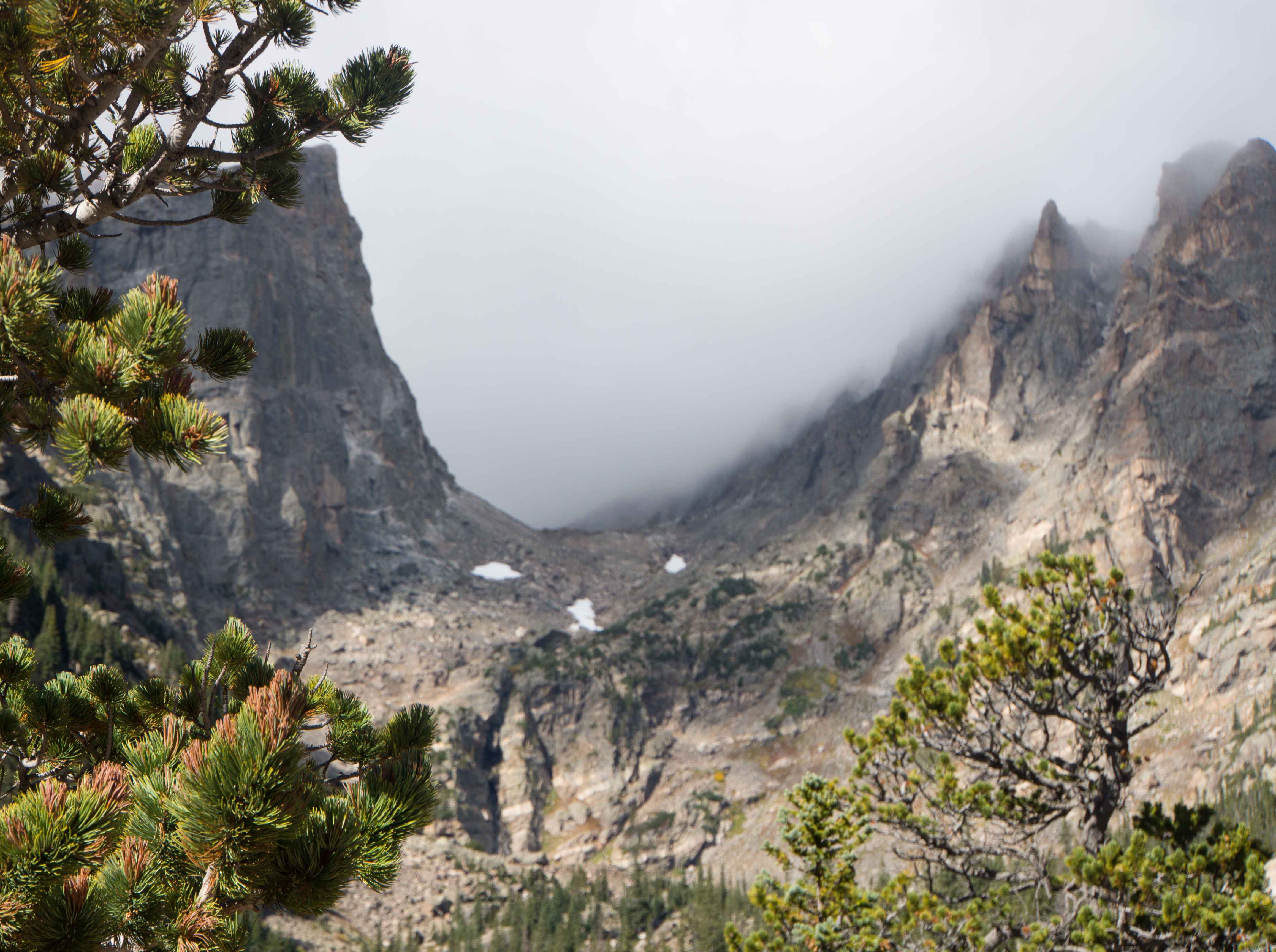
We must work to help the story emerge
Students like stories because they put a concept together into an easily digestible form.
In some ways it seems like nearly anything put in story form gets attention. Even over at Dumb Sketch Daily people comment that they are curious about stories behind the various dumb sketches appearing there. And if there is no story, the reader makes one up. It’s nearly an involuntary response. Our minds are made to put things together, to look for the connections and to make things fit. We find stories where none should exist: I’m remembering one daughter who named each bag of leaves in the back of the van and told stories about them—even as we drove the newly-named leaf bags to the compost heap.
In the race to get heard, story is a form we are all searching for. Story is irresistible. Sermons and monologues induce sleep. Story wakes. Story compels.
So why is it, again, that we elevate facts and principles and dry argument to such a high place? We think intellect beats emotion. But how much better if emotion and intellect are joined?
###
Image Credit: Kirk Livingston
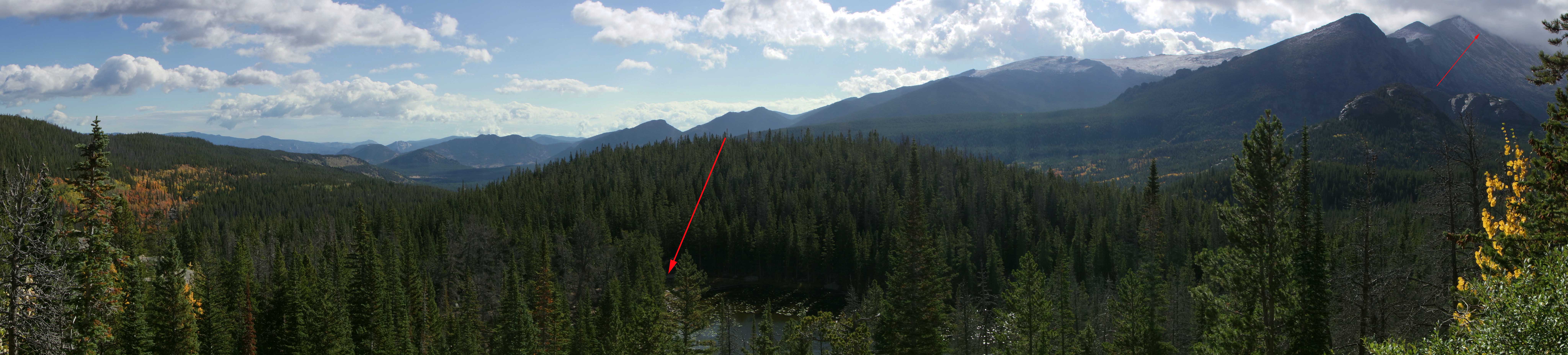
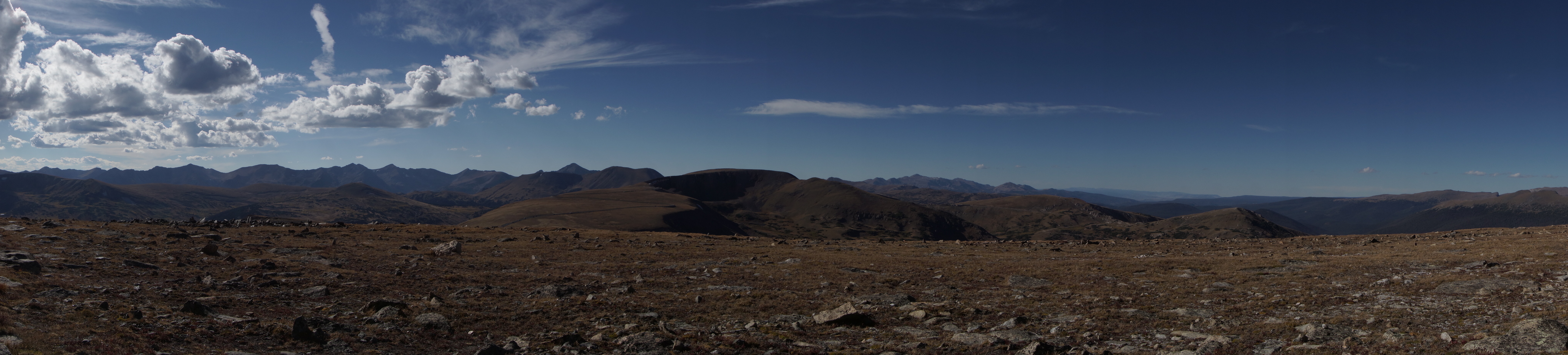
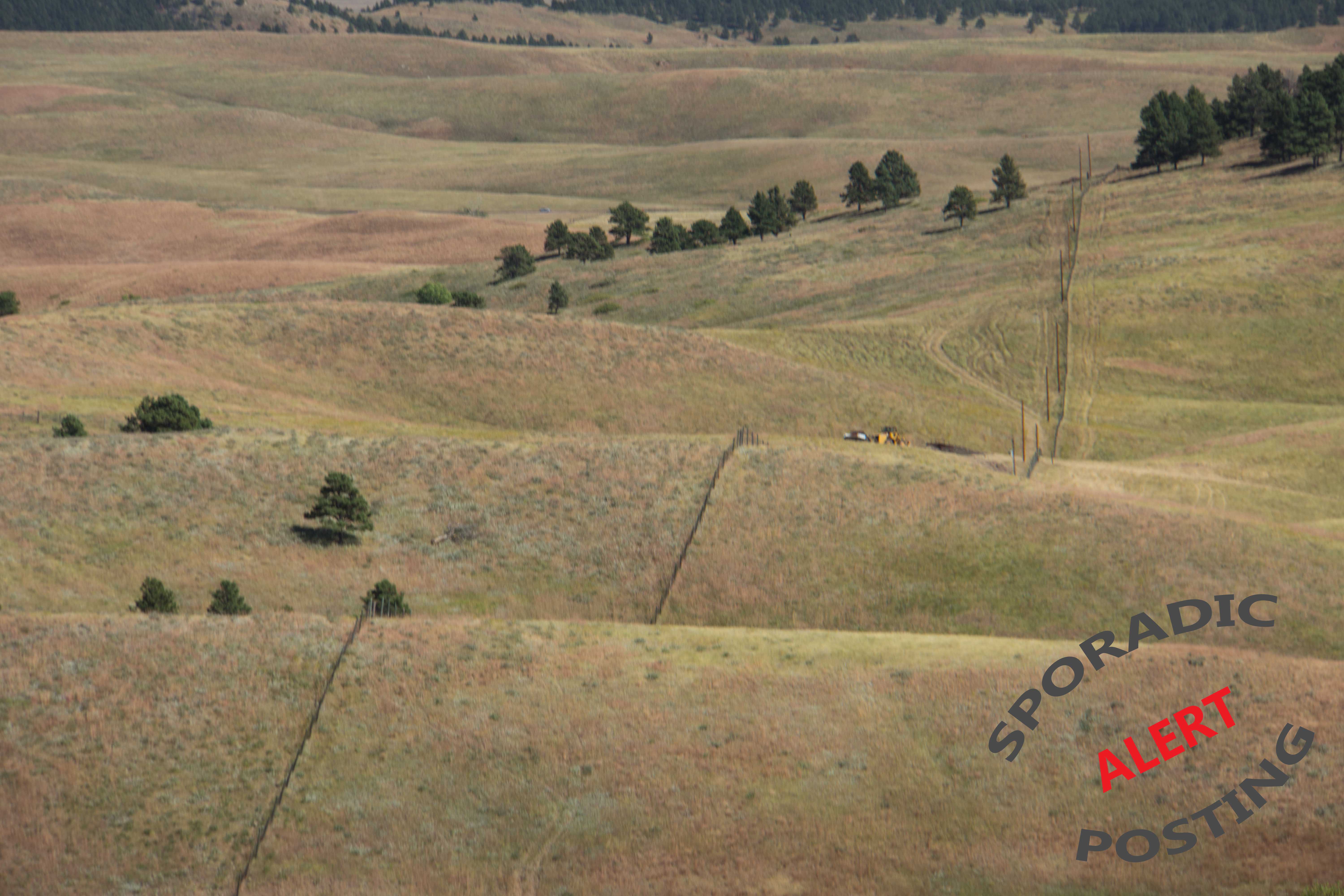

Mythical Minneapolis
Once every 100 years, you can almost see it.

###
Image credit: Kirk Livingston
Just Do It—Out Loud (DGtC#31)
But what if I’m a scaredy-cat?
I’m toying with the notion of starting conversations people won’t like. I’ve advocated and agitated for having the difficult conversation:
- Even if I don’t know all the answers,
- Even if I don’t have all my ducks in a row,
- Still, start the conversation.
It’s a faith thing: faith that pressing thoughts into words and sending them clanging out at a conversation partner will have a positive effect. The faith part has to do with hoping we’ll get through it and still have a relationship.

My friend is a hospital chaplain. He and I have talked several times about the sort of sacred space he tries to step into at the bedside of a dying patient and family. It’s typically a quiet space, through deeply-charged with emotion. He comes to listen, he says. Platitudes and easy answers are not part of his game plan.
At these moments, just before the end, all sorts of unsaid stuff gets suddenly said. Confessions. Sorrow. Hopes and dreams. Oddly, even the very most mundane, ordinary things—weather, lighting, parking, “the soup is too salty”—are also said. But these ordinary words have more to do with human connection and presence than transferring information. The words themselves communicate far more than Webster’s dictionary would allow.
“Sometimes people just need to hear themselves talk,” said Dave, the chaplain.
So he listens.
And the process of letting-go unfolds.
You’re Doing it Wrong
Surely we’re doing things wrong if we hold our most important thoughts in stasis until we show up at a loved one’s deathbed. Or until we wake up on our own deathbed. There’s got to be room for saying what’s really on our minds, even if uncomfortable, even if potentially relationship-threatening. I suspect that saying our important stuff out loud is sometimes a work of fierce determination. There are times where we must force those words up the esophagus and out through the lips.
Saying our most important stuff will not happen on Facebook or Twitter. Those spaces are loaded with an image we’ve carefully primped. We are agreeing and agreeable in those places.
No—I want to cultivate those raw conversations. I’m thinking of those conversations that happen after driving 1700 miles together. The conversations that happen at the end of a long evening talking with friends.
Is it possible to bring those kinds of conversations into regular life—even if they make people uncomfortable? Even if it goes against my grain as a people-pleaser? Those are the conversations where growth can happen.
What have you left unsaid today that really needs to be out in the open?
###
Image credit: Kirk Livingston

 conversation is an engine