Archive for the ‘photography’ Category

Why we don’t know what we don’t know
“As I was telling Mrs. Kirkistan…”
Our unguarded responses in conversation often point a way forward. It’s just that we don’t realize it until we’ve said it. And even then, it may take us recollecting that statement, in yet another conversation, to an entirely different person.

Sometimes we carry our own answers
Example: sometimes I think writing is the stupidest thing to do on earth. This is not my standard line with writing students. But sometimes I swing low, like after I finish a big project and stop to calculate the return on (mental) investment.
Note to self: Never stop to calculate the mental ROI on a writing project. Just keep writing.
I was describing to Mrs. Kirkistan how it is I’ve come to believe writing is the stupidest way to spend your time—bar none. In that conversation, after several (verbal) paragraphs about all the frustrations of writing and why I’ve come to despise it, I found myself defending the process and telling of the delights of writing and what I want to do next.
How did I just travel from one conclusion to another within 90 seconds?
It’s almost like opening a water tap in a long vacant house: you let the water run until it is cold, then you drink. I know with writing you have to write a lot of dreck before you ever get the useful and true stuff. Same with verbal conversations: sometimes we just talk to fill up the space between us. And then sometimes the true thing just spoken—that thing that landed between us—is the very answer to an unasked question.
We unwittingly answer our own question.
But, this: we need to listen so we can hear what we already knew.
Moral: make sure there are some unguarded responses in each day. And listen to those unguarded responses to help sort what you don’t know.
###
Image credit: Kirk Livingston

Is There No Antidote for Our Perpetual Push for Power?
Some say there is
Trump wants power, of course. So do each of the Republican candidates for president. Just like the Democrat candidates—every candidate wants power and pledges to do right by those who grant them power. We are no different from those candidates: We all want power. We want colleagues to listen to us, spouses to bend to our will, children to follow our directives.
We want what we want. Especially because what we want is good and pure and right, holy and God-ordained.

di Rosa Art Museum
One ancient writer thought there might be a different way. Old (dead) Dr. Luke quoted Jesus as saying you are better off finding a way to help the helpless then you are arguing over who is most powerful. Helping those who have no way to pay you back opens doors to a different sort of life that has very little to do with amassing power.
In fact—all that energy you spent manipulating and maneuvering into power—it’s not likely to lead you to the kind of solid ground that matters most.
What would our presidential politics look like if candidates thought about serving rather than voicing shameful prejudices that pry power from blocks of fearful voters? Likely that would not be covered by the media, because there is no story in that.
The institutions and organizations that own the candidates would not like that.
But humans might actually flourish in those conditions.
###
Image credit: Kirk Livingston
Hold On: Let’s Talk About That
Getting things right requires triangulating with other people.
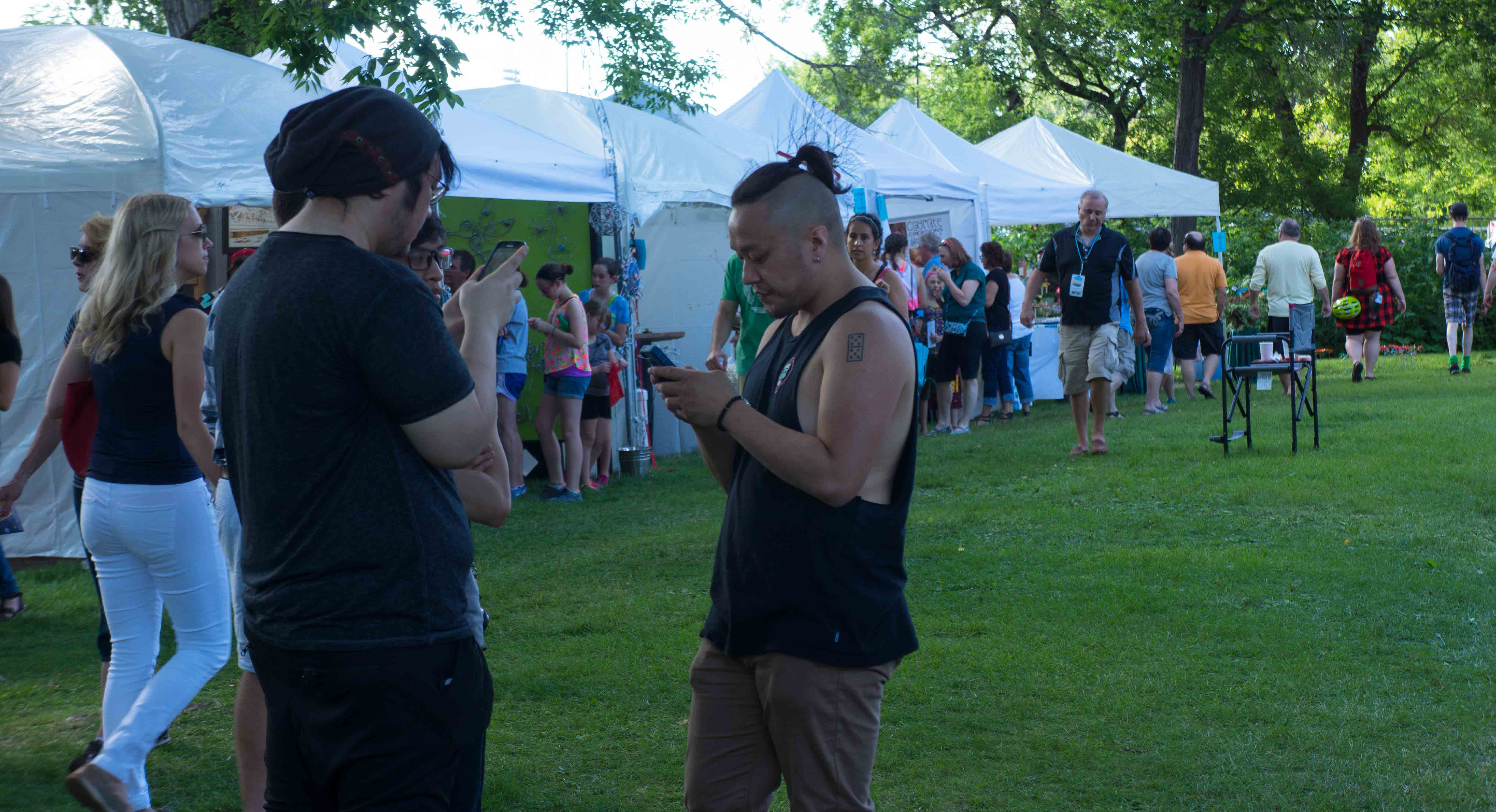
Wait, let’s triangulate for a moment.
Getting things right requires triangulating with other people. Psychologists therefore would do well to ask whether “metacognition” (thinking critically about your own thinking) is at bottom a social phenomenon. It typically happens in conversation—not idle chitchat, but the kind that aims to get at the bottom of things. I call this an “art” because it requires both tact and doggedness. And I call it a moral accomplishment because to be good at this kind of conversation you have to love truth more than you love your own current state of understanding. This is, of course, an unusual priority to have, which may help to account for the rarity of real mastery in any pursuit.
–Matthew Crawford, The World Beyond Your Head: On Becoming an Individual in an Age of Distraction (NY: Farrar, Straux and Giroux, 2015) 63
###
Image Credit: Kirk Livingston
5 Ideas that Will Change How You Talk Today
3 Philosophers, a Rhetorician and a Social Media Expert walk into a bar…
Since writing ListenTalk, I’ve continued to hear these voices echoing in my conversations at work, at home, at church, in the street, at the curling club (I made that up. I don’t curl. Nor do I hurl.).

Here’s what these voices say:
- We have responsibility for others. That’s why we greet people and learn names and acknowledge presence. Our responsibility can do deeper—or not. But it is there from first sight and we all know it. (Emmanuel Levinas)
- People are not objects. So when we treat people as objects, we devalue them and strip ourselves of excellent relational opportunities. People becoming objects can happen in the workplace: it can happen when the CEO looks down on the vast army of minions. It can happen in the home. But it shouldn’t and we do well to defy this narcissistic pull. (Martin Buber)
- Words have incredible power. We can say things and, behold, it is so. Like pronouncing a marriage. Or deciding on a goal. This may not seem so, given the river of words we issue, the mundane, seemingly meaningless conversations that make up 99% of any particular day. Despite the great volume of words avalanching through our lives, they do—at times—hold incredible power. That’s why we hang on the last words of a dying person. That’s why we want to hear the words behind our favorite writer—we want to hear them explain how their story or argument came about. You can probably recount a handful of life-changing words right now, words someone spoke to you at just the right time. (JL Austin and John Searle)
- Our best talk comes when we’re not out to win a conversation. Humans are persuasive beings—we’re constantly trying to convince each other of things. But our best thinking and talk comes when we listen as well. And our worst conversations look like monologue—when someone preaches at us without listening. Those also tend to be short conversations. (Wayne Booth)
- Say what you will. Unless you live in North Korea or Russia, you generally have the capacity to say what you want. Yes, the current Facebook effect seems to be to say only what our tribe wants to hear, but we can find and build new tribes using social media. This is very important, because the old institutional voices are veering from truth more and more frequently. We need those new voices. We need your voice. (Clay Shirky)
Do you see how any one of those five ideas might impact your conversations today?
###
Image credit: Kirk Livingston
Good News on Clinical Trials: Positive Results Plummeting
This is good for science and good for patients. It saves repeating a trial or patients taking medication that they may or may not need.
—Veronica Irvin, assistant public health professor at Oregon State University, as quoted in The Oregonian about a study she was lead author of concerning how the percentage of clinical trials with positive results has plummeted since federal regulators established new rules requiring greater transparency

di Rosa Art Museum
###
Quoted from ACRP Wire. Oregonian article here.
Image Credit: Kirk Livingston
Something Old. Something New. What is Your Process?
Mostly borrowed. Likely blue.
We like the myth of the genius inventor or the brilliant writer. We want to hear more about the talent that simply cannot be stopped: so much to write and create.
But pull back the curtain on their work and you see lots of failure and many bad first-, second-, third-, twenty-fifth drafts. Just ask Edison. Or Hemingway. L. Frank Baum’s Wizard of Oz was rejected so many times he kept a journal he called a “Record of Failure.”

Let’s break out: new from old.
That’s why our ongoing conversations are so critical. These conversations—with friends/colleagues/spouse, with media, with a keyboard, with ourselves, with God—are the process by which we sort all kinds of life-stuff. An artist friend has challenged me to attempt an abstract watercolor. I’m no artist, but I do produce dumb sketches every day. It helps to have the bar set very, very low.
The only way I can move forward with an abstract image is to think of the entire project as a conversation. But this conversation is between a bit of burnt sienna, a dab of periwinkle, a waterbrush and a slice of Strathmore 90# paper. I call it a conversation because I am only bringing the elements together and have no clue what the result will be. I call it a conversation because I await the new thing that often results from the interplay. I’ll likely not call it art.
It’s the “something-new from old” that energizes creators. Today’s copy project also requires a conversation between old elements, a clarified message from my client and a new audience. Again: I’m trusting process rather than brilliance. Because any brilliance that happens grows organically out of process.
###
Image credit: Kirk Livingston

Our Best Conversations Satisfy and Anticipate
They can satisfy a question we didn’t know we had.

They can anticipate a question still on the horizon.
###
Image Credit: Kirk Livingston

 conversation is an engine