Archive for the ‘The Human Condition’ Category
Tom Scharpling: “A problem never comes without a gift in its hand.”
On creating for love not profit

Everything has worked to my benefit, even the things that felt, at the time, like they were working against me. A problem never comes without a gift in its hand. You may not even be aware of it until five years later.
–Mike Sacks, Poking a Dead Frog: Conversations with Today’s Top Comedy Writers.(NY: Penguin Books, 2014) 277
###
Image credit: Kirk Livingston
How to Focus. And Why.
Sometimes it’s hard to see past the niggly imperfections of the day.
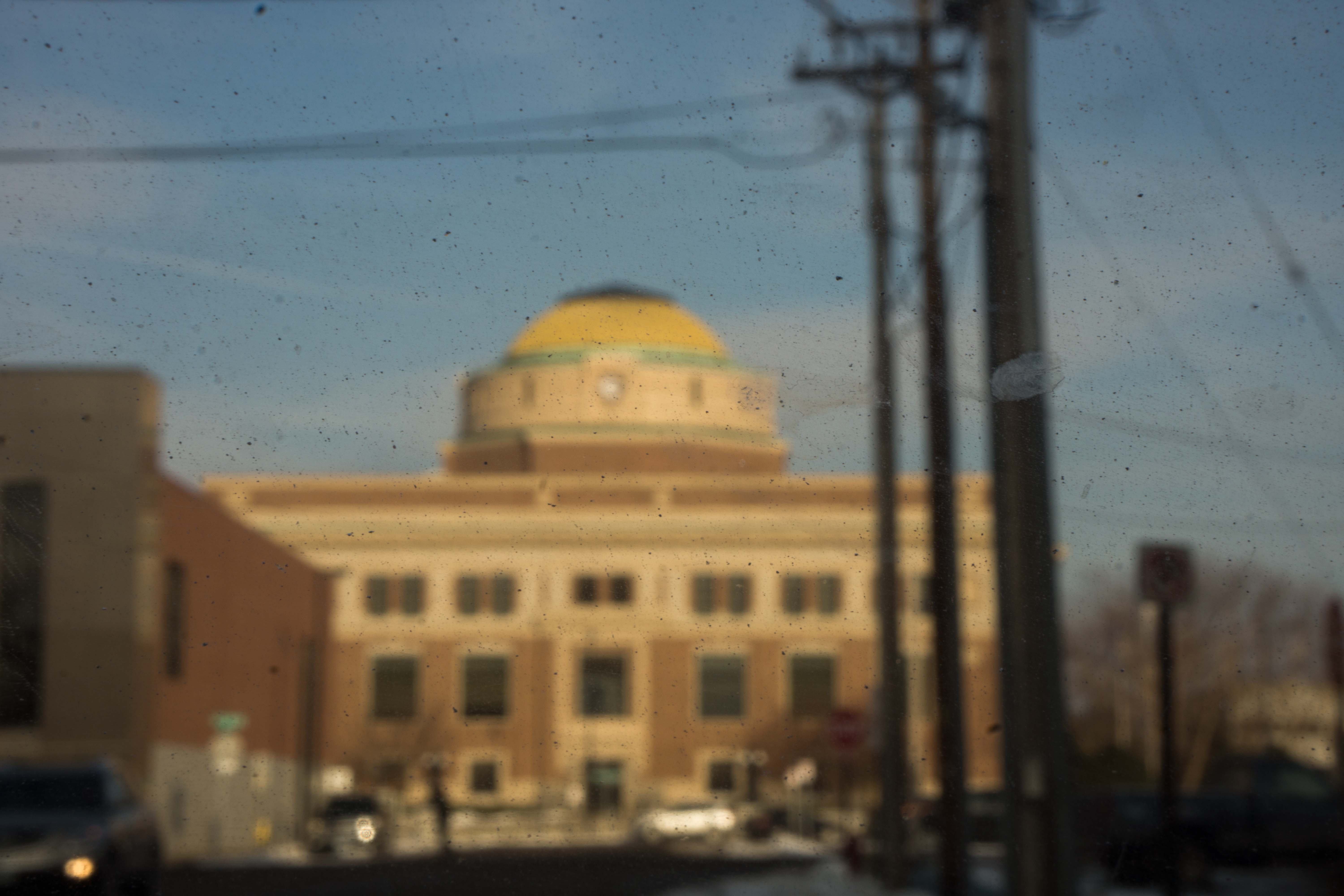
Fie on the dirty windscreen.
What glories have we missed?
And sometimes we use other tools and attitudes and conversations to get clarity.
###
Image Credit: Kirk Livingston
George Saunders: How do you energize someone?
Sometimes it will be a word.

Bright bits among the ordinary.
George Saunders, on the odd little Zen parables he heard growing up. Told for laughs, they also carried deeper hints about how to live and what is important in life:
My whole childhood we lived next door to this family I’ll call the Smiths. We didn’t know them very well at all. At one point, Mrs. Smith’s mother, who was in her nineties, passed away. My dad went to the wake, where this exchange occurred:
Dad: “So sorry for your loss.”
Mrs. Smith: Yes, it’s very hard.”
Dad: “Well, on the bright side, I suppose you must be grateful that she had such a long and healthy life.”
Mrs. Smith (mournful, dead-serious): “Yeah. This is the sickest she’s ever been.”
My dad came home just energized from this. I loved his reaction.
–Mike Sacks, Poking a Dead Frog: Conversations with Today’s Top Comedy Writers (NY: Penguin Books, 2014), 241.
###
Image credit: Kirk Livingston
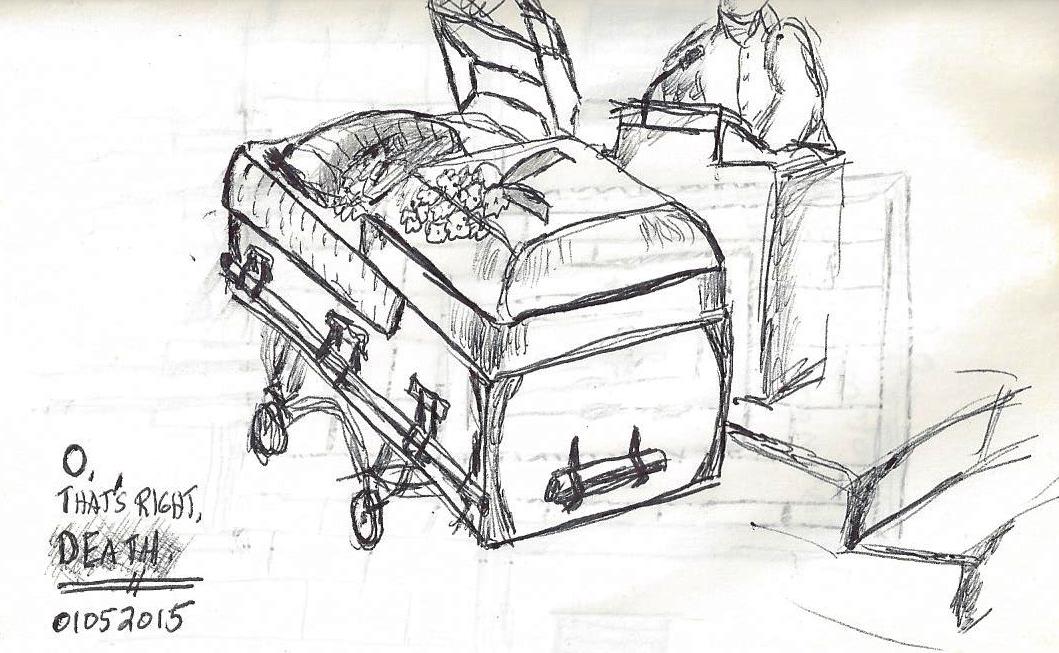
Not Resolutions: New Year’s Experiments
What will you try next?
Another way to approach the beginning of the year.
Science constantly tries to rid experiments of bias and prejudice. Medical researchers set up double-blind, randomized studies in an attempt to remove personal bias and to avoid the temptation to game the results according to how we want to see them. Bias always and forever creeps in—it is part and parcel of the human condition.
But what if, instead of looking for work-arounds for our basic subjectivity, we embraced our very human bias and used it to move forward? Not so much in science experiments and medical trials, but in our personal lives?
A theologian tweeted the other day about the lack of research and experiments in theological studies. He was right, in theological research you do not see big multi-center clinical trials running across the country. Partly because pharmaceutical companies are not lining up to fund such studies. And when they do, we’ll have an entirely new class of worries about drug-induced faith.
But, in fact, we each experiment constantly. Each of us in our own way. We experiment with ways of living. We experiment with belief systems: trying this or that to solve those deep questions. We allow ourselves to be deeply affected by what our friends, family, colleagues and neighbors believe. These experiments are a simple fact of how the human condition works. We game the system all the time and it works.
Or not (and even then, we know something new).
Some of us make resolutions this time of year. Others of us try to set direction (versus resolutions) for the year in an attempt to avoid the dismal reality of resolutions quickly broken.
But how about running your own set of experiments this year?
My friend suffers acute anxiety. It’s not a clinical condition, just solid worry as a way of life. She would like to not be such a worrier. My suggestion was an experiment in trust. Pick up nearly any of the poems by the poet-king and simply do what he did. In plain, persistent, passionate language, exclaim and define with agonizing precision the current situation and ask for release. Or help. Or mercy. The poet-king talked frankly to God—which seems like a solid experimental idea for any of us.
Experimenting with our dissatisfactions is not that bad an idea. Last year I tried to write a novel in a month (National Novel Writing Month) and I tried to make a sketch a day. Both attempts were wildly unsuccessful. But as experiments they announced solid directions by the end: write more fiction and keep practicing drawing. Last year I also experimented with following the poet-king’s example. My subjective results were mixed and positive and pointed in a direction: more trust. And more gratitude.
What subjective experiments will you run this year on your guinea-pig self?
###
Image credit: Kirk Livingston
Stop On The Way
Ask: “What do you see from there?”
Mostly we hurry from this to that.
In this season we move from party to party. At work we move from meeting to meeting, hardly stopping to breathe, let alone reflect or appreciate the unique spot we’re in.
We do this because we are crazy-busy (always the right response in our culture). And sometimes reflection is uncomfortable, especially between things. No one really wants to dwell in the space between. But the space between has things to say as well. Things you would never hear otherwise.

Always “crazy-busy.”
We all know someone stepping between things. Maybe our friend has left a job or school or some relationship. Maybe we ourselves own some piece of life that has less than secure footing. All of us caught in between want the solid ground of the other side.
But we gain perspective by asking what we see from this liminal space. What does life look like from this uncomfortable, slippery place? What is important here—and should that thing be important when our footing is more secure?
Perhaps we do our friend a favor by asking what they see from that uncomfortable place—could it even be bit of mercy to ask that question?
###
Image credit: Kirk Livingston

Imagination, Guts and a Camera: How Does Story Work?
Thomas Sanders: Only a few resist the story
Every marketer on earth wants their brand to be part of a larger, compelling story. That’s because story is irresistible catnip to those in the human condition. We want so badly to be part of a big story.
Watch for what happens as strangers quickly enter the story—or not.
It’s the moment of decision—join or not?—that makes this compelling and so watchable.
###
Via 22 words
Please Say More, My Radical Lesbian Feminist Friend
Mary Daly: Voice from the Fringe
Well, “fringe” for me.
I’ll confess: I’ve not been so conversant with feminist theology or philosophy. And this: it had not even occurred to me to think about it.

Sometimes a different perspective helps cut the fog.
But then I read our daughter’s college paper on Kierkegaard and his potential exclusion of women. Our daughter’s reference to the self-described radical lesbian feminist Mary Daly and her Beyond God the Father: Toward a Philosophy of Women’s Liberation (Boston: Beacon Press, 1973) was something like click-bait for me and I had to order the book. I’m glad I did. Mary Daly’s voice has been a playful, combative, eye-opening excursion into seeing things differently. I’m only a chapter in, but already she has named patriarchal theology and turned it on its ear. Ms. Daly has suggested all sorts of thought-exercises that would never occur to anyone living in the usual theological/philosophical grid system:
For example, women who sit in institutional committee meetings without surrendering to the purposes and goals set forth by the male-dominated structure, are literally working on our own time while perhaps appearing to be working “on company time.” The center of our activities is organic, in such a way that events are more significant than clocks. This boundary living is a way of being in and out of “the system.” (43)
You don’t have to be a theologian or philosopher (or even a radical lesbian feminist) to appreciate the different way of seeing things Ms. Daly offered. A quick glance through her Wikipedia entry suggests there was personal a cost to seeing things differently—especially in the male-dominated structures she worked within.
What I like about this particular quote is how it points beyond authority to the organic or self-directed work each of us knows as our own. Much has changed since Ms. Daly wrote this in 1973. We still have male-dominated structures and maybe those are changing, though too slowly for many.
But think about “structures” for a moment.
Reading the quote as a freelancer and entrepreneur, I cannot help but notice how exactly her description fits anyone with a growing sense of their own work or mission—especially where that work or mission differs from the work or mission handed down from authority.
Regardless of gender.
The point is not to agree with everything Ms. Daly said. The point is to begin to hear. And to begin to see—so then we can begin to name the framing system we live within. By noticing and naming, potential solutions may begin to appear.
###
Image credit: Kirk Livingston
Who We Are Who We Aren’t.
A lot rides on identity
- We aren’t torturers, that’s for sure. Except for…wait, it looks like we are (read the report here).
- We believe in the rule of law, unless we’ve been violated. Then we stand above the law.
- We believe in the level playing field, where everyone has the same opportunity. Except bankers and corporate boards and Wall Street and race are exposed nearly every week as rigging the game and handing big money and privilege to the rule makers.
- We’re not a police state, except for when we are. And it looks like we are building in that direction.

The personal and local and national conversations we need to have are getting harder and much less comfortable. Maybe that’s because we’ve put them off so long and been in denial for so long. Maybe it is because we remain afraid of talking with people unlike us.
But we need these conversations. These are the conversations that help us figure out who we are. These are the conversations that help us move forward.
###
Image credit: Kirk Livingston

 conversation is an engine