Archive for the ‘What is remarkable?’ Category
Everybody Attends the School of Hard Knocks
Grandad’s knowing was not so different from my own
What knowledge works best?
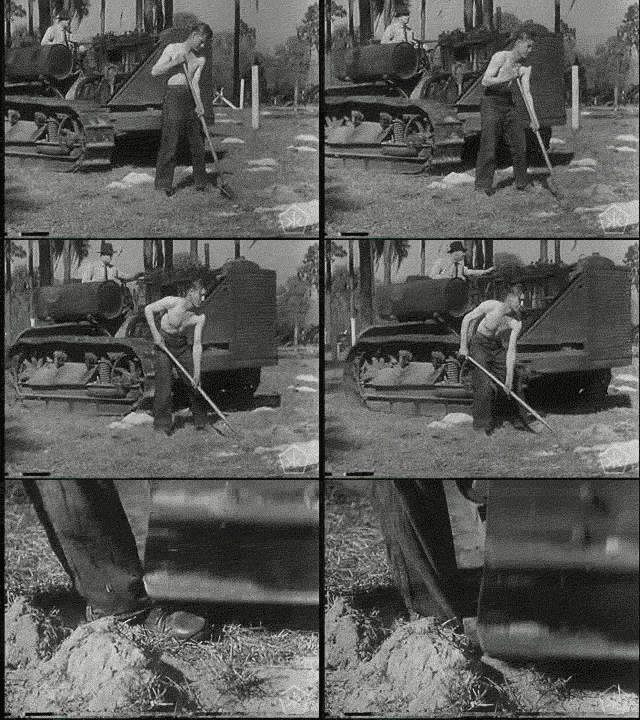
My grandfather, when faced with the schools and degrees and academic pursuits of his grandchildren, would typically say he went to the school of hard knocks. He grew up in the great depression and was on speaking terms with want. In the Navy he literally experienced hard knocks—one of which resulted in a metal plate in his skull. Later in life he was something of a salesman and generally learned by doing. His was a kind of knowledge easily passed on because it relied on behavior and action and movement. You could see what he did and you could do it too, or at least try to.
Same with my father: what I know about fixing stuff I learned from watching Dad. It takes me longer, or course. And I fail several times before I finally succeed (if indeed, I ever succeed). And, yes, the occasional plumber’s word gets uttered during the fixing.
Walter Ong wrote about the transition from oral to literate cultures. He noted that knowledge passed verbally was quite different from locating knowledge on a page. One fatality of the movement from oral to literate culture was that learning became a more isolated thing rather than a thing we did together:
In an oral culture, knowledge, once acquired, had to be constantly repeated or it would be lost: fixed, formulaic thought patterns [that is, clichés] were essential for wisdom and effective administration. (Ong, Walter J. Orality and Literacy: the Technologizing of the Word. NY: Routledge, 1993. 24)
Today our schools consist of lots of reading (which is good, which I applaud) and some hands-on. But in generations past there was not so much opportunity for spending a few years in college, let alone graduate school. People learned from each other any way they could. Apprenticeships helped, and helping Dad build a wall or a house—all these were the stuff of learning.
It seems to me still that experience is the best teacher. Not that books aren’t great. I’m a committed reader. But the best, most useful knowledge, the kind you can pass on to someone else, comes from information plus experience. Some mysterious forging takes place in the cauldron of reading + doing + telling + interacting with others. The result is a very strong knowledge that is also highly communicable.
More than once I’ve heard business owners and recruiters say they favor those who have experience in their field compared with those who go directly from bachelors to masters to doctorate.
Once the information we’ve read becomes something we do with our hands or something we can communicate to someone else, it becomes very useful indeed.
###
Image credit: Okkultmotionpictures (American Red Cross, “Why Not Live”) via 2headedsnake
Theology of Place: Minnesota
WWFD: What Would Fred Do?
Ever since I read of Fred Sanders’ work developing a theology of place in California, I cannot stop thinking what such a set of thoughts and conversations would look like for Minnesota. Mr. Sanders developed the notion after teaching a summer undergraduate class at Biola University focused on California authors and essayists.
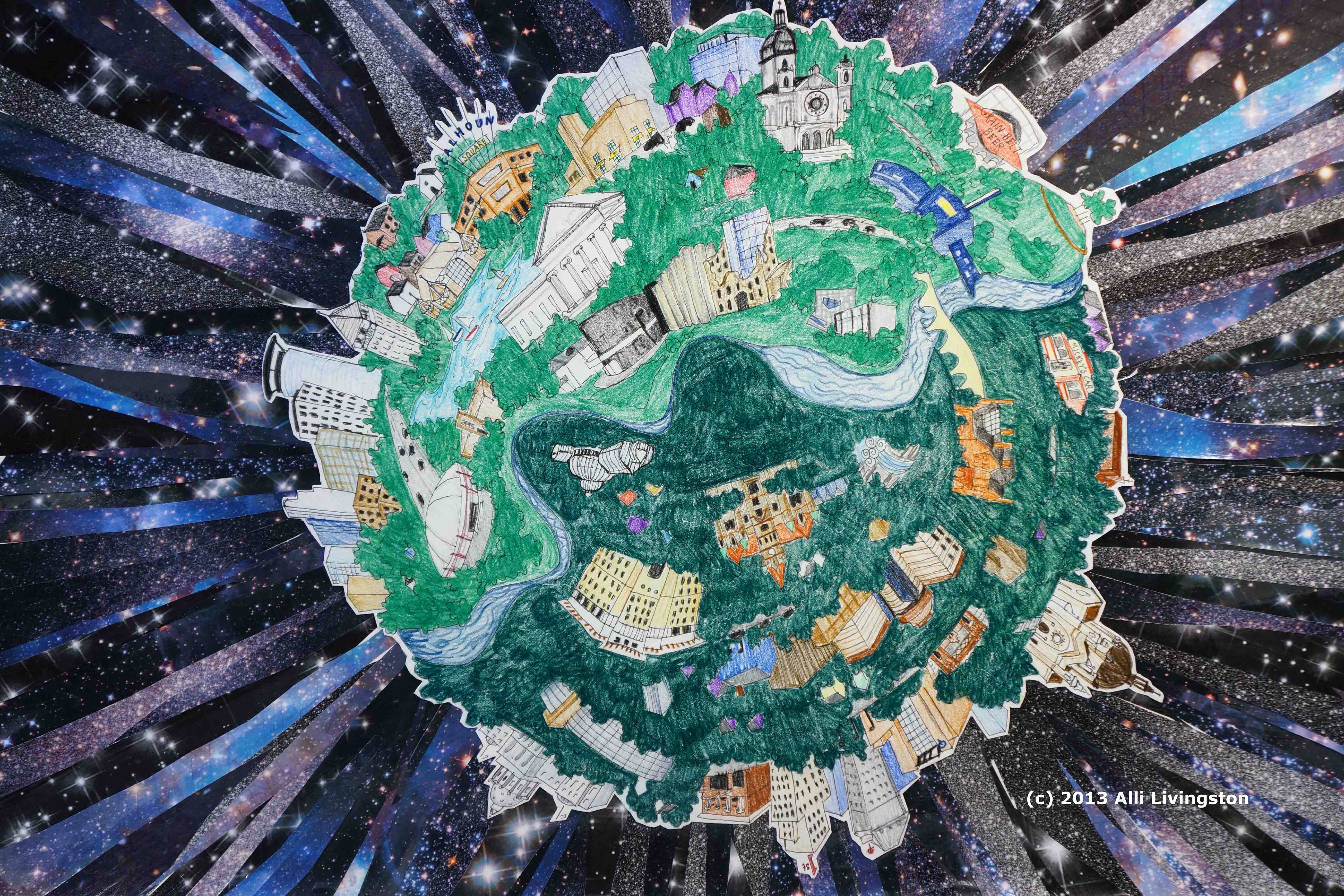
Here’s Sanders describing his project from the EPS blog:
I wanted to apply that great books approach to California literature, about which I knew very little. I just had an instinct that the perennialist approach, in which we read the proven classics, “the best which has been thought or said” in the history of the western world, would benefit from a little dose of localism, where we investigate a regional heritage and get to know our own surroundings.
A Minnesota-based project would have a lot of moving parts.
There are the obvious Lutheran influences, of course. From Germany and Sweden. Catholic influences are also strong and vocal and from everywhere. The two cities where the majority of Minnesota’s population lives, Minneapolis and St. Paul (plus surrounding suburbs), are themselves launching grounds for waves of immigrant communities. Irish folks, Northern Europeans of every stripe. More lately Hmong and Somali folks have entered the area. There are communities of people from India and Ghana and Thailand. The Native American community should be an anchoring presence. Just walking the neighborhoods reveals much about what is important to the different groups.
Then there are the literature pieces: from F. Scott’s newly rejuvenated Great Gatsby to the benign(ish) Lake Wobegon characterization of Minnesota to Augsburg Fortress publishing insightful theological tomes to the nationally recognized Milkweed Editions. I’m missing lots and this is just for starters.
There’s all the science and medicine and vast amounts of research taking place at various colleges and universities. Medical devices and industry headquarters. The advertising and design and communication communities are clever and vocal. How would one start to get a handle on a theology of place: what are the priorities of the people of these communities? How does faith mix into the public and private lives of the people who live here? And what have the results been and what can we say about what is likely to develop in this vast mix?
Maybe the beginning point is to follow the lead of Minnesotan Andy Sturdevant who’s MinnPost column The Stroll is a weekly chronicle of pedestrian interestingness in the Twin Cities. Stuff we typically we don’t see because we rarely leave our cars.
Maybe we need our theologians and philosophers and artists to take group hikes through the cities, followed by a beverage and a discussion about what they saw and understood and what it all meant.
I’d sign up for that walk.
###
Image credit: Alli Livingston
Can you tell the truth if your form is a liar?
Herzog & Morris & Searching for Sugar Man
The politburo of Kirkistan recently made its way through two documentaries. One paved the way to fully appreciate the other.

In Capturing Reality: The Art of Documentary, Director Pepita Ferrari set documentarians Errol Morris, Werner Herzog and others in front of the camera to show and tell how their work is entirely biased toward telling their story.
Why would anyone expect otherwise?
Except there is something about the documentary form that shouts “objective”—which turns out to be a profound misdirect. Some documentarians are not above setting up and staging shots in their passion for telling their story. This should surprise no one. And it is neither wrong nor a misrepresentation—depending on how the documentary is billed. As always: caveat emptor. And this: sometimes the story is true though not all the parts actually happened. Fiction writers lead with this all the time (the preface to Tim O’Brien’s The Things They Carried comes to mind).
Ferrari’s film was a perfect set-up for Searching for Sugar Man. This is an unbelievable tale of a washed out 70’s era Motor City singer/songwriter who helped foment revolution in South Africa—but who never knew it. This film exhibits breathtaking storytelling, with the paradox gripping you from the first scenes. It’s also a history lesson in how apartheid fell. I won’t give away the end except to say it is one of the sweetest stories I’ve heard in a long time.
How about taking in a documentary this weekend?
###
Glen Stubbe: “I did this thing. Let me show you.” (Shop Talk #7)
When Photojournalists Gather: MNPA Shop Talk
I’d like to see more. And better.
Photography, like sketching, is another way of interacting with what is right before us. Both photography and sketching present opportunities to see differently—both are a kind of active seeing. As a writer, I have an ongoing project of learning to see more and better and differently. Seeing better helps me write better.

Glen Stubbe Photography [@gspphoto]
That desire prompted me to show up at the Minnesota News Photographers Association last Saturday at Murphy Hall at the University of Minnesota. I wanted to hear how news photographers talked about—and thought about—their work.
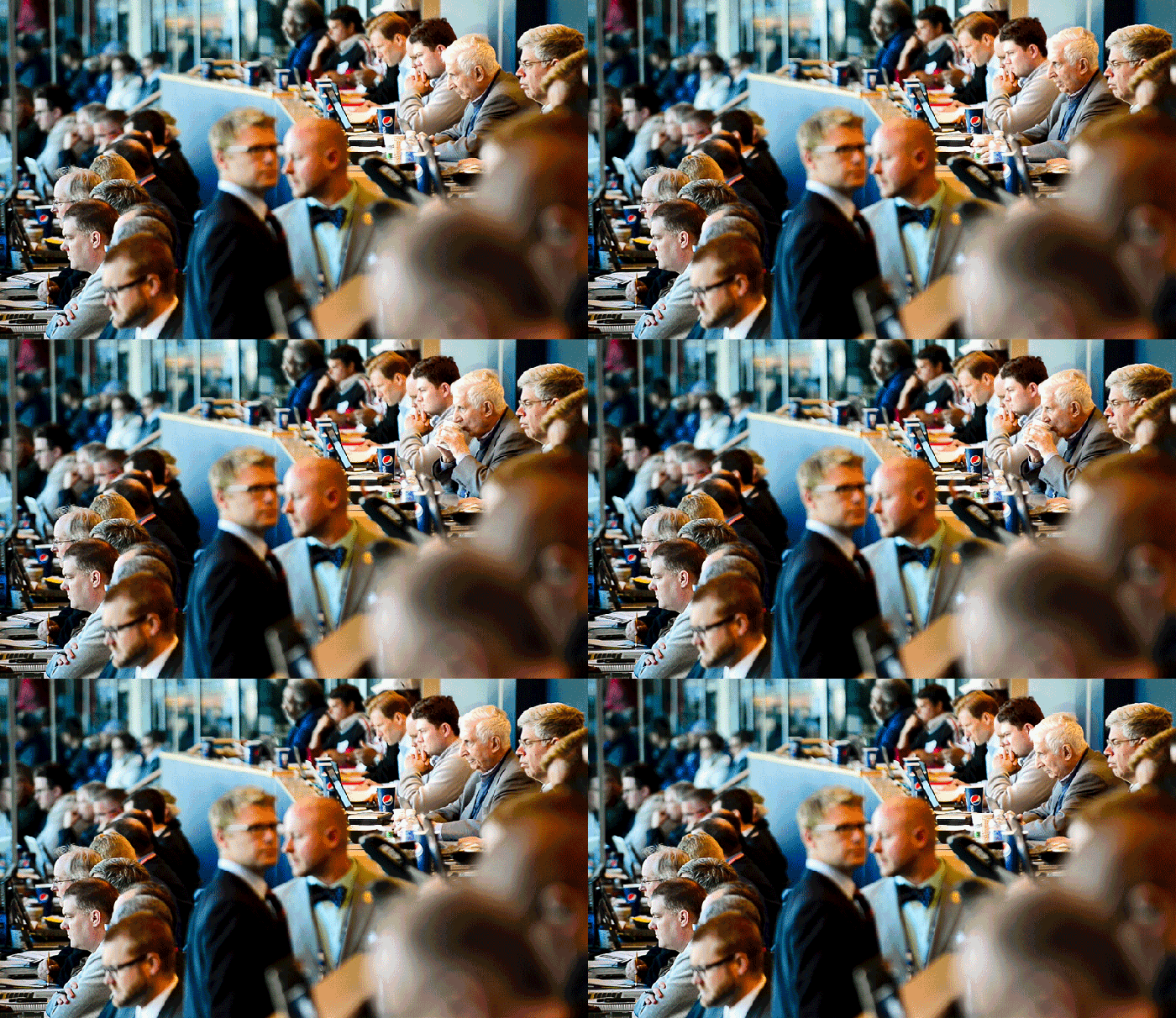
What I heard was talk of technique: details about exposure and how to layer different exposures in a single photo, when to wait and when to move when stalking the photo they have already seen in their mind. Several times I heard how photographs were once merely an accompaniment to the article and how that is quickly changing. Glen Stubbe cited an example of his photo of Michelle Bachman escaping a pointed question went on to start a national story thread.
The photographers were exactly right about this last point: as we move to a post-literate culture, visual content moves to the primary spot. How long do stories stick around in any media you consume without some compelling visual anchor? Not long. I’ve often thought readers either fear blocks of copy or simply find them off-putting. But this is nothing new, we’ve know this for some time. As a writer, visual storytelling is a must.
The photojournalists talked about the increasing role of social media and the blurred lines between reporter and photographer. But three things stood out from the panel between Ben Garvin (Pioneer Press), Glen Stubbe (StarTribune) and Jeffrey Thompson (MPR):
- “Tweet Every Assignment.” Ben Garvin said this and I think it could be true for anyone finding their way into social media. Whatever your work (or vocation or avocation), those things that are top of mind are the very things of (potential) interest to others. The premium here is on immediacy.
- Develop and Feed a Personal Vision. There are some things (photos, thoughts, words, quotes) that land outside of our daily work. There is a place for that top-of-mind content—a public place. Ben Garvin feeds that vision at his blog. For Glen Stubbe , it’s his Instagram account. I believe this personal vision is the necessary counterweight to daily work. My respect for the people I work with and read grows as I see the parameters of their thinking outside their primary work.
- Share what is remarkable. It was Glen Stubbe’s quote that helped me see the emotive content that makes something remarkable—a question I’ve wondered for some time. Something is remarkable when it makes us step out of our routine and remark, out loud, to someone else. To Mr. Stubbe, it was photographs he just had to share. The making and sharing of the photos remains a prime driver for him. What amazes us is the very stuff we share with our spouse, our kids, our friends, total strangers. It is good when we can capture what amazes us.
Ben Garvin [@bengarvin]
###
Image credit: Glen Stubbe, Ben Garvin
Bending HIPAA Toward Spontaneity—Just for the Health of It
What if our propensity for over-sharing helped us get healthy?
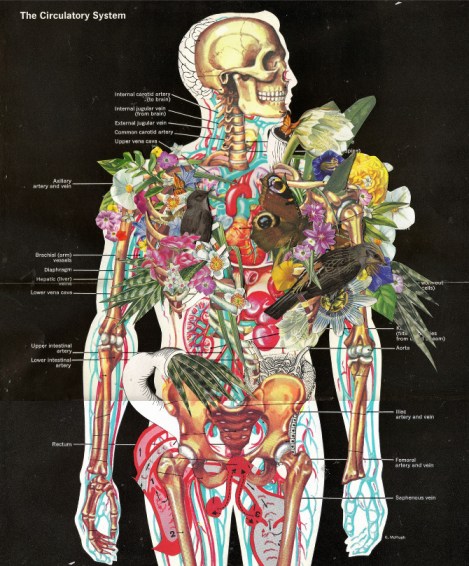 Writing for Fast Company, Jennifer Miller reported on a study that showed the amazing stickiness of Facebook status feeds over other literature. Miller queued up the notion as “mind-ready content,” which is a pithy way of getting at the heart of the study. It seems the immediacy and poor spelling and bad grammar we expect in status updates all have a way of indicating spontaneity. And one of the study experiments suggested:
…the remarkable memory for microblogs is also not due to their completeness or simply their topic, but may be a more general phenomenon of their being the largely spontaneous and natural emanations of the human mind. (Major memory for microblogs abstract: Mickes L, Darby RS, Hwe V, et al.)
We’ve been witnessing the rise of social media to help people lose weight, get exercise, eat right, among a sea of many other activities. It is the telling and the reading—all on a fairly spontaneous level—that has great persuasive powers. Not to belabor this point, but it is not just reading about others’ success that can motivate behavior change. It is when we ourselves record our progress (and lack thereof) (in public and not) that also motivates change. If you’ve ever recorded the calories you eat in a day or the money you spent in a day, you know how awareness jumps to high alert.
Can these facts about human motivation and memory be harnessed by physicians? Should healthcare have a social component…generally? Privacy on the web—always a moving target—would seem to have hit the immovable object of what the US considers protected health information: those rules the medical community follows to ensure medical records stay private. But encouraging patients to share what they are comfortable sharing, is there a possible positive health outcome in that? Maybe. Maybe not. Who is itching to read about their friend’s infection (sorry: bad word choice)? I have no desire to read colonoscopy stories. But on the other side, will we start to see spontaneous-ish declarations from our friend the corporate doctor/robot that encourage us toward healthful habits—based on our Facebook feeds?
One wonders.
###
Image credit: Ben Giles via 2headedsnake
How to Regain Wonder
Target cannot sell you a loaf of wonder
 It would seem that life beats wonder out of us. This project went sour. That team sucks. My career seems more about false starts and abrupt ends than ascendancy to the corner office. The boss or CEO or pastor or professor are in it for the money or the power or both. People and institutions disappoint.
It’s easy to paint most anything black with the brush strokes of cynicism. Our culture largely applauds and rewards this attitude, often providing pulpits for the world-weary naysayers. It’s a stance we learn early in life. We chide optimists as Pollyanna and naïve.
But if you look around, it isn’t the cynics who make things different. It’s the people with faith. I’m not talking about religion, though faith in God applies big time. It’s the people with a sense that things don’t have to be this way, that there might be a better way. And beyond that: people with a basic wonder at how the world works. People with a sense of wonder and curiosity are the refreshing people who are fun to be around. They entertain just by pointing out the invisible stuff that we never thought to think about. These are the gratitudists, whose stance of thanks sweetens the well for all around. Their faith and wonder refuse to let today’s seeming realities push forward as tomorrow’s certainties.
Where do you find wonder in your life? Hostess has closed and Wonder bread may or may not be available. But I plan on seeking out those places and people where wonder presents.
###
Image credit: Adam Pękalski via 2headedsnake
CEOs Who Blog
Training your CEO to blog
 Not every CEO is a born monologuist—but many are cut from that cloth. Training your CEO to blog means helping her or him get comfortable with the notion she or he will be joining a conversation, not delivering a sermon.
- In a conversation, self-revelation is the norm. We tell things about ourselves as a way to foster relationship.
- In a conversation, we tell what is remarkable. We talk about those things that catch our attention because we think the people we are in conversation with might also find it interesting.
That’s the tone your CEO needs when blogging: a personal voice connecting bigger things that are going on out in the world, bigger things that say something about the mission of your company or organization, but delivered in a personal tone.
This takes time. For many if not most CEOs, it takes too much time to blog. But the potential benefits are that customers and potential customers will join into the relationship building. Authentic relationship building will be a big part of commerce going forward—so it is worth your CEO’s attention.
###
Image credit: via 2headedsnake
Mind Your Obits
This Week’s Hero: Wallace Allen (1919-2012)
The things you learn from obituaries:
Mr. Wallace Allen had been a long-lasting editor at the StarTribune (three decades) and passed away in December. During his tenure he led the way to “make the paper more accessible to readers.” He seemed to have a focus on words and design, and employed both in his passionate understanding of what a newspaper could accomplish in our culture. At 93, he continued to read the New York Times and the StarTribune daily.
Two bits from Tuesday’s Obituary stand out:
- Though he suffered various ailments, he had been able to get around with a walker. On that walker he had this bumper sticker: “Free press. Free speech. Free country.”
- And even after decades of editing he continued to edit and write in retirement. Notably, in one of his last assignments editing a newsletter at his assisted living home in Honolulu, he urged his volunteer staff to “to investigate actions by the home’s management.”
So—a commitment to finding and telling truth all the way through.
That is remarkable.
###
What is Remarkable—in Your Industry?
Connect the Dots for Your Clients and their Customers
 Over at the Same Rowdy Crowd, Joe Loveland wrote about the best and worst of the Blogosphere. One of the points Loveland made is that the blogosphere is less about creating and more about aggregating. Nothing new there: we’re all curators today. But in aggregating, we are also connecting the dots for ourselves and for each other. This actually is a value-add: because I get to see how you are thinking about life today. Which also points to the ephemeral side of social media. Like tweets, blog posts are mostly of the moment. Meant to be read and discarded, much like verbal conversation: as we announce something, it is gone. That is the nature of sound.
Blogging and tweeting (and etc.) are simply tools of remarking. My working definition of “remarkable” is that a thing is remarkable when I choose to tell someone about it. Bear with me: there’s more to this. If I remark on something to someone, I think they’ll care. And I think they will find it interesting. I won’t remark on something to a friend if I think they’ll not care or if I think they will find it boring (like my 10-year-old friend thought me yesterday).
So the work of social media, in many ways, is that of connecting the dots by remarking on things we think people—our audiences—will find interesting. And along the way we show our expertise (or reveal our shallowness) even as we invite our audiences to think with us about one slivery facet of a topic. One small thing. One small thing that is of today.
It is this one small thing, this one slivery particular that has the power to pull in the outsider. This is because we can become fascinated by the inner workings of someone else’s world. It is the momentary pulling aside of the curtain that both reveals what is inside and draws others in.
Over at Clarity Coverdale Fury they are running a series of posts on the conscious consumer. Rob Rankin remarked about how his wife rented a dress for a Christmas party rather than buying one. He called the organization she used the “Netflix of fashion” and went on to hint at how this model of commerce will intrude into yet another industry. That is interesting and remarkable and a nice connection for most any audience.
One challenge of communication today has to do with finding those remarkable things you can share with insiders—and industry outsiders—which they will find interesting. It’s a language challenge. And a focus challenge. But since the days of monologue and the bully pulpit are long gone, this is our invitation.
###
Image credit: via Frank T. Zumbachs Mysterious World

 conversation is an engine