Philosophers don’t pack heat. Right?
On Preparing for Ignite Minneapolis
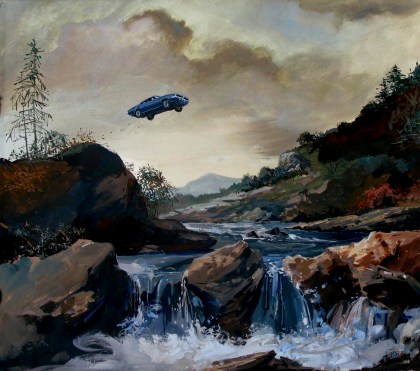
outcome not yet determined
The unrelenting movement—every 15 seconds a slide changes—makes speaking at Ignite Minneapolis more a verbal dance than a straight-out talk. I’ve compressed four voluminous thinkers (Martin Buber, Emmanuel Levinas, JL Austin and Wayne Booth) into pairs of 10 second sound bites. If the audience includes philosophers packing heat, I may not make it out alive. Practice, practice, practice. And more practice. And then practice lots, lots more. It’s the only thing that begins to still the nerves.
I remind myself of the dream: to see if anyone will bite on my notion that ordinary conversations can be turned into insight-producing engines. All it takes is four steps to tune our thinking—but I’ll wait until after I present to spill the beans on “How to HACK a Conversation for Insight.” It’s the message I’m excited about presenting. Very, very swiftly.
###
Image Credit: Zohar Lazar via 2headedsnake
Getting Voice Right
Speaking for Someone Else is Always a Collaboration
 Speaking in someone else’s voice is not really possible, though copywriters are often called on to do just this. The process—when done well—is more like hearing the client’s messages and collaborating to expand and deepen those messages. If the goal was just getting the words right and getting the message out clearly, strong editing would suffice. But the strategic copywriter often contributes substantive content. Helping the original ideas along by serving as a conversation partner to the client, to help them process through the message and its ramifications. The resulting content can prove stronger than the original content, though the danger is that it can sound like a committee wrote it. But a strong copywriter owns the process and follows through with a singular voice.
A singular, compelling voice.
These old Miller High Life commercials help make that point. These were filmed in the 90’s, directed by Errol Morris through Wieden+Kennedy. The retro male voice is just over the edge to make you laugh, but there is a bit of truth in the way the Americana is presented. The voice-over is perfect—and a perfect throw-back to 1950s and 1960s. That’s where Miller wanted the target audience to dwell for 30 seconds—with that slight whiff of what a man once was. Or at least what the Miller/Wieden+Kennedy collaboration thought might produce spending behaviors. And they succeeded: throughout the set there is the slightest hint of something you sorta remember—something your dad’s friends said. Or maybe your grandfather’s friends.
You’ll find a bunch of Errol Morris-directed Miller commercials here, but “Broken Window” (below) does a good job of capturing our grown up fear of the Other.
###
Image Credit: doylepartners.com via 2headedsnake
Going to Church Today? Consider This.

expect a conversation that will help sort things
Probably someone will speak to the group—that’s typically what happens. And there will be singing. Prayers will be offered. You’ll shake a few hands. Maybe you’ll learn something new. Maybe you heart will be lightened. Your load lifted.
If heart-lightening or load-lifting happens, stop and think why. Was it because of magic words spoken from the pulpit? Not likely, as there are no magic words. But there are words that find a home in a person’s conscious thought and get absorbed there to do some work. One of the tests the old church fathers used to determine if a letter or text should be included in the Canon (our Bible today) was whether it had the power to change people—did the text speak with authority into a people’s lives? Did something happen because of hearing the text? When those old words get uttered from the pulpit today—they are not magic—but their truthiness has sticking power.
Just as likely: you meet someone who says something that affects you. Makes you think. Makes you reconsider an impending decision. And perhaps that same heart-lightening or load-lifting occurs. Sometimes we meet people who speak truth and it has the same effect.
And consider this: perhaps you go into that time expecting to hear something. What I mean is, sometimes we move into a situation actually expecting to hear something that could have the power to change how we think or act. You might call this listening. Or attentive listening. Or attenuated listening. Or listening on steroids. But whatever you call it, this is the most productive penultimate approach: listening with expectation. Then you pick up the tasty truthiness from any source.
###
Image credit: Douglas Smith via 2headedsnake
Is it Time You Wrote Your Autobiography?
I’m not writing one. Then again, who isn’t adding to their autobiographical material daily, whether with words or deeds?
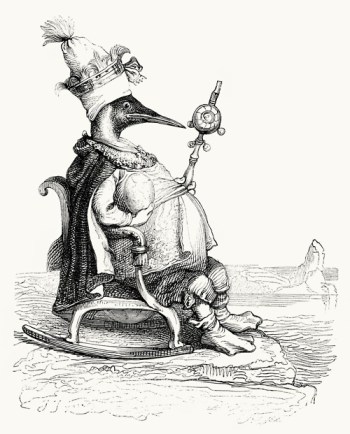
but surely I am king of something
I’ve been reading the autobiography of R.G Collingwood, an Oxford philosophy professor of the last century. He set out to trace the outline of how he came to think—a kind of personal intellectual history. Early on in his life (at 8 years old) he found himself sitting with a philosophy text (Kant’s Theory of Ethics). And while he did not understand it, he felt an intense excitement as he read it. “I felt that things of the highest importance were being said about matters of the utmost urgency: things which at all costs I must understand.” (3) That reading set one course for his life.
One thing that makes this book worth reading is his notion of how questions and answers frame our production of knowledge. Collingwood said he “revolted against the current logical theories.” (30) He rebelled against the tyranny of propositions, judgments and statements as basic units of knowledge. He thought that you cannot come to understand what another person means by simply studying his or her spoken or written words. Instead, you need to know what question that person was asking. Because what that person speaks or writes will be directly related to the question she or he has in mind. This is incredibly useful when studying ancient texts—like a letter from the Apostle Paul, for instance. It’s also incredibly useful when listening to one’s wife (ahem), or a student or to anyone we come in contact with.
Another thing that recommends this book is hearing him tell about his main hobby: archaeology. Collingwood was the opposite of a couch potato. He spent a lot of times in digs around the UK, unearthing old Roman structures and then writing about them. Here too, he explained that while some archaeologists just set out to dig, he only set out to dig when he had formed a precise question to answer. His digging (tools, methods, approach) were all shaped by this question. By starting with a question, he came to very specific answers and, of course, other brand new questions.
Questions begat answers. And more questions.
What question is your life answering?
###
Image credit: J-J. Grandville via OBI Scrapbook Blog
What’s a Rolodex and why would I want one?
When will the cloud break your heart?

“I don’t care if Google has my information,” said the sales woman.
Digital natives may be a lot of things, but one thing is certain: they aren’t too worried about technology. For them tech is a fact of life, like air and electricity and coffee—always there. Always ready. All slick and wireless and greased to go. That’s why Facebook is mostly just a free $13 18 20 billion Rolodex and Google is a verb. Thus has it always been. And so it shall always be.
Except when it isn’t.
Digital natives have abandoned themselves to the cloud assuming it will always be there. Mostly they don’t have a plan B when stuff goes away. Plan B is to call friends for numbers and addresses and recreate what they had before—but that’ll never happen because Facebook will be there, right?
I don’t put myself in the digital native category, which means I remember a bunch of dumb old stuff like phones with cords and 5 ½ inch floppy disks and, well, I won’t bore you with a kiln-load of nostalgia. But I retain crisp memories of this: important stuff vanishing with a bad piece of media. And an old computer simply destroying things I’d spent lots of time on. More than once. And that lesson stuck. That’s why my contacts and files reside in multiple places, including the cloud. That’s also why I do not assume Internet access in my travels. Instead I have this dumb game of searching for Wi-Fi wherever I go: just last week I ran across a signal called “Chuck Norris” in South Minneapolis. My many experiences losing important information have made me happy to seek redundancy.
The sales woman at the AT&T store has no problem storing contacts, messages and files with Google. Same with millions of us. Who cares if Google scans our communication and sends the right advertisers our way? Who cares if Facebook is about to have one of the largest IPOs in history, based on the dumb comments we type and the hours we spend on the site? Nobody cares—we get what we want out of the deal. We chat with people and divert ourselves with dumb games. Half of Americans think Facebook is a passing fad—and GM thinks their advertising with Facebook is a waste of money. Even if both of those are true, something more enticing and powerful will surely rise next.
I’m guessing down the road we’ll realize the much larger issue was not about losing stuff. And the larger issue maybe isn’t even that we’ve given away the keys to our connections between friends, family and acquaintances. We have yet to understand the full impact of this progressive-thought harvesting, but I’ll admit Nick Carr’s post on digital sharecropping has set me to thinking about where I spend my digits. It also makes me reluctant to entrust everything to the cloud and the enterprising folks who manage it.
###
Image credit: Chris Buzelli via thisisnthappiness
You’re Soaking In It—Creative Unresolve and the Good Life
The issues that roil your nerves and kick you in the gut may be instrumental in pushing you forward.
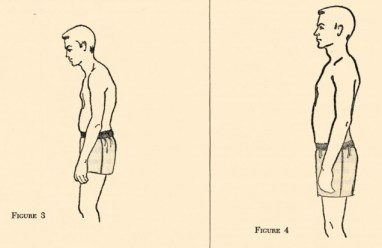
let creative unresolve lead you forward
A few days back I wrote about sitting with unresolve as long as you can, as one method for producing creative ideas. John Cleese had a few choice words on the topic. After talking about this in class and listening to Mr. Cleese and experiencing it afresh with my own writing, I realized a couple of ancient voices had been swarming around, punching me in the face with this very point—only applying it to the rest of life.
One voice is a warrior-poet. Aside from being handy with a lyre and deadly with a sling and stone, he had a very lucid and descriptive (often prescriptive) way of asking God to do terrible things to his enemies. And yet, though he often had the power and opportunity to take action, he didn’t. Instead, he turned from the shortcut, obvious solution and waited. We all know that waiting for God seems to take longer than anyone likes.
Same thing with another Old Testament character—Habakkuk. He saw bad stuff coming (a brutish band of thugs coming to decimate his homeland) and decided also to fix his attention on God. And wait.
Something happens when we wait. Sometimes we can fix things in life right away. Often we can’t. So we wait. And just like when we’re working through a creative solution to a thorny business or communication problem, we sit with unresolve and let the discomfort itself push us forward.
Same thing with life. We wait and seek and wait. And–this may be most critical—we reach out. We reach out when things are not right with us. And reaching out is nearly always worthwhile. Reaching out looks like a phone call. Reaching out looks like an email. Like prayer.
Some students from my copywriting class are graduating. Everyone says it’s a low-energy job market—difficult for the job hunter. I sympathize. To these graduates I simply offer the notion that your creative unresolve can lead you forward into networking, conversation and, yes, to reach out in prayer.
I still maintain that the best stuff in life happens in and through the choices and actions made directly from chaotic, creative unresolve.
###
Image Credit: itchy banquet via thisisnthappiness
Copywriting Tip #5 for English Majors: Why Voice Matters
The human voice will always reign as king of communication.

words contextualize our presence and vice versa
I recently talked with a pastor who opted out of social media. Entirely. If he wanted to connect with someone, he picked up the phone.
“That seems anachronistic,” I said.
“No—that’s how I connect,” he said. “I talk with people.”
And then I realized: Yes! The sound of the human voice will never go away entirely. People may joke about removing the phone app from their phone, but that remains a joke. There’s something about the human voice that demands a response and always will. The human voice has a directness that goes beyond any technology, whether text or tweets or simple words on a piece of paper or images scattered on a cave wall. When our advertisements don’t get through, when our emails fall short, when our Facebook message goes unanswered, we go stand in front of someone and ask our question.
The human voice will always reign as king of communication–it says “I’m here. I’m present.”
Students in my professional writing classes at Northwestern College wander the web with ease. But they are loathe to pick up the phone to talk with people about potential job prospects. This is, perhaps, a pitfall with pursing writing. But perhaps the pitfall itself can show the way forward.
As copywriters we try to use that voice. We mimic it by writing in a conversational manner. With short sentences. We try to “sound” like the voice—“sound” because the sound is in a reader’s head (so—not really a sound). The more our writing sounds like the human voice, the more invisible it becomes—with the goal of messages that get into one’s mind without someone remembering they just read something. Kind of like how you drive to work everyday.
Unconvinced? Check out this German ad (and below) about organ donation. The pathos in the voices is unmistakable, even if you don’t speak German. But the voice is magnified by the dialysis chair. In the train station. It’s a bit of theater that amplifies the voice.
Context switching—from hospital to busy platform—becomes that platform that makes the human voice all that much more effective. The voice, plus the human before them—hard to resist. And emotion is a definite part of this.
Moral: “Write like you talk” is good advice. And not easy to achieve.
###
Image via thisisnthappiness
No One Expects the Spanish Inquisition
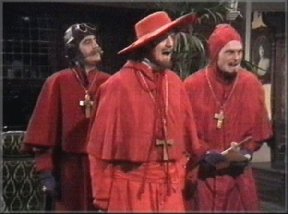 This was a favorite phrase back in High School, when there was no end to how much Monty Python we could quote each other. Lo these many years later, it turns out that John Cleese had quite a lot to say about creativity. I invited Mr. Cleese to lecture in my Freelance Copywriting class last week (via Youtube). Two lectures—spaced 18 years apart—show and reinforce that the best ideas come from sitting in that uncomfortable spot where things are not resolved. The quick solution is often not the best solution. Mr. Cleese argued we need space to become playful, time to border our playful escape from life’s ordinary pressures, time to grind through creating, confidence that mistakes made while creating mean nothing and humor—which is one of the quicker ways to get to this open mode needed for creation.
My goal with copywriting students (and with myself) is to learn to inhabit that chaotic place of unresolve. To live in that space—for as long as possible—while fitting different ideas to the problem. Looking for a match. The chaos of the unresolved space has some motivating effect that helps generate new solutions.
If we wait there.
###
Via Brain Pickings
Advertising’s 10 Best Kept Secrets (Via The Ad Contrarian)
These ten facts run counter to all we’ve heard about what’s happening on-line. For that reason alone they are worth 76 seconds of your time.
Click here.

 conversation is an engine