The Bare Facts about Freelancing
“The life of a plant is harder than it seems.”
In this case, the plant truly is our hero.
Copywriting Tip #4: Speak Truth to Profits (Dan’s Story)
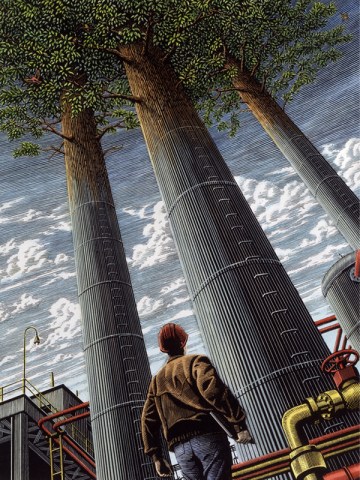
ancient copywriters rocked
I’m fond of a particular collection of ancient texts. One tells the story of a copywriter named Dan. Dan’s client was all-powerful and routinely dismantled (sometimes literally) those who did not do exactly as he asked. This client never hesitated making impossible requests and had no problem forcing his teams to guess his mind.
Dan was an employee who had been groomed and mentored and specially-trained for leadership. And yet Dan retained a commitment to the recognition that even his abusive, ill-tempered, seemingly all-powerful employer had to answer for his actions and did not have as much control as he liked to believe. This perspective had been shaped early in Dan’s life by his large, extended family.
Dan’s understanding of life held sway over his work. And while he was dedicated employee, he had committed himself to write truth, no matter the cost. This put him in a bind when it came to this client, because this client’s wealth and power routinely corrupted those around him, so most everybody told the despot exactly what he wanted to hear.
The story goes that one gruesome assignment forced the entire team to guess what the employer dreamed and interpret that dream. Or be dismantled. Of course no one could do it, and so they said. The employer force the point and the team prepared to be dismantled. Dan heard of the impending mass dismantling and he and his buddies thought they better act on their understanding that even the king answered to God. So they prayed. That’s right, this is a story of a copywriter who conversed with God so he could do his work better. Dan would often point to these conversations with God when people praised his insights.
And he did get insight. From God. It was not an insight that put the employer in a good light, but Dan told it anyway. And everyone lived another day.
The Moral
Truth matters more than appeasing the abusive despot before you.
And This
The copywriter’s work has always been about providing insight into the soul of a client and the heart of a client’s audience. Get help with that.
###
Image credit: Douglas Smith via 2headedsnake:
What Grid Are You Using Today?
Everyone uses a grid to sift the events and inputs of any given day. Your grid is your life experience that informs how you hear and see everything: all that you’ve read. How you’ve experienced life. The dark and bright sides of life you’ve experienced. Nerd or jock. Pretty or not: all of this speaks to how you hear conversation and how you interpret actions. Even your intentions and dreams are part of the grid.
Over at MultiCultClassics, the bloggist(s) sees ads and news through a grid of inequality. Copyranter uses a polarizing screen to force communication events into best or worst categories, with little in between. At church on Sunday the teacher reads an ancient text through a doctrine developed centuries later, invariably forcing the ancient author to say what the author never meant. Werner Herzog reads Curious George showing one species making a buffoon of another (what, you thought Curious George was a kid’s story?).
But there is no escaping our grid. We’ve always been a subjective species. Always will be. The best we can do is identify the baggage we carry that holds us to our interpretations. And it’s best if we can be honest with each other about where we are coming from when we read this text, or interpret that comment.
Honesty about how we understand things makes for good conversation.
###
Copywiting Tip #2: Start Fast. Engage Brain.
Start today.
Now. This very moment—long before you have a clue what you are doing. This sounds different from what Young said. Young said go slow, gather your material and masticate. Chew it over. And keep chewing. I agree with Young but with this addition: trick your mind into engaging the problem by jumping all the way to the end before even beginning to gather. Then go back to Young’s process.
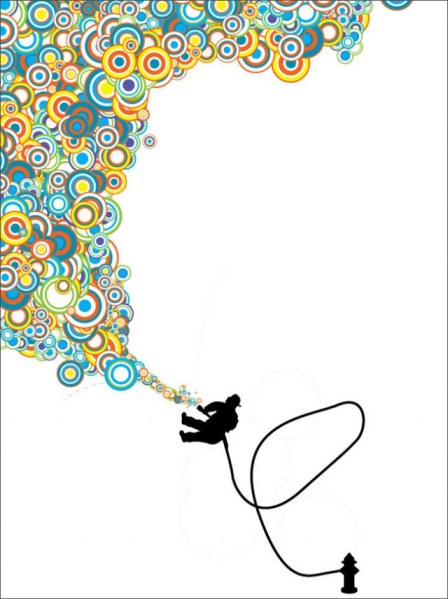 Writing the end result out of ignorance does this: you know you’ll write dreck so your internal Editor-Nazi takes a nap while your inner poet-child scrawls all over the wall with red crayon. When you wake up the next day and look at the terrible mess the poet-child made, you recognize a couple very productive words that hint at where this thing needs to go. Sometimes those words or images drill to the internal core of the problem you might never have guessed at with all your precious process.
###
Image Credit: Oliver Barrett via 2headedsnake
Copywriting Tip #3: Words + Images (Think Visually)
How To Think Visually?
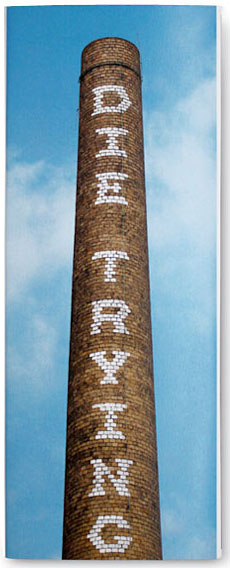
Exhaust your brain with mad thinking not lazy searching
Thinking visually and combining words and images is something of a kaleidoscope experience. Especially for the English major. These folks love words and regularly ask them to leap and dance and bite and romance. English majors have been going steady with words for years. I’m asking these people to see others—but it’s not about two-timing your fascinating Helvetica friends. Just add an image to the mix and step back: did the image just comment on the words—or vice versa? Did the words explain the image? Or did the words supply a subtle subtext that subverted the image? Or vice-versa? Now we’re spinning the kaleidoscope and it is all sorts of (kinda nerdy) fun.
Hint: Don’t Start With The Google Machine.
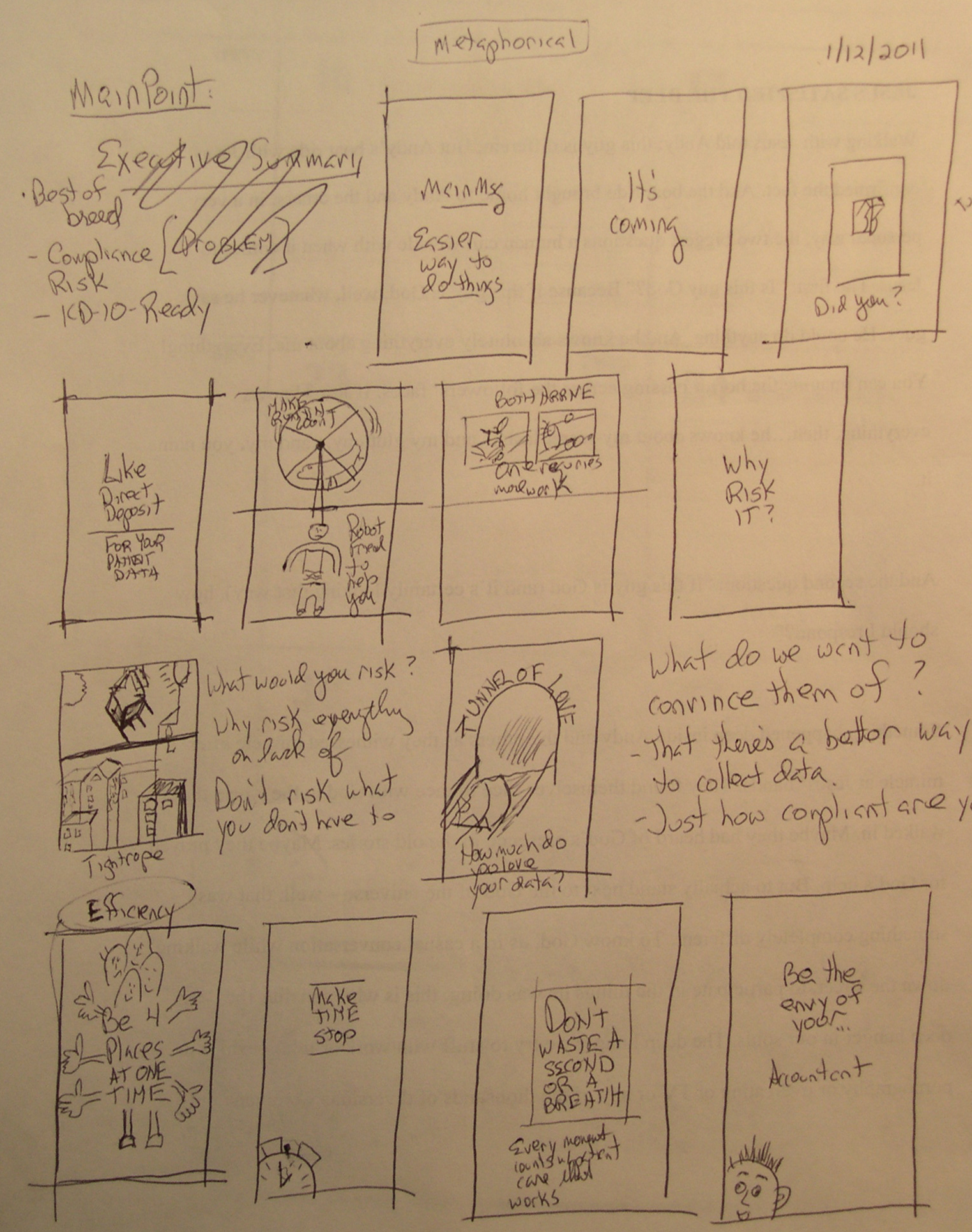
The temptation is to type your first thought into the search bar and see what images pop. This lazy approach will be at least mildly amusing and completely distracting for the next 73 minutes. There is a more productive way to begin: pen and paper. Any number of artists and writers will tell you that working through potential ideas in the isolation of a blank page helps you focus. The drill is to do it again and again. Page after page. Hour after hour. Until you can’t stand it anymore. From all that terrible, worthless dreck that you would never show your mother let alone the cute human in your Classics class, pick the two or possibly three that don’t make you wretch. That are kinda ok. Google those.
The key is to get your brain working and keep it working long enough that your subconscious takes up the project, freeing you to walk around the lake or pull a prank on your roommate.
You will produce something in this manner.
Try it and tell me if it worked.
###
Image credit: Maximum stacks/Creative Review via thisisn’thappiness
Below: dreck. Maybe an ad came from it. Maybe not.
Copywriting Tip #1: Love the Study
 In Freelance Copywriting (Eng3316) we’ve started producing work in earnest and every week (including tomorrow) another student piece moves into their portfolio. All the students have signed up for work they’ve never tried before—ad concepts, radio scripts instructional booklets, and many other forms. All according to where their writing passions are leading them.
One thing I love about copywriting is learning new stuff. Whether it’s asking a doctor questions during brain surgery or watching a silicon wafer get doped and fired or learning about the medicines Lewis and Clark used (forced marches and blood-letting seemed to resolve a lot of their ailments). There is no end to fascination with how the world works. Putting what I learned into words (and images) electrifies the whole task: spooling out my argument and helping show why anyone would care what the patient said while the doctor probed his frontal lobe, or why ramping quickly to 900 degrees centigrade matters when firing a wafer or why Dr. Rush’s bilious pills had such a strong…(ahem) purging effect—it’s a puzzle that rewards more as I attend to it. Words and ideas are the puzzle pieces. The goal is to engage very particular audiences (with much shorter sentences than I’ve used here). James W. Young would call this the gather and masticating stages of the process. How could you not love this work?
Part of the research is figuring out what makes a good print ad. Or what makes a radio spot compelling. In other words, what forms have people used to tell these stories in the past and how do we use these forms today? Or do we pick a new form (which typically means recycling another older form)? These are questions we answer again and again as we look at what’s being done today and revisit the best of the best.
But love of learning is the engine. And putting things into words is the transmission. These are the bare bones vehicle of a copywriter.
###
Image via Copyranter
What Makes Something Remarkable?
Old Volkswagen Station Wagons never die.
 In several classes at Northwestern College we’ve talked about what makes something remarkable, as in, “Hey, let me tell you about this thing I saw….” The Heath brothers tried to parse out the secret of remarkable in Made to Stick, and did a good job noting six principles that make something sticky. But in our Social Media Marketing and now in Freelance Copywriting classes, we’re noting “remarkable” is less science and more art.
Was this ad remarkable in 1966 when DDB’s Marvin Honig wrote it for Volkswagen? Maybe. It is remarkable now because of the nostalgic, iconic bus—just look at the shape of that thing! But for me it is the story telegraphed from inside the bus and at the center of the image: the small businessman waiting to sell you some chili. The copy plays out the story benefit by benefit. Sure—you know you are being sold, but you’re willing to walk right into the story for the 26 seconds it takes to read the copy.
The ad is remarkable in retrospect because of the place this vehicle took in American culture. The story is in the ad, and the story in the ad played out in real life. Surely “remarkable” has something to do with reflecting real life. That’s where things get sticky.
Read the copy here.
###
Via copyranter
Wait for It (And Resist Checking Your Phone)—Dummy’s Guide to Conversation #8
Anyone who writes for a living or who must regularly produce creative solutions knows the best ideas are typically not the first ideas.
I’m about to begin teaching a freelance copywriting class at Northwestern College and I’m guessing there will be some who will submit copy they’ve done at the last minute: something thrown together to meet the assignment requirements, but just barely.

don’t rush me
I hope college students don’t remember college as the place where they learned to do the least at the last minute to see how much they can get away with. This is not a great attitude to take into the workplace. And it is a fatal if you work on your own, because it leeches craftsmanship (and joy) from the work itself. And craftsmanship—care for the work itself—is one of two key elements in meaningful work. The other element is learning how to serve someone else’s needs and finally get over yourself.
When I brainstorm for an ad or a bit of copy I fill up pages and pages with pure dreck. Worthless stuff that only serves to get my keyboard moving. And then, at some point, one bit of dreck solidifies into a line that is sort of ok. Or a direction that makes sense. But that only comes after the pages of dreck. Occasionally it comes first, but I need the pages of dreck to help me realize any possible or potential brilliance.
How does that work in conversations? Same way. The first stuff we way say is obvious and not that interesting. The first conversations of a cross-country car trip have a vanilla flavor. But by the time you’ve arrived at New York to catch a flight to Europe, you know the deep hurts and high joys of everyone in your car, and you’ve somehow settled on a series of jokes about fast food restaurants or particular car types that leave you all gasping for air because they are so funny. It takes time and sustained attention to get to that place where the good stuff comes out. It’s almost like you invent the context for familiarity as you go.
This is the way for lots of satisfying things. And it is the way for ordinary conversations. I’m learning to dwell in a conversation. To not rush it. To give myself and other space to breathe so that they (and I) feel free to let come what may. And that can be uncomfortable because silence is awkward for us. Soap opera stars lock their eyes in those silences. In a cross-country car ride you look out the window. In a conversation, you just…look…and wait. But the silence works to lube thoughts. Resist the urge to move to the next thing. Resist the urge to pull out your phone. Wait for it. Because eventually something will come along that changes everything.
###
Image Credit: Langdon Graves via thisisn’thappiness

 conversation is an engine