We’re not good with multiple voices
But if top-down communication isn’t working,

People find their voice.
###
Image Credit: Kirk Livingston
Of Trolls and Engineers and Open-Source Dialogue
What will it take to think together?
How hard can it be to learn something from a conversation?
Really hard—if you go against what your audience believes or wants to believe. In Mistakes were made (but not by me), Tavris and Aronson make a compelling case that facts mostly don’t get in our way when we form opinions. In fact, cognitive dissonance feeds our ability to continually spin our decisions in a positive light. So citing facts becomes like hanging paper in a room—I see you pasting it up and already I’ve tuned out the pattern.
Also hard if you fear reprisal for speaking your opinion. Given the troll-mentality that affects the best of us when hidden behind our keyboard, why dare express an unpopular opinion if some sort of flame war results? And yet saying what we think—stating aloud how we read the situation or how we understand something—is key to learning. We need to hear ourselves to begin to see room for change.
Also hard if talking with a monologist who piles on detail. Engineers are not the only ones guilty of this. Many of us forget to pause, take a breath, and check that anyone cares what we are saying. Learning conversations require a bit of white space.
Learning by talking is also hard if hurried—and perhaps this is the most common difficult. Who’s got time for the long conversations that take hours to unwind? Long car trips are great for this. So are camping weekends. Mrs. Kirkistan once described to me a three-month conversation she had with a good friend when they drove to San Francisco for the summer. I was envious.

We all need a guardrail at times
I’ve recently run across a phrase that is new to me but which attracts me very much: deliberative conversations. The phrase seems to suggest a way around the hard bits I’ve described above. This background paper, Deliberative public engagement: nine principles, put out by the National Consumer Council in the UK, seems wildly optimistic about human talk. Take the first three principles:
The process makes a difference
The process is transparent
The process has integrity
And yet, these three, along with the other six principles, describe well the very essence of our best conversations—the ones where we actually learn something, the ones where we change our mind. Shot through this paper is the notion that people need time to sort stuff. And they/we may just need some guidelines to help us move through.
So rather than leaving it at “wildly optimistic,” I might prefer to say, “Yes. These are exactly the requirements each of us has for a truly deliberative, learning conversation.”
Now.
How to make that happen?
###
Image credit: Kirk Livingston
What Good Is a Group?
The occasional spark. The intentional fire.
I’ve been wondering this lately: what good is a group?
Mrs. Kirkistan and I lead a small group that regularly meets together to read ancient texts. At the moment we’re slowly going through Jesus’s Sermon on the Mount. It’s riveting stuff.
There comes a time in the life of every small group where people start to bow out. Life gets in the way. Work, sickness, commitments and gradually the small group is, well, really small. Only a few show.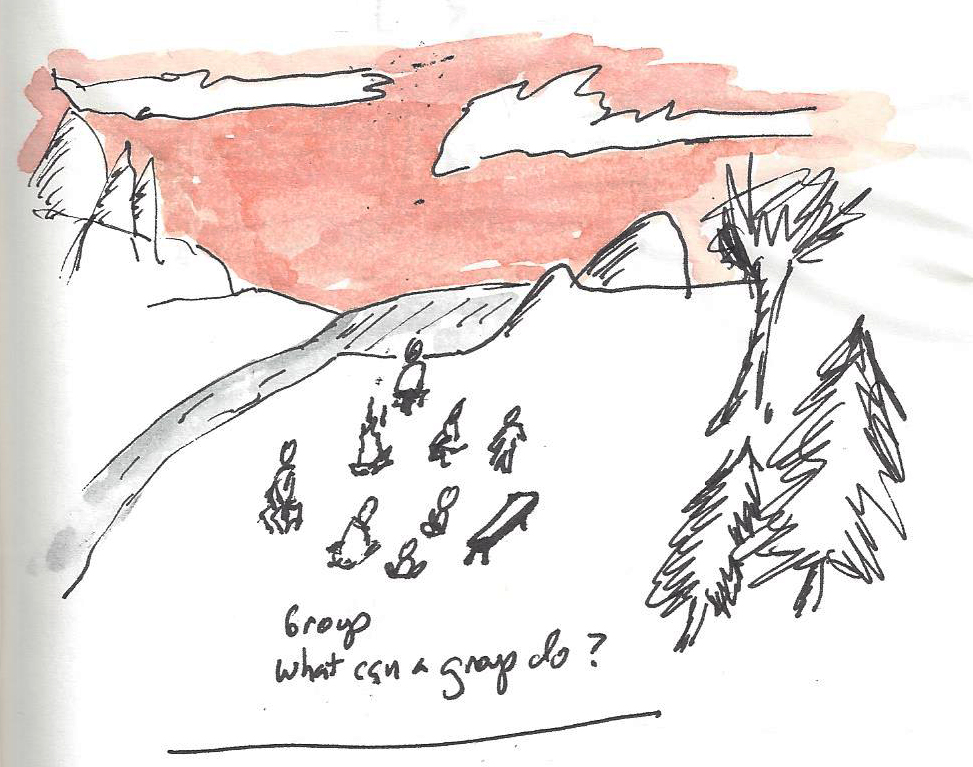
Even so—with only one or two showing up—some magical spark can happen in the course of an ordinary conversation. We talked about the pointed words Jesus had to say about lust and adultery—old terms we don’t hear much in our culture—experiences so common they seem to be just expected parts of everyday life. In the course of hashing through those words, we talked about seeing people as objects. And suddenly I was making connections with Levinas and Buber and realizing I am also in need of reforming bad thought habits.
These conversational sparks happen at work too. Yesterday I was lamenting to myself the ways large corporations dampen the enthusiasm of otherwise bright, motivated people. In the middle of that thought a client returned a call that we had cut short the day before. He had been thinking through our conversation and had five or six things to add. This client—from a very large corporation—had found a way to take personal ownership of the process and our discussion had a sort of breathless excitement to it.
This is rare.
And cool.
Our seemingly ordinary conversation had unearthed some live wire. And a group of us were doing our best to act on it.
So—all this to say that groups can do things individuals cannot. And sometimes a group conversation can create something brand new.
###
Dumb Sketch: Kirk Livingston
Sometimes only a dumb sketch will do
Show. And (perhaps) tell.
My client has a subset of curious employees who love detail. They work with detail all day, design with deep specificity and get impatient with any glossed-over, highlights-only story. They want the details and don’t weave in that marketing hooey.
These curious employees regularly talk with their customers who also want detail. One curious employee told me a story about a conversation with a customer. The customer didn’t get how this product could work—the benefits simply did not register. Then the employee showed the customer a cut-away drawing. The customer did the mental work and could instantly see the benefits of the product. The customer needed to do the work himself, and that work opened the door to the benefits.
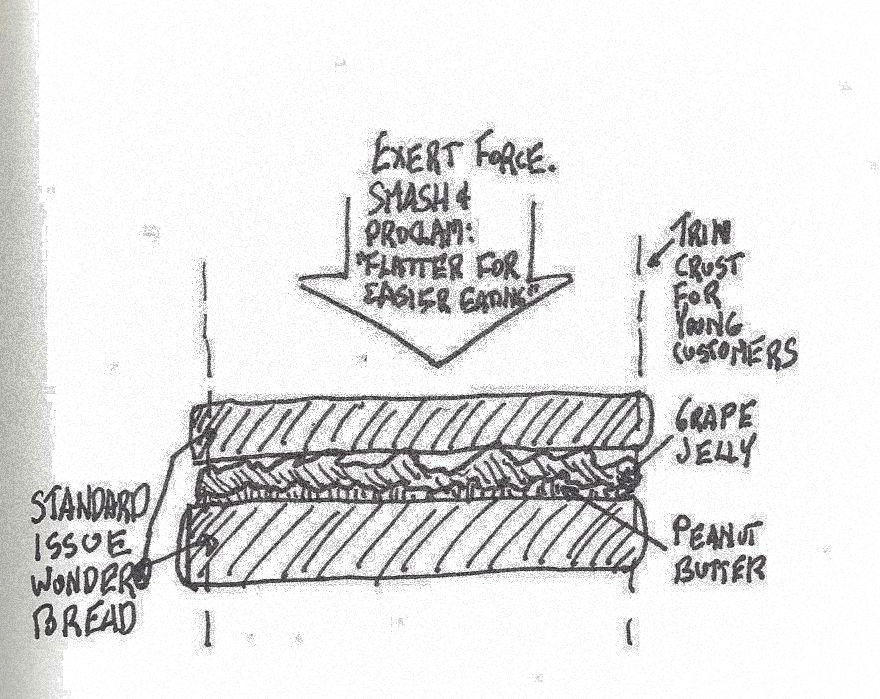
Flatter for easier eating
Moral: Images can go where words fear to tread.
###
Dumb sketch: Kirk Livingston
What about those hard conversations? (DGtC #27)
Are explosive words better from an authority or friend?
I am convinced that where people gather: a classroom, a department, a congregation, discussion is a more effective use of time than all of us listening to monologue. Many teachers explore the flipped classroom, where their time together is in discussion and the preachy monologues and lectures slide to a different time, place and pace. In general I am attracted to collaboration and many voices speaking. I keep hoping coherence will show up.
We may want to collaborate, but obstacles arise. We may want to be walking catalysts, but something stands in the way. Unsaid obstacles can block collaboration. And sometimes we need to have hard conversations, the kind where we not only disagree, but our different positions are emotionally charged. To assert my position will cut at my conversation partner’s position and vice versa. There may be anger. There may be tears. There may be power-plays. This conversation could be explosive.
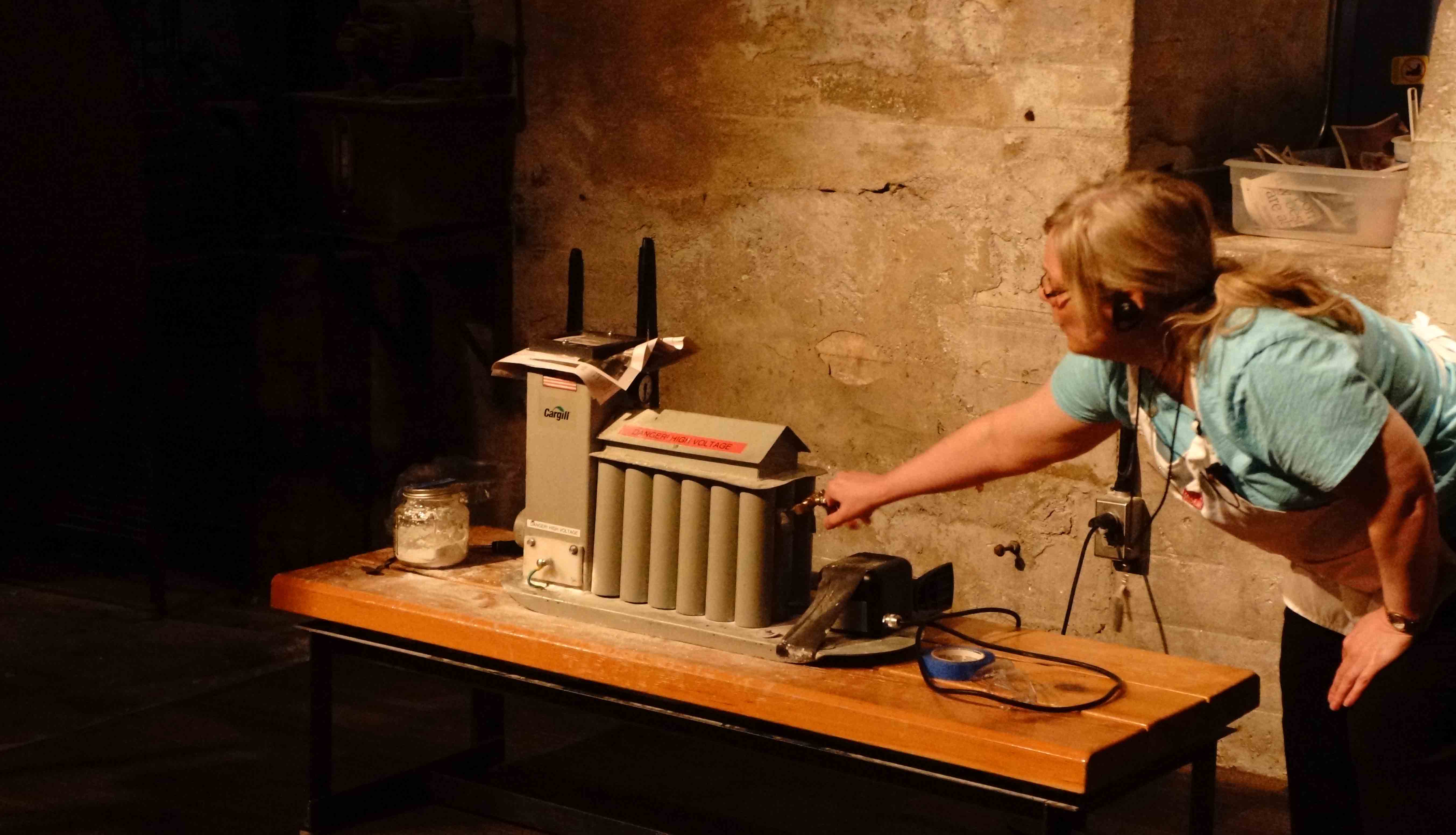
Demonstrating the explosive past for Minneapolis flour mills.
The late Wayne Booth advocated a kind of listening-rhetoric: listen intently enough to your conversation partner to faithfully tell their position (without denigration) while still holding to your own. This would not be the place for win-rhetoric, where your goal is to beat your message into someone else. Emmanuel Levinas might say we have an obligation to watch out for the person before us—this conversation partner. In fact, he might advocate that this person before us is our first priority. Martin Buber might say we continue to hold that person in high regard as a person, inviting them to consider this different perspective rather than trying to force our viewpoint. Even Jesus modified the law with love and compassion (he actually said love was the fulfillment of the law).
So…
- Say we take the listening seriously as we approach the hard conversation.
- Say we take seriously our commitment to the growth and personhood of this conversation partner (stay with me here). And we recognize this person as a person (versus an employee or student or lesser-being).
Given a kind of love for the person before us, we say the hard thing. And the explosion happens. No guarantees, but that blow up can be a worthwhile communication event. Good things can come from that, hard as they are.
Personally, I shy away from these explosive conversations.
But is shying away from a potentially explosive conversation doing a disservice to the thing that needs to happen between us?
###
Image credit: Kirk Livingston
George has a superpower. You do too.
Problem: How to get people to appreciate something they already have?
Solution: Dramatize it.
Nicely done.
###
Via Adfreak
Martin Buber, Jesus and Kim Kardashian walk into a bar
The Sermon on the Stool

“I can’t be your love object, Marty,” said Kardashian.
“How could you be my object?” said Buber. “As far as I know, we’re still all “I-Thou.” Though I will say your Instagram screams “I-it.”
“That’s the spirit, Marty,” said Jesus. “Way to marshal your intent.”
“Bartender—give me a Jägermeister.”
[The End]
###
Image credit: Kirk Livingston
Catalyze This! (Dummy’s Guide to Conversation #26)
What to do: Engage colleagues or just put up with them?
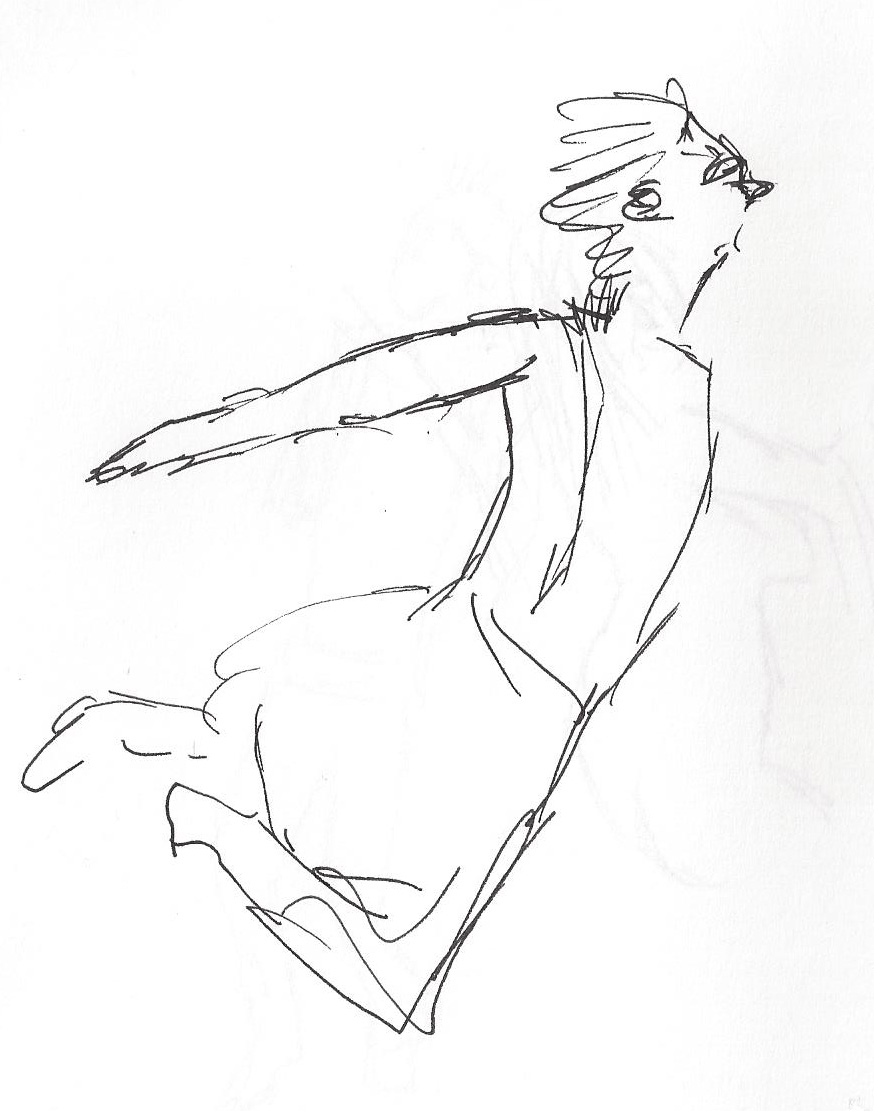 Between David Rock and David Bohm there is a lot of good advice about helping people have productive conversations. Rock’s “Quiet Leadership” is all about helping your friend find the answer she already knows, which is particularly useful for folks with leadership responsibilities. Bohm, on the other hand, was an omni-thinking physicist with deep curiosity about ordinary life connections. Bohm (and Rock, for that matter) are two of my conversational heroes.
Here’s Bohm on how it is that something new gets created between two people (italics added):
Consider a dialogue. In such a dialogue, when one person says something, the other person does not in general respond with exactly the same meaning as that seen by the first person. Rather, the meanings are only similar and not identical. Thus, when the second person replies, the first person sees a difference between what he meant to say and what the other person understood. On considering the difference, he may then be able to see something new, which is relevant both to his own views and to those of the other person. And so it can go back and forth, with the continual emergence of a new content. That is common to both participants. Thus, in a dialogue, each person does not attempt to make common certain ideas or items of information that are already known to him. Rather, it may be said that the two people are making something in common, i.e., creating something new together.
–David Bohm, On Dialogue (New York: Routledge, 1996)
Every day affords some catalyzing opportunity, often hidden in a very ordinary exchange.
How will you leap in to catalyze today?
###
Dumb Sketch/Timed Gesture: Kirk Livingston
RIP Stan Freberg
Clever Copy
Enough with the pizza-slapping, Harry. Even if it does let you talk about “tender” pizza.
Read the article at Ad Age
###
Via Advertising Age

 conversation is an engine