Tokyo: Industrial Landscape Tourism
“Factory infatuation” maybe a thing?
Yesterday’s post drew a comparison between liminal spaces and the work that happens in a good conversation: how we help each other explore a topic, which often opens a route to a conclusion and even action.
Along the way I confessed that I am drawn to those more industrial parts of the city. Artist Michael Banning said that particular bent is starting to look like a thing people do. At least in Tokyo. He pointed me toward this:
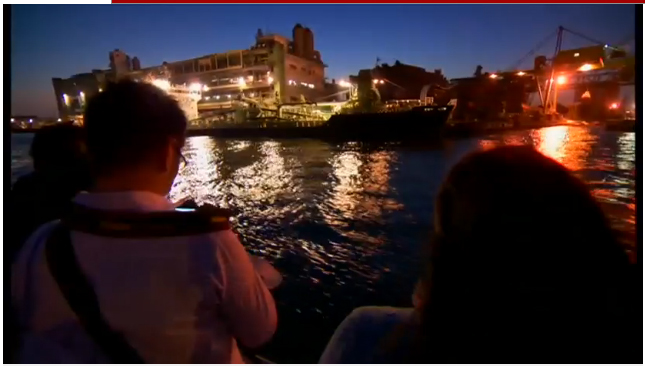
Click to play.
###
Via BBC World News
Let’s Get Liminal: How to be a Co–Laborer/Co-Thinker/Co-Contributor
Show up to explore the space between
My friend helps researchers at his Midwestern university organize their thoughts for publication. He also helps them apply for grants to fund their research—a function many universities are increasingly focused on.
To do this work, my friend has found ways to walk alongside new professors as they form their research interests. By staying beside them over time (years, even), he is able to help identify places where the work can go forward and also begin to locate potential funding sources. That’s when the hard work begins of explaining the research to a funding committee.

Approaches to Minneapolis
This space between—where the research shows particular promise but is still unformed—this is where a conversation can bear fruit. Maybe even the goal itself is starting to take shape, along with possible routes to that desired end. Sometimes it is the conversations surrounding the goal and routes to the goal that open it for exploration.
Michael Banning is an observer and painter of liminal spaces—those spaces and places that we typically don’t even see:
I am interested in the liminal spaces found at the edges of the inner city. Amid the trucks, weeds and railroad tracks of those often post-industrial surroundings, one can find compelling views of the distant skyline as well as a sense of peace and quiet uncommon in the urban experience.
–“Parking Lot near Train Tracks,” by Michael Banning, label from James J. Hill House Gallery
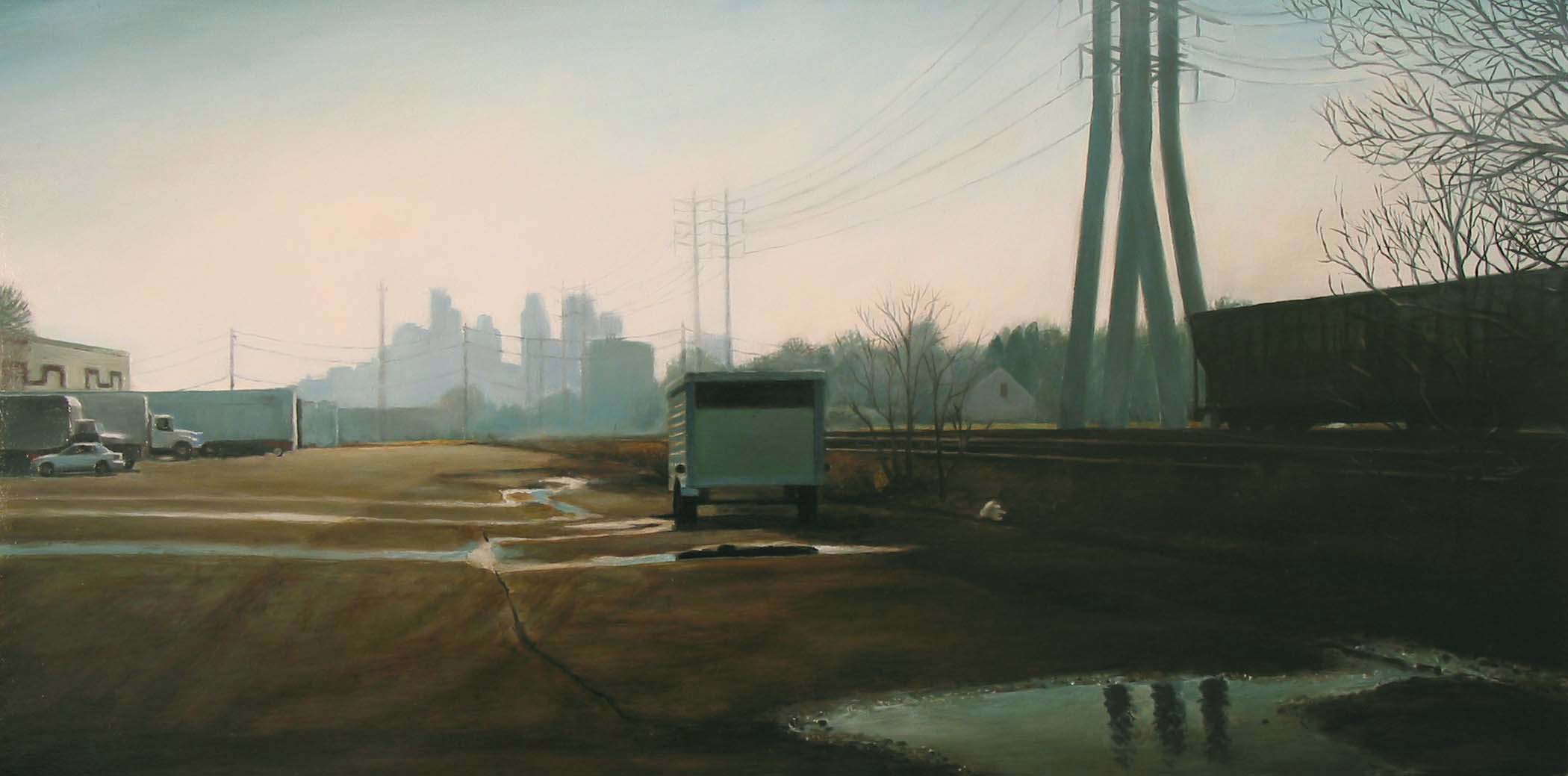
Parking Lot near Train Tracks (Photo courtesy Michael Banning)
See Michael Banning’s work here.
When we are lucky enough to find ourselves talking about these liminal spaces with each other, we might be collaborating in a particularly effective way. Typically we don’t have a clue when we’ve entered such a verbal space. Years later we might identify a conversation that was a turning point. Perhaps the best we can do is to remain open to entertaining each other’s unformed thoughts.
Who knows what might result?
###
Image credit: Kirk Livingston
Pearls Before Swine: The World According to the Supreme Court
Stephen Pastis helps us wonder aloud.
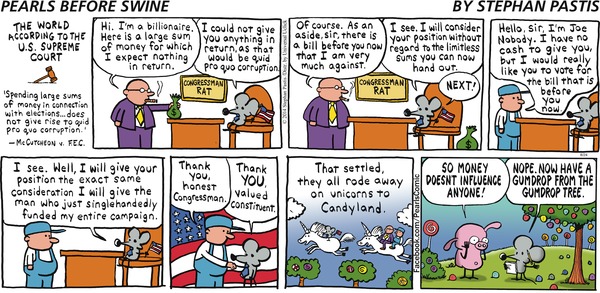
That seems right: “So money doesn’t influence anyone!”
###
Steven Woodward: Dictionary, 2005
How did you think of that?

Apart from [extensive world] traveling and reading, the majority of my adult life has been spent alone in a very larger room, imagining what I wanted to see and how to create it.
Read more about sculptor Steven Woodward here and the James J. Hill House Gallery here.
###
Image credit: Kirk Livingston
When Walking To The Podium, Remember This.
Resolved: “You are gonna dig this.”
No one will argue that public speaking is petrifying. On this we all agree. Even seasoned performers routinely get the nerves before they walk on stage. In my limited experience, the one thought that calms nerves and spurs me forward is that something I’m about to say will help someone.
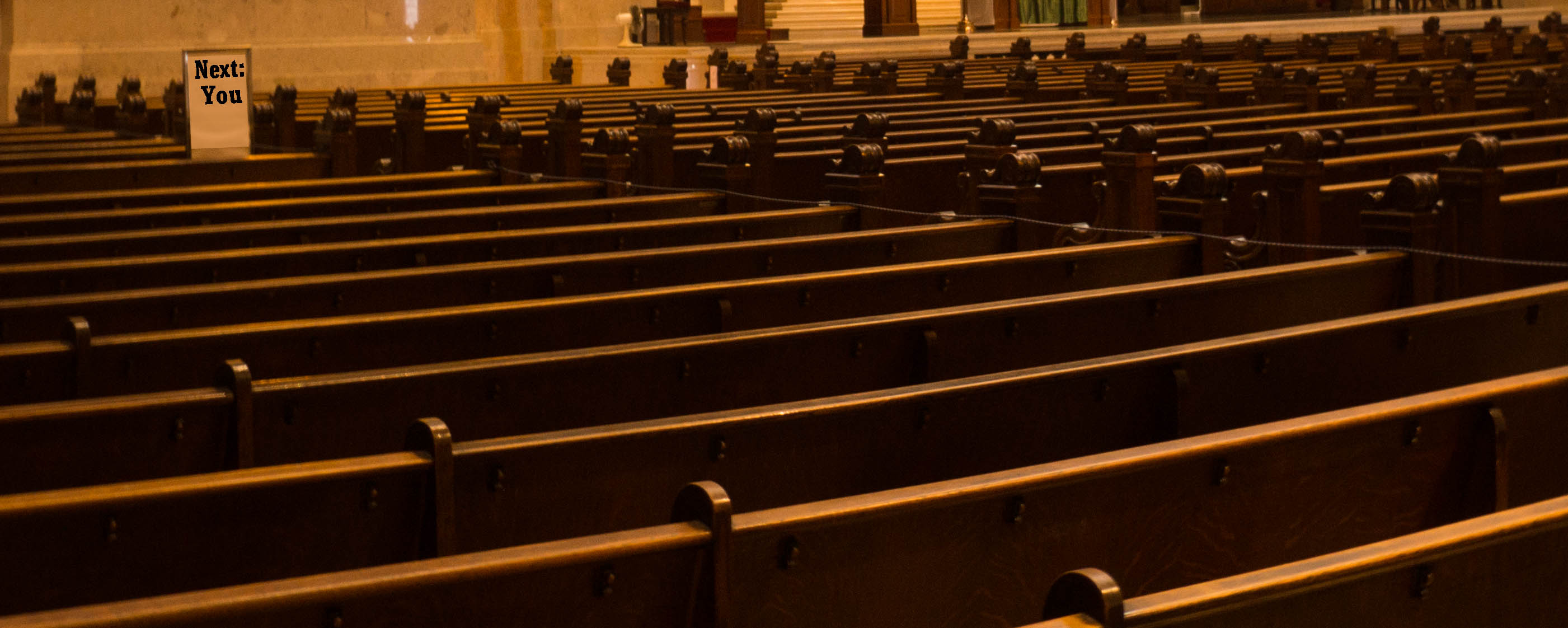
Next?
This occurred to me recently in working out the details for launching ListenTalk. Someone suggested a party and my first reaction was, “Ugh—I hate being the center of attention. No thanks.” But on reflection I found myself at a decision point: do I want to give my best effort toward helping this book succeed or will I follow natural impulses and just drop the published book off on Amazon’s front steps, ring the doorbell and run. Because if I do the latter, I am guaranteeing a narrow audience.
On further reflection, and perhaps with a bit of divine intervention, I realized the message of ListenTalk is much more about this hope I’m starting to entertain: that readers will begin to happily engage in and explore their own daily conversations with something of a treasure-hunter’s gusto. That’s the good thing I want readers to understand. That’s the thing people are gonna dig—once they get it.
So, for those about to engage in public speaking, or for those looking for motivation to move forward with some public task, ask yourself: How am I helping the person I’m about to engage?
It’s always good to refocus on the other person.
###
Image credit: Kirk Livingston
Citizens: Neither Audience nor Consumers but Makers

Reuters image
In a viable self-governing nation… citizens can only know themselves by way of the civic agency. True citizens are not the audience of their government, nor its consumers; they are its makers.
–Hyde, Lewis. Common as Air (NY: Farrar, Straus and Giroux, 2010) 27
###
Mind-reading and the Perfectionist’s Dilemma
“Come here, you big, beautiful rough draft.”
You know what needs to be done.
You know how to do it.
But—given your schedule—you simply cannot attend the details. What you want is to jump to editing the rough draft—but who’s got time to create that rough draft?

This is what I’m thinking….
We could be talking about drafting an email, an article or a chapter. We could be talking about a curriculum for a class or a seminar. We could be talking about writing a memo to employees or a letter to partners or a speech to stakeholders—anything that requires focused attention for a time so you can spin out and organize the details. We’re talking about anything you need to create from scratch to deliver to others. Any communication that solves a problem you’ve noticed.
Now is when you need an assistant who can move forward without hand-holding. Now is when you need someone who knows what you know without you telling them. Now is when you need a mind-reader.
But there are no mind-readers.
Are there no mind-readers?
I won’t say copywriters are mind-readers. I will say I find myself in situations every week where my client has provided 15-25% of the details but expects our project to organize 100% of the content in a coherent, compelling fashion.
Sometimes I wonder if our close friends, colleagues and collaborators serve as near-mind-readers. With them we feel free to spit out the raw bits of what we know. And as we say it, we realize what we need to do next. To tell someone what is on our mind is the first step to accomplishing a task. Those conversations are a kind of verbal rough draft.
Don’t be intimidated by the blank page. Embrace the notion of doing something mostly wrong and partly right, which is to say, embrace the rough draft.
It is much easier to change words on a page than it is to put words on a page.
###
Image credit: Kirk Livingston
Could Your Organization Grow Your Spirit?
LEED-like certification for human-spirit-sustainable workplaces
LEED certification is a rating system that recognizes a building’s sustainability. LEED or Leadership in Energy and Environmental Design, rates a new building project using five different categories:
- Site location
- Water conservation
- Energy efficiency
- Materials
- Indoor air quality
Businesses and organizations with the highest ratings display them as a sort of badge of honor for the public to see.
What if there were some system to measure and rate the culture within a company or organization? Since we worry about bullying at school and we’re starting to recognize bullies in the office and toxic corporate cultures, does it make sense to start thinking about organizations that sustain people rather than beat them?

For instance, what if any organization was judged by these four categories:
- Bias toward collaboration
- Employee engagement indicators
- Mix of top-down messaging with true conversation
- Ratio of CEO-pay to rank-and-file pay
Seem ridiculous?
It would be difficult to measure many of these, especially since most of the categories seem so subjective. And yet, would it be impossible to measure? Would it be worthwhile to measure? Are we already moving in that direction?
In Minneapolis/St. Paul—like any set of cities—insider talk has long identified those cut-throat corporate and institutional cultures that routinely toss human capital to the side. Insider talk also identifies those bosses, managers and C-suite people without empathy and/or ethical moorings. New employees are generally forewarned when they sign up.
Of course, business is still about earning a living for the people involved even as the organization serves some human need. So don’t think I’m championing some communistic collective. Profits will and must be made to help society move forward.
But as we move toward fuller employment, workers will become more choosy about where they spend their days. And those cultures that have a less sustainable ethos will not be the winners.
I’m not convinced I’ve identified the right categories to measure. What categories would you include?
###
Image credit: Kirk Livingston
Danny Santos II: Shooting Strangers
People in Place in Space
Check out the work of Danny Santos II, a street photographer in Singapore. He creates composite images of people moving through locations in and around Singapore.

In each place, I set up my camera & tripod right in the middle of the street, then stand a few feet away with my remote trigger, clicking away for about 30 minutes to an hour.
Composites are digital images made of multiple photographs taken from the same spot. These photographs are then combined using photoshop, and with a little extra care, these shots can stitched together seamlessly to look like one single photograph.
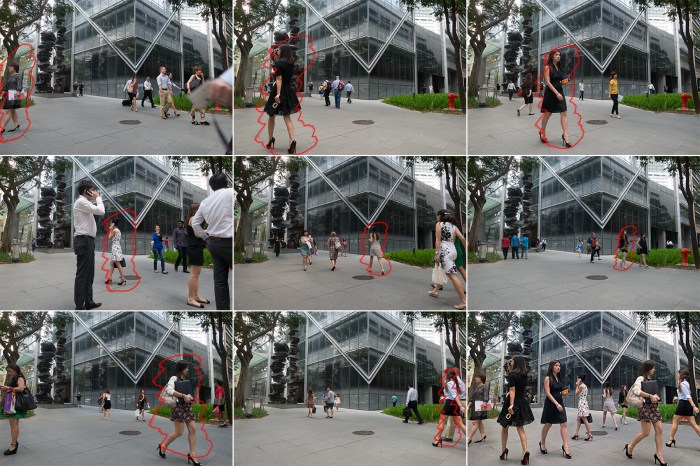

It’s all real. It’s just not all real at the same time.
###

 conversation is an engine