Neville Brody: Making Space on a Page to Think
In the advertising business, it’s not in the interest of advertisers for people to think about what they’re presented with. It’s in the interest of advertisers that people choose to think in the way the advertisers intend them to. It’s a formulaic thing, where there’s only one possible outcome in advertising. That creates a space where the “right to thought” is taken away from people.
I’ve always tried to approach my work as being open-ended and with a degree of abstraction or ambiguity. This prevents it from being a monologue, because it is a dialogue. The work is only completed when a viewer has looked at it and made his or her own decision as to the full meaning of the piece.
From Debbie Millman’s, How To Think like a Great Graphic Designer (NY: Allworth Press, 2007) 72-3
Guns & God & GOP: Why Listen Beyond What I Know? (Dummy’s Guide to Conversation #20)
Why listen to a different viewpoint?
Q: I’m a passionate guy. I have strong beliefs and I know what’s true about the world. And yet coworkers and neighbors blather on with their ill-founded stupidities. Why won’t they listen to reason?

A: I’m glad you ask because we all fall into this state from time to time—often without realizing it. What stands as a clear and obvious reason to me looks like wishy-washy BS to you. And your clearly developed opinion looks like ideology-driven, fact-picking to me.
One guy in the Bible talked about an opportune time for everything: birth and death, crying and laughing, speaking and shutting your pie hole. Maybe there is a time to shout your opinion and maybe there is a time to listen to what someone else has to say.
We do a lot of shouting in this country.
What if we experimented with listening?
If there were a time for listening, it would happen in a conversation where we truly wanted to hear what someone else wanted to say. Perhaps we’re talking with someone we respect a great deal. Maybe we’ve purposefully sought out a friend with a different opinion—just to try to hear it clearly.
What if we listened intently to the pieces of reason and fragments of story our friend uses use to tell her side of things? What if we intentionally entered a conversation with the purpose of listening rather than doing battle or proving our point? We all know that the purpose we bring to a conversation has a big bearing on the outcome. We’ll get a fight if we want one. We may get an interesting eye-opener if we listen properly.
Note how different that intention is from the half-listening we typically do while we form our rebuttal. We’re all guilty of preparing a torrent of words to combat the wrong-headed notions spewing from our worthy debate opponent.
But what if it was not a debate we wanted? What if, after listening we tried to summarize what our conversation partner said to see if we could get it right? And only then, after hearing and summarizing, we formed a response. And what if we didn’t reach for the phrases we heard on TV or trot out the canned responses our club’s magazine produced? What if we stayed in the moment—with this friend—and voiced our disagreement even as we continued to listen?
Here’s what can happen: You and I can remain passionately eloquent about what we believe. But we also can say with certainty what our friend believes-though we disagree.
That kind of talk can feed your passion, feed a relationship as well as make for an interesting and engaging few moments of human connection.
That’s why we listen to a different viewpoint.
###
Image credit: Kirk Livingston
Help: My Friend Talks Past Me! (Dummy’s Guide to Conversation #19)
Vary Your Response to Train Your Friend
Q: My friend and colleague stops by many times a day to chat. We do a similar job but in different areas so it’s helpful to compare notes. The interruptions are mostly welcome, save for this one habit of hers that drives me crazy: she cannot seem to hear me. It doesn’t always work this way, but when she gets agitated, she keeps saying the same thing over and over. She doesn’t seem to hear my answer and then she just keeps repeating herself. Sorta endlessly. I want to thump her forehead with my index finger to get her attention, but that seems improper behavior between two adults. What to do?

Wait–let’s talk.
A: It’s good you hold off from thumping your friend’s forehead. Treating each other as adults is a top-notch approach to human interactions and is definitely the right way to go. Your friend gets stuck in an endless anxiety-driven loop she cannot escape. The loop and anxiety are so strong she gets a little lost.
Help you friend by coaxing her off the endless merry-go-round of anxiety. Start by slowing her down—you are trying to break into the endless loop and it may take more than words. Stand. Look into her eye. Hold her shoulder. Speak slowly. Do what is necessary to get her attention. Bring the kind of attention you reserve for those serious situations where you might be delivering bad news, say.
Mind you: you are not talking down to her. Try not to say, “Calm down!” as you might a child who has lost control. This is not a time for condescension or disparaging or ridicule. Your adult friend just needs another perspective to intervene, that’s all. And that’s what you are going to provide. We all need another perspective—probably more often than we realize.
Deliver your response in slow, measured tones. Your point is not to solve the anxiety loop, but just to engage in conversation. Your goal is to work through the problem together, to discuss and sort out next steps. It’s the conversation that is the remedy.
That’s what friends are for.
Keep that up and—just possibly, given time—your friend may see the anxiety loop before she steps on.
###
Image credit: Kirk Livingston
Medtronic, “Accounting Fiction” and Irish Performatives
How do you say “Fridley” in Irish?
To those who live as if words are worthless and refuse to see the role of systems in building wealth, let us now gaze on Medtronic’s deal to buy Covidien. What does $42.9 billion get you these days, besides a cohesive portfolio of medical devices and a bunch of intelligent workers and systems? Smart people are speculating it also buys freedom to spend foreign profits without worrying about more taxes, which may amount to a roughly $20 billion future spending spree.
Of course corporations will seek the best deal for making money—that is the project of corporations—and will surprise no one. Do Minnesotans worry a beloved company born and bred in Minnesota is growing up and leaving home? Of course. But the significant investment Medtronic has made in their operations in the state should cause worriers to back off a bit. A quick driving tour through Fridley and Mounds View reveal a rather permanent corporate presence.

How can you control chaos and churn?
But then—of course—stuff happens and things change. Which produces anxiety in hard-working people.
What I find interesting is that while the deal involves a significant exchange of money, it also changes a key definition that then dodges a set of tax requirements. Note this: becoming an Irish company is mostly in name only. The StarTribune quotes Eric Toder of the Urban-Brookings Tax Center as describing the newly formed Irish company an “accounting fiction.” So while Medtronic will always be a Minnesota company, it will become an Irish company. And there is money to be saved in being an Irish company. By cutting this deal—by pronouncing these words in international legal documents—a new thing happens at Medtronic that will please shareholders and worry local workers. JL Austin might call that corporate speech-act a performative. And there is no question that performative will change things in the real world.
[Full disclosure: The author has worked for Medtronic and continues to consult for Medtronic.] [At least the author did until posting this.]
###
Image credit: Kirk Livingston
Words Make Stuff Happen
What must you say today to move forward?
And who do you need to hear from?

###
Image credit: Kirk Livingston

Northern Spark 2014: Don’t Freak
Go, by all means. Just don’t freak out…

…at the…

weird stuff.

Northern Spark: June 14 9:01pm – 5:26am, Minneapolis
Worth every minute.
###
Image Credit: Kirk Livingston
Today I’m Listening
What can you hear between the lines—and where will it take you?
I’ll start by listening to a set of phone conversations my medical device client fields constantly. I want to hear the questions. I want to hear the responses. But I especially want to hear the tone of the questions. I’m listening for urgency and for actual language used. I’ll write down the words and note the flow and capture quotes. These notes and my listening will guide the communication that takes place next.

Listening goes places.
I’ll spend the balance of the day listening between the lines for another client. But this time I’ll be listening to the text I am creating for them. And I’ll listen to the process they use to serve their customers. Listening and revising and re-jiggering and re-listening.
Listening is required to know where to go next
What—or who—are you listening to today?
###
Image credit: Kirk Livingston
Your 10,000 Hours
Trust Your Process
There are times when you don’t know the answer and you cannot see a way to an answer.
There are times when you simply cannot see what to do next. This happens constantly in my work: even today I have a project that needs a unique kind of help. Help I cannot even quite imagine.
What to do?
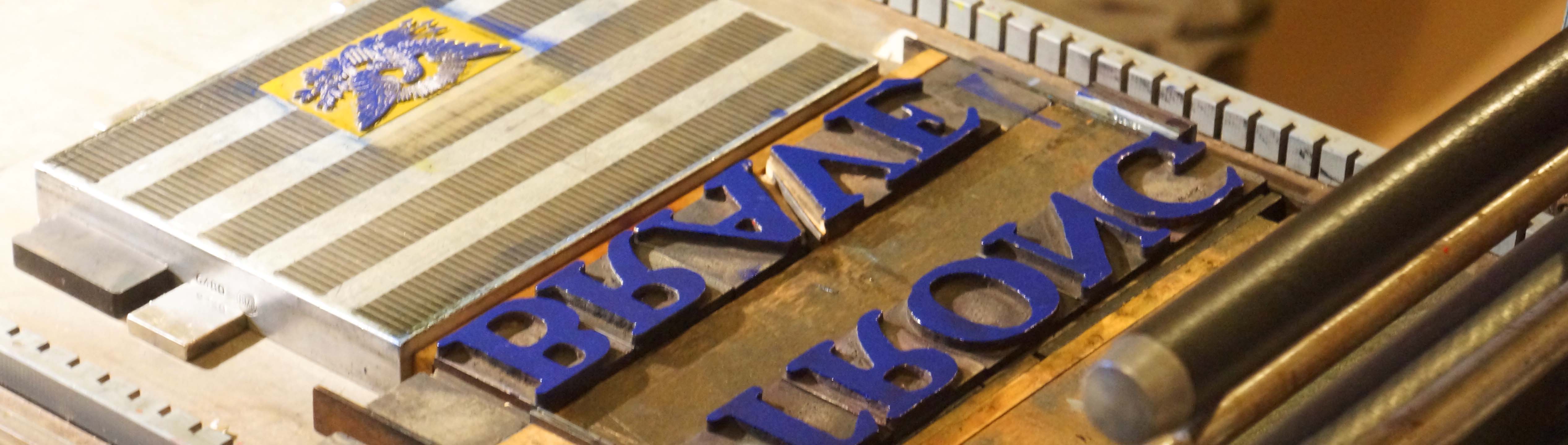
My writing process seems to be all about working my way into a corner or a dead end. It happens again and again. But as I continue chipping away and working at it (which is to say, I keep writing), the dead end turns out to be a way to rethink something. Getting stuck in a corner turns out to be the necessary thing, the thing I needed to actually turn the corner.
Malcom Gladwell contends that you must put in 10,000 hours to become an expert at something. He may or may not be right about the numbers, but certainly an expert has worked out a process the she or he follows—some way they use to accomplish the thing they do. They’ve sorted some way to keep at it. And whether or not the outcome is perfect, the process itself is revealing.
That’s why one keeps at it: to see what the process reveals next.
What are your 10,000 hours revealing?
###
Image Credit: Kirk Livingston

 conversation is an engine