Try “Yes, and…” Today
Let there be a Science of Deep Collaboration
When I hand out a group project in my writing class I hear audible groans.
It’s because we’re trained to work at things on our own—that’s how scholarship and schoolwork and academics have worked for a long time. The groans come from all the extra work of communicating and all the expectations around not knowing if others in the group will keep their end of the group-work bargain. The groans come from the anxieties that hover around roles and responsibilities and knowing you’ll have to sell your ideas.
I am eager for new and deeper research into collaboration. Let’s call it a Science of Collaboration. Maybe it is a social science. People like Keith Sawyer and Edgar Schein are moving this science forward—along with many others. I am fond of the work Patricia Ryan Madson has done around Improv, which seems the perfect gateway for anyone to learn the fun of collaboration. And Keith Johnstone seems to have spawned many thinkers along these lines.
 I’d like for this science to do (at least) two things:
- Invite people in who have been working alone for forever. But gently, and independent of the introvert/extrovert divide. I want the invitation to show the fun of the process. I want that invitation to promise more aha moments and then to quickly deliver on that promise.
- Show next steps to working together. What can an ad hoc team do to quickly get grounded enough to toss ideas that build on each other? There are techniques out there, certainly, but I’d like this to be second nature, part of our emotional intelligence, something we come to expect. Something we’ve grown up with.
“Yes, and…” seems a perfect place to start. This is the old improv notion of building directly on what the last person just said. And quickly, without lots of deliberation. It requires a certain fearlessness.
What if “Yes, and…” was built into our educational DNA from grade school up?
###
Image credit: Kirk Livingston
Ratcheting Expectations in World that Demands Viral
Again: what does success look like for my project?
Do you have outsized notions of what is important?
Of course you do.
We all do, because we assume (wrongly) that what is important to me is important to everyone. Turns out that is not the case. For all the videos or stories or songs that go viral, there are countless that arrive stillborn—at least as far as numbers go.

What shadow will your project cast?
It’s easy enough to see that not everyone shares our passions and drives. Not everyone is fascinated by Star Wars or Wes Anderson films, for instance. Not everyone longs to spend hours tinkering with their lawn, or building perfect pectorals or diagramming the stars in the night sky. Not everyone asks “Why?” Not everyone asks “How can I do that myself?”
So if we are looking for our idea to go viral, we had better negotiate together what we consider viral. Will my idea get 3 million views? 3000? 30? And which am I satisfied with? What can we be satisfied with? That’s worth talking about before a project goes out the door.
I’m reminded of that bit of faith that writing will find its audience. As we prepare to launch our idea, and as we talk about who is open to hearing/acting on the idea, some frank talk about what success looks like will help immensely. Realistic expectations at the beginning of the project will help set the stage for the eventual self-scourgings or pats on the back, in a week or month or year, when you see how the project did or did not do.
And for the artist or writer—just doing the work may be enough.
And maybe that is not a bad place to dwell.
###
Image credit: Kirk Livingston
Of Course Money Is Speech
More money = More articulation = More influence
As I read Dollarocracy by John Nichols and Robert W. McChesney, I cannot help but think about the biases we bring to any topic or any text.
The authors make no bones about their stand on the free flow of money into our political system and the corrosive effects for everyone touching that money. The authors are also clear about how our media is complicit in helping form story arcs and shaping mythic-sounding conflicts that might just serve the media best by training viewers to stay tuned. Fox News has not cornered the marketing on training viewers to panic—it seems to be the purpose of most news shows these days. And why not? Advertisers love those vulnerable audiences and there are fortunes to be made, after all.
I cannot yet agree with the authors that our representatives are simply “bought” by Super PACs and big lobbying firms and corporate interests. I think there are connections between the money they need for reelection and the ways they vote. But I’m not sure it is a one-to-one correspondence. It’s more complicated and nuanced, but common sense tells me that if some set of powerful organizations has contributed millions of dollars to a reelection campaign, the person seeking reelection will vote favorably to the interests of those organizations.
That is the nature of gifts.
That’s why I like OpenSecrets.Org: they try to trace where the money comes from and where it goes. Especially dark money, which is typically hidden for a reason. Because money is not given to political campaigns out of altruism. People buy influence with what seems to be a gift.
 Nichols and McChesney bring a bias to their writing of expecting to see our representatives being bought by corporate interests. I don’t blame them—they’ve written several books on the topic and have seen what they have seen. For myself, I just want to begin to train my eyes to turn from entertainments once in a while to see which of our representatives are being influenced by which Super PAC/lobbying firm/corporation.
We cannot end the flow of money into our political system. But we must become aware of what that money is buying—and what it is costing the citizenry.
Best if we could say out loud to each other where we’ve seen influence purchased.
###
Image credit: Kirk Livingston. Neon by Patrick Martinez via Public Functionary


John Green: On the American Dream & Inequality of Opportunity
John Green: Makes complicated stuff…a bit less complicated…or at least worth talking about.
John Green: just fun to watch.
###

Anxiety is the experience of failure in advance–Seth Godin
There is no better apologist for freelance than Seth Godin

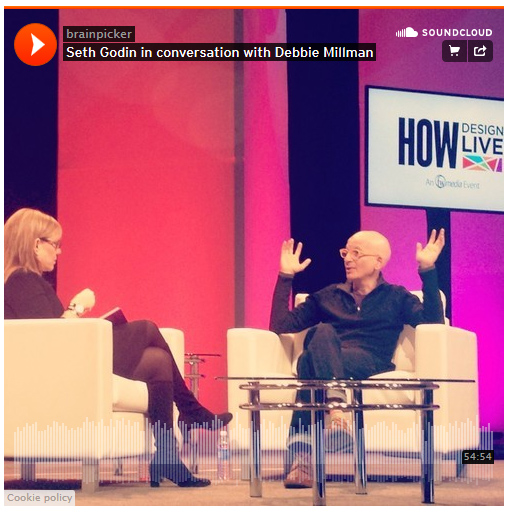
If you find yourself asking “What is my work?” listen to this interview with Seth Godin:
###
Via Brainpicker
Image Credit: Kirk Livingston
Please Read Dave Eggers: The Circle
In a world where everyone sees everything…
If you’ve ever wondered where complete transparency might lead—as I have—consider reading Dave Eggers’ excellent novel The Circle.
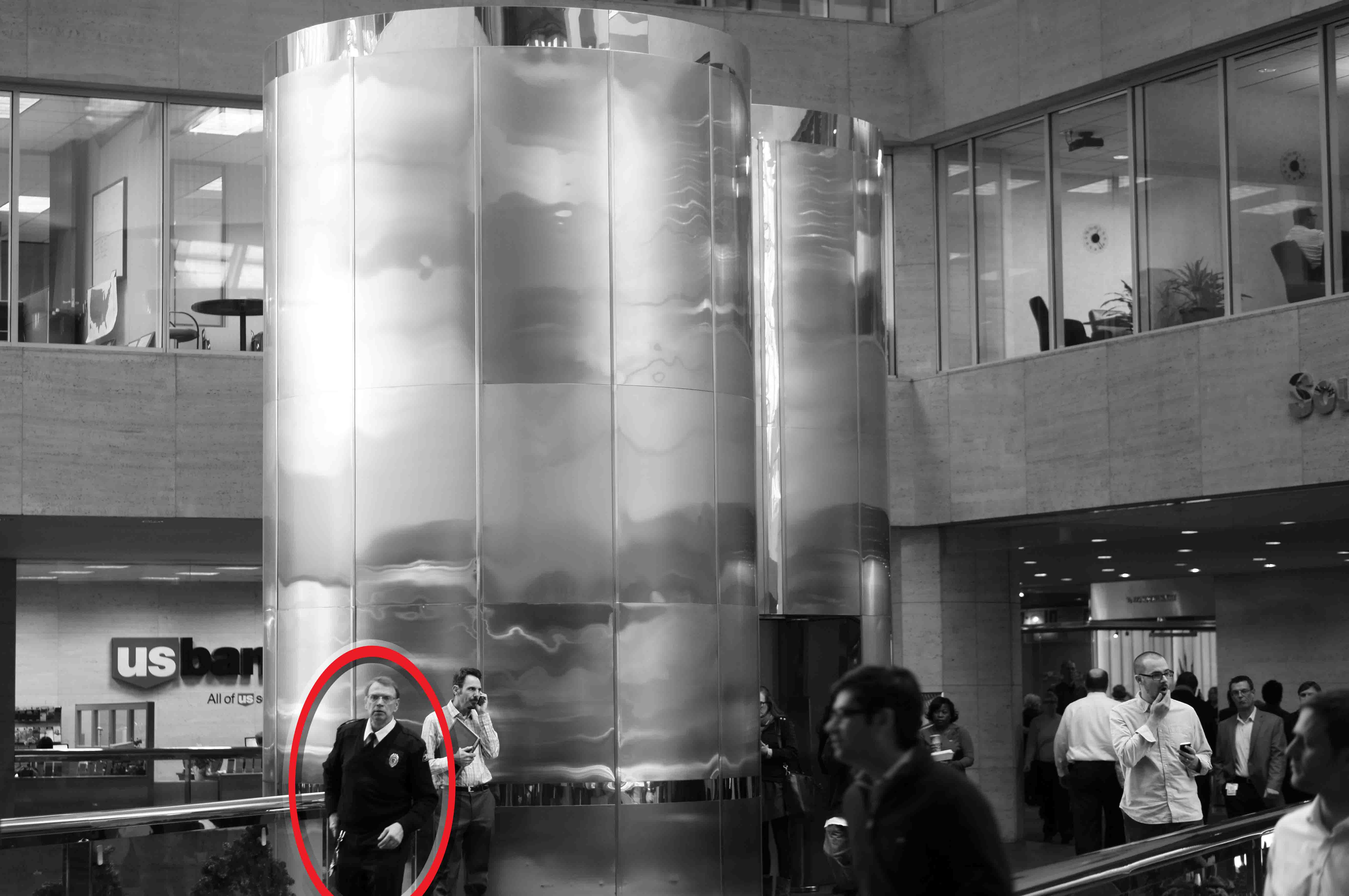
Don’t worry–no one’s watching.
Mr. Eggers has created a very comfortable world (for some) of deep collaboration, where everything is provided to those lucky enough to work for the Circle. The Circle, the corporation at the center of the story, looks more than a bit like our most celebrated high-tech companies brimming with smarts, cash and outsized ambition. Think Google or Apple or what Microsoft once was—and then add in a cast of characters each with an overweening and boundary-less high EQ—and you’ve got a world that is totally supportive—as long as you move in the same direction. The novel traces the story of Mae Holland as she “zings” (tweets) and “smiles” (likes) her way from outsider to the inner circle.
The story gets uncomfortable at times, especially when it shows the intent behind the use of social media and the social pressures applied. Especially when you start to recognize product placement on a very, very personal level.
Mr. Eggers has me rethinking my eagerness for employees up and down the corporate ladder to use their outside voice. I’ve been advocating, among my clients and when teaching Social Media Marketing, that helping employees reveal their work to interested outsiders is a move toward a new kind of marketing that looks less like selling and more like a conversation among interested parties. I still think that is a good move, but Mr. Eggers has explored the boundaries of that notion, and it is a bit, well, totalitarian.
I will consider using The Circle as a supplemental text for my next class on Social Media marketing. Well-written and consistently engaging, Mr. Eggers’ book is well worth your time.
###
Image Credit: Kirk Livingston, just before a recitation of photography rules within a non-public space

 conversation is an engine