
How to Hack the Bully’s Monologue (Dummy’s Guide to Conversation #16)
Resist the rhetoric of control
Every person has worth. Every person has something meaningful to communicate to us and vice versa.
But sometimes the guy in the corner office just wants to yank your chain. Sometimes your colleague comes in your cube too close and berates you for something that riles only her. And sometimes these work contexts make you question your worth. Today we call this bullying and officially frown on it, though bosses of all stripes let their primordial managers get away with it as long as they post results.
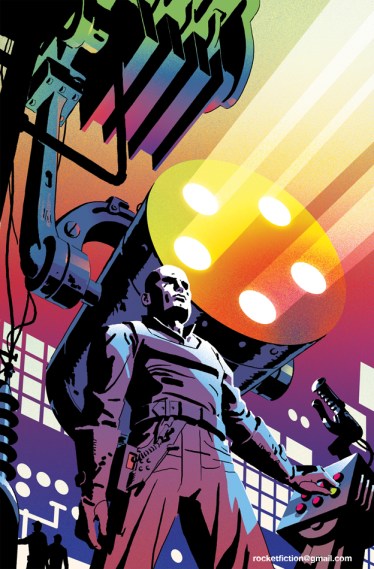 In the face of the bully’s monologue, we may need to set down our goals of understanding and hearing each other. We may need to pick up tools that will help protect us from the bully. And especially as our culture talks more about innovation, we must recognize that the enemy of innovation is the bully who uses monologue to quell thinking and drive over dissent.
- The hack begins with dropping sycophancy. Just because the VP of marketing is telling you a personal story about his cabin doesn’t mean he isn’t trying to put you in the low place he wants you. There’s no need to continue to play the prop: the underling enamored by all the person in power does.
- Be present. Don’t go to the Bahamas while the bully drives his verbal tank into position.
- Stand. Even if sitting, assume a mentally poised place to challenge.
- Challenge. Is there another way of looking at the perspective the bully shouts? What is the truth here? Speaking fast and loud does not make something true.
- Know two things
- You are a person, too. A person of value.
- That language can be encouraging or damaging. Every communication encounter has a shaping effect on both conversation partners. Don’t let the bully continue unchecked.
- Turn the other cheek. Yes: quite. Back to Jesus the Christ who knew something about handling the bully. He knew the most effective thing long-term was to offer the bully even more. Not in every case, but dealing with the bully from a place of peace and, yes—faith (in God)—may just cut power to the BS generator the bully madly operates. This counter-intuitive step holds much promise for moving forward as a human.
Some reading this may think no modern/post-modern workplace has bullies like this. You could not be more wrong. It is interesting that the tools used to shine a light on the bully’s madness are also effective in ordinary conversations.
How do you handle the bully’s monologues?
###
Image credit: Used with permission from Paul Rivoche via 2headedsnake
Ulysses Despite His Parents
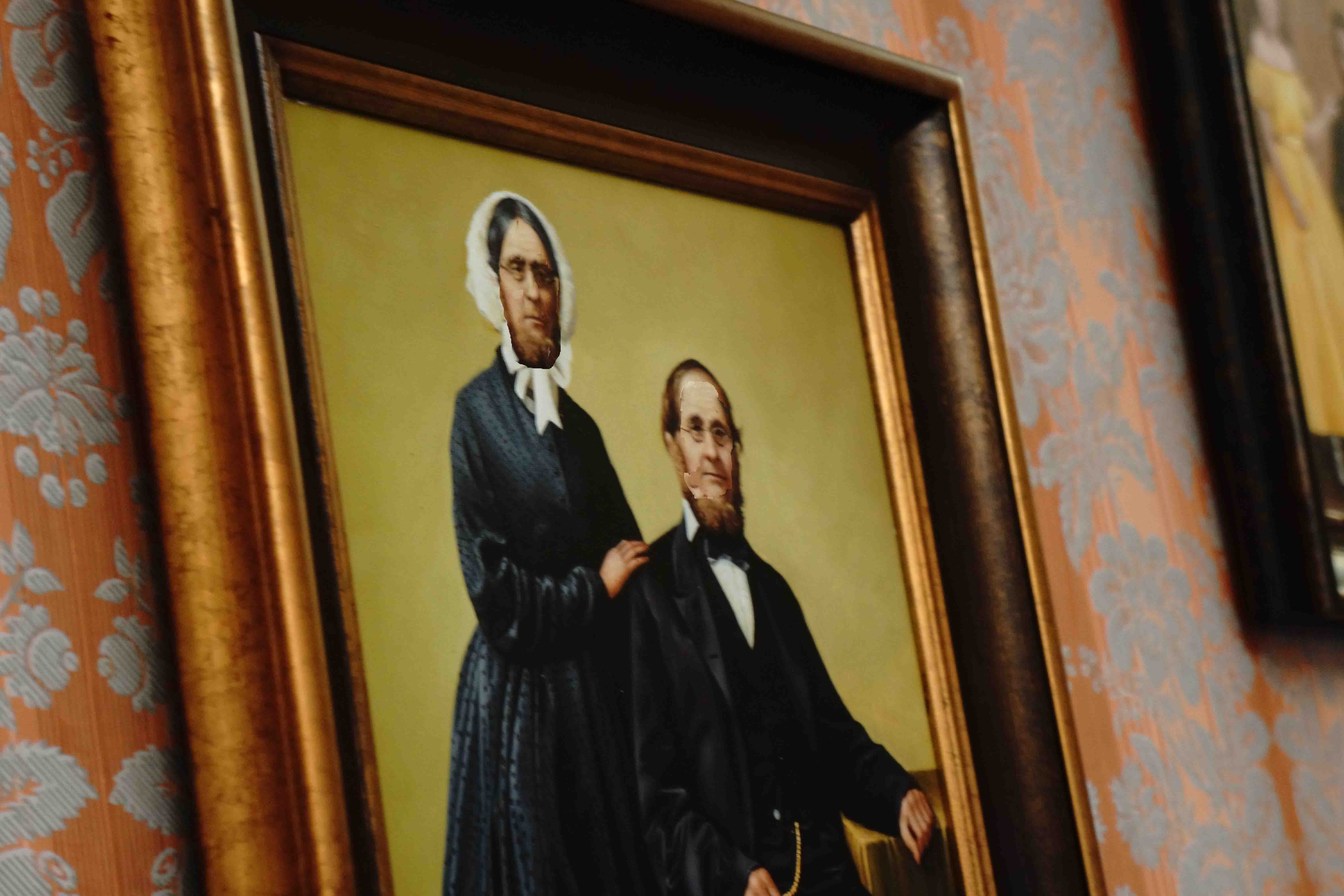
Ulysses S. Grant had a serious, civic demeanor despite his parents’ constant pranks.
Old Joy: Nothing Happens.
Really. Nothing.
It’s a walk in the woods. It’s reconnecting with an old friend—though it’s unclear if the friend is a bit off his nut because of all the weed he smokes or just generally off his nut. For 73 minutes I waited for the crazy guy to pull out an axe or to shoot the other friend. Nothing.
Old Joy is a meditation on slowing down. The photography of the Oregon woods is beautiful. The destination of the Bagby Hot Springs, breathtaking. Lots of peaceful ambient sound and streams and dripping. The vehicle is two friends reconnecting in awkward ways: one has moved on, about to become a father. One lives among his abstractions, poverty and drug sales.
Watch Old Joy for the reflections on friendship. Watch expecting to revisit your own awkward attempts to reconnect. Don’t watch for robots, explosions or aliens, though Will Oldham’s character (“Kurt”) might just as easily fit in a Men In Black film. Actually, Oldham’s beard alone would make an excellent alien.
###
Our Questions Help Us Do More Than Just Show Up
No one expects a lightning bolt on Monday

don’t be that gal
Daily routines condition us to low expectations for our everyday conversations. We assume most of today’s banter will be transactional (for instance): we’re just exchanging information or spreadsheets or paragraphs or money or whatever. I don’t expect anyone to reach down into my box of personal perplexities and provide a custom answer. We don’t expect to be changed by the people we see every day. We kinda know what they will say already. Right?
Some people in my life are thinking through career and other life questions. They are in the process of making decisions and perhaps a decision is due right now—so those questions are up near the surface of their daily experience. When questions and decisions lie near the surface, we show up with all our intentionality poised and ready to fire. Our impending decisions attune our antennae for anything that could help confirm or reject the choice—any help will do from whatever source, before we jump from pan to fire.
Living with clearly articulated questions makes it more likely we will ever find an answer. That’s not a bad strategy for everyday living.
What if we spent some of every day listening for answers to our own deep perplexities? What if we kept looking and hoping for lightning to hit us with insight? It is possible and even likely that answers and insights may flow from the very familiar people who surround us. But we would need to listen to them in a different way.
And sometimes we don’t realize we’ve been lighting-bolted until we’re walking down the hall after a chance encounter.
###
Dallas Willard: If I wake up dead, please someone tell me.
Dallas Albert Willard (September 4, 1935 – May 8, 2013)
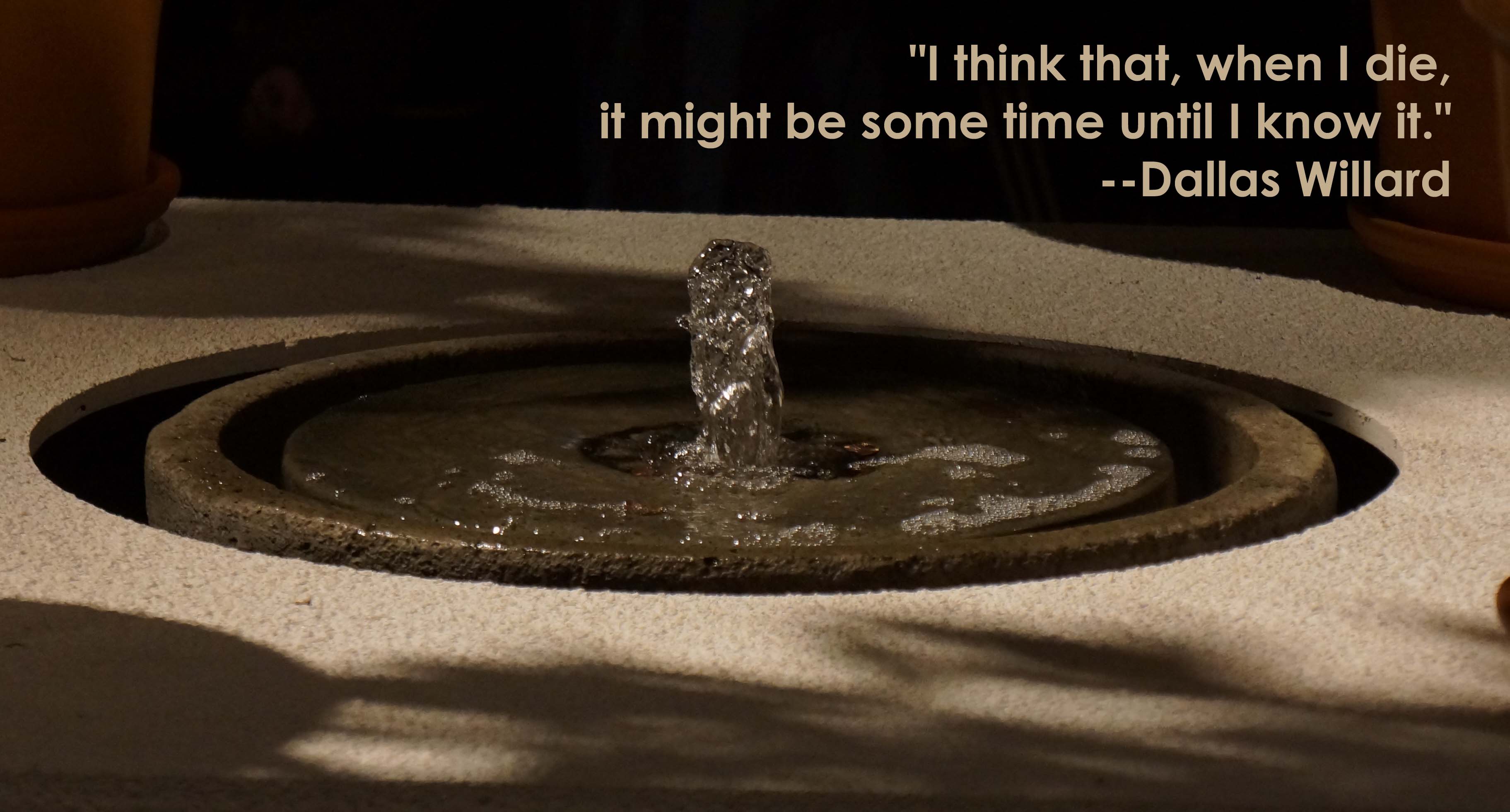 He was an improbable thinker: crazy about Jesus the Christ and a well-regarded professor of philosophy at USC. An expert in Edmund Husserl (father of phenomenology) and yet a very clear writer (despite phenomenology, which is notoriously difficult reading). Willard’s The Divine Conspiracy was a key text for me in learning about spiritual formation. His writing continues to bubble through my brain pan.
Dr. Willard combined the many unlikely things I love best. I never knew him personally, but I miss him already. John Ortberg’s tribute was perfect.
###
What Do You Need To Move Forward?
Applause? Permission? Donuts?
Twice in the past week I’ve asked myself this question.
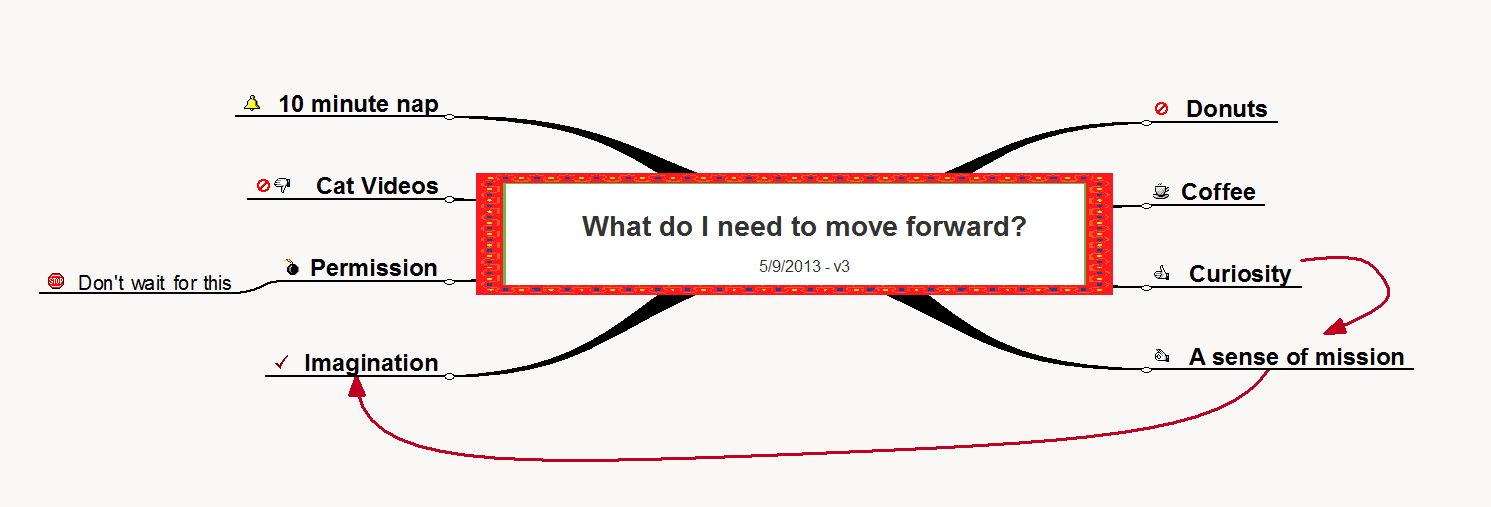 In one case I had just started a large writing project requiring all sorts of information that is not available and will not be available any time soon. My topic is partly in a shipping container in the Pacific, partly in a guy’s head in Scotland, partly in a set of computers in Minnesota and mostly nowhere near complete. But the need is approaching and my content must move on a parallel path with product development. A very specific audience needs very specific information.
In another case the blank page itself kept reminding me of the limitless intrigue of cat videos and TED talks. There’s nothing like a blank page to send you to all the advertising blogs and newspapers you’ve not checked on the web lately.
In both cases a conversation helped me mend the tracks to send the idea and task trundling forward. As I heard myself describing what I was trying to do with the idea and what I needed to complete the task, I realized I have the tools before me right now. There is nothing holding me back.
Waiting for permission to move forward is nearly as fruitless as waiting for someone to applaud your work or tell you what to do.
We move forward and the work has a role in showing us how to do it.
###
Image credit: Laurent Millet via 2headedsnake, kirkistan
Care Guides: In Praise of Knowing Nothing
The better to listen
 Allina employs people to work the space between a physician’s prescriptives and the patient’s adherence to said advice and prescriptions. (May 6 StarTribune: Care Guides show another face of health reform)
Maura Lerner’s story shows a comical side to healthcare that should surprise no one. The comedy is not that hospital systems would employ people with little to no medical training (that makes good sense to me). The comedy is how many patients and physicians have learned all sorts of dysfunctional ways of interacting and not listening to each other.
Betsy Snyder, 23, never wears a white coat on the job. She wouldn’t want her patients to get the wrong idea.
Care guides make sense because they feed corporate efficiency objectives of moving physicians quickly from patient to patient, which serves to maximize those costly human assets. And certainly care guides will try hard to work within their contractual obligation to not practice medicine not matter how hard the kindly older woman pushes for such advice (especially since they’ll quickly be out of a job if they do).
The key common-sensical notion here is that the care guide becomes another interpreter of the physician instructions. And as they discuss prescriptions and compliance with the patient, they are another voice advocating for improvement. And since they arrive without the baggage of years of training they are free to listen.
And listening is the key. Listening and talking—such simple things—but these are the missing ingredients in treatment. Just because a physician prescribes doesn’t mean a patient complies. But talking it through, why, maybe it is actually a kind of therapy trigger.
Care Guides are a positive development as healthcare corporations try to relate to humans and their conditions.
###
Image credit: Courtney Perry via StarTribune
I hate you so much love from me to you
When to poke your target audience in the eye
My client needed to reinforce the why behind a clinical trial. We needed physicians to remember their tried & true therapies didn’t always apply under this particular set of calcified conditions. We hoped for a visceral reaction to help change fixed treatment habits toward a killer disease. The poster was both over the top silly and aimed at the gut of a largely intellectual audience.
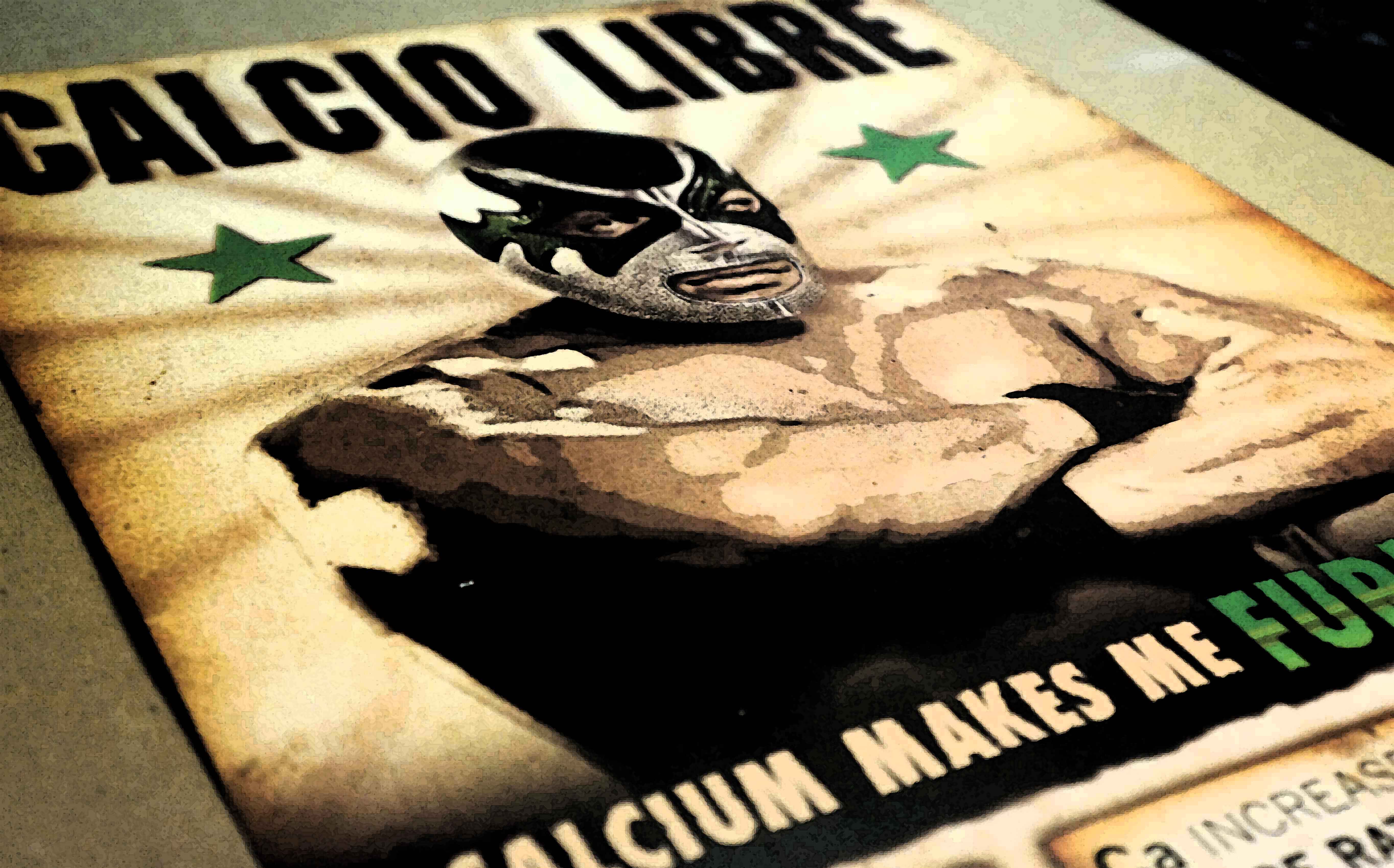
Some hated it. Some loved it. Some thought it went too far and was not appropriate for a clinical setting. Some found their rage against the disease. The poster polarized even as it got attention. And that was the point.
Not all our communication is meant to slip into the space between us like links in a chain moving meaning smoothly from your mouth to my brain. Sometimes you need to jar me from my stupor so I can really understand what you are saying. Because what you are saying is urgent and important and not business as usual. This is why teachers make students stand and move every 15 minutes or so—to restart the brain. This why street preachers are uncomfortable and often memorable.
Rather than automatically aim for consensus, challenge your team about the kind of reaction you want from your target audience. When does it make sense to provoke?
###

 conversation is an engine