Sally Mann & Creating With a Magpie Aesthetic
Over time we understand our frame of reference

Photographer Sally Mann talked about her process in Art 21 :
If I can be said to have any kind of esthetic, it is a magpie esthetic. I just go around and pick up whatever is around. It’s very spontaneous. I see a dog bone. I bring it in. I take a picture. I like the picture.
And so she ends up with a dog bone show.
Mann believes art is best made without an “overarching reference.” And yet her body of work appears to support an overarching theme that she herself embeds in it. 
This is the benefit of keeping at our work: over time we sort out what it was we were supposed to say or create.
But about Mann’s magpie esthetic: I’ve noticed the same. This flow of material constantly sweeping past me and I simply reach down and grab something. For me it is an idea, a snippet of conversation, an observation, a word spoken, even a chord strummed, any of these can be fitted together into some semblance of how I understand life.
How does creating work for you?
###
Image credit: Sally Mann, PBS
When Did I Learn People Don’t Matter?
Jesus and Mr. Levinas show a different way
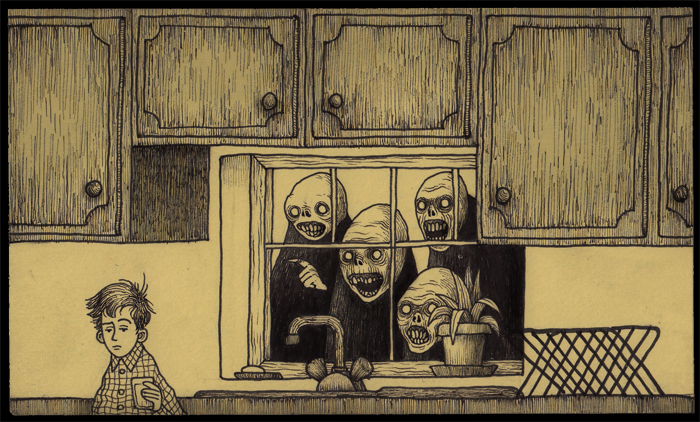
I’m scanning back through my childhood to remember when it was I picked up this notion that people don’t matter. I cannot blame my parents or my early religious communities or the packs of feral boys I ran with. It wasn’t at Riley Elementary School, and certainly not from my first grade teacher Mrs. Buck.
But somewhere along the line I got in my mind that I could turn and walk away from people and relationships. Somewhere I learned a kind of arrogance that made me think I alone knew what was right, had all the answers, knew the best way. This thinking meant I didn’t need to listen, though sometimes I could condescend to pretend interest. Looking back, it’s hard to imagine why I ever thought this way.
Maybe it’s our get-the-checklist-done culture. Maybe it was the arrogance of my 18-year-old self who knew everything without the slightest inkling how wide the world was. And yet that arrogance persists in the odd niche and behind unopened doors in my life.
I’ve taken to dwelling with a dead philosopher whose writing remains quite lively to me. Emmanuel Levinas is not the model of clarity, but even in his glorious obscurity he says things that make me pause. I recently asked [the long dead] Mr. Levinas to comment on that inaugural address Jesus delivered up on the mountaintop. Mr. Levinas, not exactly a Jesus-follower though he respected the Torah, has a lot to say about the intrinsic worth of people and even hints that others have authority over us in the sense that we owe them attention. From the get-go.
I started to find a lot of agreement between Mr. Levinas and Jesus. Mr. Levinas insisted on the priority that the Other holds in our lives. Jesus reframed the Old Testament law by putting treatment of people up near the top of what it means to be right with God. For instance: Jesus talked about forgiving, even loving, as the alternative to getting even. This has huge implications. Not because we have so many enemies, but because we naturally harbor and nourish each slight done to us.
My philosopher friends from the Analytic tradition (most of the philosophers in this country, judging by the academic programs available), get all twitchy when I mention the Continental tradition of philosophy, which is where Mr. Levinas hangs out. Analytics have a lot of suspicion about how Continentals assemble their arguments. And lots of smart people think Mr. Levinas goes too far. But I think not. In fact there is something in Mr. Levinas that brings Jesus’ inaugural speech back in focus for me.
Mr. Levinas is helping me reconsider the notion that Jesus was not speaking hyperbole. That he really wanted his listeners to give priority to others—even those who had hurt them. This is revolutionary stuff and not at all easy. And it must be understood in the larger context of Jesus’ inaugural address and the way he walked it out later.
Still.
Giving people priority in our lives is neither a recipe for madness nor sycophancy. In fact it may be at the heart of our humaneness and our mental health.
###
Image credit: John Kenn via 2headedsnake
Work Matters. And Show Beats Tell.
Tom Nelson Vs. Wendell Berry Vs. Your Work Horizon
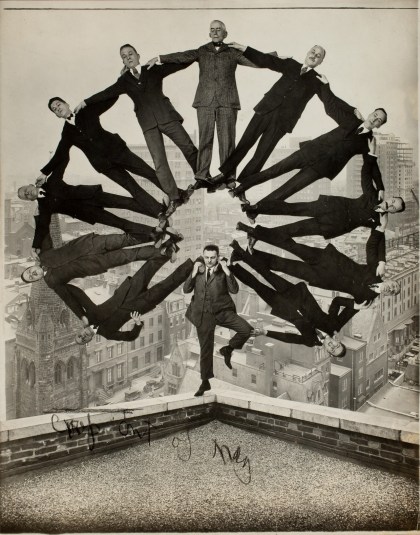 Not so long ago I heard Tom Nelson speak about his book Work Matters: Connecting Sunday Worship to Monday Work at a Bethel University event. Reading his book confirmed what I noted after hearing him: that preachers often talk about work from an abstracted viewpoint that collects themes from the Bible for a positivistic spin on what many consider the nasty business of business. I’ve tried to understand this phenomenon and I’ve come to suspect it has to do with the horizon anyone brings to their work: if you work but are really on your way to seminary or some transcendent mission, your horizon is 3-5 years, give or take. But if you work and your work is your life work, you have a different set of questions that are not exactly urgent, but are incredibly important.
Those questions are not easily addressed by a set of principles or a preacherly communication event. It’s not that Nelson’s book is wrong. It presents solid thoughts that are good to remember during one’s workday, though the preachy voice is there, the one that happens when oral delivery lands on a page. This voice puts a light, happy, totally-enjoined and engaged touch on every human encounter—which is not how real-life relationships work. Perhaps that voice more than anything provides makes the topic feel trite. Maybe I tuned out because of that voice.
If you were asking questions about why work matters, you can do no better than to pick up nearly any story or other piece of writing from Wendell Berry. Berry doesn’t just tell why work and faith and life fit together. Berry’s fiction shows people enmeshed in lives of work. Yes: he shows older agrarian communities. But he doesn’t show them in the abstract. He shows people who have a basic dignity—an understood dignity, not given by a preacher or unearthed from long silence. Berry’s characters are often in their work for the long haul, and their work becomes part of their identity. That’s a very long horizon indeed. Through their work they understand that they are doing a thing that brings order to the earth.
In my mind bringing order to chaos is a thing our work can do that is closely related to the stuff God does. Bringing order to chaos is a good way to spend a day.
###
Image credit: Metropolitan Museum of Art via Old Chum
Why I Want To Do What Others Don’t (Shop Talk #6)
Guest Post from Kayla Schwartz

From The conchological illustrations, by George Brettingham Sowerby, London, 1832.
[A few of us have been discussing what fulfillment looks like for a professional writer. The entire discussion was in a response to a question from Kayla Schwartz, a professional writing student at Northwestern College. Check out these six essays filed under Shop Talk: The Collision of Craft, Faith and Service for more on that. Kayla’s back with this guest post that contains a few of her thoughts and conclusions.]
“Technical writing? That’s so…interesting.”
This is the response I usually get when I tell people what I’m studying. As a professional writing major, I’ve done journalism and PR writing, but I’ve been most drawn to technical writing.
Why? I had not given it much thought. Most people think of technical writing as boring or tedious. So why pursue it? What really drives technical writers?
As I’ve thought about these questions and talked to technical and other professional writers who’ve been at it much longer than I, I’ve gleaned a few potential answers.
- It’s useful. Some people find a lot of satisfaction in their ability to help others understand things. They feel they are making a difference.
- It’s necessary. Technical manuals may not always be read by customers, but they are a necessary step in the process of distributing the product. There is satisfaction in contributing to a company’s success.
- It’s interesting. For people who are naturally curious, technical writing offers an ideal situation: learn about new ideas and products, and get paid for writing about them.
- It’s lucrative. Yes, some people are just looking for something that pays the bills.
All of these are valid reasons to do technical writing. However, none of them really expresses my motivation (although the last one is starting to look pretty good when I think about my student loans).
I’m pursuing technical writing because I genuinely enjoy it. I like creating an organized, easy-to-follow document. I like figuring out how to use words effectively and concisely. I’m a bit of a perfectionist and don’t mind spending time on “minor” details. I suppose I enjoy learning about new things or knowing that I’m helping others, but ultimately, it’s a way to do what I love.
Maybe this makes me the exception among technical writers, but I hope not. Technical writing isn’t for everyone, but for those of us who enjoy it, it can be just as satisfying as any other career.
###
Image credit: George Brettingham Sowerby via OBI Scrapbook Blog
When Talking with the Queen: Do You Avoid Conversation Because of Social Status?
Have you had this experience?
Tell me in a comment (I won’t make it public unless you grant permission)
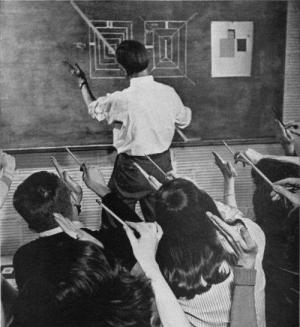 Consider the lowly species of a short, thin 7th grade boy. This particular boy wants to ask a girl to the school dance. As a 7th grader, he is on the lowest end of the social structure: 8th– and 9th-grade boys cherry-pick the pretty and popular girls and have no problem asking out the 7th grade girls out. This particular 7th grader has his eye on a brown-haired girl he likes. She is pretty and popular and funny—and also very much out of his league. She seems to exist in an alternate universe at the center of activity and power in his 7th grade class. To even speak with this lovely being would be a huge, baffling step. How to accomplish such a feat from his place of dwelling in weakness?
This is one of the problems of conversation. We sometimes find ourselves tongue-tied around people we perceive as having higher social status. Talking with the teacher or principal or Queen or CEO or chief cardiologist or the pretty, popular girl can bring to mind our inadequacies. And with those neon inadequacies before us, we lose all semblance of ordered thought and advance toward becoming the tittering sycophant.
When our kids were in middle school and high school I sometimes tried to convince them that social structures and cliques were all enculturated figments of the collective imagination. Some people seemed more popular, some people seemed at the center of things, but if you asked them, nearly everyone felt alienated and isolated.
“Pretend power is the nature of our schools,” I would say. “Any school.”
Social structure is all make-believe: blow through it. Talk to whomever you like.
But then I would remember my own high school experience where cliques were both fiction and real and ruled the place—somehow the student body agreed on who the cool people were. How did that happen? And then I remembered the same unwitting agreement happened in other organizations. In fact, get a group together and there always seems to be some popular person at the center. And then there is everyone else.
But today: do you ever avoid conversations because you feel less powerful or less popular than the person you would speak with? And how do you overcome that? Do those feelings still exist in the adult world and if so, how do they hold you back?
###
Image credit: queataquemasgratuito via 2headedsnake
Pope Francis Tango: Simplicity, Poverty, Rigor
Messaging that Walks Then Talks
I’m not a Roman Catholic sort of guy, still I find myself drawn to the early descriptions of this tango-driven, Argentinian man-for-the-poor Pope. His actions—catching a crowded mini-van to dinner, hoisting his luggage while paying his hotel bill, crowding into elevators and stairways with everyone else—illustrate some new thing. This new thing looks closer to people and sympathetic rather than distant, academic (in the fusty, out-of-touch sense) and authority-driven. The Roman Catholic Church remains an immense hierarchy with all sorts of problems, but this new thing looks positive.
I like that he wants the organization to get back to evangelism. That seems like he is peering into the right well, looking back at the roots. If he had asked me about repositioning the church (still waiting for the call), I could point in no better direction.
Of course, all sorts of bad, coercive, manipulative, openly evil things have been done under the guise of evangelism. But at its best—and it gets hard to strip away the muck accumulated over centuries—Christ’s message of redemption carried by people who are themselves changed, is transformative.
So. Bravo for pointing back to the roots, Pope Francis.
###
Image credit: John Stark via Frank T Zumbachs Mysterious World
Lower Your Weapons of Mass Reduction (Dummy’s Guide to Conversation #15)
Put down your straw man. Back away slowly.
 To reduce someone else’s contribution to “just this” or “just that”—some single point—is usually more about getting ready to dismiss the point than it is actually hearing the person out. Reducing the complex to the simple is something our media is very eager to do, and something we Americans dearly desire. But over and again we do violence to our understanding, and more importantly, we do violence to our relationships with others when we force the complex into a box that we can understand.
Into a box we can easily shut.
We short-circuit relationship when we reduce this to that. It is a way of avoiding people and ideas that are different. It is a way of forcing people to be the same as us, even when they are quite different. And often we gather whatever personal power or social capital to shut out the dissenting voice. It is a sort of knee-jerk, instinctual reaction.
Listening takes courage and lots of it, just like a good conversation.
###
Image credit: June Kim via 2headedsnake

 conversation is an engine