“He may be short, but he’s slow.”
Of inauspicious beginnings

That’s what my sixth grade gym teacher said as he watched my friend run the cinder track in a time trial. Some days feel like this: nothing doing, no big expectations and no real signs of progress, let alone genius. Some days seem to perfectly satisfy low expectations, like a poem from John Tottenham:
A long time ago I made a decision
to become a failure. It wasn’t
as easy as I thought: browsing through life
from one distraction to the next, while waiting
for the last lost moment to become unseizable.
As if there were some fundamental honesty
to not striving: There wasn’t.
I suspected it all along. (The Measure of a Man, John Tottenham)
For the past week I’ve been working with an old, old story. I can’t let the story go because I want it to frame a chapter I call “Extreme Listening.” I need the story to hint at what is accomplished when we listen very closely to the voices in our lives. I keep retelling the story to myself, emphasizing different elements to see what it is really about, but it remains elusive.
My story is of a Mighty Narrator and a Woman and a Man and Another Man born of humble beginnings. The Woman wanted a baby so badly she would do anything, including dedicating the yet unborn child to God—which meant the child would grow up apart from her. In her desperate soul-searching and panic of spirit and bargaining with God, she appeared drunk and senseless. The man, an observant official who was himself on a long, slow dereliction of duty, said as much:
“How long will you go on being drunk?” he said. “Put your wine away from you.”
“No,” she said. “I am a woman troubled in spirit.”
“Go in peace,” he said. “And may God grant your petition.”
The Woman had the baby and carried out her promise. The Man continued to abandon his duties and became widely known for how he let things slip. The baby grew into Another Man who took over the Man’s abandoned duties and then steered a nation into (yet another) vibrant beginning.
What intrigues me about this story is the mighty narrator. Because behind the scenes much larger things were happening, things that showed themselves as tip of the iceberg stuff in the conversations between the Woman and Man. So…listening and talking that resulted in pivotal actions (human and well, Other).
I think it is a good story—but who was listening to whom?
###
Image credit: Nikita Nomerz via 2headedsnake
The Etiquettes of Therapy/Religion/Business
When must we say “No!” to etiquette?
 We don’t talk in elevators. Many of us avoid taking a cell phone call in a restaurant. We don’t use church language at work. And we don’t use plumbing words at church (those words that come with a pipe wrench in hand and head under a sink—according to Steve Treichler). We observe all sorts of behavior habits and patterns from day to day, all of which we call “etiquette.”
In Encountering the Sacred in Psychotherapy (Guildford Press, 2002), James and Melissa Griffith attempt to bridge a taboo of talking about God with clients in their psychotherapy practice. As you may or may not know, conversation is key therapeutic tool and Griffith and Griffith believe therapists too easily dismiss a powerful ingredient when they don’t allow for stories of how people’s faith effects whatever is the topic of therapy. The caveat is that Griffith and Griffith have opened themselves to hear all sorts of faith stories—not just those they might have considered orthodox. The two therapists tell of their own journey toward openness to the varieties of ways patients tell personal stories. By the way: let the record show that openness to hear the wide variety of things our conversation partners say is not the same as giving up on our deep-seated beliefs. We too often confuse openness with wishy-washy. Not the same.
I was initially attracted to the Griffith and Griffith book because of the details they reveal about conversations: how to help each other talk, the amazing nature of a simple conversation, and the mechanisms of speaking that prove so healing. Along the way I’ve come to realize they’ve done something substantial by breaking down a Berlin wall between problems and potential solutions (though perhaps psychotherapy practices have changed quite a bit since 2002).
Over the years I’ve found that colleagues at work will talk about all sorts of stuff in the course of a day, from money to sex to faith to the Twins to the boss to marriage and kids—plus everything else. This is to be encouraged—this flow of words is both natural and cathartic. It’s all about encouraging relationships (which are the primary source of joy for many at work) and work talk routinely breaks across walls of etiquette.
###
Image credit: fredrikrattzen via 2headedsnake
Our Dream of Liberation from Every Restraint
Increasingly over the last maybe forty years, the thought has come to me that the old world in which our people lived by the work of their hands, close to weather and earth, plants and animals, was the true world; and that the new world of cheap energy and ever cheaper money honored greed, and dreams of liberation from every restraint, is mostly theater. This new world seems a jumble of scenery and props never quite believable, an economy of fantasies and moods, in which it is hard to remember either the timely world of nature or the eternal world of the prophets and poets. And I fear, I believe I know, that the doom of the older world I knew as a boy will finally afflict the new one that replaced it.
The world I knew as a boy was flawed, surely, but it was substantial and authentic. The households of my grandparents seemed to breathe forth a sense of the real costs and worth of things. Whatever came, came by somebody’s work.
From Andy Catlett, by Wendell Berry, Part III, (p. 93)
Bottledworder: Writing in spite of the daily (Shop Talk 3.1)
Words Create Something In the World
 May I steer you toward a blogger I’ve recently discovered? This generous writer visited a number of obscure blogs (including Conversation is an Engine) and commented. Many of us followed back to her blog (lesson learned on growing an audience).
Bottledworder wrote Writing in spite of the daily on January 20. It’s a post that points out the concentration and isolation needed for creative writing. She also writes of how much a privilege writing is—with which I agree. Down in the meat of her essay she disparages making a living through “useful” writing:
“useful” varieties of writing where writing is the medium to achieve something else, not the end-goal.
I use “disparage” lightly and with affection, because it is clear writers of all sorts are heroes in Bottledworder’s world—and I could not agree more. Still, her comment hits at this notion I’ve been thinking and writing about: does writing/creative fulfillment come only from digging down in the isolated depths of one’s own psyche?
 That still seems to me only part of the story.
And for proof I continue to point to the exercises in creativity my writing has contributed to with companies and agencies, in places where we’ve joined as a team. Maybe those team/financed experiences don’t exactly duplicate the joy of writing something pulled from the depths of my soul (and that is a primary joy of writing, no question), but a true phrase that helps a company move forward is also a beautiful thing. Plus, it helps create something real in the world.
Again—there’s so much more to say about this. Here are a few early related posts:
- The Tradeoffs in Selling Your Craft (Shop Talk #1)
- Writing with Sheet Metal (Shop Talk #2)
- Is Your Job Fulfilling? (Shop Talk #3)
###
Image credit: bottledworder, confuse-a-cat via 2headedsnake
Bellicose & Belligerent: North Korea Demands Food & Attention

Escape from Camp 14
Cheery news today that North Korea will continue to test rockets that can deliver a nuclear payload to the US. Our comedians and entertainment industry joke about the over-the-top language of Kim Jong-Il/Un/Whatever—and that feels right and proper. But the predictable North Korean blustering and pattern of extorting food from the West have a new soberness for me after reading Escape from Camp 14 by Blaine Hardin. Hardin tells the story of Shin Donghyuk, who escaped after being born and raised (for 23 years) in a North Korean prison camp. The only person known to have done so.

Camp 16
It doesn’t take many pages into Shin’s experience as a second-generation prisoner (that’s right, his mother was jailed—part of their “Imprison three generations” policy) to see how desperate the entire nation is. The camps are living horror stories where breeding and forced labor are routinely carried out on a diet of cabbage and salt (but all the rats and bugs you can catch). Long days of field work followed by evenings of forced self-examination followed by sleep on a concrete floor. Death by beating or malnutrition is common. We’ve all seen movies like this so it sounds like fiction—but such camps and conditions have existed in North Korea “as long as Stalin’s soviet gulags and twelve times as long as the Nazi concentration camps,” at least according to the book blurb.

in his father’s house were many mansions
And it is not just the conditions of the political prisoners (and when do we start talking about “crimes against humanity” with this country?), it is an entire nation scrounging for food and held hostage by central economic planning that failed years ago, with thieves at the top. Escape from Camp 14 gives a bit of detail about the Kim Jong legacy of stripping the entire nation for personal gain–enough to turn one’s stomach.
It sounds like fiction. But I’m afraid this story is not getting any better for millions of North Koreans.
Check out North Korean Economy Watch for maps chronicling the ongoing North Korean tailspin.
###
Image credit: huffington post, dailymail, the age.com.au
Even My Agnostic Friend Says: Pray Your Day
Multiple Causation Skeins
 A thinker I respect—someone who continues to pop out a learned book for her tribe of university professors every year or two—told me one of her habits for writing. As she gets down to the task each day, she records a “wish” in her journal.
“Call it a wish,” she said. “Call it a prayer. But it’s a focus. It is a thing I ask.”
This thoughtful friend comes from a Christian tradition but doesn’t abide the wonder these days. I’m hacking her advice to note this practice: I find myself asking—no, make that recording specific questions, specific prayers, at specific times as I start various projects through any given day. My ask/prayer is for all kinds of stuff that is on my plate for the day, from paragraphs of copy to working out a tangled manuscript to organizing my client’s technology tell.
My friend practiced her “ask” because of the focus it presented. The focus helped her move forward. That is what I want to do as well. And more: I still suspect there is wonder tied up in the minute by minute actions of any given day. I still think our meaning-making is composed of “multiple causation skeins,” to quote Mark Noll. So my ask is directed and hopeful and often historic (yesterday’s ask text) and tries to make room for much bigger things that could be at play through my tiny actions.
###
Image credit: Built of books by Frank Halmans via 2headedsnake
Is Your Job Fulfilling? (Shop Talk #3)
Depends: what do you mean by fulfilling?
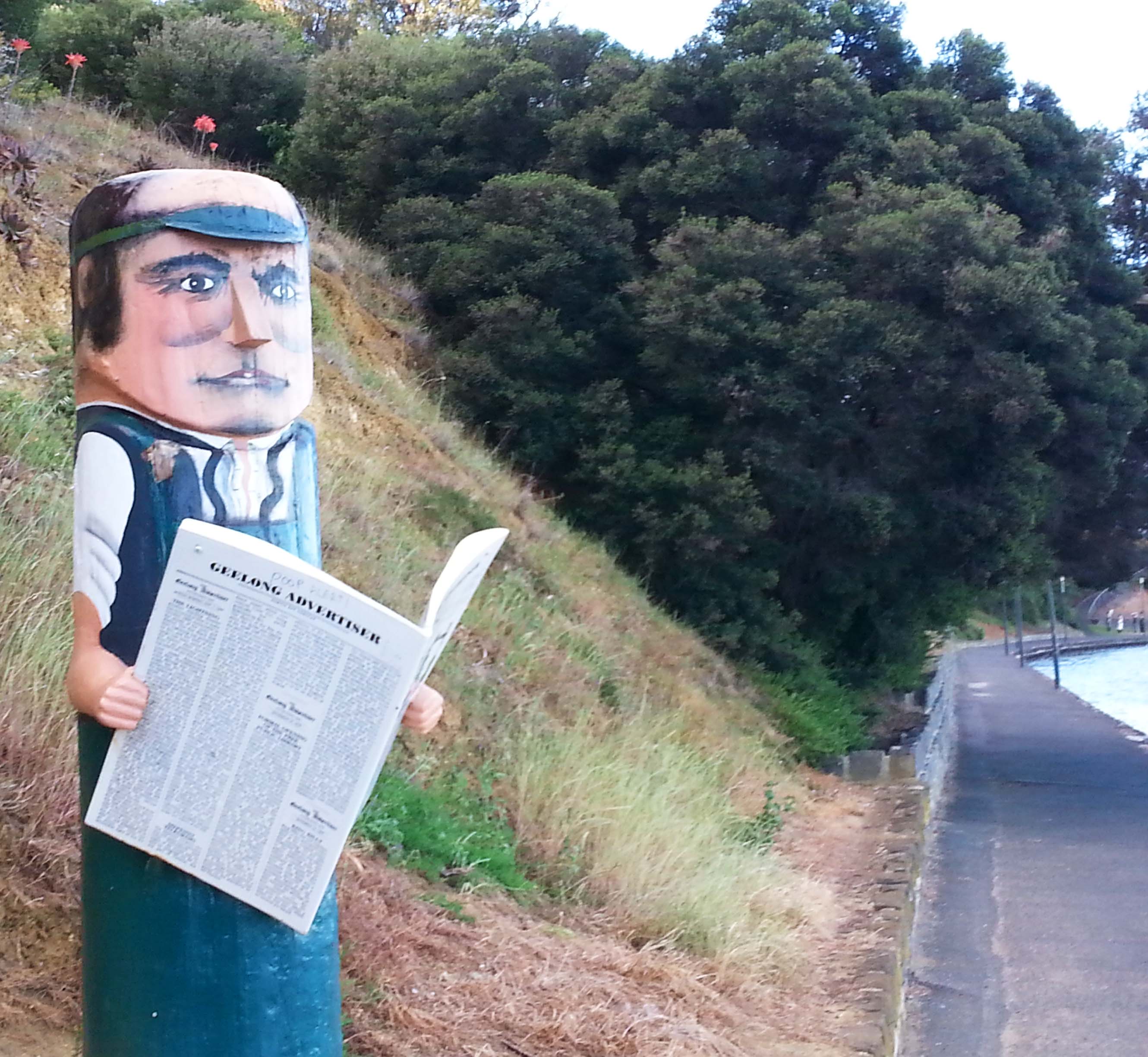 An art director and I were talking once about the different jobs we had done over the years. Al said he did some work as a freelancer he was not particularly proud of: wasn’t bad work, just didn’t highlight the creative style he had become known for. Why did he do it? “Well, I had a family and a mortgage and…you do what you gotta do.”
This is my story, too. It is everyone’s story.
An English student asked me how someone writing for an agency or corporation can find fulfillment when the writing is essentially voiceless. By that I understood she meant that the writing was not coming out of some personal deep need to communicate. I get what she means and I think this is an important question. But I also think we romanticize the production of art, novels and poems.
I’ve been arguing that work and art sometimes fit hand in glove and sometimes stay at opposite ends of our daily teeter totter. I’ve been arguing you need both to make either work. If you just have paying work, you are not exercising your creative self. If you just are creating, you’re broke and maybe you don’t have a place among real people in real life. Here are a few things that happen when work and art find a way to live together:
- Workmanlike attention: Our work with its deadlines and status updates helps us (sometimes forces us) to be productive. This is useful when it comes to delivering on our art or craft. Just getting to it—every day—is the way we produce anything. None of this waiting for enlightenment stuff.
- Having a place among people: isolation is not good. Those colleagues and bosses and clients who critique our work help shape it (no matter how painful). In the same way as we try to explain our craft or art to others, it gets shaped as well.
- It is your job to develop a voice. It may not be your voice, but it must be a believable voice. And to run that voice through the gauntlet of critics and peevish managers and lawyers and regulators is no small feat. The voice you produce can become a team or corporate asset. That is something to be proud of.
- Now is not forever. If you are not producing the art/poems/novels you intended, find a way to get to it. This usually involves owning up to the myriad excuses we present for not doing it. And if today’s work is less than fulfilling: start looking. It’s the steely beauty of the free market system that you can change. Recognize that this job is for now and not forever (more and more I’m convinced different seasons in life hold different tasks and levels of fulfillment. Plus, we are personally changing all the time, which means fulfillment is a moving target.)
Several of the hard-bitten copywriters I know would say “Who has time for writing outside the office?” To these I would say your own art and copy is a gift to yourself that pays back in meaning and insight.
There’s more to say about this. What would you add or subtract or say to my student?
###
Image credit: Kirk Livingston
Superior, Wisconsin: -20.6 Degrees Celsius
Fumarole Procession 7:49am
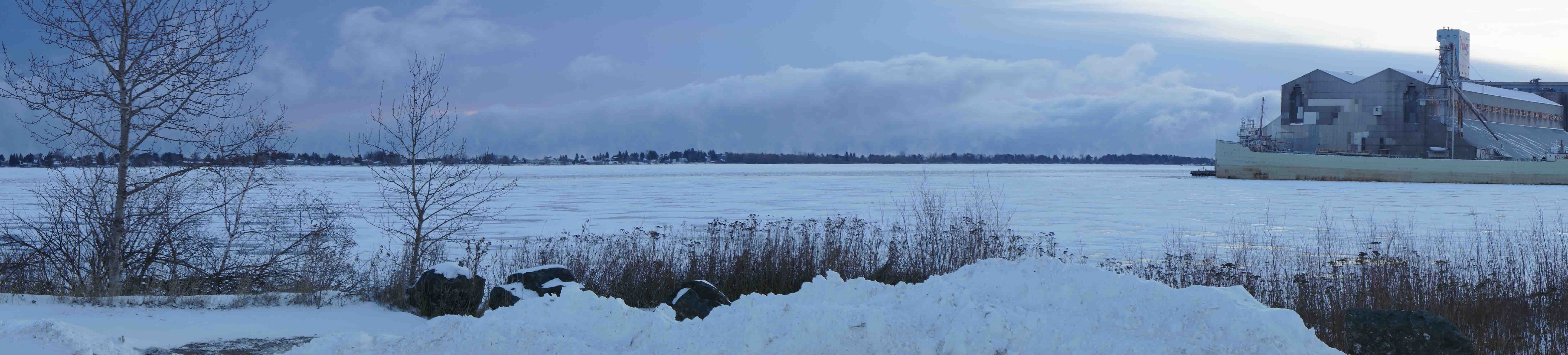
This is the cold of my youth in Wisconsin. Dangerous pain after a few moments exposure for ungloved fingers. Toward the horizon (barely visible above): vertical flues of mist escape Lake Superior.

How I’m Writing Today: Palimpsest
Here’s your close reading.
 These days nearly all these posts grow out of a much larger manuscript I’m working on. It’s as I were on a teeter-totter: falling with the gravitas of this larger work but then buoyed by the thought of breaking my indulgent thoughts and sentences into smaller pieces and stripping away language. Or this: pushing forward with the larger more difficult manuscript opens windows and doors in passing that frame tantalizing ideas that turn into posts.
Someone I recently read mentioned the notion of a palimpsest: an old manuscript that was erased and rewritten, because the parchment itself was valuable and endured. Modern techniques have allowed for the reading of the words that were erased.
Maybe the palimpsest is not that different with how we are with each other: our rewritten and redacted conversations help catalyze thoughts, actions and intentions with each other. Completely tangential words have the capacity to present a new and quite fruitful direction. Or waste lots of time.
Diversions present. I give chase. It’s neither a tidy nor effectual way of writing. And yet, the result is a fortuitous amount of blasting that clears away the surface…crap…and bores down toward the issue. Sometimes.
###
Image credit: gifmovie via 2headedsnake
Mind Your Obits
This Week’s Hero: Wallace Allen (1919-2012)
The things you learn from obituaries:
Mr. Wallace Allen had been a long-lasting editor at the StarTribune (three decades) and passed away in December. During his tenure he led the way to “make the paper more accessible to readers.” He seemed to have a focus on words and design, and employed both in his passionate understanding of what a newspaper could accomplish in our culture. At 93, he continued to read the New York Times and the StarTribune daily.
Two bits from Tuesday’s Obituary stand out:
- Though he suffered various ailments, he had been able to get around with a walker. On that walker he had this bumper sticker: “Free press. Free speech. Free country.”
- And even after decades of editing he continued to edit and write in retirement. Notably, in one of his last assignments editing a newsletter at his assisted living home in Honolulu, he urged his volunteer staff to “to investigate actions by the home’s management.”
So—a commitment to finding and telling truth all the way through.
That is remarkable.
###

 conversation is an engine