Writing with Sheet Metal (ShopTalk #2)
The Pull of the Factory Floor
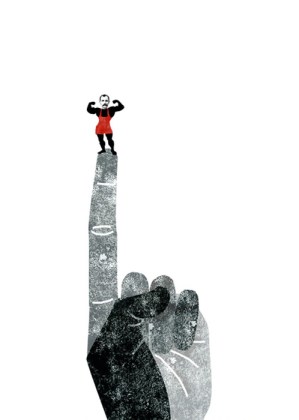 As a copywriter I spend my days in front of a pair of computer screens. Writing. Yes, I have meetings with clients and colleagues, brainstorming sessions and updates and phone calls. But mostly I remain planted before my computer, sorting through masses of information, ordering data that came with competing priorities and generally figuring out new ways to present the right facts to the right people in a way that causes a reaction.
Then there are days I visit a particular client’s factory. It’s a factory with a whistle that blows, union members who take 15-minute breaks, safety glasses and focused workers at benches doing macro and micro tasks. It’s a factory that stamps and welds metal, where electricians wire metal carcasses as long and tall as a semi-trailer. This factory is lit so everything is visible and produces a hum of activity across the concrete floor, which is the size of several football fields.
Why give so much detail? Because many who read this—myself included—spend our days in offices. But a factory floor is a different sort of place—a different world, with a different set of priorities and where production is king but craft sits near the throne.
I like this factory floor because it is different from an operating room, different from a cath lab, different from a conference room during an endless PowerPoint presentation, different from a row of cubicles and different from the Livingston Communication Tower (high over St. Paul). There is an irresistible, energizing activity on this factory floor that flows out of the scores of workers. But maybe that energy also comes from my past, because I grew up watching my dad craft furniture from oak and walnut. Maybe that’s where I absorbed the notion that producing a solid piece someone might actually use is a great way to spend your time and a fulfilling thing to do.
In this ongoing discussion of what makes for fulfilling work, I want to trace fulfillment down a different thread. This thread places the writer in a team with a goal of productivity. The writer and the team are focused on this goal of shipping something real and substantial. At the same time this team is also sort of doing life together—because in the middle of work there are the discussions about the rest of life. For a writer, this team-ness is a different way of spending the day and not to be missed.
Don’t take this as a romantic view of factory work. Instead, see it as the reality of the life situations where your craft takes you to meet a need.
###
Image credit: Yael Frankel via 2headedsnake
The Tradeoffs in Selling Your Craft
Make a living while making a life
 Teaching in a college English department, I come in contact with lots of people who want to express themselves. They have things to say and they want to say those things through poetry, fiction and all manner of creative writing. The typical line of thinking goes that the best and highest fulfillment comes from putting words around those things that compel us. The process of searching out those compelling things involves regularly plunging deep inside to pull stories and impressions up to the surface to slice and dice for delivery. This is good and useful work and has, or course, resulted in the poems and works of fiction and symphonies and songs celebrated worldwide.
This work of surfacing our deepest thoughts and emotions and capturing them for delivery is important work in which each of us must continue. I want to do this as well and regularly set aside time for it. But is this highly internal work the only route to fulfillment? Answer “Yes!” and you shortchange the rest of life.
I want to argue in a few posts that we make some of our best and most meaningful contributions when three streams collide:
- Faith: what we believe
- Talents: what we are gifted at
- Service: as we focus on needs outside of us, how can we use our faith and talents and imagination to solve those needs?
I want to argue the junction of craft and faith and need is the locus of true fulfillment. When we plumb our depths for words or impressions that solve a need our organization or community has identified, well then we’ve done a good thing and a highly fulfilling thing. I might further argue that much of our greatest art and literature has come from that junction of craft, faith and need.
Writing ad copy or technical specs is not the route to personal fulfillment. But neither is a self-focus that never reaches out.
There’s lots more to say about this.
###
Image credit: frenchtwist via 2headedsnake
Should I Stay or Should I Go?
Keep an Eye on Your Vision Gauge
A conversation over the weekend reminded me of how vision works in my life. As long as I have vision for the organization and my role in the organization, work moves forward. But if vision quavers, all sorts of rocky stuff starts happening. I get itchy for purpose.
For me vision is like the gas gauge: I can (nearly) see it as it maintains or slowly drops. And if nothing replenishes vision, movement slows to a stop.
But what is vision? For me it is seeing a longer term role or impact. It is also recognizing my organization has a larger purpose and how I fit that purpose. Vision gets personal.
After a couple years at a large industrial company—early in my career—I recognized the growth paths presented by the manager led nowhere I wanted to go. Not long after that pep talk the company’s mission and purpose started seeming pretty stale. In fact, I could not see anything in the organization I wanted to do. So I started knocking on different doors. The doors that eventually opened helped me sort out my direction.
The Clash was singing about romance. But work is also a kind of romance—a dance of loyalty and engagement—far from the purely transactional presentation your HR officer lays out the day you get laid off. And that is true for more than work: any and every company, volunteer opportunity, or gathering that attracts us does so because of purpose and mission. At least that’s true for me.
What does your vision gauge read today?
###
Wendell Berry’s Jayber Crow: Christ Came to Found an Unorganized Religion
I am, maybe, the ultimate Protestant, the man at the end of the Protestant road, for as I have read the Gospels over the years, the belief has grown in me that Christ did not come to found an organized religion but came instead to found an unorganized one. He seems to have come to carry religion out of the temple into the fields and sheep pastures, onto the roadsides and the banks of rivers, into the houses of sinners and publicans, into the town and the wilderness, toward the membership of all that is here.

Well, you can read and see what you think.
(Jayber Crow, Chapter 29)
###
Low-Life Exiled Son of a Hooker
A Leadership Story You Never Heard in Sunday School
 Jeff, son of Gil, was a fighter. Jeff’s mom was a prostitute—which deeply embarrassed Jeff’s brothers. Jeff’s brothers—born of Gil’s wife—told Jeff in no uncertain terms he was different, not up to par, had no share in the family business and had to go. So he did: Jeff moved off to a different country. In that different country he attracted all sorts of has-beens, slackers and ne’er do wells. Jeff’s low-life friends went out and did their low-life stuff together.
Years passed. Jeff’s brothers took power and a neighboring nation declared war on them. So they called Jeff to lead the attack. Jeff said, “Why? I thought you hated me.”
[under their breath: we still do you son of a…and maybe we hate you even more now but] “Come be our leader.”
So he did. He proved to be a hot-head and prone to rash vows, but Jeff first tried to reason with the opposing army. When that didn’t work, he went and busted them, which did work. But in the process he vowed something very precious to win the battle. It was a promise he would deeply regret and remains entirely barbaric today (hint: don’t wager treasures from your own home).
I read this story a few days back and it reminded me that all sorts of people get enlisted to lead us forward. My favorite ancient text points to a leadership tree composed of a family of deceivers, a tongue-tied retiree, a prostitute, and this son of a prostitute—just for starters. One thing these losers had in common, even beyond a sense of calling, was trust in some One larger than themselves as they faced a need way out of proportion to their tool box.
So…just because you don’t have what it takes to move your team or family or people forward, doesn’t mean you should not consider the task. Look for a way to trust, which seems a good way to proceed, given the frailty of our human condition.
###
Image credit: Thom Ang via Frank T. Zumbachs Mysterious World
Ken Kellenberg (1940-2013): Thoughtful Mentor
What’s The Impact of One Life?
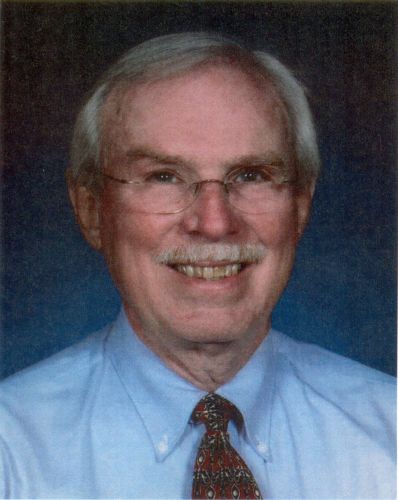 Different people stand out at different times in your life. Ken Kellenberg was one of those stand-out people for me, at a specific time when I was making all sorts of life choices. Ken died last Sunday.
I met Ken in college. He was the founder of a free-form church on the edge of the University of Wisconsin—Madison campus. Faith Community Church was just beginning to shape-shift and every Sunday looked different from the previous. Some days the gathering was raucous. Some days quiet. Some days a theme bubbled up through the words and prayers and thoughts shared. But every week was unscripted and very different from the previous week. There was no formula.
Every week was unforgettable—and quite possibly poisoned me for the many feeble prescriptive gatherings I’ve been part of since.
Ken and I met a few times toward the end of my undergrad days and he offered advice about jobs and faith and relationships. Ken also performed the ceremony that united Mrs. Kirkistan and I in marriage (Behold: 27+ years ago).
Once Mrs. Kirkistan and I we were passing through London on the way to or from somewhere and stopped to talk with Ken and Natalie. They were characteristically open about reservations with the particular organization with which they were working. I had some experience with the organization so we had a rich and memorable conversation.
It was Ken’s openness that retained my attention. The sharing of doubts and questions, the refusal to set out a formula. The desire to be present in the relationship and situation and to listen and to pray—these are things I learned from Ken.
Over at Men of Hope they are talking about people who have influenced them. I hope they don’t wait until their influencer has died to consider the full story.
Ken, I wish I could have said good-bye.
You’ve meant a lot, friend.
###
Dummy’s Guide to Conversation #14: Please Say More
How To Be A Verbal Philanthropist
 I always like it in the classroom when the professor says to the student, “Please say more about….” It is a sign of active listening, a phrase which pulls the reluctant student further into the conversation.
“Please say more” is irresistible in its eagerness to hear more of a person’s thinking or reaction or opinion. It is also a demonstration that people and their thoughts and ideas are important. And it is a crazy generous way to engage in conversation. Generous because by nature we rush to fill the space between someone else’s words with our own thoughts.
When someone says to me “Please say more” I feel honored and free and engaged—almost like having been given a gift.
Being a verbal philanthropist doesn’t cost much—just your attention.
###
Image credit: Neil Swaab via 2headedsnake
You might also like:
- Listen Up: #2 in the Dummy’s Guide to Conversation
- Listen to Other People’s Stuff:: #6 in the Dummy’s Guide to Conversation
Please Read Jonathan Sacks “The Dignity of Difference”
How to Escape the Orbit of Xenophobia
There is so much good to say about Jonathan Sacks’ The Dignity of Difference: how he welcomes the stranger, how he shows the impact of considering everything as a marketplace endeavor (this approach does not end well: people and relationships don’t fit the calculus of the marketplace), how the work of covenant might well be the glue that binds a global culture together and helps us overcome our stunning differences (just like communities have for centuries).
I like that Sacks grabs texts from the Old Testament to reframe very modern difficulties, like how Abraham honored the stranger, which speaks to our own ambivalence about people different from us. But Sacks also draws on old Jewish wisdom and criticism to help put those stories into context. I like how he pits Plato against Moses and dispels the notion of dualism and the notion of perfect forms. In doing this, he has opened a way from the ivory tower where pure academics lives apart from the rest of life. I appreciate his examples of Jewish scholars who were also workers. Thinking and working should be intertwined, much like Matthew Crawford wrote about so successfully.
You may get the sense this is a wide-ranging book, and it is, though a delightful read at each step. All this material—and he does make it fit together—is in the service of helping the reader reconnect with the wonder of what we can learn from each other. Rabbi Sacks Jewishness is a vital piece of the puzzle: as someone from a tribe that famously wandered for a long time, he thinks his people are uniquely positioned to welcome our world’s current batch of strangers. He may be right about that. In Sack’s view, people of true, deep faith learn to value the faith of others, even as they hold to their own.
My one critique has to do with the other end of the Bible Sacks quotes from freely. I would offer that the mystery of the very Jewish Jesus who was also the Christ greatly enhances the story of tolerance and inquisitive curiosity Sacks seeks to tell. The apostle Paul, in one his letters to his friends in Corinth, talked about being an ambassador to any and all, representing to the any and all the reality of being in relationship with God. My take on Paul, with a nod to Lord Sacks, is that those compelled by the Christ have every reason in the world to both hold firmly to their faith in the Christ while simultaneously listening deeply to those around them.
Many of you will stop here and point out how firm faith is more often used as a battlement from which to sling arrows. I don’t deny that has happened. And I confess we’ve not done well in that approach. But faith in the Christ offers both solid ground and excellent motivation for listening, though this is not the kind of thing you hear from the outposts of conservatism.
If you have opportunity to read The Dignity of Difference—do it. It is challenging and a tasty intellectual meal, and possibly life-changing.
###
“Today I Choose to Wear Clothing.”
You have more choices than you think
 Shirt? Yes. Pants? Why not?
Just like every day.
Just like most people.
Except for the odd nudist colony, most people clothe themselves without becoming embroiled in internal debate. Appearing clothed is one of those basic understandings we share. Being clothed is not the question. What that clothing looks like is, of course, the question that drives multi-billion dollar industries.
I’ve been thinking about the boundaries that circle our lives. Or maybe I’ll call them norms. There are expectations out there we follow without thinking. And that’s a good thing, because we might become paralyzed by all the choices before us if we did not have these norms our culture expects of us. And we also have these well-worn ways of acting that help us avoid constantly choosing. We always shower before breakfast. We always drive this route to work. We always park on this side of the lot. We always say “Yo, James” to the receptionist. These are the things we do.
But nothing says we must do it that way.
Nearly every corporate job I’ve had has involved colleagues complaining bitterly about the boss or the manager or director or the CEO. Mondays seemed to foster these discussions. Maybe we cited “golden handcuffs” or likened ourselves to wage slaves in those discussions. But in truth, we’ve been surrounded all along by truckloads, trainloads, barges full of options. An unprecedented wealth of options. But we didn’t see them because we followed the script of our workplace or culture. We didn’t see our choices because the script didn’t let on that there were choices.
I’ve been reading Wendell Berry and Jonathan Sacks—both of whom saw choices that were outside the script: pursuing contentment rather than fame or honoring the stranger. That poet-warrior-king wrote his own set of scripts that were bathed in gratefulness rather than ambition. That inveterate letter writer Paul went off script by weighing the choice of death and life for himself. Of course, Jesus the Christ guy lived the king of all scripts—something we’re still sorting out 2000 years later.
What script are you following today?
What choices are hidden from you because of that script?
###
Image credit: Gervasio Gallardo via 2headedsnake

 conversation is an engine