Say What You Will: Dummy’s Guide to Conversation #10
How to Not Feel Bad About Voicing Your Opinion
 I grew up wanting to not disrupt people. Sadly, I remain a people-pleaser.
I’m working on it. (so back off.) (darnit.)
But I’m learning lately that every voice really does matter—no matter what condescending tone your client or boss or the VP takes in today’s conversation. Even when she sighs and says “We’ve been over this,” know that if it bugs you, you need to bring it up. And the know-it-all in Purchasing doesn’t really know it all—he just sounds that way. So raise your point. If what you hear doesn’t sit well, say so and tell why. Reject verbal manipulation and say what you will. Be civil. But say it.
That inveterate letter-writer said to speak truth in love, and he was right (again). Each of us hears only what we want to hear most of the time. And it only gets worse over the years as our blinders sit more firmly over our eyes and ears. We don’t see or hear what we don’t know. We’re not even looking for it. But we need to hear it, and sometimes we desperately need to hear the big obvious thing everyone is trying hard to not say. Our words are most effective when they carry with them true care for another person. “True care” as opposed to the catty smites that characterize so many of our public forums.
Say it because your conversation partner will get over it. Or not. It is true that sometimes our words can end friendships—but that is less likely when our words also communicate care.
And beyond our need to hear from outside ourselves, a lot of critical human work gets done within the moving parts of a conversation: affirmation, understanding, self-understanding, mutual-understanding, reframing a situation, brand new ways of looking at things. That list is long.
But none of that happens if we don’t say what we are thinking. So stop worrying about disrupting the day of the self-important windbag. Much bigger things are at stake.
###
Image Credit: Eric Breitenbach via Lenscratch
Who can see the wind? You can.
Great story packed into 124 seconds.
We need more people like the guy on the park bench.
Copyranter says this won a bunch of awards in 2007-2008.
I see why.
###
Via Copyranter
How do your tools shape you and your customer?
We work with tools. Tools work back.

Current Tools Train Us to Expect Collaboration
It is not precisely true that our tools train us. More to the point: our tools sometimes wake dormant skills. Our tools help us exercise muscles we’ve not used so much: for instance, my running shoes help me exercise a different set of muscle than my bicycle typically requires. I know this because I have different pains after using each. An axe requires differing coordination skills than a hammer, which is also different from a ratchet.
Current social media tools exercise our collaboration muscles. From Facebook and Twitter we began to see that collaborating is fun. And we start to look forward to working together. It now feels good use those muscles and skills. It feels productive.
So when we require each other to sit silently in a long meeting, well, that doesn’t feel so good anymore. Or when we tell our employees or our congregation to go do this thing without asking for their input and experience—that just won’t fly anymore. And if we expect our customers to buy whatever we sell with no questions, well, that model has been dead for some time (the cult of Apple comes to mind as one exception).
David Straus in his practical and interesting How to Make Collaboration Work (San Francisco: Berrett-Kohler Publishers, 2002) rightly labels this a matter of human dignity: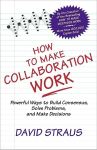
People who are directly affected by an issue deserve to be able to express their opinions about it and have a hand in formulating a solution. (46)
How are the current tools changing the expectations of your client, customer or congregation?
###
Image Credit: Inkdrips via thisisnthappiness
In Praise of Brain Picker
Maria Popova shows how to move forward
 If you are a fan of Brain Pickings and Maria Popova (if you are not you should be), do yourself a favor:
- Sign up for her blog…
- And tweets (@brainpicker).
- Read for a week and then…
- Read this article from Mother Jones. You won’t be able to appreciate this article until you experience for yourself Ms. Popova’s prodigious output.
If you are unfamiliar with Brain Pickings, it is a resource-heavy blog that pulls together the oddest assortment of topics that will mesmerize and pull you deep into some of the most creative minds our species has produced. From creativity to music to authors to architecture to, well, the list is long. In each post—and she posts three times a day!—she identifies diverse resources and pulls them together with enough depth to change how you think about your work this very day.
The effect is breathtaking. I subscribe to a lot of blogs but Ms. Popova’s posts all require further, eager reading. Much of my Instapaper account is filled with ideas, authors and links that started with a post from Ms. Popova. The Mother Jones article gives more detail about how she accomplishes what appears to be a team effort, but isn’t. Along with working a regular job, she reads 15 books a week, posts three times a day, and tweets every 15 minutes (that’s right, four times an hour: 56,096+ tweets gathering 222,195 followers). Ms. Popova is motivated by “combinatorial creativity”:
But even before I knew what that was, I always believed that creativity is just, sort of, our ability to take these interesting pieces of stuff that we carry and accumulate over the course of our lives—knowledge and insight and inspiration and other work and other skills—and then recombine them into new things.
Her vision for curation is compelling:
…you enrich people with creative resources, and over time, these Lego bricks that end up in their heads eventually build this enormous, incredible castle. And I don’t think that’s an original idea at all—it’s something a lot of people intuitively understand, and a lot of curatorial projects are born out that vision.
When I teach copywriting at Northwestern College, we spend a fair amount of time thinking, reading about and practicing combinatorial creativity. This kind of creativity is at the heart of any good copywriting practice, but it also has the capacity to open hidden vocational doors.
###
Gay Marriage and the Desperate Times/Desperate Measures Argument
People of faith can do better
 Amy Bergquist’s powerful editorial (“This man shouldn’t get the last word on gay marriage”) in today’s StarTribune makes a strong argument about treating people as adults. Read the comments (59 as of 10:10am, 135 as of 2:50pm) and you’ll be reminded of what a lightning rod issue this is for our culture. Setting aside the lightning and the working parts of Christian conviction in a multi-religious nation for a moment, I believe Ms. Bergquist is exactly right about Frank Schuber/Schubert (The Strib printed his name both ways) methods:
Running emotion-driven ads at the last minute does not give room to debate, discuss or even engage one’s mind. It’s all visceral. It’s all knee-jerk reaction—which is the point: We all know that every institution and cause, from the Axis to AIDS, has played on emotion to move people to action. We each tune out countless of these messages every day.
As a copywriter and a student of persuasion and a Christian, I question Mr. Schuber/Schubert’s tactics: while his ads may move the vote, they do not promote transformation. Transformation happens as people engage with an issue and think it through and talk it through (and pray it through). On a personal level, it is one-on-one conversation that makes things happen. The notion of ambush communication tactics may give short-term gains in Jerry Falwell’s culture wars while leaving the nation’s current inhabitant’s thumbing their fact-checkers as they walk away.
I know these tactics well as a copywriter. But anyone can see that advertising and marketing communications are moving away from the trick-you-into-buying mentality. The marketplace is much more conversational and becoming more so every day.
As a sometime faculty member at Northwestern College where Mr. Schuber/Schubert was interviewed weaving his emotional magic, I wonder if the faith community that supports the college can call for better, more mature, truly Christian communication. I doubt the college sanctioned Schuber/Schubert’s particular work, though clearly the marriage amendment would have a lot of support from the evangelical-minded folks aligned with Northwestern College. But I would challenge the community to find ways to engage people in conversation—sort of like Jesus and Paul did—rather than supporting more rapid-fire emotional outbursts.
Let’s grow up.
Together.
###
Image Credit: Famous Movie Quotes via thisisnthappiness
The Gift of a Fresh Topic
Say Something New to an Old Friend

step away
Anybody can get fixated on a topic. Usually it is the annoyance that sticks in your craw or the coworker/friend/acquaintance who doesn’t act like you think they should. It bugs you, so you talk about it. I know the hot buttons for a bunch of people: things I can say to cause them to automatically press “Play” on their internal dialogue player. And here come the same words out of their mouths every time. People know my hot buttons, too: when I hear “trickle-down economics” the same set of words come to mind and mouth every time, with visceral results.
But consider what happens when a third party comes along: someone without the relationship history, someone unfamiliar with your precious grievance. Someone with an entirely different, passionate focus. This person can step into and through the usual troubled-water topics and help lead you out the other side. And it can be energizing to step away from the little slights we’ve nursed and twisted and inhabited.
I’ve witnessed grandchildren doing this with grandparents: asking an innocent question that led to an articulate explanation rather than the expected tirade. Such is the power of relationship and dialogue. And for those of us all too happy to walk on eggshells, maybe it’s time we say out loud what we’re thinking.
###
Image Credit: via Wo and Wé
Wes Anderson and the Intrigue of Low Affect
After recently watching Moonrise Kingdom we’re on a jag of Wes Anderson films at the Livingston Communication Tower (high over Saint Paul). Anderson brings a recognizable color palette and camera work to each piece of communication. He also brings a tone that is memorable for comedy touched by a bit of failure. Or failure touched by recognition and agreement.
Even his short persuasive tools earn my rapt attention: this American Express commercial is a masterpiece of jumbled information layered into less than straightforward answers, all of which makes no sense until suddenly it does. This Softbank commercial with Brad Pitt showcases Anderson’s playful direction that rolls with the action even as it creates its own. There is something lighthearted about the commercials while his films often circle a darker place.
The other night we watched Rushmore. In the middle of the movie, Mrs. Kirkistan wondered aloud how dark it would get. But by the end…well, I won’t spoil it, except to say it ends well, which is not a surprise. But along the way it is the understated communication that perpetuates a kind of unflappable honesty that runs through the characters and scripting. Bill Murray wears the honesty particularly well.
Color, emotional affect and carefully framed shots all figure highly in Anderson’s work. Each feels like a mini-play, like we could be watching it on a stage rather than on a small frame on the wall. Or maybe like we’re seeing an old, forgotten toy spin again, but this toy has a few barbs attached. The Darjeeling Limited and Fantastic Mr. Fox certainly have this feel.
NY Times columnist Rick Lyman in his 2003 book Watching Movies, sat down with a number of movie-types to see the films that influenced their art and careers. Wes Anderson was one of these types, but in 2003 more “up-and-coming” than established. Lyman asked Anderson why he chose to watch Francois Truffaut’s Small Change.
Mr. Anderson, it turns out, is the sort of person who tells you—a little sheepishly—that he has no answer to something, and then spends the next two and a half hours giving you one.
Wes Anderson may be something like his movies. But then I would expect art to have a relationship with its creator.
###
Being Present is Hard Work
Just Don’t be Boring
 I know this from teaching college students. Some students are right there with you (I love these people!). I see others fade into and out of our discussion while some simply park their carcass in a chair as their mind plays on a sandy beach in South America. I don’t blame them. Helping any audience be present is a challenge for every communicator. It’s a challenge I try to take seriously in teaching, writing and face-to-face conversation. A creative director I worked with would always say, “just don’t be boring.” He was right. No speaker or conversation partner has a right to squander someone else’s attention.
I know being present is hard from my own experience as well. Paying attention to someone requires a lot of energy. Maybe introversion/extroversion has something to do with it. Maybe not: extroverts have an especially hard time listening because they really, really want to interrupt and say their spiel.
Over the weekend I talked with a physician who works really hard at being present with each patient. Her day is spent in 15-30 minutes intervals of intense listening followed by repeating what she heard, followed by diagnosis mixed with more listening and more response. It’s easy to see why it takes all her energy.
Rereading Robert Sokolwski’s Introduction to Phenomenology, I ran across this quote:
All experience involves a blend of presence and absence, and in some cases drawing our attention to this mix can be philosophically illuminating. (18)
The physician worked hard at being present with her patients precisely because the words uttered by patient after patient were only one piece of the puzzle. She was also analyzing what wasn’t being said, what the patient was trying not to say, as well as analyzing physical appearance and the way the patient holds him or herself. Same stuff we all pay attention to, but the physician needs to draw concrete conclusions or at least educated guesses that could lead to a course of action.
Being present is a gift we give to each other.
###
Image credit: Paul C. Burns via thisisn’thappiness

 conversation is an engine