Posts Tagged ‘photography’
How to Anticipate a Thaw
Sometimes life mirrors fiction
My client needs a strategy for their online presence.
They know their presence appears text-heavy and pedantic, making them less attractive to the new audience they seek. My client’s online presence must quickly inform the querying audience why they should care, but this message needs to be packaged with a color palette and intuitive organization that say “Come in!” long before the audience gets to the headlines, let alone body copy.

All sorts of off-the-shelf tools can make that happen these days. WordPress has a number of themes that can invigorate tired old websites.
But what I’m interested in is the engagement-promises my client can make that are deeply true. The organization itself is on the cusp of change and their online presence is a first new thing to present a refreshed vision. As such, their presence needs to be aspirational (“Here’s who we want to be”) but also rooted in long-held values. Their new presence needs to reflect the hard-won, chiseled facets they have come to love—facets that may just present new ways forward.
When I get stuck writing a piece of fiction, I go back and see what my characters have already been saying and doing. And then I retrace their steps along a new trajectory. And that is exactly what my client needs.
This is a team effort situated in real life. And this team effort will retrace and map and begin to outline a new trajectory. This team hopes to generate a conversation that precipitates a thaw after a long winter. We hope this conversation will pull in those who have long been hibernating.
###
Image credit: Kirk Livingston
My New Mug is a Proper Communist
Fresh from St. Petersburg

Oh—it has made a free-market friend.

Or is this some new annexation?
###
Image credit: Kirk Livingston
“You Should Care” Versus “Why You Should Care”
Just Say No to this Toxic Assumption
This Sol Stein quote on high-powered facts failing to invite others in reminded me that we are at our best when we express our passion as an invitation. The best teachers are the ones excited about a topic. Their excitement is itself an invitation into the topic. The best salespeople are those humans who use the product and love it—which is why word-of-mouth remains the most sought-after form of advertising. The most persuasive evangelists are those whose lives have been altered by faith or by an Apple product (which is itself a kind of religion).

Alternatively, the worst college classes, the worst business meetings, the worst seminars are those where the professor/supervisor/speaker assumes you care as much as she does. That assumption leads immediately down deep into depths of details without painting the larger picture. And many of us are desperate for the larger picture. We want to see how our work or faith makes a difference in the rest of life.
A basic truism of life as an insider is that we stop talking about why we are here (in this company or department or group or church) because we’ve heard other people’s stories and we don’t need to go over that ground again. Pretty soon we assume we are all on the same page with the meaning of our activities together. Every once in a while the boss of your boss may say something about why we are here and why its important. But day-to-day it is largely assumed.
The outsider knows nothing of this.
The outsider comes to a group not with a blank slate so much as a slate marked by other groups he has dealt with. The person on the fringe trying to understand the group wants to hear the big meaning statements, the “Why we are here” stuff. And this is precisely where corporate talk falls flat. Corporate talk about meaning and mission and purpose is often vapid precisely because there is no human behind it.
But when the outsider makes contact with the insider who is properly enthused about the meaning-making activities of the company or group, that is a very different story. Mission and purpose come alive when demonstrated by another life being altered.
So—two things:
- Don’t assume the people around you are insiders.
- Keep talking about why we are here doing these things together. These orienting, meaning-making discussions help everyone. It is too important to leave to the VP of mission.
More takes on “transformation” here.
###
Image credit: Kirk Livingston
Why Academic Writing is so Boring
Insider language bores the outsider
Researchers, scientists, academicians marshal their facts to a higher standard, but with their neglect of the emotive power of language they often speak only to each other, their parochial words dropping like sand on a private desert.
–Sol Stein, Stein on Writing (NY: St. Martin’s Press, 1995) 11.

And please don’t equate “emotive” with flowery.
###
Image Credit: Kirk Livingston
Seeing Past Childish Symbols
Step 1: See the Template You’re Working from
I’ve been trying to learn to draw and Betty Edwards’s Drawing on the Right Side of the Brain has been particularly helpful. Edwards looked at why it is so many adults say they can’t draw, which is especially odd since nearly every child loves to draw. How did we move from love to incompetence? Edwards answers that by tracing our development as artists, and here is one milestone:
By around age five or six, children have developed a set of symbols to create a landscape. Again, by a process of trial and error, children usually settle on a single version of a symbolic landscape, which is endlessly repeated. (73)
As we age we become dissatisfied with those symbols but we have not worked out new ways to put on paper what we see. And so we give up, and our drawing gets stuck in that old symbolic system. Edwards provides a much richer discussion, but at least one result is that we must set aside our childish system of symbols to begin to see.
Which is not so simple.

I still start with a circle.
Not so simple because of the confusion that sets in as we try to translate real world scenes into a two-dimensional representations. To set aside the sun as a happy face in the upper right corner means I must look at how the sun reflects off, well, everything. To look at a face and see that—no, there is no outline—is off-putting. How to draw a face without starting with an oval?
This is why Edwards starts with learning to see as a precursor to learning to draw. In my 70+ days of drawing daily, learning to set aside my childish symbolic language has proved difficult. But the answer to seeing better and especially to seeing past the old symbols is to do things badly. And maybe do them badly for a long time. To do things so bad they are cringe-worthy. But that is the price one pays to learn.
I cannot help but think this life lesson and applies across the board. Learning to see and hear, and learning to form your own opinion and make your own representation applies universally. Growth from child to adult means you find new ways to interact with parents, so you set aside some (not all) the old relational cues. The ways we interact with colleagues and bosses must change as we take ownership for our work. Even the childhood symbols that directed our understanding of life purpose and how one knows God must be rejiggered. There is a template for romance we would do well to look at again. Nearly every part of life is helped by reexamination.

“Cutie Pie” + “Let’s Read” seems like a good place to land.
But make a deal with yourself : be patient and give yourself time to move beyond the immediate confusion.
###
Image credits, including dumb sketch: Kirk Livingston
Hit Send & Live With The Results
Because Isolation Won’t Cut It
There is a special frightening moment in many of my writing projects lately. I’ve had a few longish-form assignments, each with lots of moving parts. In each I’ve needed to collect first-hand information from people with diverse backgrounds and expertise, and then combine that with research from journal articles. Each interview—each assignment—was a mini-seminar where I was schooled (very quickly) on the intimate details of the situation.

Ship it, already.
Not so long ago I noted the benefits of sending work out to others and embracing deadlines. More recently I made the case for the aspirational lie, noting how one works toward telling the whole truth, mostly getting it wrong before getting it right. Both the sending out and the aspirational lie are at work in this visceral fear. There is this moment, after I’ve written my email with explanations about what my client will see, after I’ve written my caveats, after I’ve attached my rough draft, this moment where I pause.
Do I really want to send this?
Because, honestly, I could do more. It’s a visceral moment: I feel in my gut the holes in the draft. Do I really want my new client to see my argument in this shape? But budgets and timing dictate this project move forward. And the only way forward is through a reaction from someone else.
Just as I’ve noted how my dumb sketches are talking to the writing part of my life, now I see how the entrepreneurial “Just Ship It” mantra is playing into my creative side. Because there is much to be gained by getting a reaction.
###
Image credit: Kirk Livingston
Ritz Flats: Handyman Special
Seems like a solid investment.

###
Image Credit: Kirk Livingston
Tourist Trap
Who can resist a solid bridge or two?

###
Image Credit: Kirk Livingston
1975 on Line 2: “Sorry, he’s on a long-distance call.”
So, you understand, he cannot take your call.
My accountant’s receptionist said this a few days ago. I had not heard “long-distance” for at least 20 years. And the phrase had not been common for a good 20 years before that.
Clearly the receptionist had time-traveled from another era. How is it she still had that phrase at her disposal?

Way back when a long-distance call took priority over everything, because dollars burned with each minute of telephone time. So you stood patiently next to the telephone with a cord plugged into a wall socket. And you finished the conversation. After all, priorities are priorities.
Not so today. True, an international call is more costly, but Skype is free, and there are a number of lower-cost communication solutions. Dollars are not burning today, or at least not in the same way and not at the same pace. So we are free to flit from talk to text to snapchat to email at will, interrupting one to catch another and so on. We keep larger conversations going with more people using multiple smaller communication events. Multitasking is a kind of badge of honor that shows how important we are, though we publicly rebuke the practice.
Smart people point to attention as the currency for today. We wonder how to get attention and how to keep attention. Long-distance and dollars spent per minute once forced our focus, but today people choose to pay attention. And they often choose not to.
What will you pay attention to today?
###
Image credit: Kirk Livingston
In Praise of Doing Things Badly
Rough draft as collaboration tool
I keep talking about rough drafts and dumb sketches. That’s because providing something when expectations are low is such a great way to share ideas. It’s a way to tell ourselves what we are thinking. It also a way to tell others what we might think together. But with the pressure off.
It’s also a great way to learn.
Some may say, “What? That guy needs a rough draft? What a chump!”
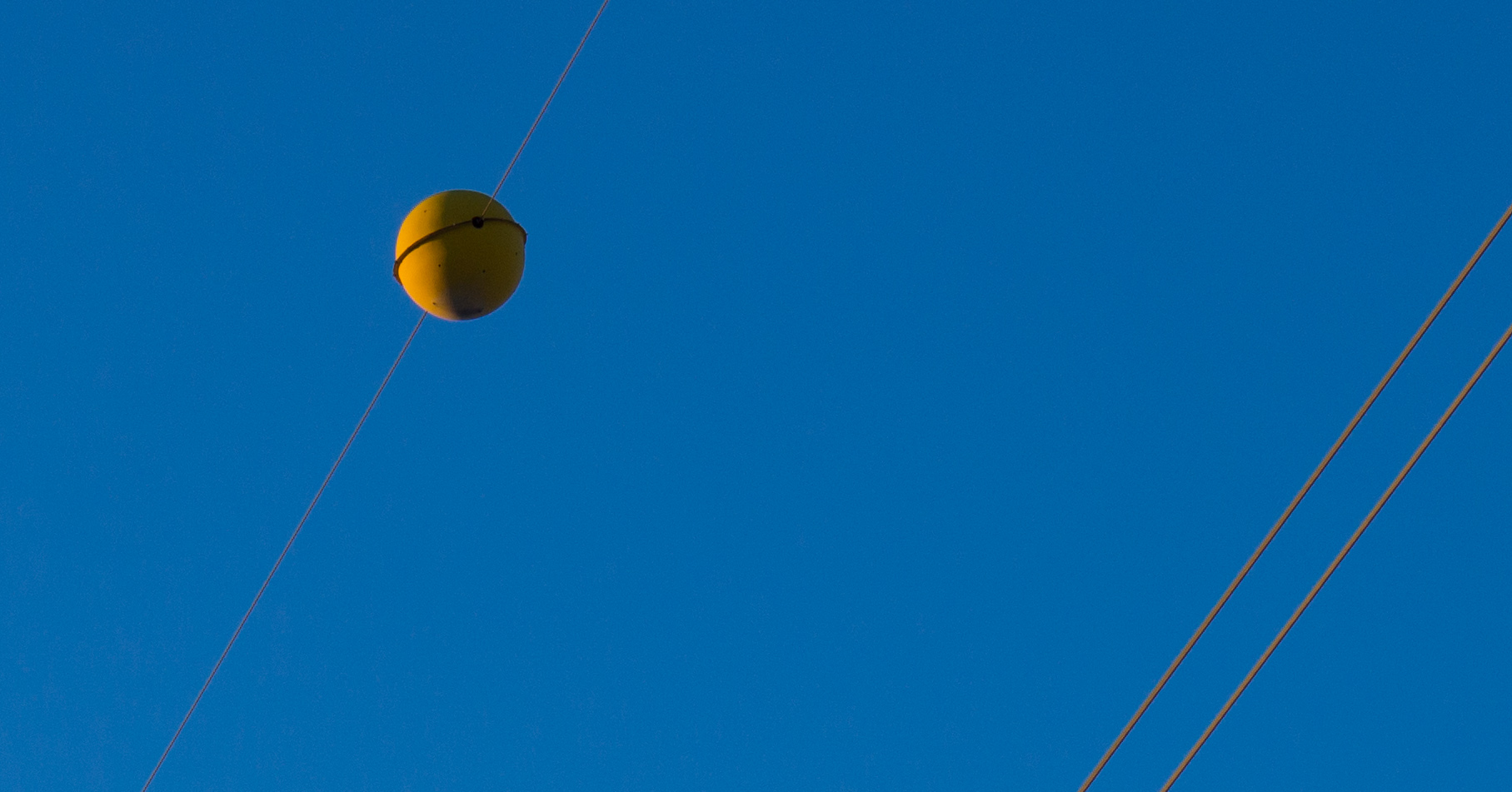
While it is true I am a chump, it is also true that presenting a rough draft—sometimes just the stub of an idea—can have an electrical, clarifying, vivifying power to move you forward. This idea, laid bare in all its clumsy, awkward glory, may just be the beginning of something important. Something even that holds your imagination for a year or five.
The rough draft laying there—all vulnerable and wrong—brings out the best in those who look on. Often evoking pity rather than harsh, fluorescent critique. And that makes for a great conversation.
What will you do badly today and share as a rough draft with a colleague?
###
Image credit: Kirk Livingston

 conversation is an engine