Archive for the ‘art and work’ Category
“You can’t change something that doesn’t exist.” (Copywriting Tip #7)
Where to find courage to create
Designer/entrepreneur Mike Lundborg uttered it dozens of times over a few projects we collaborated on. For me this quote nearly perfectly encapsulates the dance between creativity and work that is the business of freelance life. That’s why I keep the quote front and center in my work space.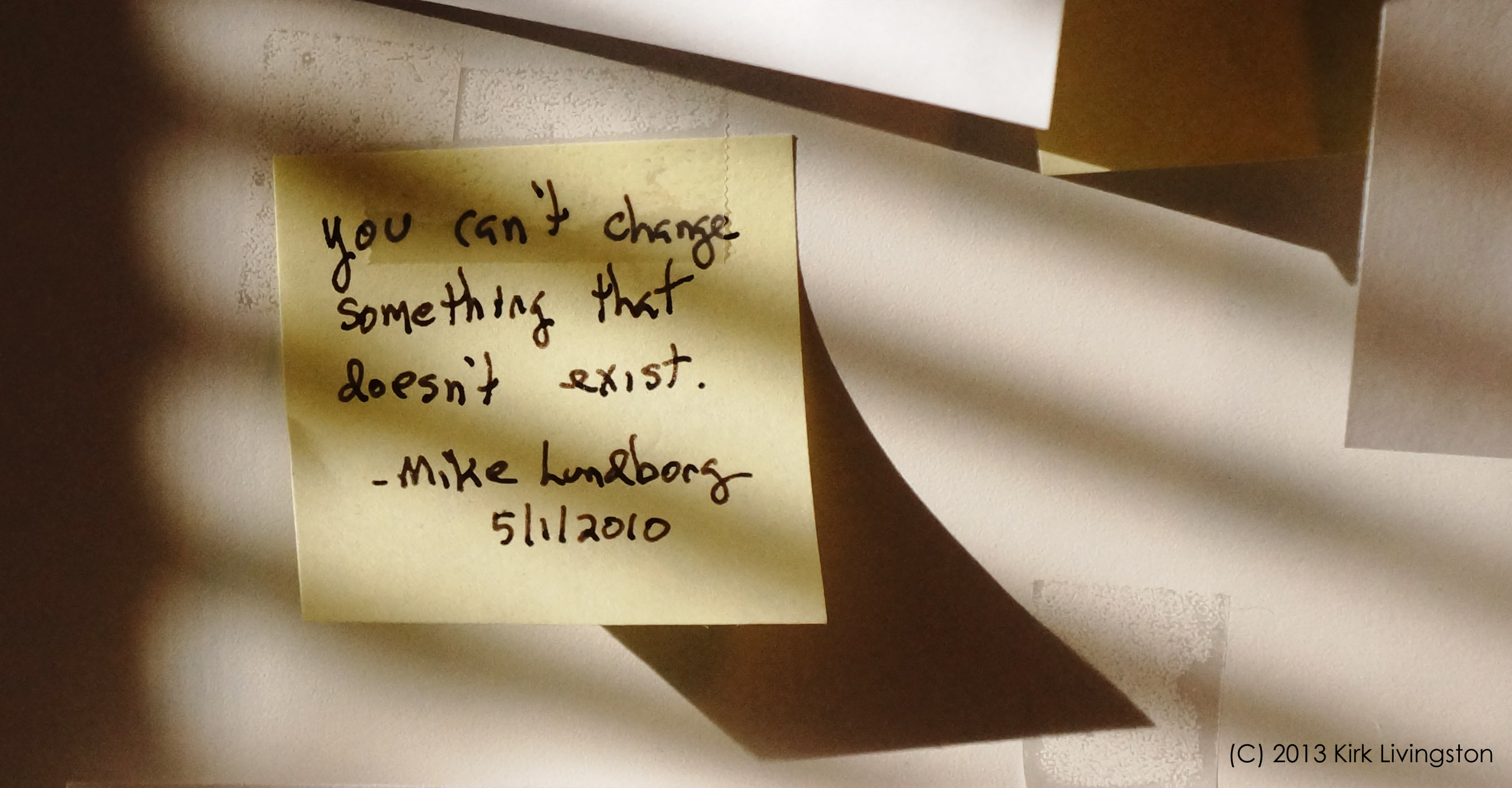
Even today I’m working on a story intended to invite prospective patients to participate in a clinical trial. But early review comments indicate my client wants to buff out the narrative parts (that’s right, losing the story itself) and swap it for clinical and corporate language. The story was meant to pull prospective patients toward a clinical trial, but it won’t if the corporation keeps talking.
But this is not a lament. It’s only a statement of reality and maybe a celebration—because this is how we create together. My sizzling hot interpretation of a marketing objective is held in the tongs of review and hammered into shape by my collaborator. And by me. This is my expectation for my ideas and the resulting words, just as it is my expectation for each part of the process.
And now this: as we release a few of the projects physical constraints, my story bounces back—which makes me glad. This is what collaboration looks like. Successive drafts change but the central objective continually informs all the collaborators as we take our turns shaping the project.
Amazingly, it is this very collaborative process that needs to inform my less commercial writing projects. The courage to create actually springs (again) from the sometimes difficult conversations that surround the project. But it also takes courage to produce a rough draft.
###
Cody Kiser: Painting the Consumer’s Irrational Fears
View from the backside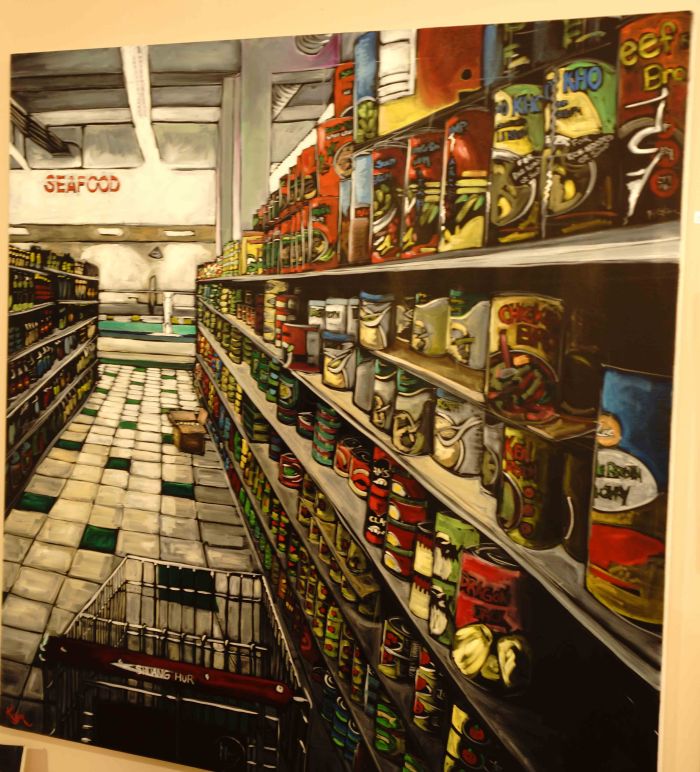

Cody Kiser paints his way into the mundane stuff of everyday life and resurrects it in a form that is both familiar and disconcerting. Mr. Kiser’s artist statement says his work functions as commentary on the irrational fears peculiar to people who self-identify as consumers. He strips away language and cultural barriers in his paintings and deposits the viewer on a not-so-distant shore with a view of the backside of our culture.
Mr. Kiser’s paintings drew in Mrs. Kirkistan and myself as we wandered through this year’s Northeast Minneapolis Art-a-Whirl. We like seeing things from a different perspective and Kiser’s work accomplished that instantly. But there is also a sort of gathering darkness to his work that hints at sinister ends. Where have the people gone? And how did I get to this place where I’m shopping for stuff I can barely identify?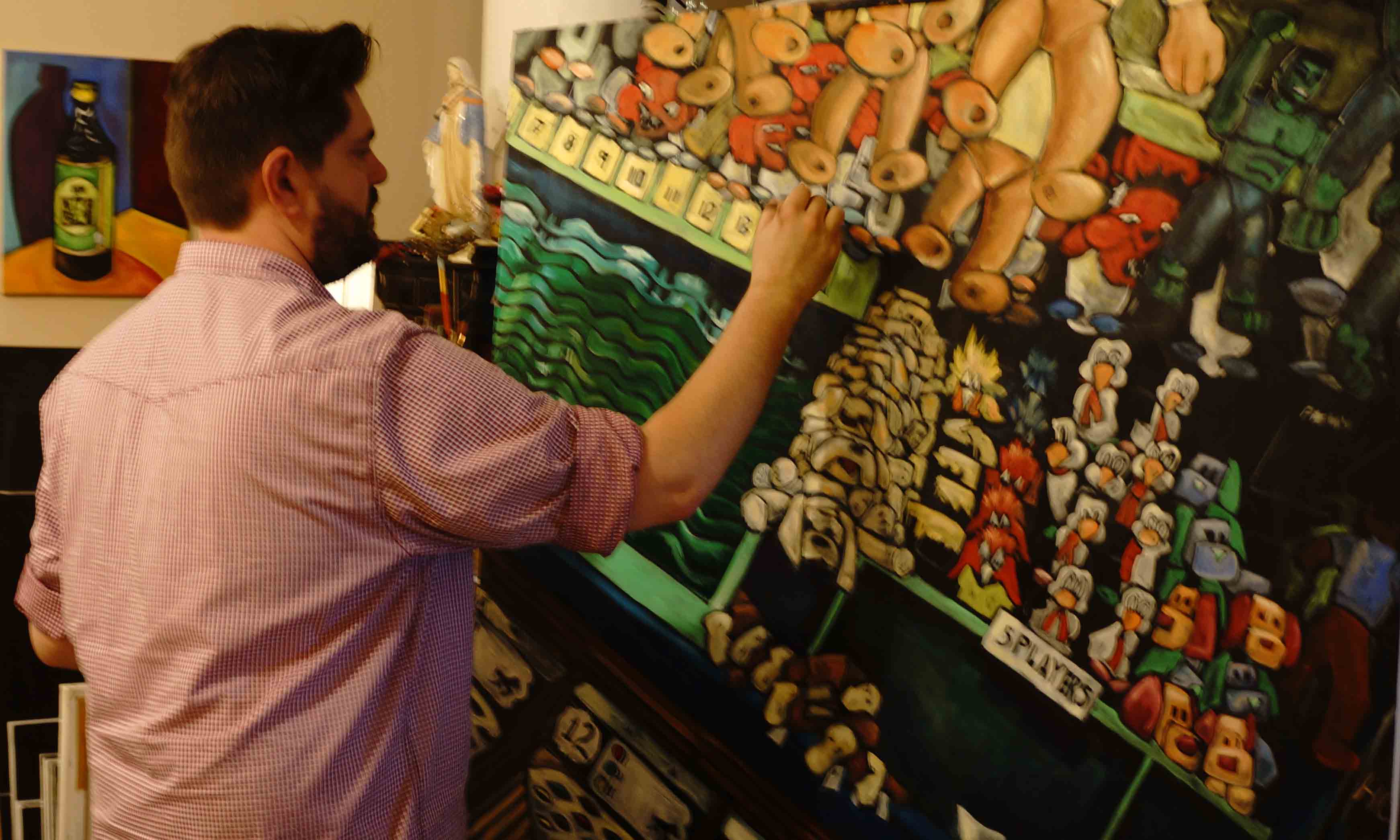
Finding patterns and vision in the dreary details of everyday life is itself inspiring. The surprise is that the closer we examine nearly anything, the more we see how wrong were our first assumptions. Upon a close examination, the hard surface becomes porous. Smooth becomes cratered under the right light. It’s funny how often that proves true.
See more of Cody Kiser’s work here.
###
Writing for Pretty Not Petty
Seth Godin: Designing Our Ideas to be Spread
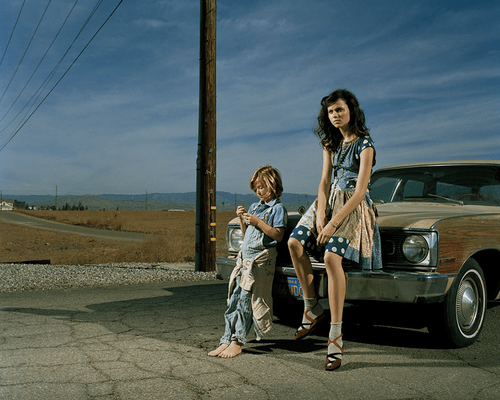 I’ve always been utilitarian–not overly concerned with fashion. That’s not a boast, it’s a lament: I confess to being more preoccupied with ideas than the various forms atoms take. But I’m coming around. I’m starting to think more about what is sharable. Pretty things matter because pretty things move around in our culture: photos, design, elegantly packaged ideas. Unexpected videos. Things that are well-lit or unusual. Baubles attract and hold the attention of babies and today’s adults alike. Visual simplicity and elegance are part of what helps an idea stick.
This is sort of a big deal. It is something we know for others but not so much for ourselves. Because we think our own ideas are inherently interesting. Seth Godin talked about this in his post yesterday and the day before. He talked about doing the work whether or not you get picked for fame. And making things sharable. Those posts are worth reading.
If I have some message to deliver, just plopping out the linear logic on paper pulls in only the most interested and committed insiders. Everyone else keeps walking thinking “nothing to see here.” Old school marketing was all about setting features into bullets for the interested reader to scan. But the interested reader was buried in the local cemetery years ago: only distracted readers walk the earth today. I’ve said over and again that blocks of copy scare people away—even people who self-identify as readers. Too much to read. Too slow.
But an image…now that is sharable. An image intrigues in a very different way.
So—today’s writer must sort out how to engage with a visual generation. Sure, we’ve known this for forever and those who have taken it to heart for the messages they need to deliver are the ones being heard today. One of our daughters feels that getting rid of the ugly in the world is part of her life work. As a writer I’m thinking about adopting that stance—I’m becoming more intent on locating images and simple analogies to help me tell the deep story that I need to tell.
###
Day Jobs of the Poets
What’s that? You plan on writing poetry for a living?

###
Image credit: Grant Snider via this isn’t happiness
Glen Stubbe: “I did this thing. Let me show you.” (Shop Talk #7)
When Photojournalists Gather: MNPA Shop Talk
I’d like to see more. And better.
Photography, like sketching, is another way of interacting with what is right before us. Both photography and sketching present opportunities to see differently—both are a kind of active seeing. As a writer, I have an ongoing project of learning to see more and better and differently. Seeing better helps me write better.
Glen Stubbe Photography [@gspphoto]
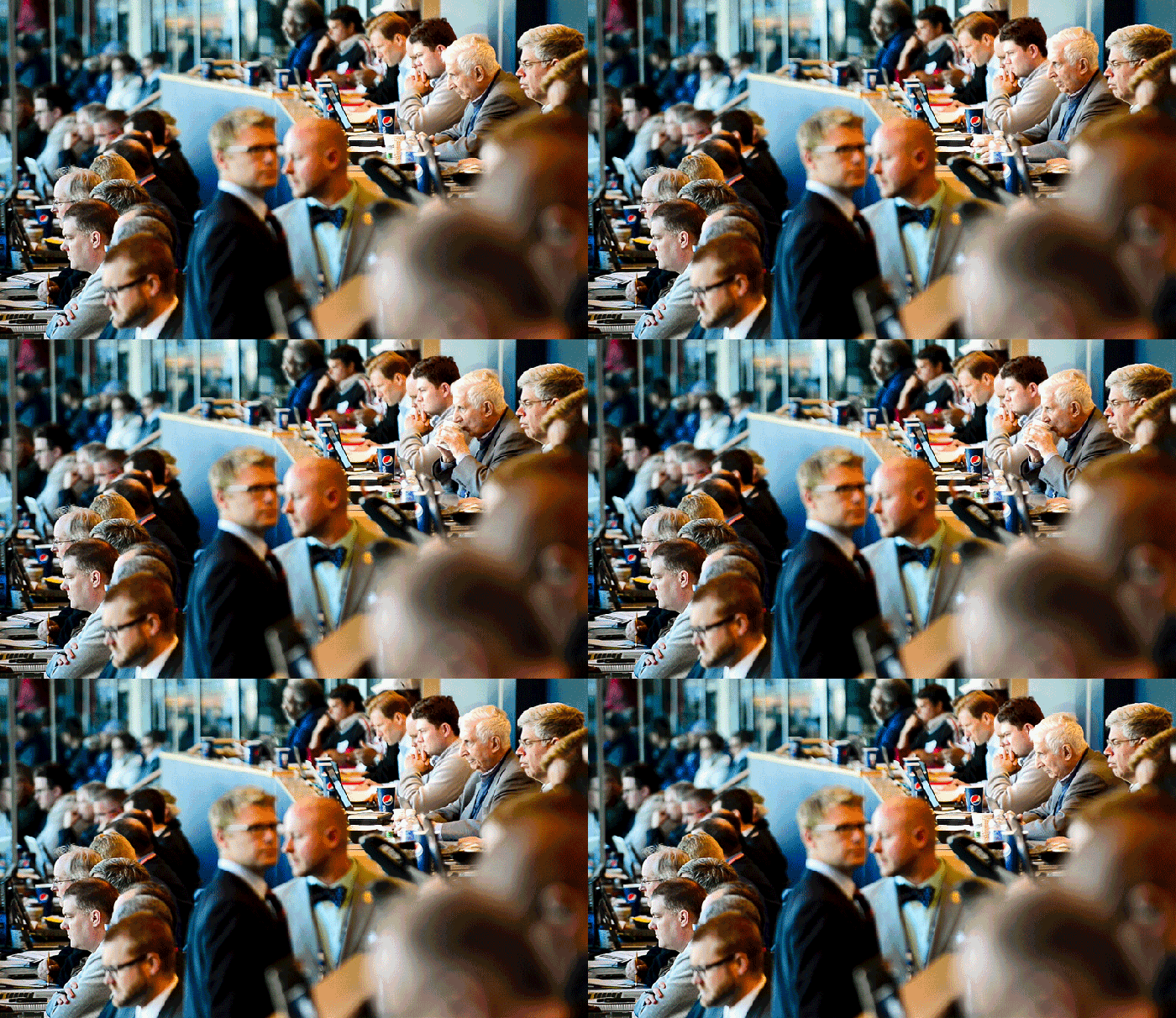
That desire prompted me to show up at the Minnesota News Photographers Association last Saturday at Murphy Hall at the University of Minnesota. I wanted to hear how news photographers talked about—and thought about—their work.
What I heard was talk of technique: details about exposure and how to layer different exposures in a single photo, when to wait and when to move when stalking the photo they have already seen in their mind. Several times I heard how photographs were once merely an accompaniment to the article and how that is quickly changing. Glen Stubbe cited an example of his photo of Michelle Bachman escaping a pointed question went on to start a national story thread.
The photographers were exactly right about this last point: as we move to a post-literate culture, visual content moves to the primary spot. How long do stories stick around in any media you consume without some compelling visual anchor? Not long. I’ve often thought readers either fear blocks of copy or simply find them off-putting. But this is nothing new, we’ve know this for some time. As a writer, visual storytelling is a must.
The photojournalists talked about the increasing role of social media and the blurred lines between reporter and photographer. But three things stood out from the panel between Ben Garvin (Pioneer Press), Glen Stubbe (StarTribune) and Jeffrey Thompson (MPR):
- “Tweet Every Assignment.” Ben Garvin said this and I think it could be true for anyone finding their way into social media. Whatever your work (or vocation or avocation), those things that are top of mind are the very things of (potential) interest to others. The premium here is on immediacy.
- Develop and Feed a Personal Vision. There are some things (photos, thoughts, words, quotes) that land outside of our daily work. There is a place for that top-of-mind content—a public place. Ben Garvin feeds that vision at his blog. For Glen Stubbe , it’s his Instagram account. I believe this personal vision is the necessary counterweight to daily work. My respect for the people I work with and read grows as I see the parameters of their thinking outside their primary work.
- Share what is remarkable. It was Glen Stubbe’s quote that helped me see the emotive content that makes something remarkable—a question I’ve wondered for some time. Something is remarkable when it makes us step out of our routine and remark, out loud, to someone else. To Mr. Stubbe, it was photographs he just had to share. The making and sharing of the photos remains a prime driver for him. What amazes us is the very stuff we share with our spouse, our kids, our friends, total strangers. It is good when we can capture what amazes us.
Ben Garvin [@bengarvin]
###
Image credit: Glen Stubbe, Ben Garvin
Sally Mann & Creating With a Magpie Aesthetic
Over time we understand our frame of reference

Photographer Sally Mann talked about her process in Art 21 :
If I can be said to have any kind of esthetic, it is a magpie esthetic. I just go around and pick up whatever is around. It’s very spontaneous. I see a dog bone. I bring it in. I take a picture. I like the picture.
And so she ends up with a dog bone show.
Mann believes art is best made without an “overarching reference.” And yet her body of work appears to support an overarching theme that she herself embeds in it. 
This is the benefit of keeping at our work: over time we sort out what it was we were supposed to say or create.
But about Mann’s magpie esthetic: I’ve noticed the same. This flow of material constantly sweeping past me and I simply reach down and grab something. For me it is an idea, a snippet of conversation, an observation, a word spoken, even a chord strummed, any of these can be fitted together into some semblance of how I understand life.
How does creating work for you?
###
Image credit: Sally Mann, PBS
Trite Ideas are a Poor Interpretation of a Problem (Paul Rand)
Trite ideas, or unimaginative translation of those ideas, are often the result not of poor subject matter but of poor interpretation of a problem.
Paul Rand, The Designers Art (New Haven, Yale University Press, 1985) 45
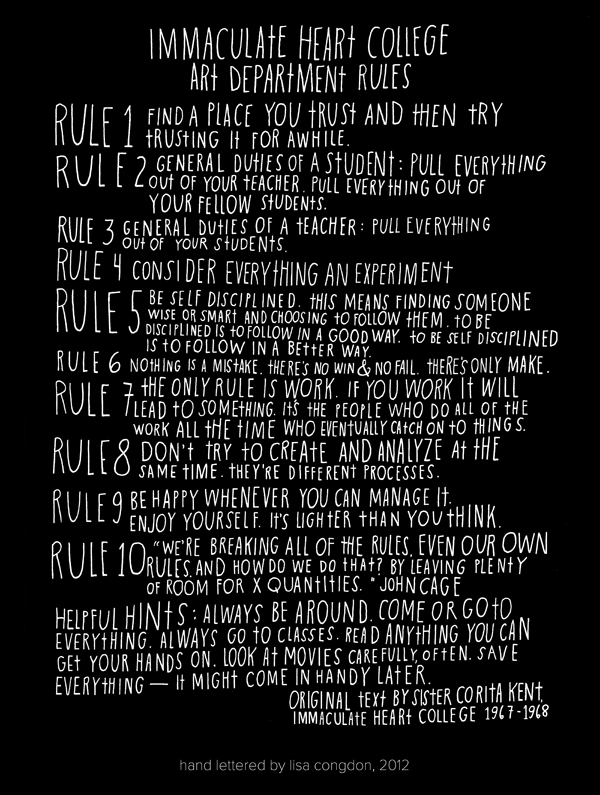
Sister Corita Kent’s Art Department Rules
 ###
###
Image credit: Lisa Congdon via thisisn’thappiness
Dustin O’Holloran & Wes Anderson & You
Art: To stop. To stare. To listen.
In the debate over art versus commerce (or fulfillment versus earning a paycheck), let me point out two bits of commerce guided by artists. Eric Harry Dustin O’Holloran wrote the score for this tourism commercial for Newfoundland & Labrador. The pacing of music and scene, from the first moments, present a different, irresistible world. I posted this commercial about a year again and have revisited it many times because it truly is a mini-vacation. The copy in the commercial is a let-down and a distraction: it’s expected and detracts from the persuasive work already accomplished by the score and visuals.
I’m a fan of Wes Anderson movies. Even his commercials are full of entertaining detail (Ad Age published a list of his great spots here). Here’s the famous American Express commercial, and then the Softbank commercial with Brad Pitt, which is itself an homage to another period of film-making. But it’s this Hyundai commercial that is chock full of detail in every frame. Anderson is known for his devotion to art direction and this commercial bears frame-by-frame examination to see the humor layered in: the kid in the cupboard. The kid in the white lab coat. The kid costumed for a Greek tragedy. I’m still puzzling over the dozens of robots that show up everywhere. I’m not sure this commercial sells cars, but it certainly fixed the carmakers name in my mind for a time.
If art is an invitation to reconsider what the world looks like, then Dustin O’Holloran and Wes Anderson have achieved art and were paid for it. Art is not about getting paid. But getting paid is not the worst thing in the world.
Check out this vimeo of Dustin O’Holloran inviting an audience to visit a different place, but without the pretty Newfoundland & Labrador visuals.
###
College Majors to Avoid + Rebuttal
And back to the work itself
 Good design often has this effect on me: it makes me want to find and do the work I am meant to find and do. Moving quickly through the many architecture or art or photography blogs out there also reminds me of what vision looks like when carried out. Vision alters our perceptions of the physical world and sometimes alters the physical world itself. And that is no small thing.
Yesterday I found myself in disagreement with the Burnt-Out Adjunct (whose too-infrequent posts I eagerly await and enjoy) who wrote that liberal arts studies should be more corollary than central to a college degree. Pisspoorprof was reflecting on another of these “ten worst” articles that pop up from time to time. This time it was Yahoo! Education touting the Four Foolish Majors to Avoid if you are trying to reboot your career.
Liberal arts degrees were the #1 opportunity killer with philosophy a close #2 opportunity killer. By the way, I cannot help but note that the entire article is an advertisement for the continuing services of Yahoo! Education.
As a holder of an undergrad degree in philosophy I both agree and disagree.
- Yes: no one hires a college grad to resolve deep-seated teleology questions (one does that on one’s own time). But to his credit, the VP at Honeywell who gave the OK to hire me (lo these many years ago) did question my stance on freedom vs. determinism.
- No: How about granting a bit of perspective? We need people who can think outside the present job parameters. And we desperately need people to challenge those parameters. Educating people to acquiesce by default is not what we need (though it is a short-term path to cash). Liberal Arts (and especially philosophy, let me say) can help this happen. Yes that sounds like the standard line from any college admissions staff says. Yes it is what professors say as they pass each other in the hallowed halls. No you don’t need a college degree to challenge the system, make a million bucks, make a difference or be homeless.
But studying things that don’t make money has a way of making us more conscious of all that is going on around us. Will it eventually make money? Maybe. Maybe not. But we need people with larger vision who can paint or write or photograph or build a different way of looking at things—however that happens.
What do you think?
###
Image credit: Studio Lindfors via 2headedsnake

 conversation is an engine