Archive for the ‘Communication is about relationship’ Category
Someone Died and Everything is Different
Times Change Us.
A gentleman acquaintance—someone I barely knew.
Mrs. Kirkistan and I were in a meeting with him not two weeks ago, and now he is absent. It’s a shock—but our shock is minor compared to that of the grieving widow and children. They have our sympathies and prayers. I cannot imagine the shift in outlook this change has wrought for them.
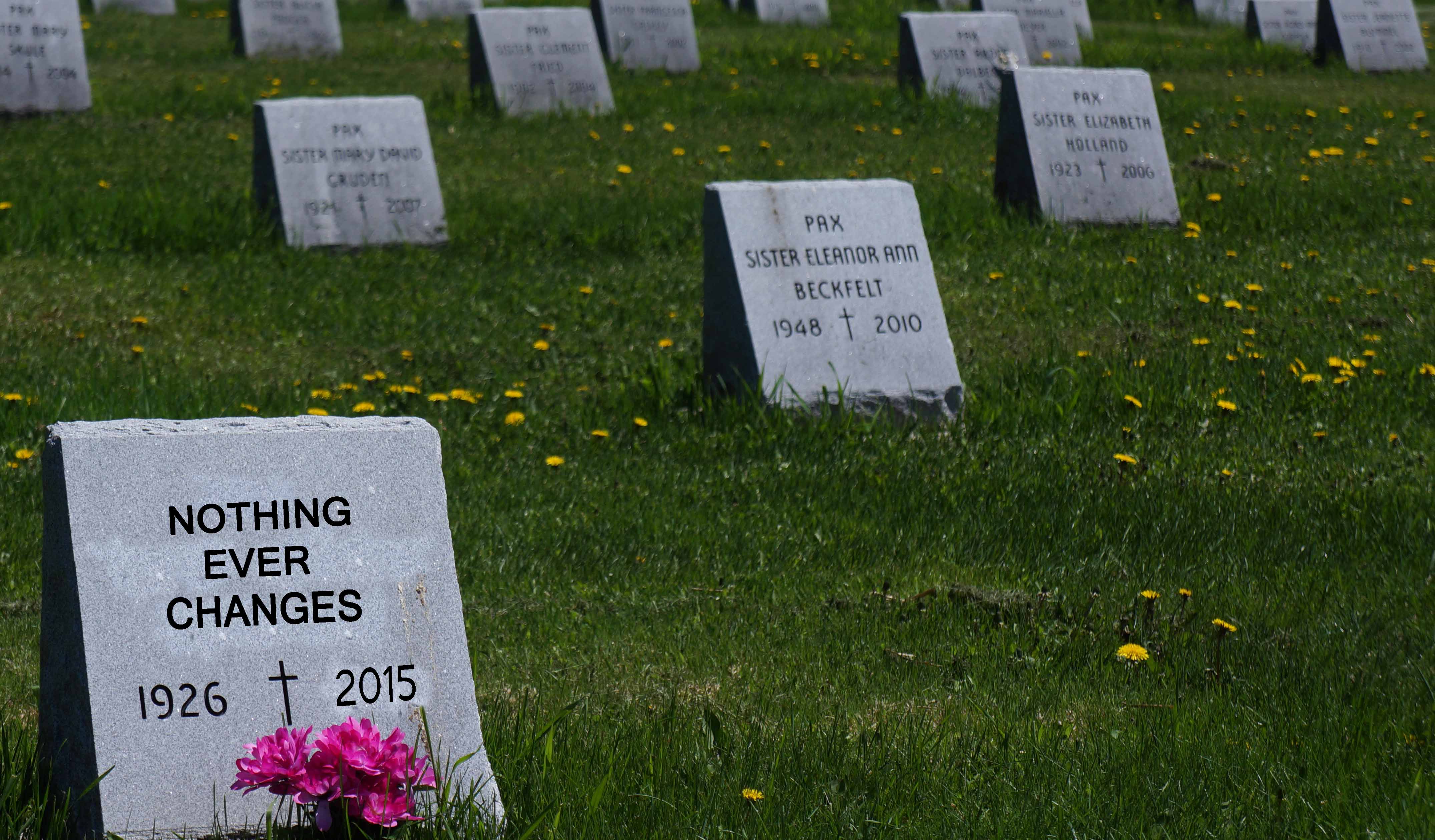
Even for me, who did not know him, there is a clear hole where he once existed. A big nothing–a memory–where, moments ago, a person stood.
And so. Mourning.
“Blessed are those who mourn, for they shall be comforted.”
–Jesus the Christ
We usually want to stick those holy old, churchy words in a pew to visit on Sunday or Easter. But today, even from the distance where I stand, they hold a glimmer.
###
Image credit: Kirk Livingston
Mary Oliver: “Here you are, alive. Would you like to make a comment?”
Just so.

…for always the new self swimming around in the old world feels itself uniquely verbal. And that is just the point: how the world, moist and bountiful, calls to each of us to make a new and serious response. That’s the big question, the one the world throws at you every morning. “Here you are, alive. Would you like to make a comment?”
–Mary Oliver, Long Life (Cambridge, MA: Da Capo Press, 2004)
###
Image credit: Kirk Livingston
Electricity. All Around You.
Questions About Your Grid
How much connectivity do you lose by waiting for someone else to speak your language?

What would you gain if you reached out with what little you knew of a stranger?
###
Image credit: Kirk Livingston
Gadamer: A Tormented Relationship to Writing
The Best Writing Sounds Nothing Like Writing
Good writing is where you remember nothing about grappling with words but are instead transported with images and ideas that appeared in your brainpan. Effortlessly—or so it seems.
This kind of effortless reading is exceptionally rare with philosophers, who are well-known for obfuscation in their pursuit of parsing detail and cleaving difference from sameness. And yet Donatella Di Cesare, the biographer of philosopher Hans-Georg Gadamer, claims Gadamer’s writing style is “lucid” with “striking prose.”
We’ll see about that.
The lucid philosopher is the exceeding rare philosopher.

I’ve just picked up Gadamer: A Philosophical Portrait by Donatella Di Cesare (Bloomington, Indiana: Indiana University Press, 2007). In the introduction Di Cesare shared about her process:
There is a further difficulty that a monograph on Gadamer should not avoid, and that is his tormented relationship to writing. In order to get around his Socratic resistance to writing, he preferred the form of the lecture, the talk, or the debate. It is not an exaggeration to say that almost everything he wrote is based in dialogue.
She goes on to say Gadamer is “always careful to interrogate everyday language and to avoid rigid terminology,” so I am eager to see how his prose ends up as lucid and striking rather than simply tedious.
What piqued my curiosity was Gadamer’s alleged privileging of oral over written. It seems his inquiry was largely based in discussion, between people, rather than one man alone with a sheet of 20# bond and a pen. Again: I’m just at the beginning of reading Gadamer. I’ve got his big Truth and Method on order, but I know from my own writing that dialogue and conversation have a pull that abstract philosophizing rarely reaches.
The best writing sounds like a conversation with an interesting friend. I’m eager to see if Gadamer achieves that.
###
Image credit: Kirk Livingston
To Flee Corporate Dysfunction or Not?
Where will you run?
My friend just quit her corporate job. She does not have another job.
“Too much dysfunction,” she said. “Why spend my days in a cube, following through on poor choices our leaders made under the guise of collaboration? There’s got to be a better way.”
“I hope you are honest in the exit interview,” several people said to her. Other top talent had quit as well and those remaining cherished a hope of productive work.

Every company has these bouts of employee-flight. Maybe the department director is a megalomaniac. Maybe the boss simply doesn’t know what to do next and is not open to advice. Maybe the department trolls rule the roost. Every so often dysfunction catches up with a department or company and talented people throw up their hands and march to the exit. It is more common when the economy is on the rise, but even in a down economy, talented people choose flight over fight, even with no job on the horizon.
So it is with my friend.
She had had enough and hoped to parlay her high-end employee history into a freelance life. I often talk with people considering this move. What I liked about this conversation was that my friend could identify a few key skills and passions that she wanted to pursue. And she had already begun to push on these passions. She knew what she wanted to build next. So her “I quit!” was less about fleeing and more about “now is when I do this thing I love.”
Because, the truth is, you can never be entirely rid of dysfunction.
“Why is that?” you may ask. (I can hear you.)
It is because you bring it with you. Disagreeing and disagreeable. Seeing issues from your personal, rigid perspective. Combative. Megalomania. These seeds are planted in every one of us. Sometimes it doesn’t take much to cause them to flower. A good conversation harnesses different potentials in those seeds and helps us move forward. A dysfunctional environment feeds the bad seed and strife rises to the surface.
Such is the human condition.
But moving forward toward our passion, finding time to do those things we love—the things we are meant to do, even if no one else cares—that feeds the productive functional seeds in us.
Is there a way to do the things you were meant to do today—right now—even as you wade through the current dysfunction?
That is the question.
###
Image credit: Kirk Livingston
How to Anticipate a Thaw
Sometimes life mirrors fiction
My client needs a strategy for their online presence.
They know their presence appears text-heavy and pedantic, making them less attractive to the new audience they seek. My client’s online presence must quickly inform the querying audience why they should care, but this message needs to be packaged with a color palette and intuitive organization that say “Come in!” long before the audience gets to the headlines, let alone body copy.

All sorts of off-the-shelf tools can make that happen these days. WordPress has a number of themes that can invigorate tired old websites.
But what I’m interested in is the engagement-promises my client can make that are deeply true. The organization itself is on the cusp of change and their online presence is a first new thing to present a refreshed vision. As such, their presence needs to be aspirational (“Here’s who we want to be”) but also rooted in long-held values. Their new presence needs to reflect the hard-won, chiseled facets they have come to love—facets that may just present new ways forward.
When I get stuck writing a piece of fiction, I go back and see what my characters have already been saying and doing. And then I retrace their steps along a new trajectory. And that is exactly what my client needs.
This is a team effort situated in real life. And this team effort will retrace and map and begin to outline a new trajectory. This team hopes to generate a conversation that precipitates a thaw after a long winter. We hope this conversation will pull in those who have long been hibernating.
###
Image credit: Kirk Livingston
“You Should Care” Versus “Why You Should Care”
Just Say No to this Toxic Assumption
This Sol Stein quote on high-powered facts failing to invite others in reminded me that we are at our best when we express our passion as an invitation. The best teachers are the ones excited about a topic. Their excitement is itself an invitation into the topic. The best salespeople are those humans who use the product and love it—which is why word-of-mouth remains the most sought-after form of advertising. The most persuasive evangelists are those whose lives have been altered by faith or by an Apple product (which is itself a kind of religion).

Alternatively, the worst college classes, the worst business meetings, the worst seminars are those where the professor/supervisor/speaker assumes you care as much as she does. That assumption leads immediately down deep into depths of details without painting the larger picture. And many of us are desperate for the larger picture. We want to see how our work or faith makes a difference in the rest of life.
A basic truism of life as an insider is that we stop talking about why we are here (in this company or department or group or church) because we’ve heard other people’s stories and we don’t need to go over that ground again. Pretty soon we assume we are all on the same page with the meaning of our activities together. Every once in a while the boss of your boss may say something about why we are here and why its important. But day-to-day it is largely assumed.
The outsider knows nothing of this.
The outsider comes to a group not with a blank slate so much as a slate marked by other groups he has dealt with. The person on the fringe trying to understand the group wants to hear the big meaning statements, the “Why we are here” stuff. And this is precisely where corporate talk falls flat. Corporate talk about meaning and mission and purpose is often vapid precisely because there is no human behind it.
But when the outsider makes contact with the insider who is properly enthused about the meaning-making activities of the company or group, that is a very different story. Mission and purpose come alive when demonstrated by another life being altered.
So—two things:
- Don’t assume the people around you are insiders.
- Keep talking about why we are here doing these things together. These orienting, meaning-making discussions help everyone. It is too important to leave to the VP of mission.
More takes on “transformation” here.
###
Image credit: Kirk Livingston
1975 on Line 2: “Sorry, he’s on a long-distance call.”
So, you understand, he cannot take your call.
My accountant’s receptionist said this a few days ago. I had not heard “long-distance” for at least 20 years. And the phrase had not been common for a good 20 years before that.
Clearly the receptionist had time-traveled from another era. How is it she still had that phrase at her disposal?

Way back when a long-distance call took priority over everything, because dollars burned with each minute of telephone time. So you stood patiently next to the telephone with a cord plugged into a wall socket. And you finished the conversation. After all, priorities are priorities.
Not so today. True, an international call is more costly, but Skype is free, and there are a number of lower-cost communication solutions. Dollars are not burning today, or at least not in the same way and not at the same pace. So we are free to flit from talk to text to snapchat to email at will, interrupting one to catch another and so on. We keep larger conversations going with more people using multiple smaller communication events. Multitasking is a kind of badge of honor that shows how important we are, though we publicly rebuke the practice.
Smart people point to attention as the currency for today. We wonder how to get attention and how to keep attention. Long-distance and dollars spent per minute once forced our focus, but today people choose to pay attention. And they often choose not to.
What will you pay attention to today?
###
Image credit: Kirk Livingston
Give Your People Presence
Is Drawing a Spiritual Discipline?
Betty Edwards, in her Drawing on the Right Side of the Brain (NY: Jeremy P. Tarcher/Putnam, 1999) calls for a different way of seeing as a beginning point for drawing. In my 60+ days of producing a dumb sketch daily I can say with certainty that my seeing has been altered. I’m open to and actively looking for much more detail in ordinary life. In particular, in the back of my mind I spend my days looking for scenes or objects or people I can reproduce (badly) on paper. And I see far more detail in buildings and structures and postures and faces than I did two months ago.
Starting to see differently feels like a small victory.
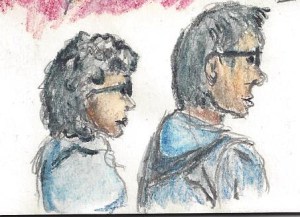
Can a dumb sketch help you be present?
Edwards has a long section on brain functionality, how the left brain works versus the right brain. I have a growing skepticism about the neatness of those two categories. I think there is some truth in the distinction. And the distinction works well for release from our typical analytical state into a more meditative zone of creativity. I’ve long depended on that zone for more creative writing assignments. But the research citations feel a bit dated and frankly I’m always a bit skeptical of forced black and white interpretations of complex physiology.
But this notion of sitting with stillness before a scene to observe, capture and (potentially) understand—it feels like a life skill that could and should translate into all sorts of different settings. Slowing to see and hear has begun to awaken all sorts of new thoughts in my brainpan. I find the practice encroaching on normal conversations, on meetings, on writing, on driving and even as I pray.
Especially as I pray.
I cannot help but wonder if learning how to observe, capture and (potentially) understand is a step toward being more present with all the beings in our lives.
###
Dumb Sketch: Kirk Livingston
In Praise of Doing Things Badly
Rough draft as collaboration tool
I keep talking about rough drafts and dumb sketches. That’s because providing something when expectations are low is such a great way to share ideas. It’s a way to tell ourselves what we are thinking. It also a way to tell others what we might think together. But with the pressure off.
It’s also a great way to learn.
Some may say, “What? That guy needs a rough draft? What a chump!”
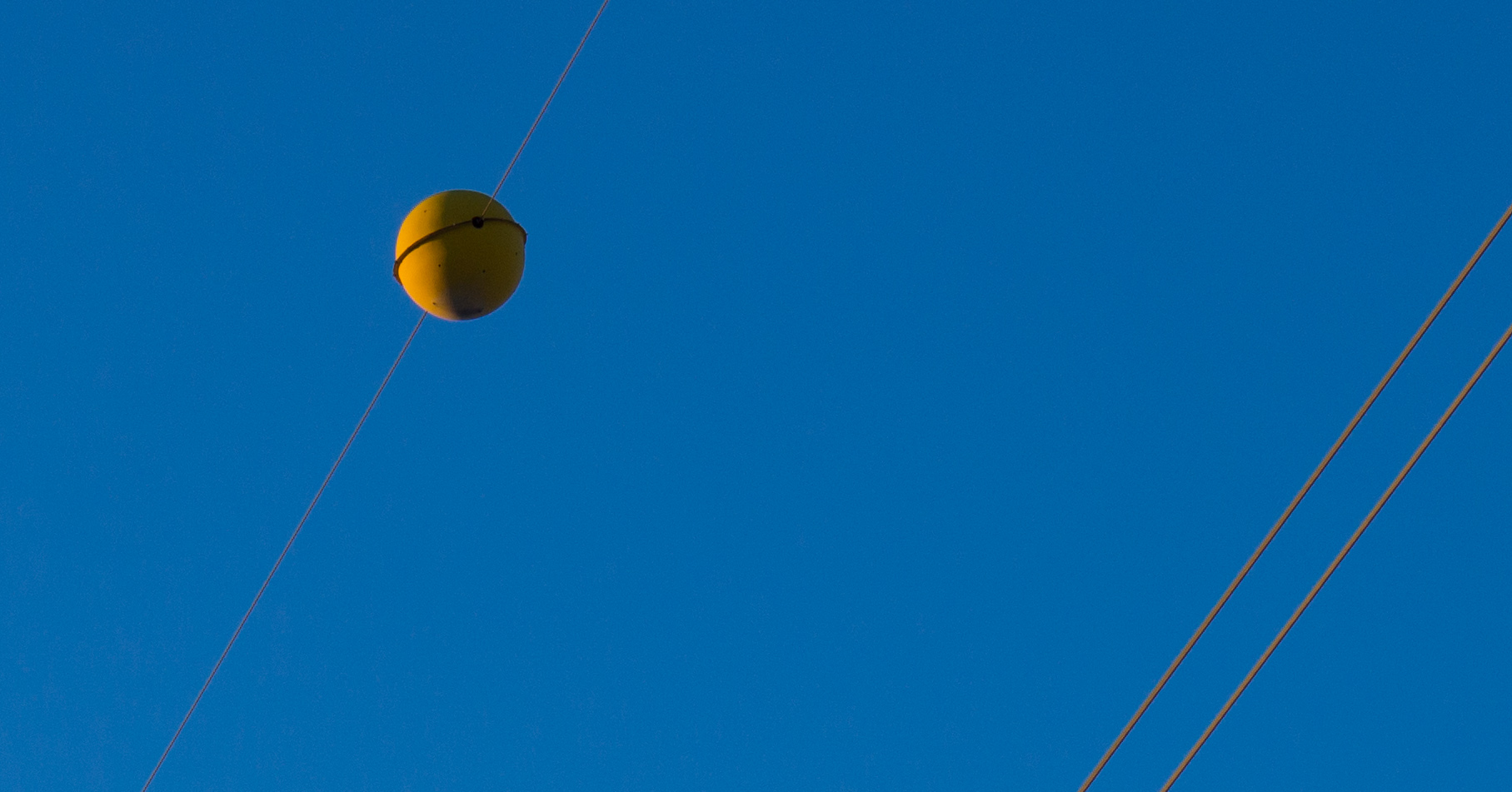
While it is true I am a chump, it is also true that presenting a rough draft—sometimes just the stub of an idea—can have an electrical, clarifying, vivifying power to move you forward. This idea, laid bare in all its clumsy, awkward glory, may just be the beginning of something important. Something even that holds your imagination for a year or five.
The rough draft laying there—all vulnerable and wrong—brings out the best in those who look on. Often evoking pity rather than harsh, fluorescent critique. And that makes for a great conversation.
What will you do badly today and share as a rough draft with a colleague?
###
Image credit: Kirk Livingston

 conversation is an engine