Archive for the ‘Communication is about relationship’ Category
11 Things to Remember when Walking Your Daughter Down this Long Aisle to Marry the Tall Gentleman at the Other End
Tomorrow Tess and Nick Get Married.
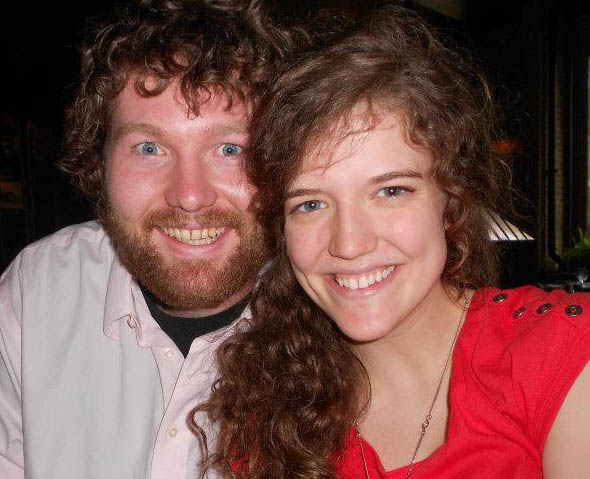 Kris and I could not be happier. Still, it is a bit of a queasy threshold, not something I’ve crossed before. So—a few reminders to help me get through the ceremonies, rituals and (self-inflicted) awkward moments:
- Check your fly. It’s up. Right?
- Breathe.
- The world changed dramatically the week Tess was born. Maybe it was because the Berlin Wall came down. Maybe because Tess showed up. I think the latter. But let’s just stay in the moment, shall we?
- Step forward.
- And again.
- Forget the four pages of detailed notes about life. These two are jotting their own notes now.
- Did I check my fly?
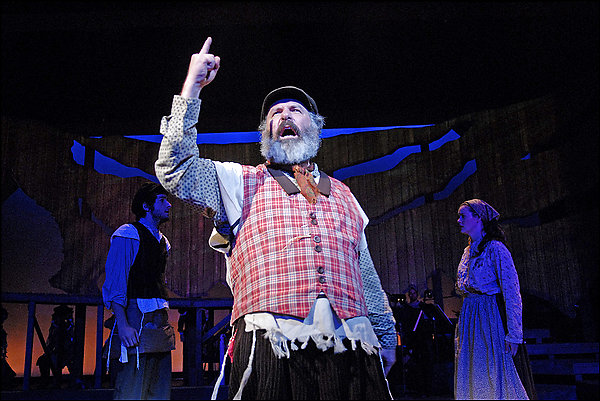
- Don’t stop mid-stride—Tevye-like—to sing out all the options. Others have a hard time holding their pose while I do that.

- Remember that something much larger is at work here, right before my eyes.
- Breathe.
- Wait—what’s that breeze?
Congratulations Tess and Nick!
###
Image Credit: Tradition Fiddler On The Roof
Boss No Like Social Media
Mashable reports that employers are not all hep on giving more social media freedom to employees.

tweet that
It seems the spread of negative information is their persistent nightmare fear. There are all sorts of main courses and sides to this tasty debate, but one thing a boss might consider is taking a longer-term look at the issue. Yes, we all know how easy it is to waste hours on Facebook. And many of us are starting to assume Facebook will give way to something else, George Tannenbaum thinks it will happen by 2017. I expect a rising Facebook backlash. But whether a backlash happens broadly, something will rise in its place. That’s because once people realize they have a voice, there is no going back.
But a longer look at giving many people a voice recognizes at least two facts:
- The era of sovereign control over you employee’s voices is over. Despite what Vladimir Putin thinks and does, what you allow or forbid workers to say at the workplace matters less and less when you don’t control the technology residing in a pocket. And conversations about your work are already in progress, whether you know it or not.
- Reasons and a few simple parameters beat “No” every time. All anyone wants is an explanation. It’s a grown-up thing to explain the reasons behind a choice that affects others. An explanation moves a team in the right direction. Even an explanation like my friend offered a two-year old visitor at his party. The toddler wanted to pick up a little poodle who had no intention of being picked up by the toddler: “You know what, Jenny? This is a Wiggly Dog. And no one can pick up a Wiggly Dog.”
Even if you have to make up a new category of canine, it’s worth an explanation. Of course, an explanation invites questions. Simply put: bosses need to get used to hearing voices. May as well start planning for it.
###
Image Credit: via Retronaut
Dummy’s Guide to Conversation #9: Say it Out Loud To Get It
 A pastor friend once wondered why the congregation didn’t know this certain fact he had mentioned in a sermon. My friend was under the notion that people listen closely to every word of a sermon. I am convinced people do listen—just not to every word.
I know this because I have taught college students and mistakenly thought that the wide-open eyes and direct eye contact meant they were listening. It took me until my first test to realize how mistaken I was. Direct eye contact is as much an act as appearing to type notes while facebooking friends. Students and all of us easily adopt the outward behaviors that allow us to escape miles away to play on the beach while the person in front persists in boring monologue.
But a conversation is a different environment than a lecture or sermon. Don’t let your conversation partner bore you with abstractions. Challenge them. Question. Ask. This is the very nature of conversation and it fits with how we understand anything: we need to try an idea on for size to sort out whether it fits us or the situation.
Trying an idea on for size looks like talking.
We must turn something over verbally to begin to understand it. It’s just how the will is connected to the brain—through the voicebox. Not exclusively, sometimes we get it without saying it or asking. And sometimes writing a note helps in understanding (that’s often how it works for me). But make peace that people need to respond in one way or another to truly begin to understand something.
This is part of the reason lectures can be so ineffective.
###
Image Credit: BLU (street artist from Bologna Italy) via 2headedsnake
Going to Church? Hear All the Voices

did you feel that?
Any pastor who cared would say the same thing: no solitary voice can ever speak for an entity as all-encompassing as the church. And except for the rare despot-in-training or the health/wealth preacher coercing you with anti-Bible blather to line his or her pockets, most leaders will say they want something like laminar flow, not just robotic followers.
Laminar Flow? Back when I wrote about mechanical heart valves we talked about the flow across leaflets and disks and how that flow of blood could have a cleaning effect or a stagnating effect.  Cleaning was good: it kept the mechanism moving. Stagnating—not so good: clots could form, which could impinge on the movement. The key was to design valves where flow was largely in the same direction. And that sounds like a bunch of conversations sprouting from individuals but moving in the same direction.
All-Encompassing? This notion the Apostle Paul talked about in some of his letters (like here and especially here) is far too large to leave in the hands of pastors and professionals and volunteer leaders. And it wasn’t just Paul: Old Testament dudes were saying the same things in different language and with different emphases. It takes an entire people—across ethnicities and nations and generations—to even begin to grasp the full story. An entire people writing the story with words and deeds and conversations.
This thing is big. Really big.
###
Image credit thisisnthappiness, RC Modelers of Laredo
Speak up! Wait. Why are you talking?
If you hail from the corner office, you’re used to being heard.
 If you are king of the OR, assistants jump at your command. If you hang out behind a pulpit or professorial podium—you know some at least pretend to tune in. But not everyone has a built-in audience. Not everyone is heard.
Those accustomed to being heard can have a hard time believing some cannot be heard. Why don’t just they just speak up if they have something to say? (Do they even have something to say?) In the same way Wall Street favors insiders over run-of-the-mill investors, every organization favors and rewards certain voices over others. These are the go-to voices in catastrophe or when a pep talk is needed. But these people sometimes assume everyone has a voice—because people listen to their voice—so, true for everyone.
Right?
But how many C-Suiters really want to hear? And how many behind the pulpit or podium really want to dialogue? Because—after all—casting vision is all about one-way messaging. Dialogue takes too long, is messy, confuses people with extraneous stuff and swerves off (my) topic.
What would leadership look like if listening were involved? Certainly there are times when monologue and one-way messaging are appropriate. But not all the time. What if the real strength of leadership was hidden in the will and unvoiced thoughts of the department/team/congregation/classroom? What if all sorts of unity was bubbling deep under the surface waiting to spring out much bigger and much better than anything the C-Suite player could ever imagine? It would be messy at first. But maybe something lasting would happen.
###
Image Credit: thaeger
Philosophers don’t pack heat. Right?
On Preparing for Ignite Minneapolis

outcome not yet determined
The unrelenting movement—every 15 seconds a slide changes—makes speaking at Ignite Minneapolis more a verbal dance than a straight-out talk. I’ve compressed four voluminous thinkers (Martin Buber, Emmanuel Levinas, JL Austin and Wayne Booth) into pairs of 10 second sound bites. If the audience includes philosophers packing heat, I may not make it out alive. Practice, practice, practice. And more practice. And then practice lots, lots more. It’s the only thing that begins to still the nerves.
I remind myself of the dream: to see if anyone will bite on my notion that ordinary conversations can be turned into insight-producing engines. All it takes is four steps to tune our thinking—but I’ll wait until after I present to spill the beans on “How to HACK a Conversation for Insight.” It’s the message I’m excited about presenting. Very, very swiftly.
###
Image Credit: Zohar Lazar via 2headedsnake
What’s a Rolodex and why would I want one?
When will the cloud break your heart?

“I don’t care if Google has my information,” said the sales woman.
Digital natives may be a lot of things, but one thing is certain: they aren’t too worried about technology. For them tech is a fact of life, like air and electricity and coffee—always there. Always ready. All slick and wireless and greased to go. That’s why Facebook is mostly just a free $13 18 20 billion Rolodex and Google is a verb. Thus has it always been. And so it shall always be.
Except when it isn’t.
Digital natives have abandoned themselves to the cloud assuming it will always be there. Mostly they don’t have a plan B when stuff goes away. Plan B is to call friends for numbers and addresses and recreate what they had before—but that’ll never happen because Facebook will be there, right?
I don’t put myself in the digital native category, which means I remember a bunch of dumb old stuff like phones with cords and 5 ½ inch floppy disks and, well, I won’t bore you with a kiln-load of nostalgia. But I retain crisp memories of this: important stuff vanishing with a bad piece of media. And an old computer simply destroying things I’d spent lots of time on. More than once. And that lesson stuck. That’s why my contacts and files reside in multiple places, including the cloud. That’s also why I do not assume Internet access in my travels. Instead I have this dumb game of searching for Wi-Fi wherever I go: just last week I ran across a signal called “Chuck Norris” in South Minneapolis. My many experiences losing important information have made me happy to seek redundancy.
The sales woman at the AT&T store has no problem storing contacts, messages and files with Google. Same with millions of us. Who cares if Google scans our communication and sends the right advertisers our way? Who cares if Facebook is about to have one of the largest IPOs in history, based on the dumb comments we type and the hours we spend on the site? Nobody cares—we get what we want out of the deal. We chat with people and divert ourselves with dumb games. Half of Americans think Facebook is a passing fad—and GM thinks their advertising with Facebook is a waste of money. Even if both of those are true, something more enticing and powerful will surely rise next.
I’m guessing down the road we’ll realize the much larger issue was not about losing stuff. And the larger issue maybe isn’t even that we’ve given away the keys to our connections between friends, family and acquaintances. We have yet to understand the full impact of this progressive-thought harvesting, but I’ll admit Nick Carr’s post on digital sharecropping has set me to thinking about where I spend my digits. It also makes me reluctant to entrust everything to the cloud and the enterprising folks who manage it.
###
Image credit: Chris Buzelli via thisisnthappiness
Copywriting Tip #5 for English Majors: Why Voice Matters
The human voice will always reign as king of communication.

words contextualize our presence and vice versa
I recently talked with a pastor who opted out of social media. Entirely. If he wanted to connect with someone, he picked up the phone.
“That seems anachronistic,” I said.
“No—that’s how I connect,” he said. “I talk with people.”
And then I realized: Yes! The sound of the human voice will never go away entirely. People may joke about removing the phone app from their phone, but that remains a joke. There’s something about the human voice that demands a response and always will. The human voice has a directness that goes beyond any technology, whether text or tweets or simple words on a piece of paper or images scattered on a cave wall. When our advertisements don’t get through, when our emails fall short, when our Facebook message goes unanswered, we go stand in front of someone and ask our question.
The human voice will always reign as king of communication–it says “I’m here. I’m present.”
Students in my professional writing classes at Northwestern College wander the web with ease. But they are loathe to pick up the phone to talk with people about potential job prospects. This is, perhaps, a pitfall with pursing writing. But perhaps the pitfall itself can show the way forward.
As copywriters we try to use that voice. We mimic it by writing in a conversational manner. With short sentences. We try to “sound” like the voice—“sound” because the sound is in a reader’s head (so—not really a sound). The more our writing sounds like the human voice, the more invisible it becomes—with the goal of messages that get into one’s mind without someone remembering they just read something. Kind of like how you drive to work everyday.
Unconvinced? Check out this German ad (and below) about organ donation. The pathos in the voices is unmistakable, even if you don’t speak German. But the voice is magnified by the dialysis chair. In the train station. It’s a bit of theater that amplifies the voice.
Context switching—from hospital to busy platform—becomes that platform that makes the human voice all that much more effective. The voice, plus the human before them—hard to resist. And emotion is a definite part of this.
Moral: “Write like you talk” is good advice. And not easy to achieve.
###
Image via thisisnthappiness
Copywriting Tip #4: Speak Truth to Profits (Dan’s Story)

ancient copywriters rocked
I’m fond of a particular collection of ancient texts. One tells the story of a copywriter named Dan. Dan’s client was all-powerful and routinely dismantled (sometimes literally) those who did not do exactly as he asked. This client never hesitated making impossible requests and had no problem forcing his teams to guess his mind.
Dan was an employee who had been groomed and mentored and specially-trained for leadership. And yet Dan retained a commitment to the recognition that even his abusive, ill-tempered, seemingly all-powerful employer had to answer for his actions and did not have as much control as he liked to believe. This perspective had been shaped early in Dan’s life by his large, extended family.
Dan’s understanding of life held sway over his work. And while he was dedicated employee, he had committed himself to write truth, no matter the cost. This put him in a bind when it came to this client, because this client’s wealth and power routinely corrupted those around him, so most everybody told the despot exactly what he wanted to hear.
The story goes that one gruesome assignment forced the entire team to guess what the employer dreamed and interpret that dream. Or be dismantled. Of course no one could do it, and so they said. The employer force the point and the team prepared to be dismantled. Dan heard of the impending mass dismantling and he and his buddies thought they better act on their understanding that even the king answered to God. So they prayed. That’s right, this is a story of a copywriter who conversed with God so he could do his work better. Dan would often point to these conversations with God when people praised his insights.
And he did get insight. From God. It was not an insight that put the employer in a good light, but Dan told it anyway. And everyone lived another day.
The Moral
Truth matters more than appeasing the abusive despot before you.
And This
The copywriter’s work has always been about providing insight into the soul of a client and the heart of a client’s audience. Get help with that.
###
Image credit: Douglas Smith via 2headedsnake:
What Grid Are You Using Today?
Everyone uses a grid to sift the events and inputs of any given day. Your grid is your life experience that informs how you hear and see everything: all that you’ve read. How you’ve experienced life. The dark and bright sides of life you’ve experienced. Nerd or jock. Pretty or not: all of this speaks to how you hear conversation and how you interpret actions. Even your intentions and dreams are part of the grid.
Over at MultiCultClassics, the bloggist(s) sees ads and news through a grid of inequality. Copyranter uses a polarizing screen to force communication events into best or worst categories, with little in between. At church on Sunday the teacher reads an ancient text through a doctrine developed centuries later, invariably forcing the ancient author to say what the author never meant. Werner Herzog reads Curious George showing one species making a buffoon of another (what, you thought Curious George was a kid’s story?).
But there is no escaping our grid. We’ve always been a subjective species. Always will be. The best we can do is identify the baggage we carry that holds us to our interpretations. And it’s best if we can be honest with each other about where we are coming from when we read this text, or interpret that comment.
Honesty about how we understand things makes for good conversation.
###

 conversation is an engine
