Archive for the ‘Communication is about relationship’ Category
“The Shallows: What The Internet Is Doing To Our Brains” by Nicholas Carr
 Maybe a Break is in Order
We can do research, entertain ourselves, communicate and think without the Internet, of course. It’s just that the addiction-like rewards of constantly seeing something new—along with the web’s ubiquity (given our groovy gadgets)—keeps pulling us back. Again and again. Carr’s book makes at least that point. One surprise is how plastic even the adult brain is (no one’s brain ever stops growing and adapting it seems). Combine that plasticity with the very old argument that the tools we use, while extending our reach and ability, also subtly limit us (make that “self-limit” because we naturally begin thinking of what we can do in tool terms), and you’ll understand the basis for Carr’s argument. What’s fascinating in the book is the conversations he has with himself and with a variety of authorities and thinkers about how and why we love the clicking life of the finger.
Carr’s much-reviewed book really has started a number of conversations among people who care about books and publishing, as well as among folks just curious about how we think and communicate. Carr builds a strong argument for taking a closer look at our own habits and even to consider taking a break from our 24/7 connections and the mesmerizing screens.
At least that was my reaction: to begin to take intervals of internet silence (small intervals—let’s not get carried away). As far as experiments go, that’s a good one, because if nothing else, the interval is perspective-producing (if uncomfortable). Carr described his own withdrawal from constant connection in a move he made from NYC to Colorado in terms that would put any junkie at ease.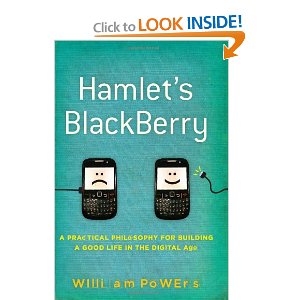
I’m preparing a class on Social Media Marketing and The Shallows, plus Hamlet’s Blackberry A Practical Philosophy for Building a Good Life in the Digital Age by William Powers (which I’m reading and enjoying now) both provide a useful counter to the always-connected expectation. There is something refreshing about an hour or two of focus on a single task.
###
Hey buddy, can you spare a story?
Every Conversation Does Something
I’m writing a book called “Listentalk: how simple conversations change your life every day.” You can read the raw argument here and the beginning of the Dummy’s Guide here and see the larger picture here. The book currently has eight chapters and 85,000 words and I’m starting to market it. But I fear it is too esoteric.
So… this plea to you.
I need roughly three dozen stories about conversations that altered your life. I’m looking for those conversations where an innocent, even mundane exchange turned into something much larger. It’s usually in retrospect that we recognize these conversations. At the time they seem like nothing. But a decade (or three) later you remember the talk or the person or the exchange as transformative. The conversation was a turning point. Maybe your life today reflects something of that conversation.
Would you tell me your story? Would you tell me two stories? Contact me through the comments below and we’ll talk and I’ll listen. I’ll even listen if you tell me someone else’s story. But I’m looking for true stories.
Can you spare a story?
###
My Raw Argument for Conversation
The Practice of Dialogue Rests on Solid Ground
I’ve become intrigued by trying to boil Listentalk down to the most elemental forms. Intrigued because there is a firm foundation for which I can build things on. Here’s what I know so far:

you really should
- There is a performative aspect of language. This performative aspect allows language to actually do something out in the world, to make things happen. It is not just that speaking something makes it true. But there is something closely related that is less about true/false and more about perception/reality: when we speak something, it becomes public, it becomes known, it becomes the story we’re going with—unless immediately debunked by those involved in the hearing and telling. So…stuff happens when we speak it. It becomes true…or at least truish. JL Austin, John Searle and others go on and on about such speech acts. I intend to hear more from them.
- We do right by others when we treat them as people. Obvious? Yes and no. Martin Buber suggested we often treat each other as objects rather than as people. He talks about “I-Thou” relationships where we treat the person before us as fully-human, whole people. Beings with many facets, interests, parts of their character. We talk and (especially) listen to them as we respect the dignity of their being human. But too often we treat others with an “I-It” sort of connection. That is, the kind of connection we have with an object too often becomes the model for the way we connect with people. We use a hammer to pound a nail, a George Foreman Grill to press a Panini for lunch. It makes sense to use tools in that way. But we mustn’t treat people as if they were objects. We devalue them. People are people. People are not objects placed on earth for the sole purpose of carrying out my personal (sometimes diabolical) will. There’s much more to say about this (in particular from Emmanuel Levinas), but that is the basic argument.
- God created and interacts with people. Lest you think I’m writing some humanistic diatribe, both the performative nature of language and the treatment of people as beings of dignity flow directly from the Old and New Testaments. Look at the role of “Word” from Genesis 1 to John 1 to Revelation 22. Words are performative so often it will make your head spin (If your head is subject to spinning) (You might want a doctor to look at that). Watch how the Eternal One allowed for the possibility that words spoken could be rejected. Even the words of the Creator. Even the Word that was a person as well as God.
- We’re at a new time when gatekeepers no longer control the discourse. Social media is part of the deal, but not the whole deal. New attitudes about who is in authority, who we can trust and who we cannot trust are in operation. Technology is opening doors.
Those are “Listentalk’s” four building blocks.
What did I miss?
###
Open Your Pie Hole: #1 in the Dummy’s Guide to Conversation

Talking can feel like a leap.
Do you remember the conversations that changed your life?
Decades ago a guy gave a talk at our church. This guy had made a career change from working as a medical device executive to becoming a leader in the denomination. In a quick conversation after his speech, I mentioned my interest in the medical device industry. He gave me a name to call. I called the guy that week and caught him at a generous moment—despite being an executive himself he spent 30 minutes telling me what he loved about the industry, the company and how helping people provided meaning for his workday. Then he gave me Dave’s name, said I should call Dave and drop his name.
I did that.
Dave turned out to be the best boss on the planet.
The conversation followed by the conversation followed by the conversation turned into decades of writing for the medical device industry, starting with Medtronic. The point of the story is that conversations can take us places we might have wanted to go to but had no idea how do get there. Of course, conversations don’t always work like that, but it happens more often than we might realize. In fact, I think simple conversations change our life every single day. That’s my premise as I write “Listentalk: How simple conversations change your life every day.”
Those conversations start with the courage to share what is going on inside—sometimes deep inside. Using words. Out loud.
Can you remember a life-changing conversation? Tell me.
###
Talking through the Troublesome Ten Percent
Brilliant Technicians can be Eloquent with the Right Topic and Right Audience
Say you have this friend. And your friend is a genius. She invents stuff all the time—important stuff people want. People buy this stuff and are even willing to spend significant money for it. And the stuff she invents works…mostly. It works, but it needs help. It works 90% of the time, but needs 10% adjusting and tweaking and, well, help. Your friend knows this. She knows she is brilliant at putting the technology together to meet a particular need. But she also knows she and her team work like demons once their unique idea is in place. They work like demons because each of their unique ideas requires constant adjustment as they are put into place, adjustments peculiar to the customer that bought the solution.
This last 10% is the source of significant pain and long hours for your friend’s team. This is because the customer bought the unique solution—knowing it was a unique solution—but secretly thinking the unique solution would work right out of the shipping crate. And no matter what your friend said to the customer, that assumption that it would work right out of the crate persisted in the customer’s mind.
That last 10% is a technology problem but it is also a communication fail. The customer perceived one thing and received another—whether or not the customer’s perception was accurate. In fact, the last 10% has much more to do with conversation than it does with technology. How so? Because conversation between those who understand the solution and the problem must take place before the solution becomes a fully realized solution. Because conversation is the give and take between people as they listen and offer suggestions, over and over again.

Let Others See the Process
Introduce Your Brilliant Friend Around
Conversations are not magic (or…are they?) but they accomplish much more than we can understand. They are great at connecting, where people begin to understand each other. They are great at diffusing tense situations simply by passing words between people. They also can inoculate against tense situations before those situations occur. All of this through the regenerating power of relationship that happens when people connect. I and have argued that letting people into a process earlier only helps the process.
Helping your brilliant friend talk about the solution she is putting together, even to engage the customer in the last ten percent may be the most productive thing you can do for your friend, her company and her customers.
There are ways to do this. Painless ways that lie outside of the old media channels. Ways that can do far more good than you may realize.
###
I Quit You, Right-Hand Page Beginnings
I might stop printing. But you’ll have to pry transitions from my cold, dead hands.

"...from my cold, dead hands...."
I’ve been doing things differently without realizing it. For over twenty years I’ve inserted a blank page at the end of sections and chapters so my next section or chapter can begin on a right-hand page. I admit to finding a certain elegance in beginning a new thought on the page lying flat before me and close to my right hand. It just felt right.
No more.
Most of the documents I produce for clients will be used electronically. Few even consider printing them because, well, why would you? Since the screen is always there…and since paper just gets lost anyway…and since as soon as you print something, it changes and your print is outdated…so why print something again? Current audiences will not realize how a right-hand page lies flat on a surface while a left page bubbles up and distorts—an open invitation to move forward.
It’s not just blank pages. Transitions are transitioning away. Remember when transitions were the thing: when you wanted to gently lead your reader from one topic to the next, from one moving part of your argument to the next? Some writing textbooks still talk about making transitions in your writing. But are the days of transitions—just like the days of inserting blank pages—are swiftly passing. Since everything is modular we expect to jump from topic to topic rather than be wooed along.
Nicholas Carr in The Shallows talks about the atomization of information. How books and chapters and articles are already being dismantled so pieces are available here, there and everywhere. People writing books with the help of social media use the situation when they post as they go, so potential reviewers have the opportunity to interact with the writing long before it is even put in the longer (and more expensive book form). One of the dangers is that writers will write for short attentions spans—wait aren’t those people called bloggers and copywriters?
In truth, writers have always written for short attention spans. Back when reading books was the thing smart and interesting people did, writers talked about the reader’s constant pressure to walk away from the text. That was a key motivation for the writer to make the text more interesting. In my writing classes we often lament the lack of readers (in general) and the reader’s constant temptation to click away from the text. Clicking is so much easier than walking.
Blank page insertions may go away, but I doubt transitions will. That’s because communicators still have an innate need to keep an audience interested. Blank pages may be an artifact from the printing days. But transitions are a piece of our humanness that is alive and well and will stick around until our final…transition.
###
Why pay medical waste costs for your messages?
Start moving your messages where they will be heard.
I just got off the phone with a friend at a medical device company. This friend helps prepare technical information for clinicians. His team works at moving IFUs (“Instructions for Use”) and other labeling concerns across regulatory and legal hurdles to be ready for clinicians. Their challenge is to reduce medical waste for their customers (getting rid of medical waste costs more than the usual garbage fee) by reducing the amount of paper they put into the system, that is, reducing the clutter they send to clinicians with products. So they are taking the necessary steps to move documents online where they can be used or downloaded to a computer or PDA, or even, yes, printed. It makes sense: people don’t read documents. People don’t store documents. People want the information they want right now and paper is becoming a bit of a nuisance.

they must find us
Getting the right information to the right people at the right time is always a work in progress. I’ve been advocating the power of search for some time, which means putting information within the reach of your intended audience’s search engines. That information needs to be there before your audience realizes they want it. Right now this is a choice companies make, with most sticking to their old corporate sales monologues and the tools that send the monologues forth, from sales rep to potential customer to waste bin. Companies anticipating the search need are the heroes of the moment.
My friend pointed out that engaging in conversations is not just for consumers, but even more for experts deep in a technical conversation. Generations grow up and Facebook, already a burgeoning economy of its own, is the model for how next-generation clinicians will expect to learn how to program a defibrillator, for instance. Companies will do well to help pave the way for this to happen.
Getting our messages to the right people at the right time trims all sorts of waste: less paper wasted on unneeded documents. Fewer brain cells wasted on fighting off unwanted sales pitches. And more freedom for finding.
###
Can You Hear The Jingle When Your People Comingle?
Let your technical staff converse with the world.

Several technical clients and friends I talk with are nervous about their business model. Their ways of getting new business feel not just old-fashioned, but wasteful of time, money and the energy of strong, passionate employees. These clients develop products that depend on interaction with their customers. Their specialized custom manufacturing is not easily duplicated and requires extensive collaboration. The problem is their customers are sometimes (often?) under the impression they purchased something close to an off-the-shelf solution: something that will work right away. Those customers may not realize (or may choose not to realize) they have actually purchased a highly custom product that requires lots of detailed conversation to make it work properly. The other problem is that neither my client nor their customer went deep in talking through the expectations each brought to the purchase.
What if my technical friends approached their business with the notion of starting technical conversations on the front-end: as a way into the sale along with the way through the sale, rather than just as a fumbling, awkward add-on after money has gone between accounts? What if these firms located the people already hard at work inside the company who had a passion for telling the detailed story on the outside of the company? I’m calling these the cominglers: employees who know the details cold and, with a bit of prompting and freedom, could carry on vital, interesting conversations outside the walls of your firm. Conversations that attract new customers even as they build credibility in the industry. This is actually happening all the time as people invest in the variety of social media channels.
It’s a plenty scary thought to many managers and VPs. I can hear it now: “We don’t want our engineers talking with civilians!” But is that really what you want, given your customers’ hunger for detailed engagement before, during and after a sale? Moving past marketing’s old monologing ways involves taking steps toward engagement at all sorts of levels within our organizations. Engagement was never just the salesman’s job, which has become clearer every single day as companies move to Facebook.
As I teach college writing students, I want them to grip their firm’s innerworkings as well as to put their head up in the space where their company moves to see the context their products and services walk among. Ongoing conversations depend on these very people.
Who are the cominglers in your organization?
###
Photo Credit: Steve Powers-Visual Blues
I’m Writing a Book called “ListenTalk”
I’m writing a book about talking and listening. I’ve become crazy about what happens in our best conversations: we come alive. We learn something about another person and in the spontaneous moment of creation as we frame up words to describe our own situation, we often suddenly learn something brand new about ourselves. Something we didn’t know before we started talking. I’ve begun to think that when we are in conversation, we are more truly ourselves. And the best conversations have a way of making us very present to each other.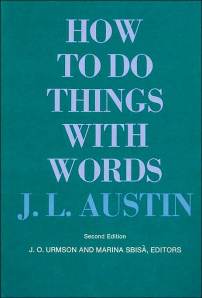
I call this book “ListenTalk: You’re Boring. Let’s Change That.” I think we were created to be in constant, deep, creative, spontaneous conversation. Not just with each other, but with God. That’s why parts of the book develop a theology of communication, starting with God’s act of creation, where His speech-act created dirt and air and giraffes and coffee beans and people, among other things. So you can see that with my book I hope to bring together something of JL Austin’s work on communication with a commitment to faith. Maybe I’m trying to do something impossible. I’m not sure. In a few days I’m scheduled to talk with a philosopher and speech-act theory expert at the University of Minnesota. I’m interested in his response to my notion of combining these things.
Two more pieces of this book project capture my attention in a big way.

Derrida and Welcoming the Other
One has to do with Derrida’s notion of welcoming the other. I recently finished James K.A. Smith’s “Jacques Derrida Live Theory” (Amazing: the book retails for $120! No wonder I cannot afford most of what I read) and was pleased to see a philosopher working from a faith perspective dealing with Derrida’s thoughts. I was impressed to see overlap between Derrida’s notion of welcoming the other into conversation and the God of the Bible’s commitment to welcoming the other. The Bible talks about reconciliation, and that definitely includes welcoming the other. What reconciliation does not mean (and here is where Derrida is particularly helpful in helping throw off some of my Christian cultural baggage) is making the other like me. We’re all tempted to make those around us like ourselves. But that effort misses the point of the kind of conversations that will sustain us.
Is Prayer a Model for Conversation?
Pulling more from theology than communication theory or philosophy on this last point, one of my chapters looks at prayer as the Bible talks about it and posits that we were meant to communicate with each other along these lines. Nothing really mysterious or unorthodox, I just wonder if the way we communicate with God (listening followed by moments of intense listening, and then very frank speech) is meant as a model for how we communicate with each other. Maybe listening is to take more of our effort than talking, which is a lesson advanced people of prayer seem to know.
Social Media is a Way Forward
This book ends with the notion that people of faith are currently presented with a rich opportunity to create and be in conversation. People of faith would do well to place ideas out in the public common areas, since there are far fewer gatekeepers, and see how people respond. This is part of the class I teach at Northwestern College called “Building Community using Social Media.”
What do you think? Would you read a book like this?
###
Are Words Always as Powerless as They Seem?
When we preach, our words often drop like stones from an overpass. And by “preach” I mean anyone who launches into a speech without a deep regard for her listeners. Pastors and priests can do it, but so do marketers, bosses, friends, even spouses. The guy at the party blathering on about his accomplishments—he’s preaching—and people walk away accordingly.
But our words need not fall like lead sinkers.
In 1955, the Oxford philosopher J.L Austin, gave a series of lectures at Harvard that became his book “How to Do Things with Words.” Austin proposed that there is a side to language where words actually cause stuff to happen out in the world. His famous example was with wedding vows: when the groom and bride say “I do,” and when the pastor/priest says “By the laws of the state of Minnesota, etcetera, etcetera, I now pronounce you husband and wife.” At that very point, something has changed in the world. Something changed because of the words spoken. Sure, those words gathered power from the context: the bride and groom, for starters. They agreed to get married. The priest or pastor officiating the deal contributed: the ordination process granted legal authority (at least in the eyes of the state) to pronounce these official words and have them mean something.

J.L.Austin
Why does preaching produce more leaden words than other kinds of talk? Again—not talking just Sunday sermon here. Corporations preach in their print ads and commercials and press releases. They collect a bunch of statements that are purposefully free from conversational context (you recognize this stuff by reading a brochure aloud. That’s when you realize no human talks like this). That kind of preaching that is more like wishing: wishing the world was a certain way. Wishing the reader was different from what he or she really is. The kind of preaching that tells others what to do or what the world is like, but is a lazy kind of talk that bears no resemblance to life. We all resort to this kind of talk that is unmoored from the people around us. Oh sure, we occasionally dress it up with an authoritative tone and we think we’ve accomplished something. But we haven’t.
Is there a way to get off our lazy butt of preaching and start saying things that make a difference in the world? Using words that instigate change? Is there a way to believe in the change our words signal?
I was reading the Gospel of Mark today, Mark 1, where Jesus starts the whole project. His first recorded words in Mark’s gospel are preaching: he preached the kingdom of God and invited his listeners to repent and believe (1.15). The rest of the chapter shows him, well, doing the stuff he preached. His talk about preaching and repenting and believing were not churchy words, meant only for the hour of the week where people piously peer up. No. His words demonstrated power by healing the sick. And the possessed. His were not empty sayings about a far-off God. They were words of invitation to taste something real. He was not just talk. He was walk.
Much more walk than talk.
How about your speech? Are you preaching to an audience who knows you are just mouthing empty words? Press release talk. Or are you saying things you can demonstrate? As a copywriter, am I doing this? And what kind of people do we need to be to deliver on the words we send out?
Makes me wonder.
###

 conversation is an engine