Archive for the ‘Credibility’ Category
Bill Moyers: Serving “News” like the Butler Serves Tea on Downton Abbey
Do Not: Do Not Disturb the Master Class
All of us can stand a bit of disruption from time to time.
David Uberti wrote recently in the Columbia Journalism Review about PBS pulling ads from Harper’s Magazine as retribution for an article critical of PBS. PBS exists as a non-commercial, educational media channel. But the critical Harper’s article by Eugenia Williamson pointed out
And so, a fit of ad-pulling ensued. But it was this candid, PBS-critical quote from the patron saint of public broadcasting that caught my ear:

Tea is served at the Pittock Mansion
Wherever you land in your organization, there is some grand narrative at work that guides all involved. That grand narrative is often a good thing and useful. It is often laden with meaning that helps us do our jobs. But it is not a perfect narrative—never is—and parts call out to be challenged by practitioners.
After all, it is the disruptive conversations that lodge in our brain pans. Those conversations we cannot forget sometimes actually open our clam shell brains to something new. And that is the way of both innovation and truth-telling.
Many of us—especially the people-pleasers among us—are careful to assemble conversations that do not disturb the people around us. I am guilty of this. But truth-telling must necessarily veer from the party line.
If only because sometimes the party line veers from truth.
###
Image credit: Kirk Livingston
Edward Bernays and Jolly Manipulation
Gather round, kids: here’s how you sway public opinion
Edward L. Bernays is called the father of public relations and his book Propaganda (NY: Horace Liveright, 1928) shows why. Bernays is absolutely jolly as he lays out the psychology of manipulation. He doesn’t just talk about the formulas, he gleefully demonstrates them in paragraph after paragraph. Much like one might describe building a shelter to a group of boy scouts, Bernays is positively beaming as he writes about how to pull self-interest into the equation to get publics to do your corporate bidding.
The modern propagandist studies systematically and objectively the material with which his is working in the spirit of a laboratory. (48)
Edward L. Bernays is the ur–flack.
If you can influence the leaders, either with or without their conscious cooperation, you automatically influence the group which they sway. (49)
Reading Propaganda today, it is clear Bernays thought corporations and government leaders and those in power would certainly use his manipulation techniques for good.
How could it be otherwise?

Look through here. You’ll see what you’re supposed to see.
But World War II was just around the corner and every nation developed their own propaganda machines. In the US, we still react viscerally to the imagery and code words used by Nazis. Today old Stalinist imagery has it’s own unique draw. The US had powerful PR apparatus as well. We continue to feed that machine. And since, then, of course, unending sets of military skirmishes/wars, each equipped with God-given reasons for why we must respond. Then Watergate and totalitarian despots revealed and deposed, and, well, it’s a long list of fails that contribute to today’s cynicism and “Question Authority” stance. People found their voice and collected it to push back with outrage at corporations and governments and to call attention to wrong doing when it appears.
Eighty-six years later, the entire population of the US—possibly the planet—is wise to Bernays’ techniques. Not that we’ve studied them: those techniques study us all day every day. Especially in countries like the US where consumption is our patriotic duty. We know manipulation from the inside out.
Bernays would be impressed were he alive to see it. I imagine him smacking his head and saying, “Wait—they know they are being manipulated, and …they still buy it? This is even better than I hoped.”
Why talk about manipulation? Not just because Bernays book is fun to read and easy to contrast with today. In particular, why would a copywriter talk about manipulation? Isn’t that secret sauce you trade in all day? Why pull back the curtain?
As a copywriter my goal is to tell my client’s story in the best possible light. I continue to argue that persuasion is a natural piece of how people interact with each other all day long. It’s part of the human condition. But I argue our efforts at manipulation damage actual conversation. When we use words and techniques with manipulative technique, we shut off further conversation. At that point it is about winning not connecting. Maybe there is a fine line between persuasion and manipulation. Propaganda is the textbook for manipulation.
As a copywriter, I want my clients to engage in conversations not endless manipulative monologues. That seems a more human approach to communication. I continue to think conversation is what today’s market will bear.
###
Image credit: Kirk Livingston
“Viral” is Fool’s Gold
People often have legs and feet. So do collaborative ideas.
Years ago we noticed the threshold to globalization falling to the point where anyone could step over it. Back then advertisers talked about music or images that could transcend language with television and radio. And it was true: cloak your message with a mainstream song and off your product flew to sell among lands and languages previously unknown.

Today we routinely interact with people across the globe. Tweets and Tumblrs and blog posts and comments can and do come from anywhere at any time (because it’s always 17:01 somewhere). It’s mostly asynchronous. But not always—my WordPress friend in Hong Kong responds to my morning posts (his evening) and I respond to his evening posts (my morning) and it feels like real time.
Marketers and advertisers want to promise a viral result from the work they do for clients. But the bar for viral gets higher every day: interweb participants stand amazed at less and less.
More realistic: go back to the old way of focus on the important people. In this we make sure our message can be carried in a style to which our target audience is accustomed. Making sure our messages are sticky for the primary and secondary audiences we care most about is better than shooting for viral. And the first step toward sticky ideas is to simplify (not the same as dumbing-down) so the idea is quickly grasped and possibly even elegantly presented.

This simplifying process is a natural result of collaboration. Just explaining an idea in the course of a normal conversation is a step away from Teflon toward sticky. That simple act of saying it aloud helps you realize what works and what doesn’t: it’s all written in the face of the person you are explaining it to.
Start with a simple collaborative conversation to begin to move toward sticky.
###
Image credit: Kirk Livingston
Italian Telecom Wind: Engage + Remind – Shill
Still selling, of course. But they pulled me in.
Lots of great “dad” moments in here.
What about those decades-long conversations we have with the people in our lives?
###
Loose Lips Link Scripts
Open(ish) access for tight-lipped companies
Technical people can learn something from advertising people.
My creative director friend presented advertising concepts by first showing how his agency team came up with the idea. His presentations took a bit more time, but along the way he restated the problem, showed visuals of how competitors attempted to solve the problem and then revealed stumps of ideas that never really worked. Then he got to the solutions he hoped the client would pay for.
My friend’s process placed his solution in a context that helped those around the conference table understand why the solution made sense. As he spun out his process, he verbally brought these people with him so they were nodding “Yes” long before they signed off on the solution.

The boardwalk protects fragile land while providing access.
Many of my clients guard their proprietary information with fierce protections. And rightly so: their processes keep things running and bring in the coin that satisfies employees, stakeholders and shareholders. But in a search and share economy where like-minded people find each other more and more often, is a firewall surrounding all information really the best way forward?
The right information presented at the right time (that is, just when someone needs it, which typically coincides with a search for that information) affects buying decisions and brand loyalty. Interestingly, your technical people are right now busy working through the context that, if properly presented, would draw others to your product.
People are searching for your information.
If only they could find you.
My more innovative clients are finding ways to help their problem-definers and solution-makers talk more publicly. And as these discussions move outside the corporate walls, they best ones are finding ways to combat the PR department temptation to suck meaning from the words. Because sharing useful information happens person-to-person. And useful information will always have something of an unfiltered quality to it.
How is your organization preparing to share details with those who can help you move forward?
###
Image credit: Kirk Livingston
Neville Brody: Making Space on a Page to Think
In the advertising business, it’s not in the interest of advertisers for people to think about what they’re presented with. It’s in the interest of advertisers that people choose to think in the way the advertisers intend them to. It’s a formulaic thing, where there’s only one possible outcome in advertising. That creates a space where the “right to thought” is taken away from people.
I’ve always tried to approach my work as being open-ended and with a degree of abstraction or ambiguity. This prevents it from being a monologue, because it is a dialogue. The work is only completed when a viewer has looked at it and made his or her own decision as to the full meaning of the piece.
From Debbie Millman’s, How To Think like a Great Graphic Designer (NY: Allworth Press, 2007) 72-3
Of Course Money Is Speech
More money = More articulation = More influence
As I read Dollarocracy by John Nichols and Robert W. McChesney, I cannot help but think about the biases we bring to any topic or any text.
The authors make no bones about their stand on the free flow of money into our political system and the corrosive effects for everyone touching that money. The authors are also clear about how our media is complicit in helping form story arcs and shaping mythic-sounding conflicts that might just serve the media best by training viewers to stay tuned. Fox News has not cornered the marketing on training viewers to panic—it seems to be the purpose of most news shows these days. And why not? Advertisers love those vulnerable audiences and there are fortunes to be made, after all.
I cannot yet agree with the authors that our representatives are simply “bought” by Super PACs and big lobbying firms and corporate interests. I think there are connections between the money they need for reelection and the ways they vote. But I’m not sure it is a one-to-one correspondence. It’s more complicated and nuanced, but common sense tells me that if some set of powerful organizations has contributed millions of dollars to a reelection campaign, the person seeking reelection will vote favorably to the interests of those organizations.
That is the nature of gifts.
That’s why I like OpenSecrets.Org: they try to trace where the money comes from and where it goes. Especially dark money, which is typically hidden for a reason. Because money is not given to political campaigns out of altruism. People buy influence with what seems to be a gift.
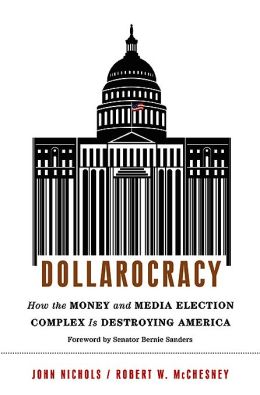 Nichols and McChesney bring a bias to their writing of expecting to see our representatives being bought by corporate interests. I don’t blame them—they’ve written several books on the topic and have seen what they have seen. For myself, I just want to begin to train my eyes to turn from entertainments once in a while to see which of our representatives are being influenced by which Super PAC/lobbying firm/corporation.
We cannot end the flow of money into our political system. But we must become aware of what that money is buying—and what it is costing the citizenry.
Best if we could say out loud to each other where we’ve seen influence purchased.
###
Image credit: Kirk Livingston. Neon by Patrick Martinez via Public Functionary
Martin Weigel: Go to give. Don’t go to take.
Even advertising people are human.
In the spirit of “What is remarkable?” I offer Slide #43 from adman Martin Weigel’s excellent Slideshare on how brands fool themselves into thinking they matter in the grand scheme of real life.
They don’t.
Not when it comes to real human interaction.
No sir.
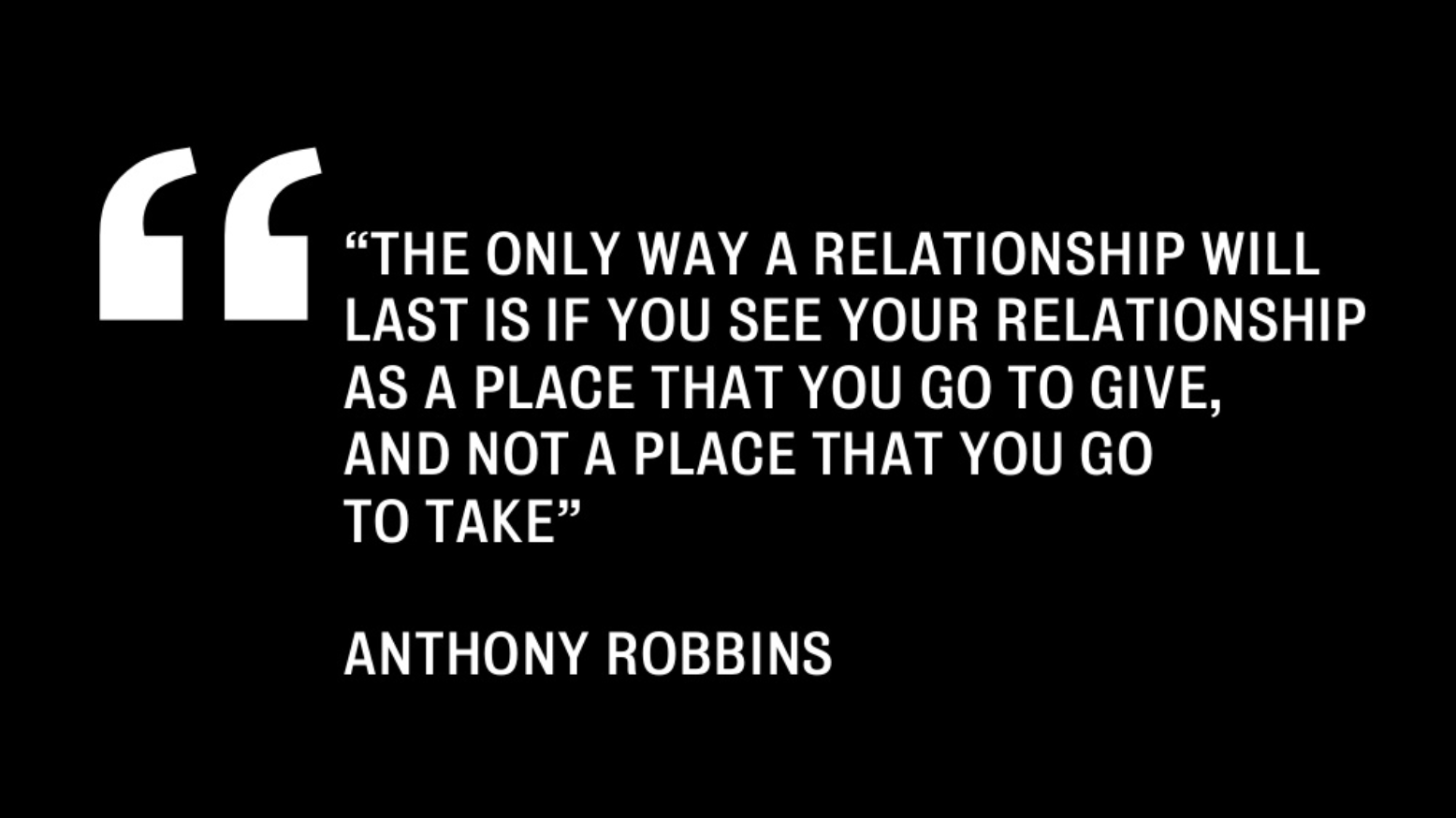
Can a brand serve? Yes. And I will argue that is the profitable space to explore.
I’m not generally an Anthony Robbins fan, but this quote has been stuck in my brainpan since I first reposted these slides. And that is remarkable.
###
Why I Don’t Listen To Christian Music
Short Answer: No One Likes Being Manipulated
On Conversation is an Engine I mostly write about communication and conversation and copywriting and how business interacts because I am fascinated by what happens when people talk. But undergirding this sense of wonder is a faith in God that makes me see much of life in theological hues. The fallout from that theological saturation means I want to approach the work of communication and persuasion from an ethical perspective—as best I can.
Lots of music labeled “Christian” does not do that.
 The college I occasionally teach at has a radio station that spins out Christian music. I stopped listening years ago when I realized my emotions were being manipulated by music that was nearly content-free. It had a veneer of faith, but seemed much more about living a good life and having positive feelings.
Especially positive feelings.
I’m not against positive feelings. Happy is good in my book. Happy makes sense to me. But if happy comes from a sugar-like high that dissipates as quickly as it formed, was it real? And is happy the point of faith in God?
I argue: No.
Happy is good. Joy is better and depending on how you define things, joy lasts longer. And true is best.
And really, what is Christian music? I might argue Tom Waits has a lot more truth to offer than whatever contemporary Christian band is currently famous. The Talking Heads seemed to provide many glimpses of truth—so do many of the folk musicians I listen to. Certainly Mr. Bach and Mr. Mozart and Mr. Telemann and Mr. John Adams and even Philip Glass provide more soaring and more depth and more truth.
Of course, music is a very personal thing and there is no right or wrong. We like what we like and I don’t want to disparage anyone’s choices—really I don’t. But if I sense I’m being manipulated by sentimental lyrics, I move on.
###
Image credit: Kirk Livingston, in response to on the move
Let’s get visceral: Choose your signal before you gut-punch
What forms say before we know anything
I recognize a business card because of the shape and size. I recognize a sermon more by a particular tone and rhythm (which signals a certain intent) then I do the presence of a pulpit or podium. I know a joke is coming because Letterman is on stage and it is 10:37pm. I know the joke will have a setup and a payoff. Or perhaps the third of three statements will be funny. I am ready for the joke because of these forms.

Before we know anything we recognize a form. Our brain sorts how to react to that form, and then, once that is settled, we process communication content. Long before I hear any content, I know what category to place each of those communication events. It is the context that prepares me: when I see X, I know Y is not far behind. My nervous system anticipates the next piece.
But what if the form is out of whack?
What if I hear preaching on a street corner? What if a clever copywriter uses a rubber stamp instead of a business card (“Here, give me your hand and I’ll stamp my contact stuff on you palm.”). And what if Letterman was serious? He has been a few times: right after 9/11 his serious tone—entirely uncharacteristic—began a bit of national healing.
I tell my copywriting students to follow the forms at times and to bust the forms at other times. For instance, we must make our ideas as easy to understand as possible, and so we present our ad concept to a client in a form that is immediately recognizable—even if the idea itself is challenging. And sometimes one thumbs one’s nose at the form on purpose, just to bust through (that is, the communication gut-punch).
In any case, following the form or busting the form is a conscious decision.
And the form is not God (not even a god).
By the way, Dan Pink has a great story about the Pixar way of presenting a concept here.
###
Image credit: Kirk Livingston

 conversation is an engine