Archive for the ‘photography’ Category
What Photography Teaches About Writing
Look for what reflects light
With camera in hand I look first for what is reflecting the light.
And then I shoot that thing.
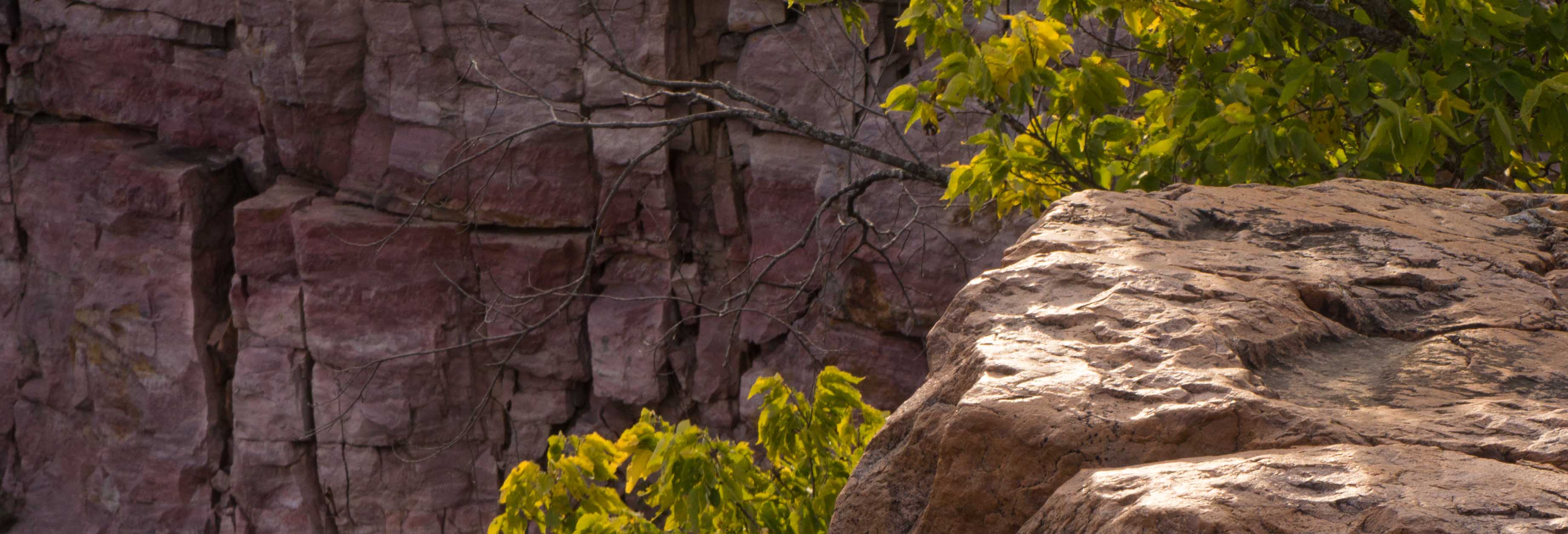
It’s all about catching some sort of reflected glory.
The best writing does that too.
###
Image credit: Kirk Livingston
“Viral” is Fool’s Gold
People often have legs and feet. So do collaborative ideas.
Years ago we noticed the threshold to globalization falling to the point where anyone could step over it. Back then advertisers talked about music or images that could transcend language with television and radio. And it was true: cloak your message with a mainstream song and off your product flew to sell among lands and languages previously unknown.

Today we routinely interact with people across the globe. Tweets and Tumblrs and blog posts and comments can and do come from anywhere at any time (because it’s always 17:01 somewhere). It’s mostly asynchronous. But not always—my WordPress friend in Hong Kong responds to my morning posts (his evening) and I respond to his evening posts (my morning) and it feels like real time.
Marketers and advertisers want to promise a viral result from the work they do for clients. But the bar for viral gets higher every day: interweb participants stand amazed at less and less.
More realistic: go back to the old way of focus on the important people. In this we make sure our message can be carried in a style to which our target audience is accustomed. Making sure our messages are sticky for the primary and secondary audiences we care most about is better than shooting for viral. And the first step toward sticky ideas is to simplify (not the same as dumbing-down) so the idea is quickly grasped and possibly even elegantly presented.

This simplifying process is a natural result of collaboration. Just explaining an idea in the course of a normal conversation is a step away from Teflon toward sticky. That simple act of saying it aloud helps you realize what works and what doesn’t: it’s all written in the face of the person you are explaining it to.
Start with a simple collaborative conversation to begin to move toward sticky.
###
Image credit: Kirk Livingston


“Writer without permission.”
Write On Your Own Dime
A new LinkedIn friend in the Minneapolis/Saint Paul area has a job title “Writer without permission.” The genius of her title is to say out loud what most every writer is thinking—nobody asked for this, nobody gave me permission, and frankly, no one is waiting for me to finish it. The whole thing is entirely self-motivated.
Let there be more of her tribe.

Writers without permission may encamp here as needed–not that you need permission.
Writers often stop mid-sentence and think,
I am entirely unqualified to write this. When will someone knock on my door and say, ‘Hey—Stop it: You got no business writing that.’?
When those Philip Glass moments occur, whether real or imagined, the writer without permission pauses and then continues the sentence. And the next sentence. And so on—breezing past the “No Trespassing” signs posted around the perimeter of the topic.
If you are waiting for someone to say, “You should write about X.” You have a long wait. If you are waiting for a fat check to cover expenses while you draft your manuscript, well that isn’t likely. Although I did chat with someone two weeks ago who received a sabbatical from her job to write a book. So, miracles do happen… and all that.
New stuff happens when we start writing without permission. But the alternative is also true: maybe nothing will happen. Maybe it will fail. Given all the books and writing and words floating around today, failure is likely. Then again, what is success or failure? If just getting your story out is success (I happen to think it is), then start writing. If success is getting famous, well…miracles do happen (and all that).
But there is something more to the kudos and the paycheck—it is a kind of validation that you are doing a good thing, a worthwhile thing, an important thing. It’s as if we need someone else’s validation to gather gumption and move forward. But what if someone won’t even understand what you are doing until you are done—because you yourself are working out the details? And you don’t fully understand it. Not yet.
We celebrate the creative genius of long-dead writers. But how many knew they were writing some landmark story until much later—or ever? Most had to battle the “No Trespassing” signs and the missing fat paychecks. And they created anyway.
Do you need permission to create the thing you cannot stop thinking about? You have my permission, for whatever it is worth.
Don’t put off creating.
Start today.
###
Image credit: Kirk Livingston
Your Office Needs More “Yes, and…” Men and Women
How to Grow Collaborators 1-2-3
- Share your first thoughts as if they were dumb sketches.
- Wait for—look for—and welcome reactions.
- Then say “Yes, and ….”
- Rinse & repeat.

Clear a space for your team.
You model commitment to collaboration by sharing your first thoughts. This dumb sketch approach to life makes you vulnerable and open to criticism. And there will be criticism. But vulnerability + time creates serious ballast around the notion of getting full engagement from all those around.
Your “Yes, and…” is the other shoe that drops to indicate you are also taking your colleagues seriously. It doesn’t matter whether your colleagues are bosses or employees, “Yes, and…” works up and down the corporate food chain. “Yes, and…” is your go-to reaction to ideas. People will gradually come to understand you think the world needs more ideas with legs and feet, ideas that accomplish stuff.
As kids we taunted each other with how sticks and stones break bones but words, well…you know. But it turns out words have a more complicated existence. In many respects, words have far more power than we ever guessed. And in this growing of collaborators, our words can make stuff happen out in the world (a “speech-act,” one might say). It only takes one committed collaborant (I think I just made up a word or re-purposed a French word) to begin to clear a safe space for collaboration. That space will invite collaborators, who become a nucleus to change a team, a group, an organization—and more.
How will you encourage collaboration today?
###
Image credit: Kirk Livingston
Do your best ideas come in two stages?
Maybe that’s where collaboration fits: between.
A story: In second grade we all had to talk about what we did over the summer. I wrote a story that included lots of driving to far-away parts of the U.S. I wrote about camping and swimming and mountains and lakes and trees.
When finished, I read it to myself and thought, “This is boring.”
So I went back at it and remembered mishaps along the way. Flat tires and people falling into lakes and instances of poor judgment from my brothers. Especially instances of poor judgment from my brothers. Then I started inserting instances of poor judgment all over the story and it got very, very interesting.
When I gave my speech to my second grade class, the instances of poor judgment got the biggest laughs.
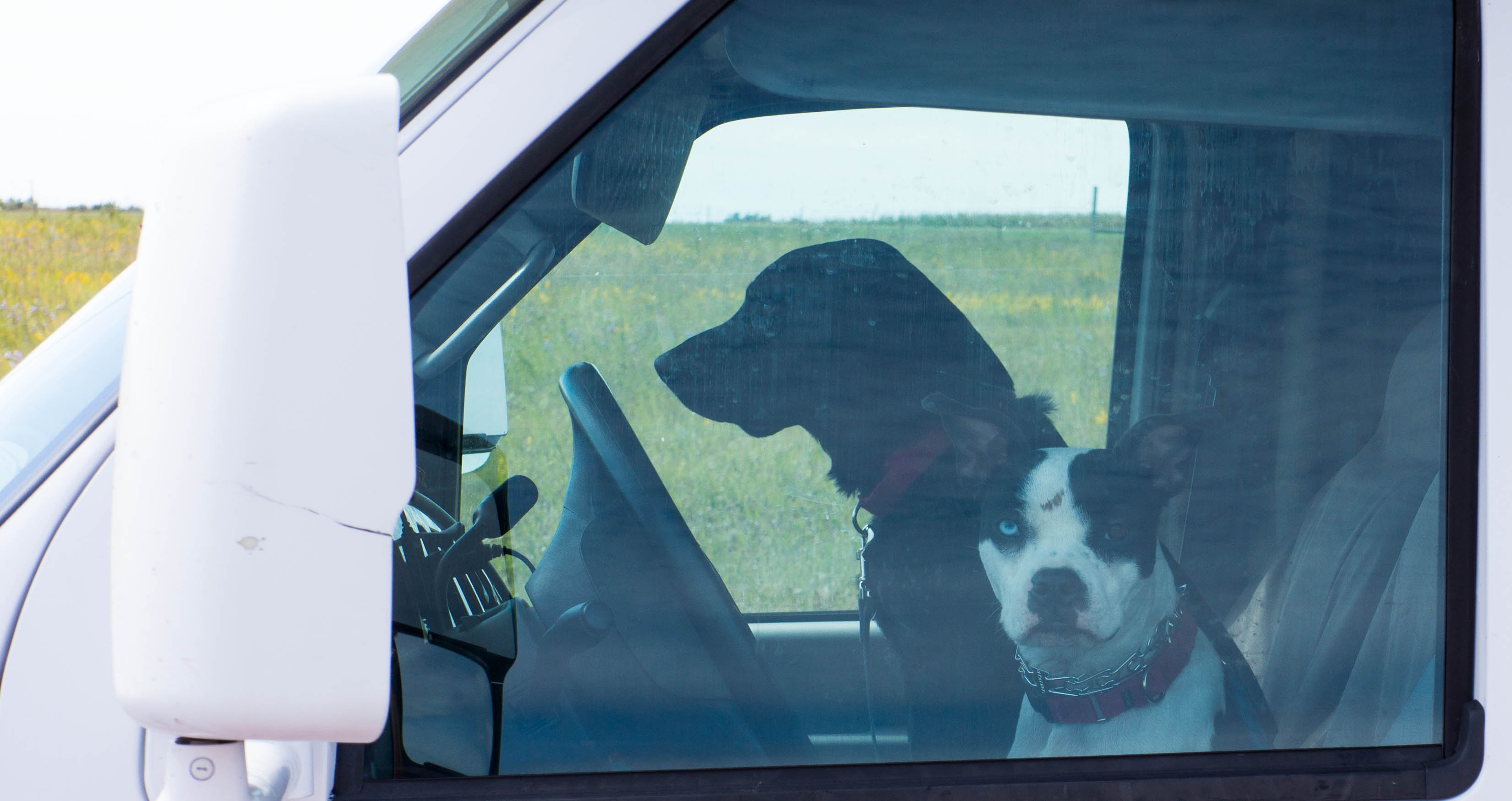
Share that raw thought with a clear-eyed friend.
Today I write stuff for a living, so I think in terms of drafts: There’s the rough draft, with all its heartache, hollering and hoopla just to wrestle a topic onto my screen. There’s the review with a stakeholder/client/colleague. Then there is the excellent revision. The goal is the excellent revision. But few people can begin with the good stuff that came out of the revision.
But you need not write stuff to realize that first ideas can often be improved by a clear-eyed, objective second glance. And often that clear-eyed glance, especially from someone hearing it for the first time, can tell you a lot about where the idea needs to go next. What your reviewer sees or doesn’t see, what causes them to pause, what causes them to guffaw, what causes them to restate or reread—all this is grist for the revision. And revisions are potent parts of the process.
With my clients I am very up front about wanting them to review a draft on the way to the final. And that is how I present it—I’ll write this thing and then you’ll look at it and give me your scathing criticism. And together we’ll move toward what we wanted all along. And the final will be that much better.
That’s what collaboration looks like to me: at least a two-stage process.
###
Image credit: Kirk Livingston
We Landed a Medtech Account—Now What? 3 Understandings
Bollixed and castrated and then we begin
Advertising agencies and marketing firms are eager to land medical device accounts. These prestigious accounts are much desired and would seem to enlarge the status of an agency because of the exacting, rigorous work that helps the human condition. It doesn’t hurt that they seem to pay on time. But having worked with a number of ad agencies once they land such an account, there are a few common threads that surprise principals and employees:
- You’ll need experts: people who know how to work within a regulatory framework (“Claim this.” “Never claim that.”). People who know the words that soothe lawyers while still making sense to humans. And especially people who know their sinus node rhythm from their rhythm method. You will stay on message and every claim must be neatly tied to an article from a respected (first or second-tier) journal.
- Your creatives are (already) wringing their hands. That’s because creative solutions lie on the other side of a legal/regulatory/corporate culture grinder.
- Yes: the company has come to you for creative solutions.
- No: they cannot/will not back-off their own internal legal/regulatory controls. Their own internal machinery will bind and castrate many of those solutions you have used in the past. What a great beginning point!
- There will be rounds of changes. Many rounds. Way more than you are used to. Far more than you can reasonably put in your bid. They will seem…unmanageable. Taming revisions will take your best customer service manners and may take you deep into the internal relationship structure of the firm. But that is exactly the kind of partnering that is needed
If your agency can come to grips with these three understandings without imploding or driving sane people mad, you’ll begin to build a reservoir of expertise.
###
Image credit: Kirk Livingston
Year Without Pants: What’s Your Conversation Prompt?
Must Hierarchy Always Trump Collaboration?
In the excellent Year Without Pants (San Francisco: Jossey-Bass, 2013), Scott Berkun detailed his efforts to direct a team of programmers working for Automattic/Wordpress. This team was distributed around the world and gathered only occasionally. Most of their collaboration was mediated through computer screens and telephone lines. Curiously, email was not a major player. Instead, in-house blogs contained most of the collaborative communication (~75%), along with IRC (Internet Relay Chat), Skype and then e-mail (~1%). Blogs had the advantage of being entirely public (to the other players) and displaying the entire conversation. So potential collaborators could get up to speed as needed by simply reading/re-reading what had been said. And others could ignore the whole thing (which is the way of blogs).

Does your conversation prompt work?
Berkun found the prompt at the top of the collaborative blog was largely ignored—so common it was invisible (much like Twitter’s “What’s happening?”). It started with,
What’s on your mind?
and then
How can Team Social help you?
migrating eventually to:
Hi Scott: Do you know where your pants are?
That changing prompt became a way to wake up the conversation. It also demonstrated the playful nature of the team—a key factor in all Automattic/Wordpress collaborations. The prompt also turned into a good book title.
Berkun’s conversation prompt gives me hope that hierarchy need not trump collaboration. In my most collaborative projects, there was always a sense of fun/playful/silly/ridiculous that settled like a bubble over team meetings. In contrast, my more onerous jobs and projects carried a sense of duty and chain-gang attention to a boss hammering out a beat.
Creating that collaborative environment requires a light touch, a willingness to explore liminal spaces, record results and allow others access to the longer conversation. Creating collaboration also involves attention to conversation that results in replies, rather than monologue that begets numb pseudo-attention.
###
Image credit: Kirk Livingston
How LinkedIn Helps Before You Are Between Jobs
Generate The Thing Between
LinkedIn is a powerful tool for connection. But lots of people, once they land the job, put connection on the back burner. Some take it off the stove entirely—and that is a mistake, especially in this economy. I know this because many friends and colleagues are on radio silence most of the time. Until rumors of layoff float by. Then it’s connections galore.

Don’t let connections go dormant.
Connection is something that happens long before you have a need or want to generate a sale. In fact, connection is not about the need or the sale, it is something entirely different. And we make LinkedIn frenemies when we mistake connection for a sale.
For those who understand the importance of connections outside immediate work and building relationships widely, there is a great joy in getting to know people and simply seeing what might happen. It’s not even an introvert/extrovert thing. It is a possibility thing. Maybe it is a thing for dreamers, but I think not. It is for anyone who starts to wonder what is possible outside the structure that encases their days.
This openness to others—this beckoning to others, this waving them close—is the early move toward collaboration. It is the ordinary conversation that starts to generate new things between you, seemingly by magic. It is the beginning of finding common ground that eventually leads to “Wait—what could we do together?”
Curiously, openness to others has a way of working backward into our present job so that we start to see new ways of working, collaborating and connecting.
When teaching college students about professional writing, I try to help them understand that the best jobs are the ones not advertised. The best jobs open and shut before ever posted on a web page or printed as a classified ad. Those jobs are available only to connections. Those jobs are almost incidental to the connection: friends see what you do, how fun you are to work with. Their synapses fire and they say to themselves, “She might be perfect for this need we have.”
Maintaining and growing connection is not for a someday need or someday sale. It is a piece of being human and carries a glory all its own.
###
Image credit: Kirk Livingston

 conversation is an engine