Archive for the ‘Teaching writing’ Category
Writers at Work: “How do you imagine that will unfold?”
Seeing Need and the Power of Imagination
The leader’s peculiar gift is to help followers imagine how their work makes meaning. The leader makes personal how the organization’s work helps others, solves a human problem, makes the world better/more beautiful/safer, for starters. From that position of ownership (note that leaders may appear anywhere in an organization, position does not equal leadership) the leader imagines the next steps needed to move the organization forward. The leader acts on that vision and invites others in.

If you accept that the writer’s art is at least partly a reimagining or reordering of life, then you may be willing to consider the work of writing in business. Can writers in business look forward to how next steps unfold and then follow that thread backward to make those steps happen?
I say, “Yes.”
But not just because I do this for a living. [Full disclosure: I do this for a living]
It’s because writers in training are blind to this side of the life/work/art equation.
That’s a premise I’m toying with as I consider how entrepreneurship and professional writing fit together. I’m working through an entrepreneurial focus to the next Freelance Copywriting class at the University of Northwestern—Saint Paul, and I want to help English students see beyond self-focused essays and creative writing. A necessary starting point is inviting them to use their writerly tools to imagine life from that leadership/ownership/need perspective. I believe this can shift ownership to the writer and provide useful insight for right now.
Julian Sanchez’s tweet as the Senate report on CIA torture was released gets at this very concept:
Imagine forward and trace backward to locate solid actions. That is the leader’s gift—and possibly the writer’s.
###
Image credit: Kirk Livingston
Wait—English Majors Win in the End?
Start Writing Your Own Future
- Announce your goal to lose weight and chances are better the pounds will flee.
- Sign up for NaNoWriMo and chances are better you will actually write that novel (no matter how badly it turns out).
What we tell each other has a way of happening. What we tell each other about our preferred futures has a way of guiding next steps.
- Write a letter to your collaborative, inventor friend about a business idea and find yourself planning concrete marketing and distribution steps at Spyhouse Coffee.
- Write a business plan for your startup and suddenly remember your friend who became a venture capitalist. And then remember the friend who bootstrapped her idea.
See the pattern? Each step forward started with communication. You may say,
“No. the idea came first.”
True—maybe.

Create in real time as you go.
But consider: the communicated idea created a spark. And—given the right collaborative conditions—the spark lit a fuse. And the fuse burned, gathering other ideas until the explosive, disruptive future no one had considered.
What if English majors learned entrepreneurship and began to see their talent for orderly, persuasive, deeply-rooted writing as a way to help themselves imagine new futures and chart forward-movement for others? What if they learned to solve real-world problems with story and emotion and analytics? Their solutions would drop-kick the spreadsheet & PowerPoint crowd. What if some English majors created Lake Wobegon while others created the next Google?
What if English majors learned business lessons alongside the standard fare of reading and writing? What if they were expected to serve up the occasional business plan or marketing strategy along with the usual essay, short story and poem?
If that happened, English majors would connect earlier in life that art and work and commerce and fiction and meaning-making all fit together in the same world. And they would begin to write their own future vocation.
By the way: 16 Wildly Successful People Who Majored in English
###
Caveat #1: I was never an English major.
Caveat #2: I teach English majors. They are smart, innovative people.
Image credit: Kirk Livingston
Collaboration in Real Life: The Book Cover
Self-promotion is stinky poop
This week I spoke with a copywriter who writes plays and novels on the side. But he doesn’t work too hard on promoting his finished bits of literature. He prefers to stick to the writing part (who doesn’t?). This copywriter is not atypical on two counts:
- If you don’t need to get your message out (that is, move product to earn the feeble coin a book represents) you can let it languish.
- Copywriters are bad at self-promotion.

Roger’s cover
Not all copywriters, and probably not the copywriter I spoke with. But many are bad at self-promotion. It’s funny because while copywriters have insight into the psychology of business problems and use divergent thinking to solve those problems, they have a hard time turning that insight onto their own projects.
And that is true for all of us.
It’s not just because self-promotion has the feeling of swimming in a septic tank. It is also because we are truly blinded to the very things we are most passionate about. We’re typically deep inside those passions, and we have no clue what it all looks like from the outside. That’s why we need to tell others and get the outside insight that telling affords.
A client and friend provided a quick insight that has proved far better than anything this insider could produce. My first book, ListenTalk: When Conversation is an Act of God, is on its way through this marathon called publishing. Encapsulating the message into an image and a few words has proved daunting to me. Roger’s cover, with the fire, well, most people love it better than my covers. I’m not bitter, I’m grateful: grateful to have people around who can offer very tangible insights. These insights regularly, well, cover my arse. And I’ve always maintained that I am neither a designer nor photographer.
I thank God for people with such quick insight.

My covers.
A word about ListenTalk versus “conversation is an engine”
If you’ve dropped by this blog, you may have noticed I hit on different topics as they relate to conversation. Business and the business of writing, and the business of how faith and craft and work fit together are key drivers for me as I write.
My first ongoing project along these lines was to develop a sort of practical theology of persuasion—something I was desperate to understand as a copywriter who regularly trusts in God. That is what ListenTalk represents. It takes some topics from “conversation is an engine” but develops them specifically for people of faith. Here’s the draft copy from the back cover:
“Talk is cheap.”
So we say, but deep down we know different.
We know talk is a potent engine for war and love and all that lies between. Talk is our entertainment and our tool for exploring every relationship. Talk is an economic engine. Lives change—culture changes—when we talk together. In many ways, the future is patterned after our speech.
And this: even God responds to talk.
Yet we pay scarce attention to the working parts of conversation: the listening, the words used, and the intent behind the words. And we hardly think about God’s purpose in speaking, and how God speaks today with fierce desire for reunion—and how that desire motivates all God says and does.
Every day, people work out God’s desire in thousands of ordinary ways. Not so much through sermons and high-minded programs as through the ordinary conversations among themselves.
ListenTalk will help you to re-think what God accomplishes in even your smallest, most ordinary conversations.
“ListenTalk is a wonderful book with deep wisdom, practical advice, and heart-warming encouragement. Read it, converse with it, and share it with others.” –Dr. Quentin Schultze, Calvin College
“In our contemporary world where words and ideas seem to divide far more than they unite, ListenTalk provides an antidote of balance and sanity. ListenTalk reminds us of a power that can lead to greater understanding, intimacy, collaboration, and even personal transformation…culminating in deepening our life with God.” –Judith Hougen, University of Northwestern—St. Paul
Hey—wait a second. You could buy ListenTalk!
###
Image credit: Kirk Livingston
“Writer without permission.”
Write On Your Own Dime
A new LinkedIn friend in the Minneapolis/Saint Paul area has a job title “Writer without permission.” The genius of her title is to say out loud what most every writer is thinking—nobody asked for this, nobody gave me permission, and frankly, no one is waiting for me to finish it. The whole thing is entirely self-motivated.
Let there be more of her tribe.

Writers without permission may encamp here as needed–not that you need permission.
Writers often stop mid-sentence and think,
I am entirely unqualified to write this. When will someone knock on my door and say, ‘Hey—Stop it: You got no business writing that.’?
When those Philip Glass moments occur, whether real or imagined, the writer without permission pauses and then continues the sentence. And the next sentence. And so on—breezing past the “No Trespassing” signs posted around the perimeter of the topic.
If you are waiting for someone to say, “You should write about X.” You have a long wait. If you are waiting for a fat check to cover expenses while you draft your manuscript, well that isn’t likely. Although I did chat with someone two weeks ago who received a sabbatical from her job to write a book. So, miracles do happen… and all that.
New stuff happens when we start writing without permission. But the alternative is also true: maybe nothing will happen. Maybe it will fail. Given all the books and writing and words floating around today, failure is likely. Then again, what is success or failure? If just getting your story out is success (I happen to think it is), then start writing. If success is getting famous, well…miracles do happen (and all that).
But there is something more to the kudos and the paycheck—it is a kind of validation that you are doing a good thing, a worthwhile thing, an important thing. It’s as if we need someone else’s validation to gather gumption and move forward. But what if someone won’t even understand what you are doing until you are done—because you yourself are working out the details? And you don’t fully understand it. Not yet.
We celebrate the creative genius of long-dead writers. But how many knew they were writing some landmark story until much later—or ever? Most had to battle the “No Trespassing” signs and the missing fat paychecks. And they created anyway.
Do you need permission to create the thing you cannot stop thinking about? You have my permission, for whatever it is worth.
Don’t put off creating.
Start today.
###
Image credit: Kirk Livingston
How to help your teammate hatch an idea (Dummy’s Guide to Conversation #22)
The satisfying work of relating
Some of us find great joy in the work itself: left alone to turn the block on the lathe or write the intro paragraph—we get a tad giddy. Like we know what we are doing (more or less) and this process is stimulating and fun and I can see stuff taking shape.
A friend with a VP-of-Meetings type brain would often jab me with his love of meetings:
Meetings are great. I don’t know why people hate them so. We get so much done.
When he said this I assumed they were great for him because he enjoyed telling others what to do. And his lackeys went and accomplished real stuff. Were meetings great for his lackeys? I have my doubts.
But for many of us, it is difficult to get that sense of getting stuff done with people. Conversation is a messy business that seems to typically lead into a wilderness of tangents and false starts rather than to a place where real stuff happens. Washington is the current poster child for conversation thwarted at every turn.
Must it be that way?

Can you see how a lot of freight gets shifted in a conversation?
I can’t prescribe a cure for Washington (though targeting the removal of big money would be a positive first step), but here’s a few suggestions for helping each other hatch big ideas and get stuff done:
- Listen. For real—really listen. And repeat back what your colleague says to make sure you get it and to give yourself time to process what your colleague said. Resist the temptation to formulate a counter-argument while appearing to listen. Listen for potential.
- Ask your colleague to say more. Gain clarity for yourself and your colleague. Work out the idea together through a volley of responses.
- Breathe. That’s right, take a breath so you can stay in the moment and hear your colleague. They might just do the same for you.
- Use your words to precisely parse an idea. It’s easy to get sloppy and quickly dismiss ideas (and people, for that matter). Instead, tease out the potential idea you saw. Give it some kindling and fan it and get the fire going.
- Say it out loud to get something done. Pulling together an idea that is scattered before a team is sort of like nailing it to the wall for all to see. Once everyone sees it, they can respond. Grabbing the idea and saying it aloud can often feel like work accomplished. It feels that way because it is exactly that.
We do well to pay attention to what our colleagues are saying. And the more attention we pay, the more wealth of ideas and practical insights we might just find. In fact, some people work this way all the time:
When we toss things back and forth, there is no compromise at all. That is when it is magic.
–Millman, Debbie. How to think like a great graphic designer. (NY: Allworth Press, 2007). From Emily Oberman & Bonnie Siegler/ Number 17, p.96
Also: consider returning to David Rock’s Quiet Leadership and check out his tidy six steps
- Think about thinking
- Listen for potential
- Speak with intent
- Dance toward insight (Permission + Placement + Questioning + Clarifying)
- CREATE New thinking
- Follow up
People are never tools or things we manipulate to achieve our desired end. But honoring each other by listening and talking—that’s how real stuff gets done in the real world.
###
Image credit: Kirk Livingston
Writing finds its own audience
Except: Even God had a hard time holding an audience for long
My cousin is a big cheese in the world of women’s studies. She’s published a number of books and teaches some pretty astute, high-level stuff to aspiring Ph.Ds. Once we talked about why anyone would write and what’s the point, after all, since fewer and fewer read. (By the way: I always say this to my classes, that even a paragraph of copy scares many of us. All those words, they’re just, well, so much work.)
My cousin said something to the effect that you’ve got to believe your writing will find its own audience. That is a perceptive statement and I’ve wrestled with it since. I think it is true. I hope it is true. And I know it is false—at least immediately.

Meh. Another Sunset.
Social technologies and search let more of us find our long-lost cousins and brothers and tribesmen—the ones we never knew existed. We find them because they speak our language, possibly with our own words. And we know them because they are passionate about our topics—the stuff we think on constantly. (“You write about garlic butter too? You are my brother!”)
It’s just that it may take a long, long time for that audience to co-locate to your web address or your part of the bookshelf. Of course we hear and read stories of the overnight success folks, who start a blog on Saturday and by Tuesday they are talking with Oprah. But for more of us, we tell our stories and organize our arguments and spin them out into silence. But we must continue on with diligence, continuing to tell the story, as if keeping the porch light on, waiting for that audience to show.
There’s an old story about God giving his words to a guy and telling him to say the words. But know that no one will listen—you’ll be banging your head against a brick wall most of the time. And it’s all going to end badly. But those words will take root. And those words will blossom.
Eventually.
And over time the audience did show up.
And we’re still reading those words today, lo, these thousands of years later.
###
Image credit: Kirk Livingston
“The readiest way of working on understanding is often through talk…”
Douglas Barnes on Exploratory Talk
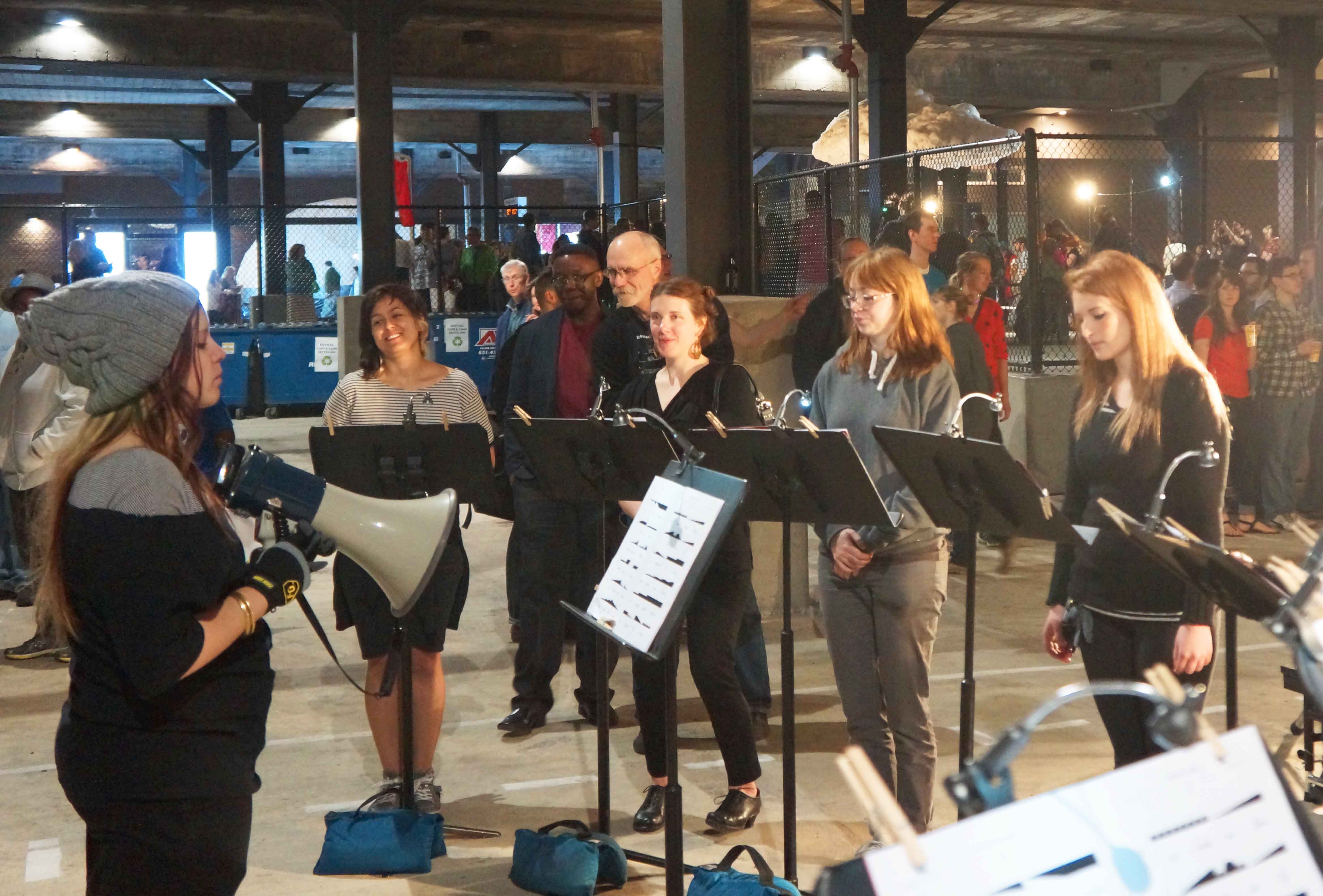
The readiest way of working on understanding is often through talk, because the flexibility of speech makes it easy for us to try out new ways of arranging what we know, and easy also to change them if they seem inadequate. Not all kinds of talking (or writing) are likely to contribute equally to working on understanding. A great deal of the writing that goes on in school is a matter of imitating what other people have said or written, and the same is true at least in part of the talk.
–Douglas Barnes, “Exploratory Talk for Learning” in Exploring Talk in Schools, edited by Neil Mercer and Steve Hodgkinson (Thousand Oaks, CA: Sage, 2009) 5
###
Image Credit: Kirk Livingston
What happens when we say stuff?
An Epistemology of Writing
I just realized I run my college writing courses in ways possibly dissimilar to how others do it. We have texts, of course, and readings. We have my dry lectures, which I try to turn to discussion (with limited success). We have examples of excellent copywriting and we talk about why they work and when they don’t. We have questions. We have answers (some from me, many from the class). We have cordial fights and the occasional snark (more remains unsaid, I think). We have yawns and longing looks at the clock.
And we have assignments.
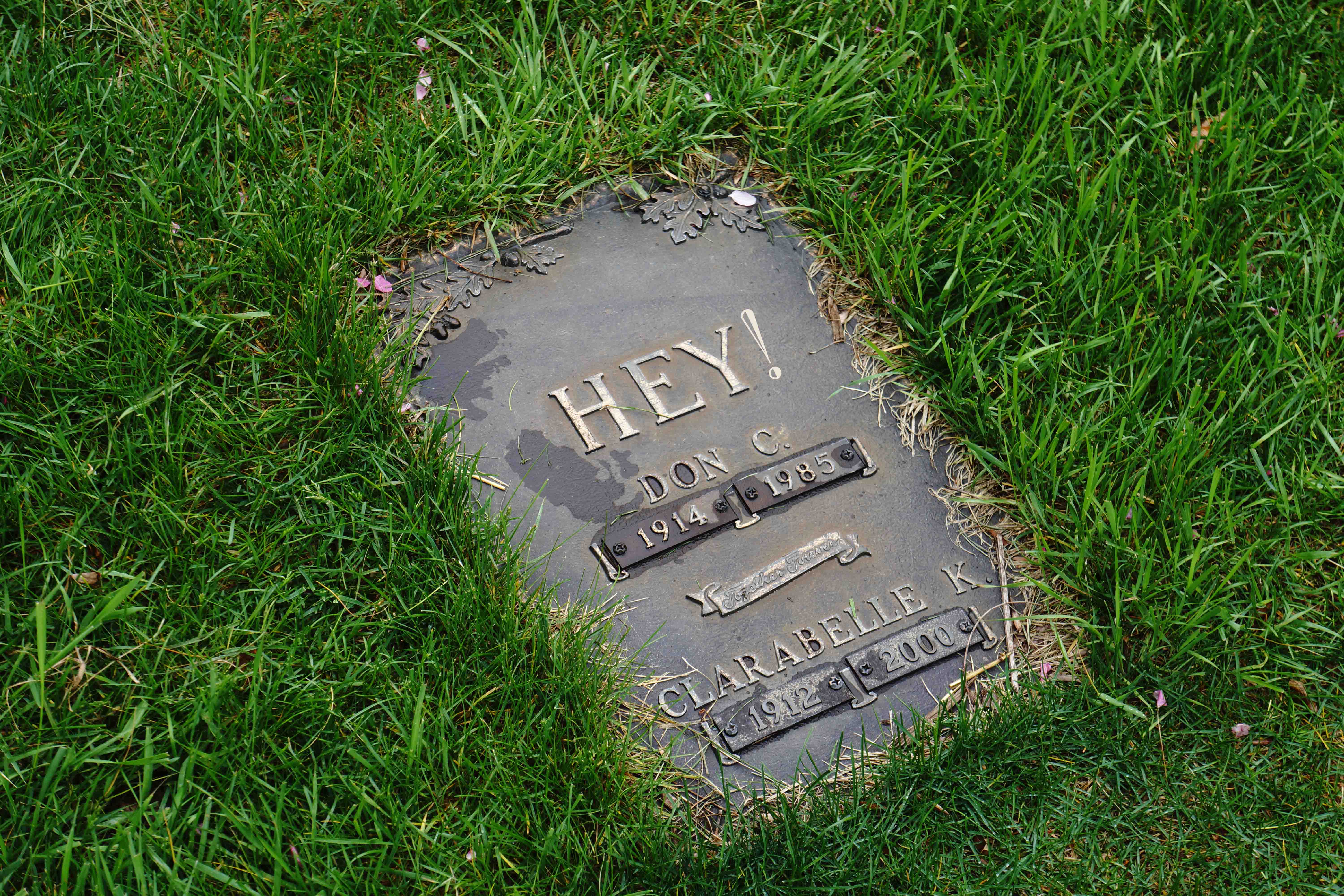
You have my attention.
A portfolio addition due ever Saturday night, five minutes before the stroke of midnight. Way to ruin a perfectly good weekend, right? (Ahem: for the record, one need not wait to start an assignment until 10pm on Saturday night).
It’s the assignments—these portfolio additions—that are the real teachers. I try to direct. I try to offer my small ways of thinking, but the real work of this education happens deep in a student’s brain pain: where sparks fly and catch the dry tinder of panic: “What do I say—and how?”
So it has always been with me: I learn as I write. I often don’t know what I think until I write it. Or say it. Just ask Mrs. Kirkistan. But when I research a topic and begin writing about it, all sorts of synapses fire and connections meet and angels sing and the sun shines on my keyboard, where doves and baby deer have collected. Especially after three cups of coffee.
And this is what I depend on in my class: that the threads of our discussion will come together in the doing thereof—the writing of copy. This capturing of a brand, or a dream. The useful words that direct and possibly encourage as they launch into a reader’s mind.
But this: just doing an assignment dampens the angels singing. This class is less about getting my grade and approval and more about creating something you will proudly show to Ms. Creative Director or Mr. Small Business Owner who can hire your magic for their capitalistic endeavors. I can already see those who get this concept. Their work shows it.
Bless them.
And bless all the rest of us, too.
###
Image credit: Kirk Livingston

 conversation is an engine