Archive for the ‘The Human Condition’ Category
Kotter: Why do leaders fail at transmitting vision?
“a gallon of information…dumped in a river of routine communication”
John Kotter’s Leading Change (Boston: Harvard Business School Press, 1996) does an excellent job explaining the difficulty of vision moving through an organization. A guiding coalition may take hundreds of hours to study a situation and come to conclusions. But as they do this intellectual work, they are also doing the emotional work of “letting go of the status quo, letting go of further options, coming to grips with the sacrifices, coming to trust others….” (88)
This is all part of the process and when that guiding coalition finishes and forms their conclusion they naturally feel their work is done.
Their work is not done.
That’s because nobody outside the coalition has done any of this difficult intellectual and emotional rejiggering. In fact, most will be blindsided because they’ve been hard at the tasks they always do. They don’t have a clue what is coming.
This is typically the point of failure. Someone from the coalition gives a speech or authors an article in the company newsletter. Or maybe a series of three articles. Here’s Kotter, very bluntly:
So a gallon of information is dumped into a river of routine communication, where it is quickly diluted, lost, and forgotten.

John P. Kotter, Leading Change (89)
Compacting and condensing and boiling down the intellectual and emotional journey is essential before anyone else can or will sink their teeth into the vision. But who budgets time or money for that piece of the process?
Those who understand vision needs legs and motivation to run through an organization.
Transmitting vision must be an intentional invitation.
###
Image credit: John Kotter, Leading Change (Boston: Harvard Business School Press, 1996)
FastCompany: The Beguiling Dangers of Insider Language
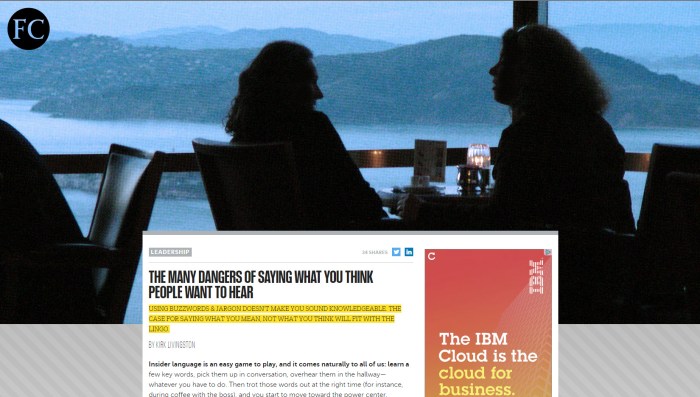
Check out my article in today’s FastCompany: The Many Dangers of Saying What You Think People Want To Hear
 ###
###
Image Credit: FastCompany
What Freelance Knows that You Don’t
For starters: Work is permanent while jobs come and go.
When I first considered life as a freelance copywriter, a friend said,
Welcome to the wonderful world of floating icebergs.
And it was so: projects fall off (the glacier of corporate planning) and float off to sea (so to speak, to the market) and you stand on them for a time, work on them, even as they melt under you. And then you step to the next iceberg. Or you tread water while another iceberg comes into view.
It’s a refreshing cycle—in a painful, polar-dip, take-this-horrid-medicine-it’s-good-for-you—kind of way.

Ice sheet, not iceberg. Don’t step on it.
I like to tell my copywriting students that the freelancer goes into it knowing this is how the game works. Then I tell them this knowing is in sharp contrast to nine-to-fiver’s who instinctually trust their jobs will remain, and are too often deeply surprised to find themselves waiting for the bus one day at 11am holding a cardboard box containing their office posters and mug.
But students typically have no mortgage or kids to feed or insurance to buy. So I’m pretty sure the comment doesn’t register until five years later, when all those conditions are true.
Recognizing the impermanence of today’s job is a great benefit, because it means one must always—always—be thinking about what’s next. The freelancer understands this in her bones. The smart nine-to-fiver rehearses this bit of knowledge every time she crosses the corporate threshold and enters the air-locked doors.
One thing that happens while I tread water is I make contact with dozens of old colleagues. I am no longer surprised by how often people change jobs, get laid off, start their own business or agency. Not to sound like an old guy, but way back when, people expected to stay at a single company for an entire career. Today I could count on one hand the number friends who have done that.
Friends often ask about work. I typically say, I’m busy and I’m looking. Always looking. In fact, this way of working has two benefits I cherish:
- Vision is no esoteric word for me. It is a hard-edge guide to what’s next. And I can never not pursue it. If I neglect to think ahead, those icebergs will float by without me ever noticing.
- The work itself become the focus. I get to burrow down into communication and copy and the telling of stories. The craft itself is a never-ending wonderland that shape-shifts as it leaps between clients and industries. The work, and the process toward the work, become the marathoner’s stroke for swimming toward the next iceberg.
In fact, faith, hope, and love remain as essential ingredients to this way of working. There is no space for taking-for-granted.
###
Image credit: Kirk Livingston
Richard Rohr: “be prepared for much resistance”
Maybe real wisdom first helps others see the path and potential obstacles.
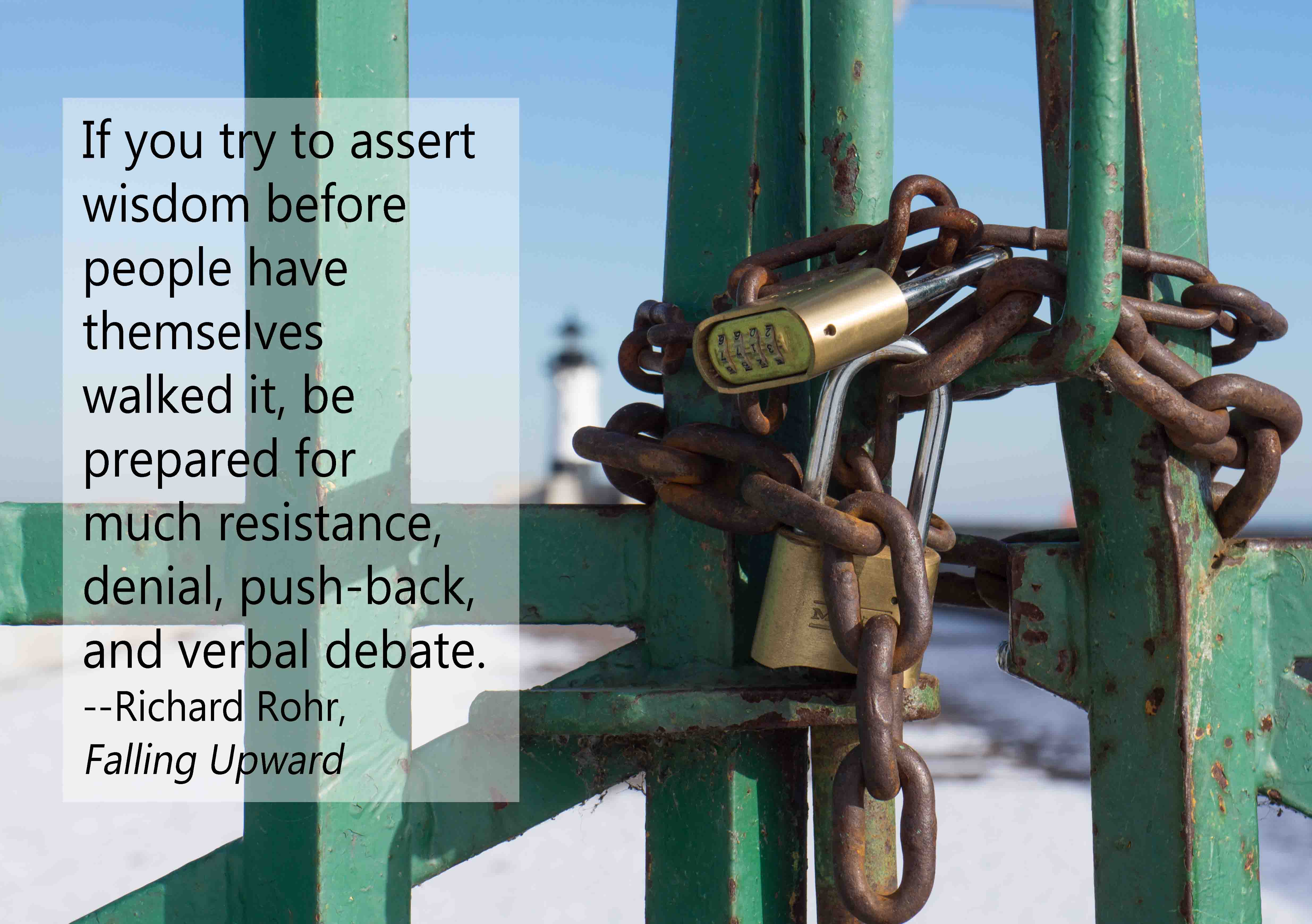
And maybe real wisdom also listens for the additional perspective.
###
Image credit: Kirk Livingston
Dormant Versus a Bias Toward Action
The Shroud of Tuesday
What if your work stopped—on purpose?
We celebrate and expect constant productivity gains in our culture. Wall Street rewards those gains as they decrease the expense line of any business. We congratulate those people in constant motion who have momentum and trajectory.
But is constant forward motion sustainable?
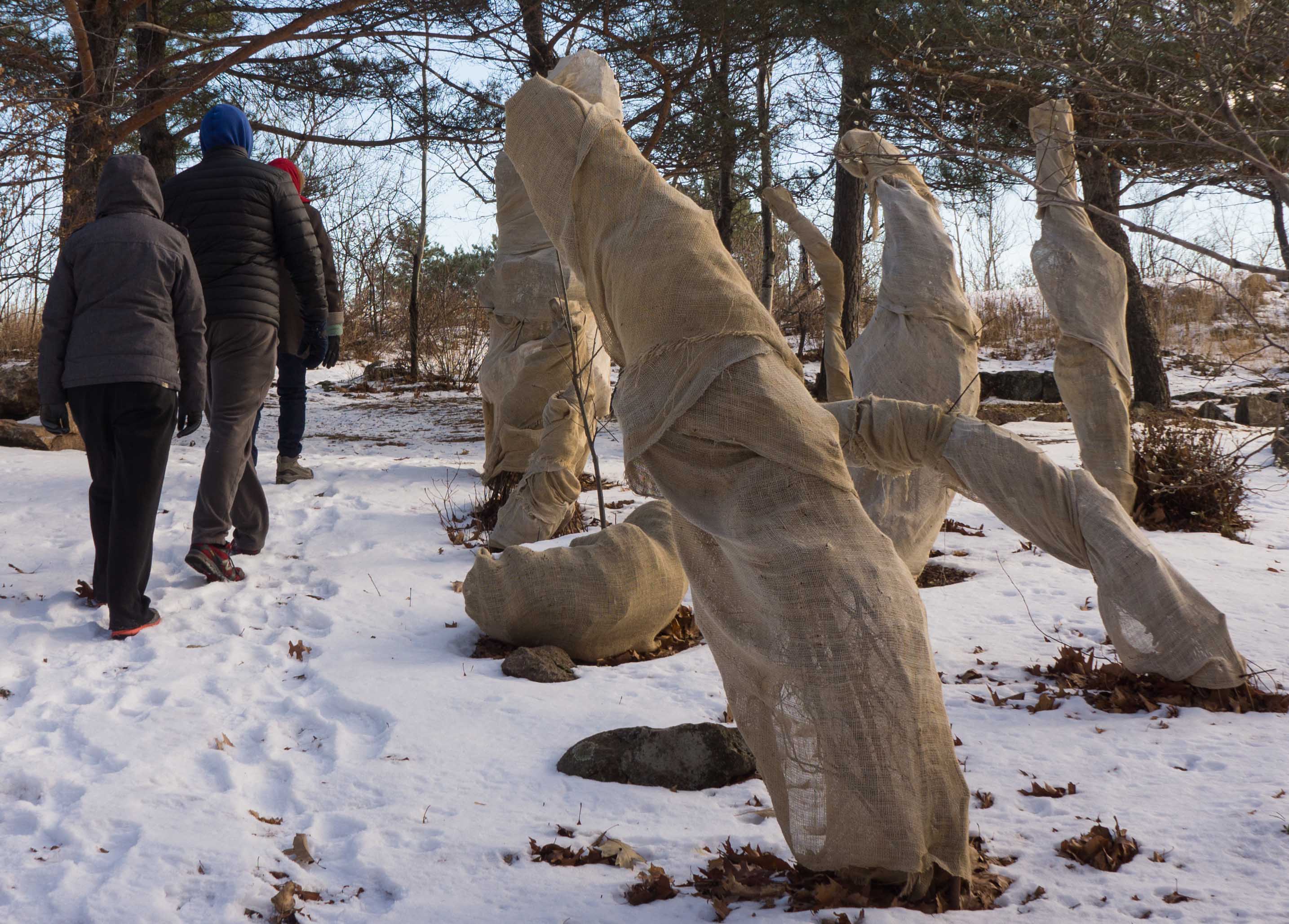
Sure: looking back over the arc of our life we can cobble together a story about how we were always moving toward this invention or position or conclusion or achievement. That bit of personal cinema we learned from the biographer’s art.
In the moment, however, there are dormant times: work goes south, dries up, gets boring. There are times when it is not at all clear what to do next, which way to go, or even if this work will succeed at all. Doubts interfere. Even if you have a boss telling you what to do, there can be internal fallow times where you silently rethink your commitment to this job or that project or that leader.
We hate those times when work goes dormant.
We love movement and purpose, followed by lots more movement.
But dormant is not the same as death, despite how being laid-off feels like a mini-death. And when a work-stoppage happens it is hard to believe the rejuvenating effects of a release from movement. And yet, most of us do make it out the other side. And typically we have a new grasp of where we need to go and what we need to do.
I’ve always wondered how any living thing survives the bitter cold of the northern United States. Every winter I am amazed that cars start and water flows and life continues at 20 degrees below zero (F). Then March and April bring thaws and by May that dead-looking Maple blooms all over again.
Every year.
Maybe the cycles outside my window are a better analogy for work: there are ebbs and flows. And maybe it is worth building up a bit of patience with slower times, and even to embrace them and allow them to do their hidden work.
Even on a Tuesday.
###
Image credit: Kirk Livingston
What skill will you grow in 2015?
I write and I want to draw and take photos. And write.
I’ve been trying to sketch lately. My son and I started a blog called Dumb Sketch December where we try to produce one sketch a day (inspired by OneDrawingDaily). I enjoy sketching more and more and I am less and less happy with the results. Unlike writing where I have a growing sense of being able to say what I need to say, sketching seems to have plateaued at capturing very little of real life.
I’m at the point where I don’t even know what I don’t even know.
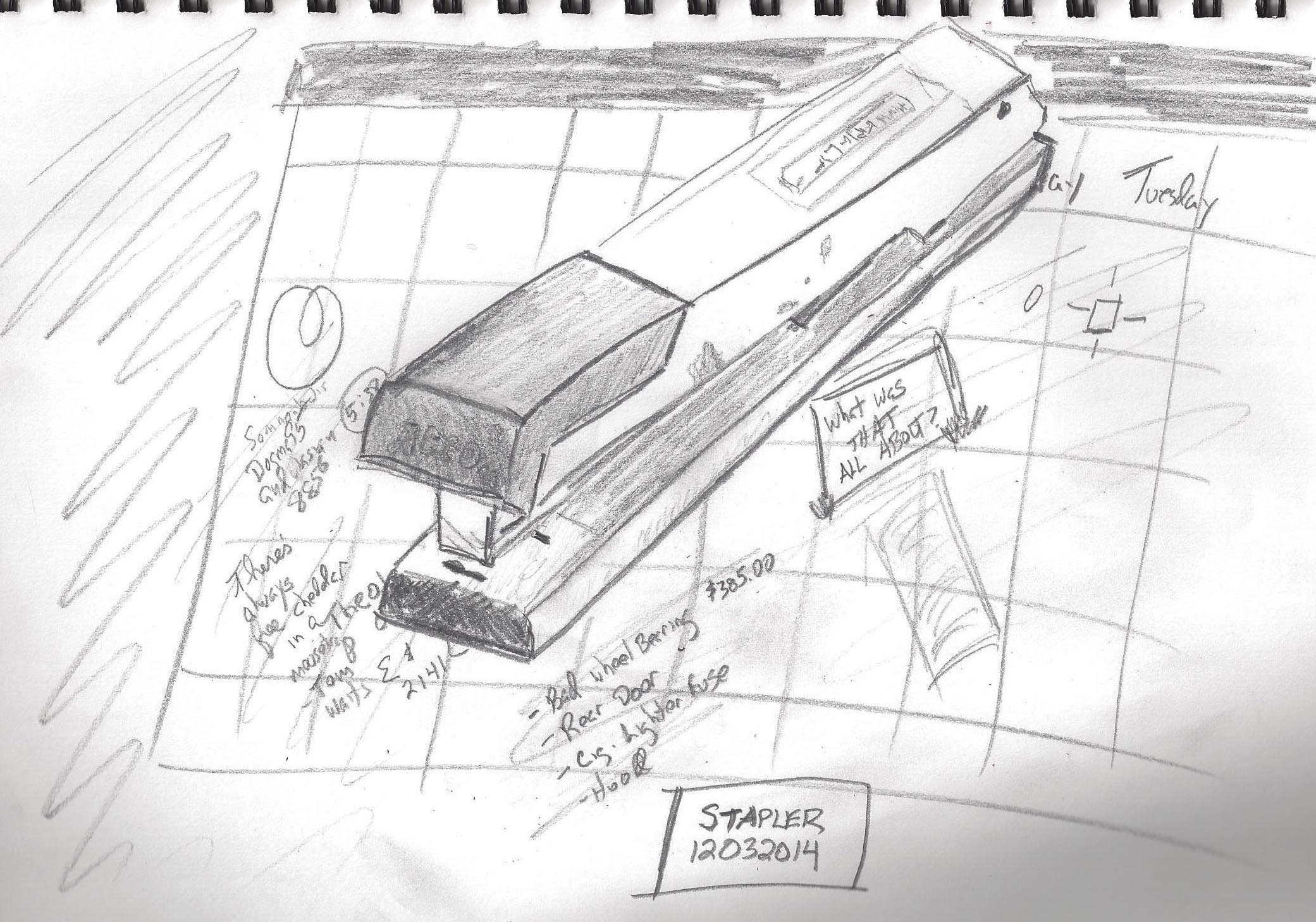
My stapler rocks. My people don’t.
Other kindly sketchers and drawists chime in with encouragements like “Keep going!” and “Huh.” Of course, I’m committed to the dumb sketch approach to life, and I can find a bit of joy in a well-capture shoulder, or when I drew something very similar to that woman’s posture or her pony-tail. I am increasingly drawn to the very black carbon laid down to hint at a clear edge. I’m trying to take lessons from Edward Hopper, though I think he would have given up on me long ago:
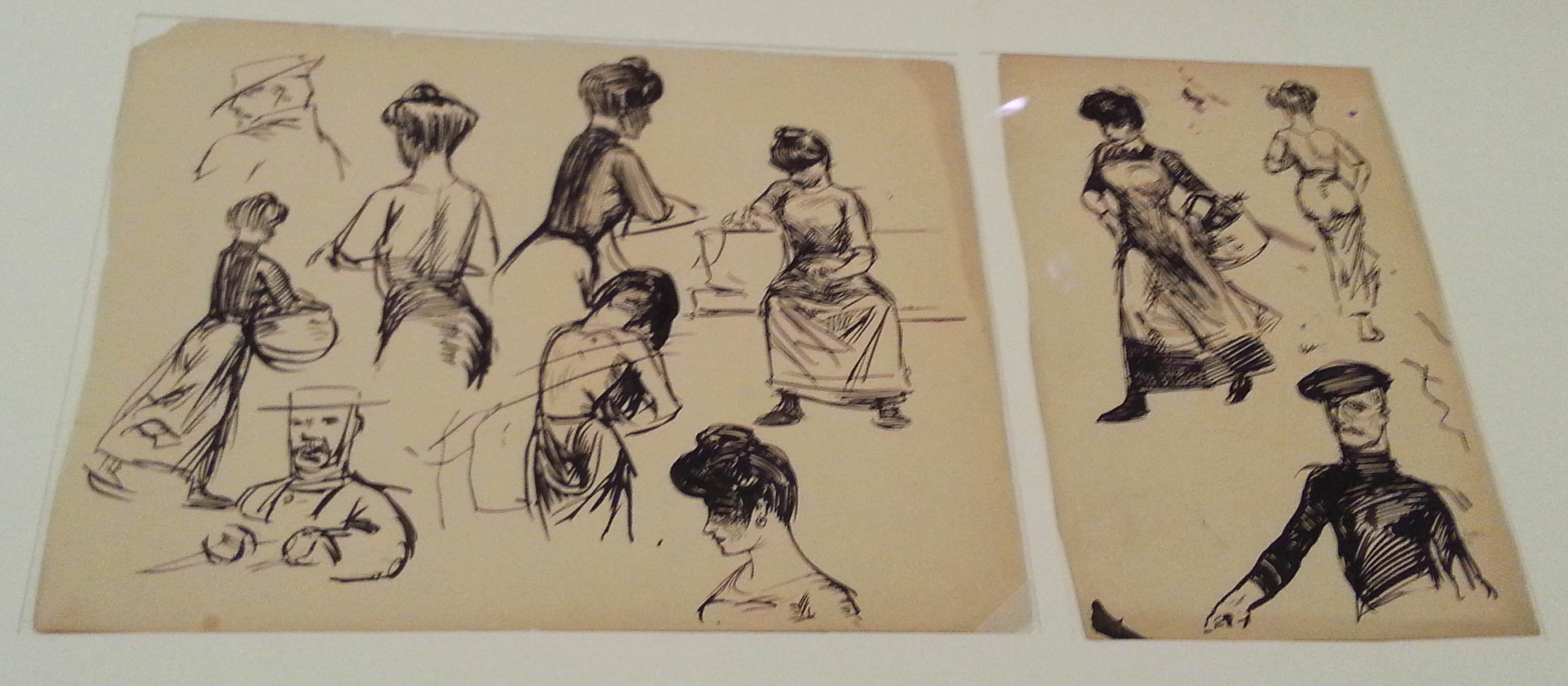
I think we can guess what fascinated Edward Hopper.
But all this to wonder aloud at skill-building. There is something about the intentional action—committed in public—that has a way of squeezing us forward. NaNoWriMo used that force, our more successful diets use that force, weddings are a celebration of the force of intentional actions publicly committed.
What skill do you want to grow in 2015?
How will you make it public so we all can take courage from your actions?
###
Kirk Livingston, Edward Hopper via The Walker Art Center
That moment when you only want to say truth
Come, blessed ignorance.
Early in my writing life I let on that I knew more than I actually did.
You did too. We all did. We all do.
It’s part of the human condition: the word or name dropped, the subtle nod that hints we are in the know,
“…and, yes—please—carry on…certainly I get it.”
Whatever it takes to not appear stupid.

I tried to impress Madison’s potato vendors with my potato knowledge. I failed.
I learned this subterfuge early in life: laughing at my big brothers’ jokes and then stopping by the dictionary later to sort that word they used. Thankfully, there was no Urban Dictionary back then.
I squandered educational opportunities by pretending to know. Maybe my early undergrad years were perfectly set up to encourage the ignorant to remain so—and I jumped into that. It wasn’t until later in school that I went for broke and displayed my ignorance. That’s when I started learning.
One benefit of writing copy for a living is you get to ask the stupidest, most ridiculous questions. Questions to which everyone in the room obviously knows the answer. And actually that is when the fun begins, because the answers that pour forth are often strikingly dissimilar and uniformly telling, in that everyone has a different expression (and possibly a different idea) of this commonplace.
At some point stupid questions become a way of life: after you realize you’ll learn a whole lot more if you just admit you don’t know something. It turns out there’s really not that much to lose. Maybe you lose face with the boss. If so, your boss probably wasn’t that great. Maybe you gum up some well-greased process. If so, your question from the edge may actually open new ways forward.
The benefits of ignorance realized are immense:
- The dumb questions is a verbal mark in the sand. And on the other side of that mark you get to actually start learning.
- It is highly likely others have the same ignorance. You do everyone a favor by asking your question.
- Asking the dumb question often unearths brand new, productive ways of looking at something.
Please—for the sake of humanity—ask your stupid question today.
Do us all a favor.
###
Image credit: Kirk Livingston
Policy is the Gulag of Good Ideas
Good Ideas Sour and Stink When Enshrined as Law
“We’ll do it this way going forward.”
If you could do a quick, very honest poll of employees listening to their boss say those words, how many would silently be saying, “No. We won’t do it that way.”
- 50 percent?
- 99 percent?
- 100 percent?

HM Prison Geelong
It is possible the very nature of the hierarchical or “push” corporation lends itself to sapping motivation from good ideas. When ideas come from above as pre-packaged laws-of-this-workplace, a piece of humanity goes dormant in the otherwise engaged employee. Enough of those pre-packaged laws-of-this-workplace and work becomes full of half-functioning automatons.
A room full of automatons working only for the weekend or the money or to keep a job or to avoid the boss’s wrath may have succeeded 50 years ago, or even 25 years ago. But smart corporations and organizations will study how to turn their hired automatons into full-fledged, interactive humans while at work, not just after work.
Inevitably, that involves hearing from employees. It must be about hearing from more than the boss or those favored few. And know this: engaged people talk and discuss. That is the way of owning a process. Automatons cannot own a process. But engaged people can own a process, no matter where they fit in the organization.
Once upon a time, the lovely Mrs. Kirkistan and I spent a few years at a volunteer organization that had a compelling mission. But that mission was hindered by a hierarchical leadership approach that treated volunteers as cogs in an unyielding machine. There was no room to engage, revise, add-to or direct from within the roles we played. Only a few key leadership voices could do that. We eventually walked, as did other talented people in a variety of roles.
Coming generations of working stiffs will expect their voices to be heard. Or they will walk.
We can all grow in listening for engaged voices with solid ideas.
###
Image credit: Kirk Livingston
A Word About Thanks
And that word is “Thanks.”
In the United States we have a day set aside for giving thanks.
Media-wise it is overshadowed by Black Friday and the ritual purchase of unnecessaries. And please don’t miss the tasty irony that at least one definition of “Black Friday” pins it as the day of the year when retailers move from financial loss to profit–so here in the U.S. we celebrate the religion of corporate solvency.
But for me Thanksgiving has little to do with buying stuff. Instead, I prefer to see Thanksgiving as a time to pause.
I like the work of Australian philosopher Damon Young, who at the end of his Distraction recommended giving thanks. Though an atheist he still noted that gratitude was a pretty good way of going through life—it ordered things, kept desire at bay and helped set perspective—though I wondered aloud how gratitude works without a being at the other end.
 For quite a while I’ve taken cues from a poet-king who penned a number of poems, each deeply infused with gratitude. His poems offered gratitude as a way of ordering life and seeing opportunity and obstacle as part of the whole deal. Unlike the Australian philosopher, the poet-king cited Jehovah as the One to offer thanks to, and he did it again and again. And again. This is typical:
You make the going out of the morning and the evening to shout for joy. (Psalm 65.8b)
The whole poem shows off stuff Jehovah does in the world and it is worth reading (check it here). Interesting that most of the 150 poems (not all written by the poet-king) had very little to do with the ritual purchase of unnecessaries—but our culture won’t rethink that until the next great depression.
Two things strike me about the poet-king’s words:
- Gratitude incites calm. When I meditate on those words, calm happens. I appreciate that. Thanks is a much more potent perspective-maker than desire.
- Gratitude generates a sense of presence. In particular, the poet-king had the sense of taking a seat at table with the very One. Invited by Jehovah. And that is pretty cool stuff.
I’m grateful for Mrs. Kirkistan and for our kids, parents, in-laws and friends. I’m grateful for way more than enough (food, shelter, clothing). I’m grateful that you stop here and read these posts.
Thanks.
###
Image credit: Kirk Livingston

 conversation is an engine