Archive for the ‘What is remarkable?’ Category
We’re Bigger Than This
Helping Colleagues See the Larger Story
Bad manners and ill-treatment make headlines in personal conversations at most of the companies I’ve worked for. Just like in our newspaper or aggregated news sources online. People often say they wish the newspaper published good news, but they would not read it if it did. Good news—things going right for a change—few have time or interest for that.
Naturally this is so: stories of the people around us always take top billing in our conversations. Family, colleagues, neighbors, we love hearing what each other did and we love to relate a story about someone else, especially if funny or it has some emotional content that will get a reaction. It is the emotional content, whether funny, sad or repugnant that we really want to get across to each other.
It is our way of connecting: we want to stir a reaction.
It takes a concerted effort not to talk about the people who are not there. Leaders see personal interactions as an opportunity to steer interest toward something larger. But that larger thing is not the mission statement produced by the top brass or Human Resource, which is typically a lifeless bit of plastic. The real stories, the ones that make leaders out of ordinary citizens, are those stories where something of the corporate or group mission has made its way into and through an ordinary life.
One boss related a conversation she had with a far-away department. The department director praised specific people on the team and told of specific details that helped their group move forward. When our boss told this to the team in casual conversation, people blossomed.
We need more connection with larger mission—even if it seems hoky at the time. And we need less stories about how bad/abnormal/demonic are the people not present.
###
Image credit: Kirk Livingston
Someone Died and Everything is Different
Times Change Us.
A gentleman acquaintance—someone I barely knew.
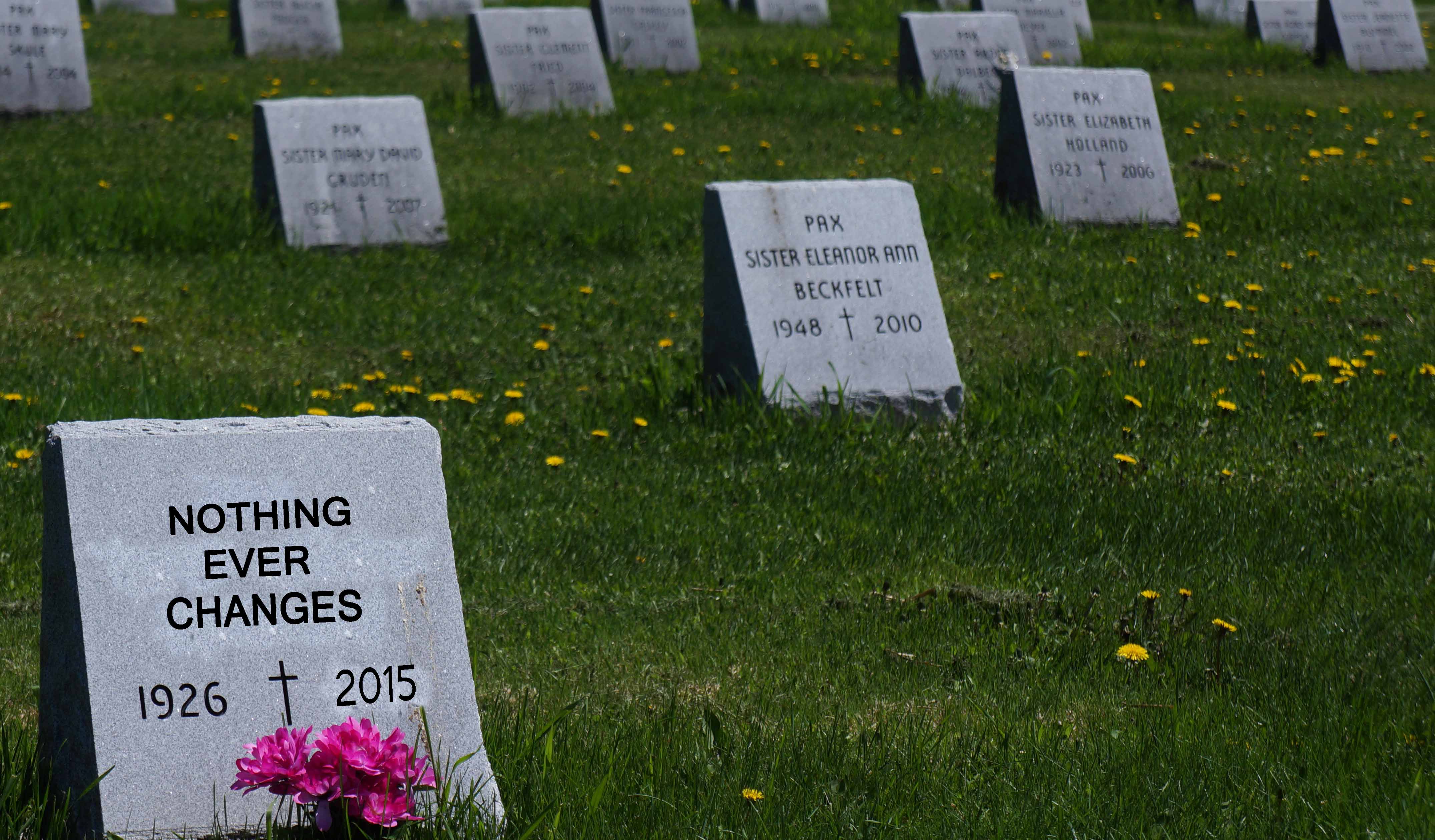
Mrs. Kirkistan and I were in a meeting with him not two weeks ago, and now he is absent. It’s a shock—but our shock is minor compared to that of the grieving widow and children. They have our sympathies and prayers. I cannot imagine the shift in outlook this change has wrought for them.
Even for me, who did not know him, there is a clear hole where he once existed. A big nothing–a memory–where, moments ago, a person stood.
And so. Mourning.
“Blessed are those who mourn, for they shall be comforted.”
–Jesus the Christ
We usually want to stick those holy old, churchy words in a pew to visit on Sunday or Easter. But today, even from the distance where I stand, they hold a glimmer.
###
Image credit: Kirk Livingston
Mary Oliver: “Here you are, alive. Would you like to make a comment?”
Just so.

…for always the new self swimming around in the old world feels itself uniquely verbal. And that is just the point: how the world, moist and bountiful, calls to each of us to make a new and serious response. That’s the big question, the one the world throws at you every morning. “Here you are, alive. Would you like to make a comment?”
–Mary Oliver, Long Life (Cambridge, MA: Da Capo Press, 2004)
###
Image credit: Kirk Livingston
Gadamer: A Tormented Relationship to Writing
The Best Writing Sounds Nothing Like Writing
Good writing is where you remember nothing about grappling with words but are instead transported with images and ideas that appeared in your brainpan. Effortlessly—or so it seems.
This kind of effortless reading is exceptionally rare with philosophers, who are well-known for obfuscation in their pursuit of parsing detail and cleaving difference from sameness. And yet Donatella Di Cesare, the biographer of philosopher Hans-Georg Gadamer, claims Gadamer’s writing style is “lucid” with “striking prose.”
We’ll see about that.
The lucid philosopher is the exceeding rare philosopher.

I’ve just picked up Gadamer: A Philosophical Portrait by Donatella Di Cesare (Bloomington, Indiana: Indiana University Press, 2007). In the introduction Di Cesare shared about her process:
There is a further difficulty that a monograph on Gadamer should not avoid, and that is his tormented relationship to writing. In order to get around his Socratic resistance to writing, he preferred the form of the lecture, the talk, or the debate. It is not an exaggeration to say that almost everything he wrote is based in dialogue.
She goes on to say Gadamer is “always careful to interrogate everyday language and to avoid rigid terminology,” so I am eager to see how his prose ends up as lucid and striking rather than simply tedious.
What piqued my curiosity was Gadamer’s alleged privileging of oral over written. It seems his inquiry was largely based in discussion, between people, rather than one man alone with a sheet of 20# bond and a pen. Again: I’m just at the beginning of reading Gadamer. I’ve got his big Truth and Method on order, but I know from my own writing that dialogue and conversation have a pull that abstract philosophizing rarely reaches.
The best writing sounds like a conversation with an interesting friend. I’m eager to see if Gadamer achieves that.
###
Image credit: Kirk Livingston
Pick a Door: Blessed are the Poor
How do you read this?
Jesus went up the mountain with his followers, as the great teachers do. His first words:
Blessed are the poor in spirit, for theirs is the kingdom of heaven.
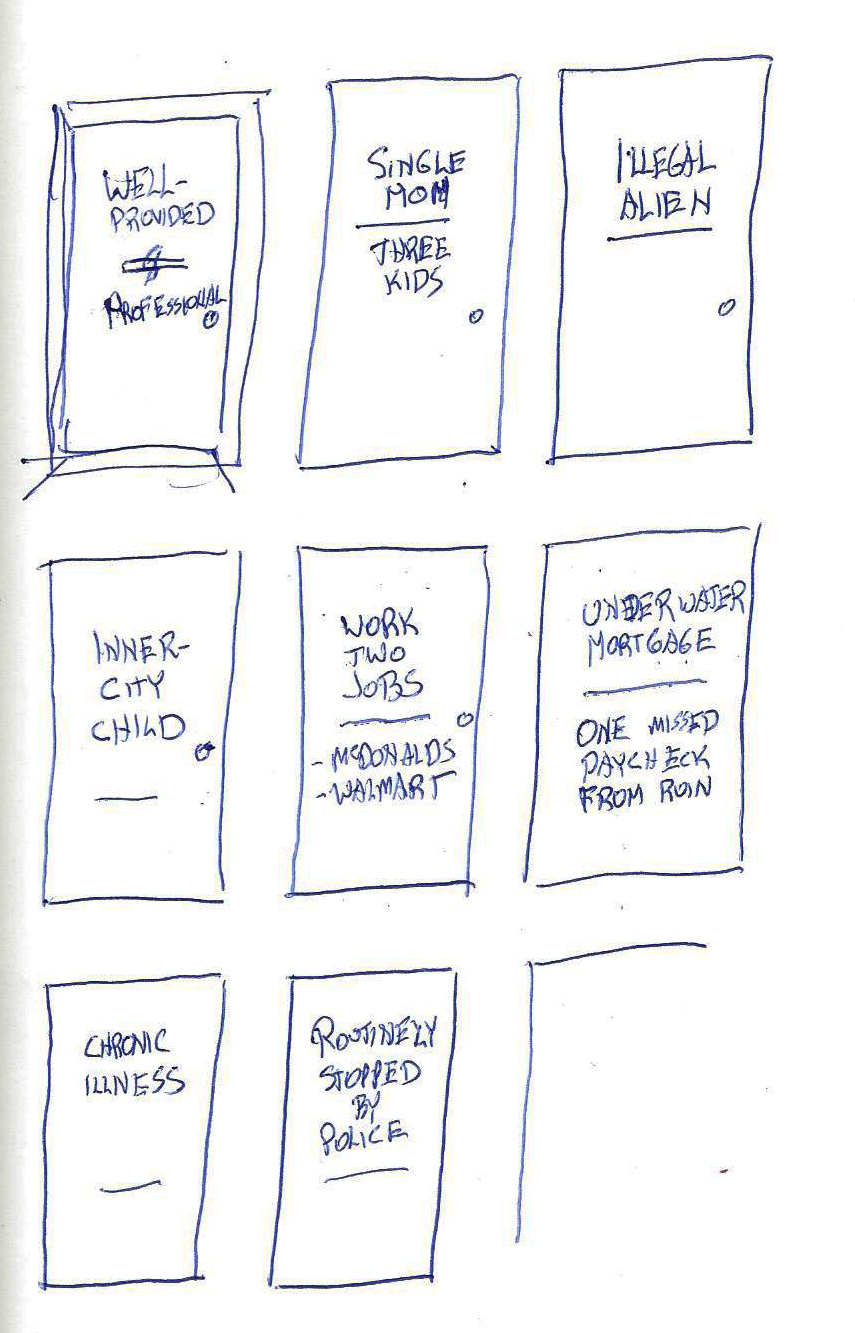
How you hear those words depends on where you come from. The images that come to mind, the connections you make, the hope or lack of hope—much is prefigured and preloaded by the conditions you bring.
What did the original hearers hear? That is the question.
But we make a start toward answering that question by asking what door we just stepped through.
###
Dumb sketch: Kirk Livingston
Josephine Humphreys: When writing from the center of things
The world keeps aligning with what I just wrote.

Interviewer: When you’re writing, is it that you notice things more acutely?
Humphreys: Yes. You notice everything, and everything seems to be full of meaning and directly centered on the thing you’re writing about. I heard E.L. Doctorow say something like that—that when you’re writing, all experience seems to organize itself around your themes, which can give you some really strange feelings of coincidence and ESP. You start to think you’re onto the secrets of life.
–Josephine Humphreys, quote by Dannye Romine Powell, Parting the Curtains: Interviews with Southern Writers (Winston-Salem, NC: John F. Blair, 1994) 192
###
Image credit: Kirk Livingston
Pat Conroy: How to tell when the story has started
Sometimes Mr. Subconscious arrives at the work site before Mr. Conscious

I think dreams are very important. I think dream journals are important. Extremely important. I have dreamed the ends of books. When I start dreaming about the book, I know it’s now starting.
–Pat Conroy, quoted by Dannye Romine Powell, Parting the Curtains: Interviews with Southern Writers (Winston-Salem, NC: John F. Blair, 1994) 51
I can’t vouch for dreams, but I cannot help but notice how Mr. Conroy’s stories seem to start without him. Writing is hard work, but there’s no denying these bits where the subconscious fills in gaps at the work site before you even arrive.
###
Image credit: Kirk Livingston
1975 on Line 2: “Sorry, he’s on a long-distance call.”
So, you understand, he cannot take your call.
My accountant’s receptionist said this a few days ago. I had not heard “long-distance” for at least 20 years. And the phrase had not been common for a good 20 years before that.
Clearly the receptionist had time-traveled from another era. How is it she still had that phrase at her disposal?

Way back when a long-distance call took priority over everything, because dollars burned with each minute of telephone time. So you stood patiently next to the telephone with a cord plugged into a wall socket. And you finished the conversation. After all, priorities are priorities.
Not so today. True, an international call is more costly, but Skype is free, and there are a number of lower-cost communication solutions. Dollars are not burning today, or at least not in the same way and not at the same pace. So we are free to flit from talk to text to snapchat to email at will, interrupting one to catch another and so on. We keep larger conversations going with more people using multiple smaller communication events. Multitasking is a kind of badge of honor that shows how important we are, though we publicly rebuke the practice.
Smart people point to attention as the currency for today. We wonder how to get attention and how to keep attention. Long-distance and dollars spent per minute once forced our focus, but today people choose to pay attention. And they often choose not to.
What will you pay attention to today?
###
Image credit: Kirk Livingston
When I form my own country, this will be my first water tower.
Honest: those were arrows, not a hammer and sickle.
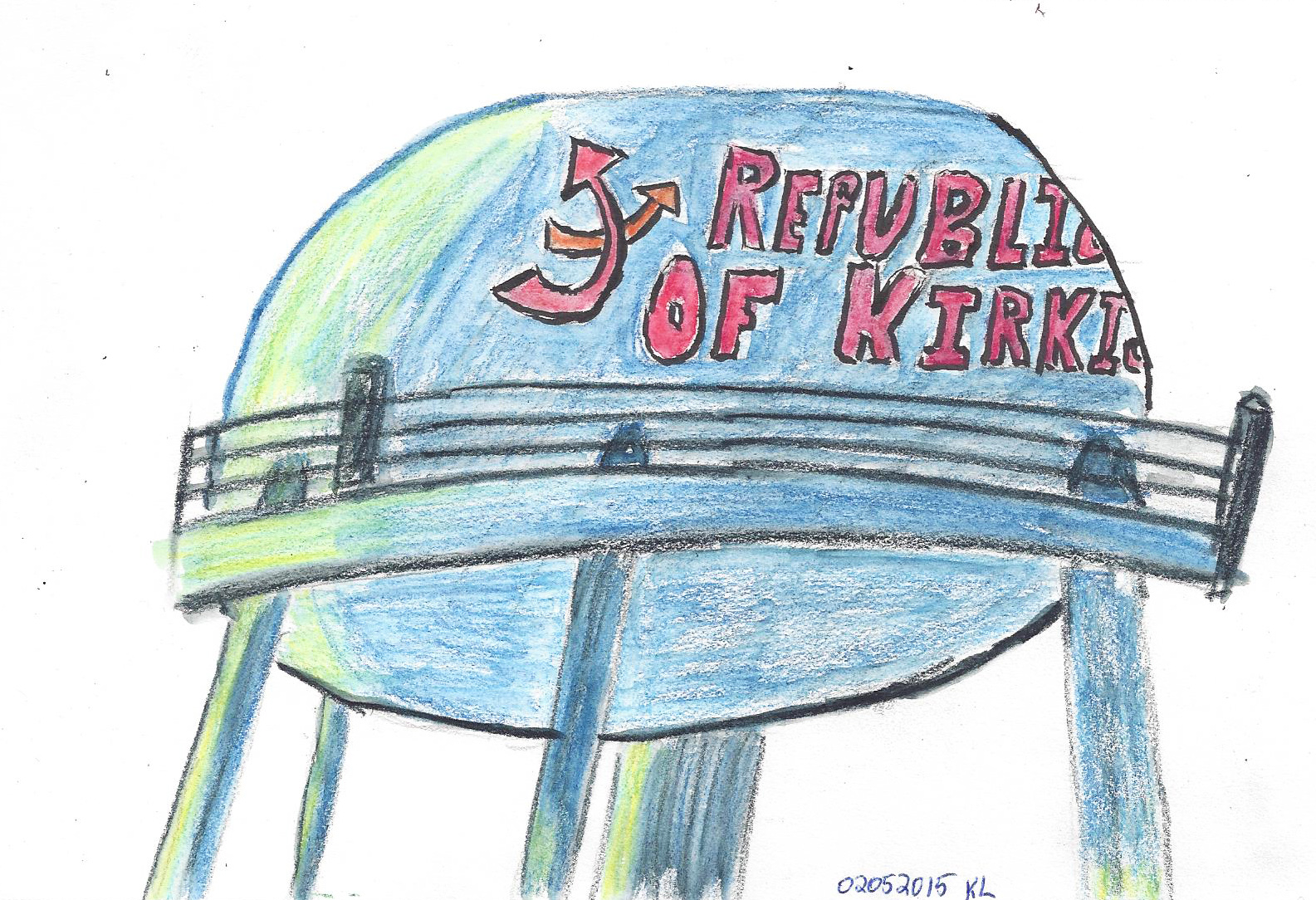
Don’t “comrade” me, brother.
Then again: Maybe I won’t install myself as supreme leader right away. I’ll start as the Minister of Agitprop.
After I release Iowa from the tyrants who were “voted in,” we’ll kick it up a notch and groove into that glorious, collective future.
Who’s in?
###
Dumb sketch: Kirk Livingston, Minister of Agitprop
In Praise of Doing Things Badly
Rough draft as collaboration tool
I keep talking about rough drafts and dumb sketches. That’s because providing something when expectations are low is such a great way to share ideas. It’s a way to tell ourselves what we are thinking. It also a way to tell others what we might think together. But with the pressure off.
It’s also a great way to learn.
Some may say, “What? That guy needs a rough draft? What a chump!”

While it is true I am a chump, it is also true that presenting a rough draft—sometimes just the stub of an idea—can have an electrical, clarifying, vivifying power to move you forward. This idea, laid bare in all its clumsy, awkward glory, may just be the beginning of something important. Something even that holds your imagination for a year or five.
The rough draft laying there—all vulnerable and wrong—brings out the best in those who look on. Often evoking pity rather than harsh, fluorescent critique. And that makes for a great conversation.
What will you do badly today and share as a rough draft with a colleague?
###
Image credit: Kirk Livingston

 conversation is an engine