Burning Down the House: Stop. Drop & Adopt.
How social greases the gears of change
One way we begin to dispose of our sheltered and separatist clubs and churches and work is to talk about them out loud. When we start to tell a stranger about a sacred ritual inside the walls of our church, we stop and realize, “Wait—this probably sounds like nonsense.” And so we back up to start earlier with the “Why?” and “What for?” And then we drop the insider words and adopt common words.
Same with our work: when someone asks how we spend our day, we don’t use our office or shop-talk words. Most people don’t understand lingo of the workplace (especially folks in the workplace). So we stop. We drop the shortcut words in favor of the basic words used by the rest of the humans that speak our language.
And then we paint that ritual or work or favored topic in the best possible light. It’s a little rhetorical flourish we do without realizing. I want you to be excited by what excites me, so I talk it up. I punch it with bits of enthusiasm and look for ways and words that help you get the same vision I have.

Do what you must to pull in the stranger.
Getting others interested by telling the juicy bits of what interests us is one of the basic ingredients of any social media. It also happens to be a basic expectation of story-telling.
What’s that?
You don’t have contact with strangers?
You only talk with other insiders?
Is it time to reconsider your circle of friends to pull in outsiders? There’s much to be gained from relating your passion to someone who has no clue what you are about.
###
Image credit: Kirk Livingston
Making It Up Daily: 1667 Words at a Time
Do You NaNoWriMo?
It’s funny that those stories we’ve lived in since childhood were written by someone. Made up, one word at a time.
Books. Movies. Plays.
All made up.
By someone.
Writing.
Game of Thrones. Lord of the Rings. The Great Gatsby. Even Burt Dow, Deep-Water Man. All made up. Maybe they carried pieces of older stories, but someone composed them. We know the names of the authors.
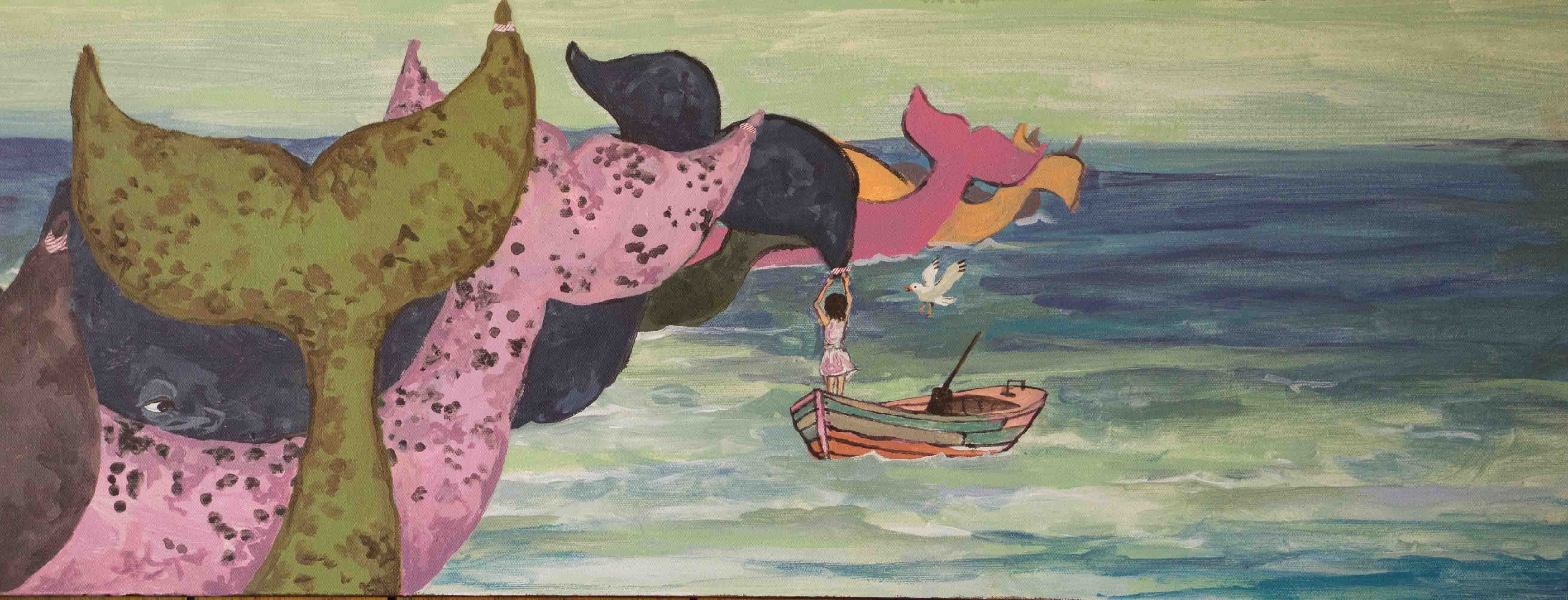
At some point in life I realized these very complete little worlds that seemed so alive were actually fiction. Funny that something made up could prove so real for so long. So concrete. But I had to pull back the curtain to realize this.
At some point—a bit later—I realized there was actually quite a lot made up: much of human interaction is made up (we call it “culture”). Oh sure, it presents as concrete reality, but behind the scenes people were literally making things up every day.
Business is a great example. Walk into a brick and mortar superstore and it seems like it’s been there forever. But we know they huge multi-million dollar inventories come and go. Same with banks. Same with restaurants—especially restaurants. Even the big institutions that are the pillars of our communities are making it up as they go. Sure, the rules of the game are there and seem to be unchanging as if handed down on stone tablets. But nothing is certain about business.
If you’ve ever been in a start-up company you’ll know that making it up as you go is expected. We need more folks willing to leap into the void of making it up. I believe making it up on paper translates to words which translates to action.
National Novel Writing Month is upon us again. And I’m joining in. It’s likely this blog will suffer inattention. But the challenge of creating a story from nothing (or more likely, from the disjointed and broken story-bits laying about in my mind and yours) is too great to resist.
National Novel Writing Month is a relatively painless way to try to produce a coherent story. Or, if not coherent, than at least something that has 50,000 words.
Where are you exercising your make-it-up muscle these days?
###
Image credit: Alli Livingston. Photo: Kirk Livingston
About the Node Not Taken
Steady There, Young Philosopher
My hardworking, entrepreneurial colleague surprised me in conversation the other day:
Sometimes I wonder what it would be like had I stayed in the corporate world—what would I be doing now?
My friend was in one of the periodic slumps that happen to anyone building a business of their own. Those slumps squeeze out long-suppressed questions. These are the questions that precipitate momentary crises of faith for those constructing wings as they plummet.

No. Really. Is there an actual “Afton State Park”?
Young philosophers like to ponder the “What ifs” of life:
- What if I had dated that person rather than this person?
- What if I had taken that job rather than this job?
- What if I had studied engineering rather than philosophy? (One certain answer: the world would have to cope with a very bad engineer.)
- What if had dived 12 inches to the left and missed that rock in the lake?
One problem with our casual “What ifs” is that they often assume a straight line from the point of decision. You go this way. You go that way. Two roads diverging in a yellow wood.
But what if our lives are composed of nodes that become roads? What if each decision is followed by another so that our paths are constantly changing in real-time?
Another problem with casual “What ifs” is they forget the tiny but forceful pinpricks of relationship and conversation and motivation that accompany every choice. Thousands of tiny insights and histories and dreams contribute to each action as well as each subsequent action.
Personally, I cannot help but wonder if the nodes that become roads all lead to the place/people we were meant to be in the first place. Wait—don’t call me a determinist yet. Stick with me: what I mean is that whether we stayed in the corporation or went on our own or dropped everything to join the circus, would we end up as the kind of people we were meant to be?
This is not a perfect thought: we build things into our lives, good and bad, by daily habit. We grow, or not, because of those habits and subsequent opportunities. Admittedly, the determinist take on choice has holes.
But I’m reminded of that inveterate letter writer who wrote his friends about walking in the “good works” begun in them.
Today I’m looking for nodes and roads.
And I hope to step in a good work along the way.
###
Image credit: Kirk Livingston
MIT Media Lab: Exactly When Do You Collaborate?
Tod Machover & A More Beautiful Question
There are times, especially early in the creative process, when I want to slow down and think about a challenging question by myself,” he said. (At such times, he retreats to the solitude of a barn converted into a music studio.)
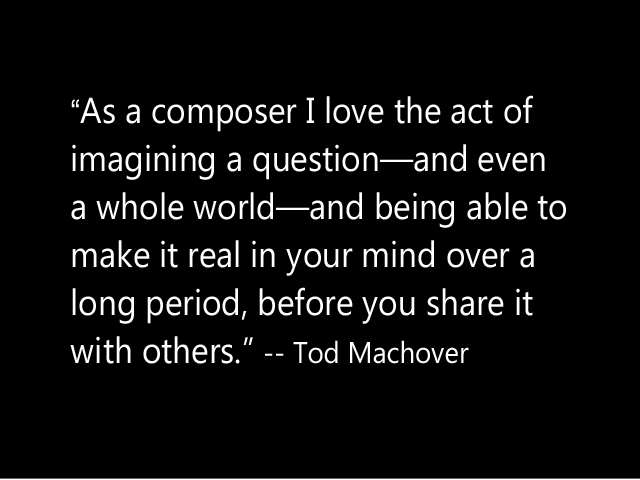
But there’s also a time, he said, when you must take your question “out of the barn” and begin to work with others. The Media Lab is designed to be an ideal collaborative environment, bringing together people from a wide range of disciplines. “Everyone is comfortable saying to others in the lab, ‘Here’s something I’m passionate about—would you help me think through this question?’”
–Quoted from Warren Berger, A More Beautiful Question (NY: Bloomsbury, 2014) 130-131.
###
Moments of Impact: Making Work Conversations [actually] Work
This third kind of work conversation involves divergent thinking
In Moments of Impact: How to design conversations that accelerate change (NY: Simon and Schuster, 2014), Chris Ertel and Lisa Kay Solomon make the case that we need a third kind of conversation at work. Here’s how Solomon and Ertel categorize most work meetings:
- Typical meeting where someone stands at the front blathering on with slides while attendees multitask with Facebook, Twitter and occasionally, actual work.
- Brainstorming meeting where people attend to think brand new thoughts (and to eat donuts). But brainstorming meetings are routinely dismissed today as producing far fewer ideas than if the attendees sat in isolation producing ideas before coming together.
- Strategic Conversations. This is Ertel and Solomon’s new kind of conversation. Rather than engaging in the typical presentation/multi-tasking meeting, they want attendees to deeply and viscerally engage in a compelling question.

Mindful like a hungry hawk.
Moments of Impact is all about how to make this third kind of conversation happen. The book develops five points to help make strategic conversation an experience versus another bout of human downloadment:
- Declare objectives/define the purpose

- Identify participants/engage multiple perspectives
- Assemble content/frame the issues
- Find a venue/set the scene
- Set the agenda/make it an experience
Nothing earth-shattering so far, right?
And yet, as it is so often, our connections provide the earth-shattering stuff, rather than any consultant’s formula. Where we connect—with 100% attention—that’s where the magic happens. In connection there something mystical that lies beyond engineering technique and management principles. Moments of Impact is about setting the stage for that connection.
One thing is becoming clearer very day: when we employ mindfulness rather than pursuing mindlessness, we find ourselves deeply engaged rather than seeking more distractions.
Mindfulness in the service of creating an experience also seems to honor humans as human (versus as corporately-owned human capital to be rejiggered at will).
That old attitude may have worked for an assembly line (doubtful), but for our volatile, uncertain, complex and ambiguous world, we need the best each of us can bring.
###
Image credit: Kirk Livingston
Charles Chamblis: Photographer’s Notes
Story told by numbers
Charles Chamblis didn’t take too many days off from photography. With his camera he captured slices of life in the African-American community around Minneapolis and Saint Paul, Minnesota in the 1970s and 1980s.
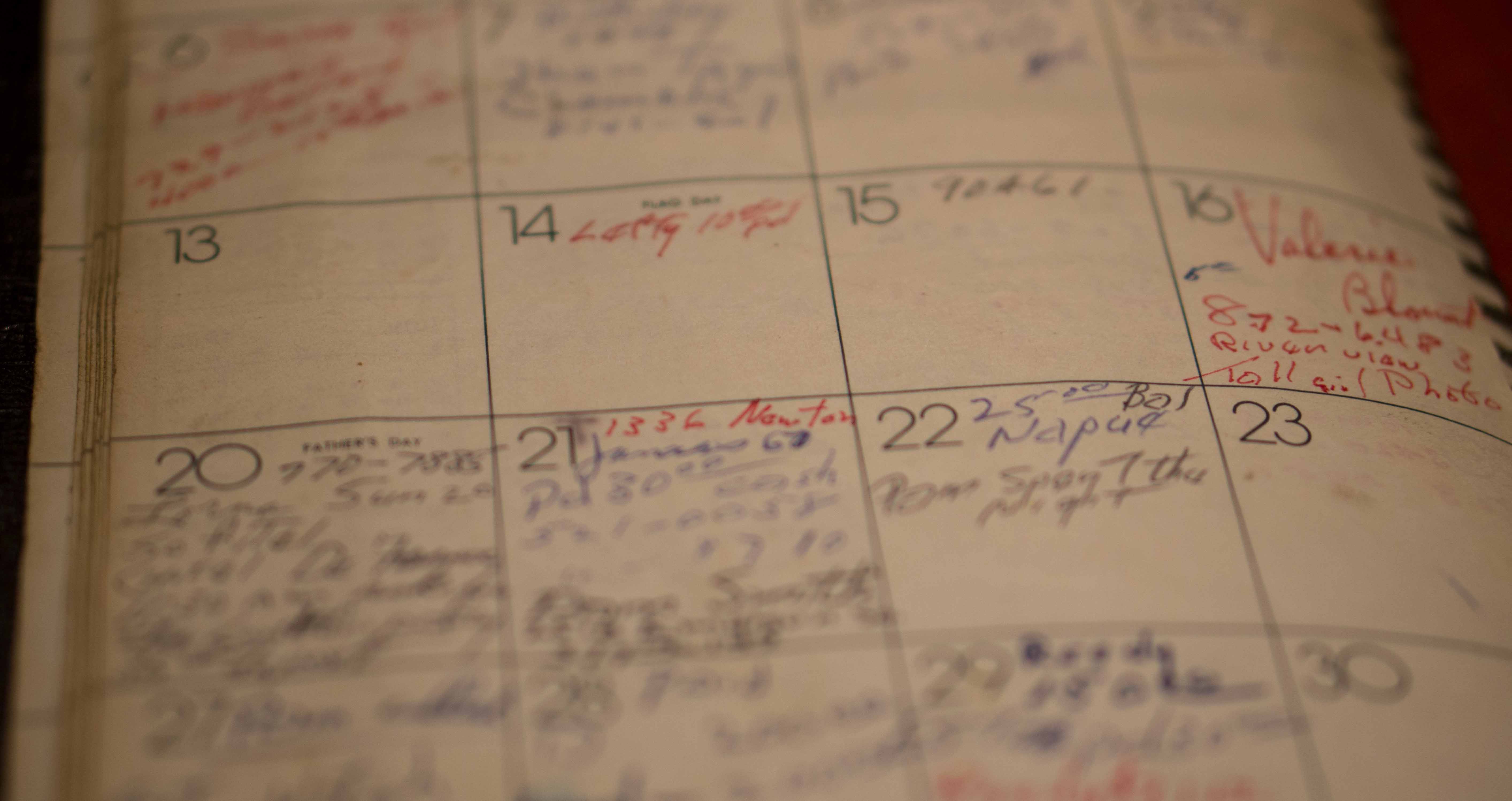
Go see his collection of Minneapolis-Saint Paul photos at the Minnesota History Center.
More on numbers here.
###
Image credit: Kirk Livingston
Collaboration in Real Life: The Book Cover
Self-promotion is stinky poop
This week I spoke with a copywriter who writes plays and novels on the side. But he doesn’t work too hard on promoting his finished bits of literature. He prefers to stick to the writing part (who doesn’t?). This copywriter is not atypical on two counts:
- If you don’t need to get your message out (that is, move product to earn the feeble coin a book represents) you can let it languish.
- Copywriters are bad at self-promotion.

Roger’s cover
Not all copywriters, and probably not the copywriter I spoke with. But many are bad at self-promotion. It’s funny because while copywriters have insight into the psychology of business problems and use divergent thinking to solve those problems, they have a hard time turning that insight onto their own projects.
And that is true for all of us.
It’s not just because self-promotion has the feeling of swimming in a septic tank. It is also because we are truly blinded to the very things we are most passionate about. We’re typically deep inside those passions, and we have no clue what it all looks like from the outside. That’s why we need to tell others and get the outside insight that telling affords.
A client and friend provided a quick insight that has proved far better than anything this insider could produce. My first book, ListenTalk: When Conversation is an Act of God, is on its way through this marathon called publishing. Encapsulating the message into an image and a few words has proved daunting to me. Roger’s cover, with the fire, well, most people love it better than my covers. I’m not bitter, I’m grateful: grateful to have people around who can offer very tangible insights. These insights regularly, well, cover my arse. And I’ve always maintained that I am neither a designer nor photographer.
I thank God for people with such quick insight.

My covers.
A word about ListenTalk versus “conversation is an engine”
If you’ve dropped by this blog, you may have noticed I hit on different topics as they relate to conversation. Business and the business of writing, and the business of how faith and craft and work fit together are key drivers for me as I write.
My first ongoing project along these lines was to develop a sort of practical theology of persuasion—something I was desperate to understand as a copywriter who regularly trusts in God. That is what ListenTalk represents. It takes some topics from “conversation is an engine” but develops them specifically for people of faith. Here’s the draft copy from the back cover:
“Talk is cheap.”
So we say, but deep down we know different.
We know talk is a potent engine for war and love and all that lies between. Talk is our entertainment and our tool for exploring every relationship. Talk is an economic engine. Lives change—culture changes—when we talk together. In many ways, the future is patterned after our speech.
And this: even God responds to talk.
Yet we pay scarce attention to the working parts of conversation: the listening, the words used, and the intent behind the words. And we hardly think about God’s purpose in speaking, and how God speaks today with fierce desire for reunion—and how that desire motivates all God says and does.
Every day, people work out God’s desire in thousands of ordinary ways. Not so much through sermons and high-minded programs as through the ordinary conversations among themselves.
ListenTalk will help you to re-think what God accomplishes in even your smallest, most ordinary conversations.
“ListenTalk is a wonderful book with deep wisdom, practical advice, and heart-warming encouragement. Read it, converse with it, and share it with others.” –Dr. Quentin Schultze, Calvin College
“In our contemporary world where words and ideas seem to divide far more than they unite, ListenTalk provides an antidote of balance and sanity. ListenTalk reminds us of a power that can lead to greater understanding, intimacy, collaboration, and even personal transformation…culminating in deepening our life with God.” –Judith Hougen, University of Northwestern—St. Paul
Hey—wait a second. You could buy ListenTalk!
###
Image credit: Kirk Livingston
Are Doctors “Ethically Obligated” to Tweet?
No.
Although Wendy Sue Swanson, MD (@SeattleMamaDoc) feels that way about her social media presence (as demonstrated in this clip).
There is one piece of the Hippocratic Oath that calls for casting a wider net in “all my acquirements, instructions, and whatever I know” to those within the physician’s circle. The original oath also called all gods and goddesses to witness and observe, but these days the NSA serves that function (despite HIPAA).
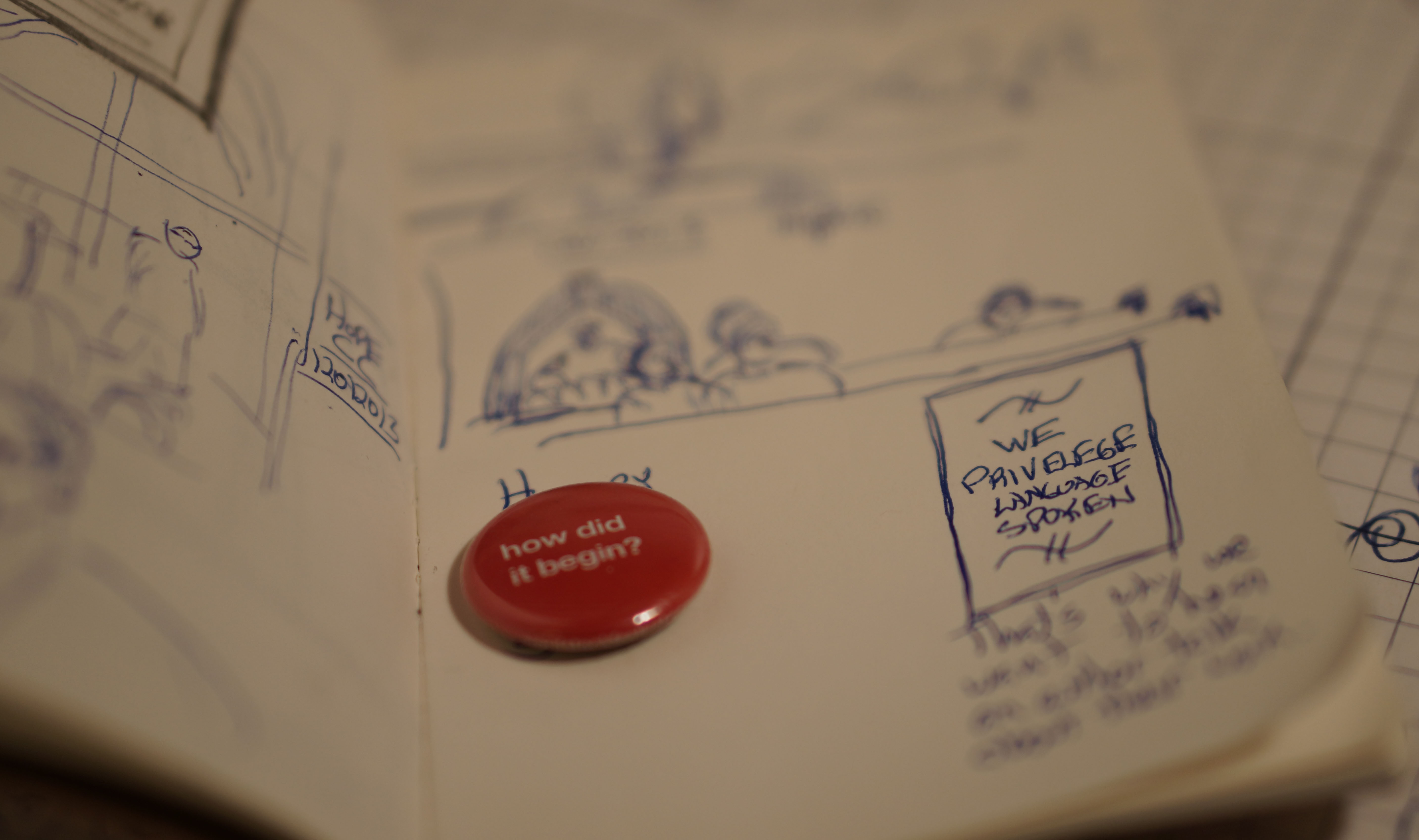
Yesterday’s MedAxiom post by Ginger Biesbrock (“Has anyone seen my Dictaphone?”) makes the excellent point that any new technology adopted should make taking care of patients easier. New technology should not get in the way of treatment, it should not be another hurdle to jump. Instead, technology should simplify meeting the patient’s need. That’s why I’m pleased with the movement to hire medical scribes to complete the electronic medical records in the moment—freeing doctors to treat patients versus keyboarding.
Dr. Swanson’s strong feeling about casting a wider net is likely shared by many if not most physicians. And it just so happens that putting correct information out where regular folks might read it may also be a way to grow your practice—which has been the capitalistic promise of social media from day one.
Sure: doctors are busy. But I cannot help but wonder if more and more physicians will make outward communication (blogging, tweeting, connecting) a priority as they work to free themselves from some routine tasks.
Many already are.
###
Image credit: Kirk Livingston
Should a Doctor Blog?
Only if they want to grow their practice. Or connect with other physicians. Or with patients. Or provide thought-leadership.
Greg Matthews, author of Missing the Forest for the Trees, has been studying the online presence of physicians for years. He’s found that the credibility of their position and the connections within that position can translate to large and devoted followings today.
But all that was counter-intuitive in 2007.
Back when Mr. Matthews was formulating his questions about physicians online.

Back then he was sure—we all were sure—that talking about health information online would never fly. It’s just too personal. What kind of nut would diagnose and prescribe in public/online?
Plus, well, HIPAA.
But some physicians found a way to talk with regular folks (that is, us non-experts who live on the web) about pressing topics. Diagnosis and prescribing on the web was a non-starter, but presenting topics in a way that made sense to regular people did happen. And as we all took to the web to sort our maladies, these authoritative, personal voices became trusted sources of information.
According to Mr. Matthews, today 61% of physicians access social media weekly, 5000 physicians post daily to blogs and Twitter, and 50 physicians are followed each by more than 500 other physicians. Some physicians even feel “ethically obligated” to share on the web. Download Mr. Matthews PDF for more stats.
In this blog (conversation is an engine) we talk about conversation. We’ve noted how conversation is a two-way street: not just in words exchanged, but actually causing conversation partners to go and do different stuff. We leave our best conversations changed and with new resolve for the most important things facing us. It’s a sort of speech-act theory for anyone willing to take a dumb-sketch approach to life.
And even physicians and even patients can gain from this. And what they both gain is far more than mere information.
It makes me wonder what paths might open for collaborative conversations in lots of different work settings.
###

 conversation is an engine