A Tale of Two Meetings
Collaboration in person and on paper
Meeting #1: The entire department was gathered at tables shaped into a horseshoe, to facilitate discussion. Twenty to thirty of us waiting for the director to come in and explain his vision. And his vision was that the creatives needed to become analysts. Art directors, designers, copywriters, production personnel—everyone an analyst. Everyone focused on metrics. Give away the creative to outside agencies.
The director talked for 30 minutes and then asked for questions.
Not a single question.
Meeting #2: The entire group was gathered at tables shaped into a horseshoe, to facilitate discussion. Twenty to thirty of us waiting for a series of speakers to come in and explain their vision. Speaker after speaker explained their vision, the metrics they used to decode that vision, and the outcomes they experienced.
Each of the seven speakers spoke for a few minutes and then paused and waited for responses. Then they spoke again and waited. The entire group learned quickly that each speaker truly sought interaction.
Every pause elicited questions. Tangents were followed despite time constraints. After all, the point was the responses.

In my social media marketing class we spend time talking about how to get interaction and comments from the communities we are building. At first it is discouraging for the students, their work feels like shouting treasured thoughts into a hillbilly hollering convention. Nearly impossible to be heard.
But gradually a few people show up at each student’s attempts. And we learned to treat comments from these few with great care: responding immediately. Thanking those who show up for reading. Engaging the thoughts of the people who showed up. Then the students learned to go visit others building similar communities and listen and comment. And soon they found their community growing (in the social world, people follow back those who show up). And they learned not just to put questions at the end of diatribe but to design pauses in the middle of their thoughts so people could respond. And they learned to break up a lecture into a series of engaging posts. And they learned to let their thoughts be shaped by what the people who showed up said.
Those two meetings had key differences: In Meeting #1 each audience member reported to the director so there was very little debate. Debate in that particular firm seemed not too far from mutiny. But in Meeting #2 (same company, oddly enough), the audience was composed of potential customers. And as each speaker spoke, they did their best work with verbal and body language to engage the audience. And each of the potential customers spoke freely, calling “BS” when they heard it, disagreeing vocally, undaunted by executive titles.
Our verbal collaborations point to our literate collaborations. Pauses in copy, short copy, even shorter copy, copy that talks about what people are interested in—all of these allow collaboration. But the key is how you think about the audience: do you really want their response? People are not stupid: they know when someone is lecturing. And lecturing is a sure-fire way to shut down collaboration.
###
Image credit: Kirk Livingston
Why Medical Device Twitter Feeds are Boring
It’s because monologue can be enforced. Dialogue cannot.
Twitter is all about the quick, personality-laden human voice. Twitter carries truncated thoughts by design—more like a human talk—one thought at a time.
Official medical device Twitter feeds are boring because the communicators behind those feeds are trussed and bound by legal and regulatory protocols. The feeds are boring because competing lawyers have police scanner-like attention for claims that fall outside of the FDA-vetted matrix. And those feeds are also boring because many of us are not in chronic pain, or worried about going through airport security with a defibrillator or insulin pump or mechanical heart valve. If we were, we might get those medical device tweets instantly on our smartphones and find them very interesting indeed.
I’m glad those tweets are boring. I hope they continue to bore many of us because we don’t need the product.
How could medical device tweets be more interesting? Clearly the human voice must be involved. When Omar Ishrak tweets (@MedtronicCEO), the tweets are at times more personal, like when his daughter runs a marathon:
But generally medical device tweets lack the sound of the human voice. They tend to sound like monologue-rich press releases:
https://twitter.com/MDT_Cardiac/status/518422795077042177
Some companies don’t even try:

Ok: SJM does tweet over here: https://twitter.com/SJM_Media
Granted, medical device firms will never sass it up like DiGiorno pizza
But surely as we move forward into deepening inter-connections between professionals and regular humans, every company must find a way to sound human or risk not being heard.
Maybe that means special release from the legal/regulatory straightjackets for certain chatty employee/storytellers. Let them tell their stories in ways that are unique to them while continually repeating “My Opinion Only.” Can medical device firms institute official unofficial-storytellers? People who claim nothing but that they work at the place and this is what they see?
That might result in fun tweets that gather an audience and endear a company to a larger public.
The era of siloed communication is fading quickly in the rear-view mirror.
###
Ditch Your Job to Woo Collaboration
Sure it’s a mess. But it’s a glorious mess.
Focused, nose-to-grindstone is certainly simpler. Get it done so you can go home on time and watch TV.
Bring another person into your process and suddenly things get messy. You find yourself explaining rather than doing. And explanation is a time-sink—just like small-talk. Plus collaboration is not guaranteed: will you have to redo everything your collaborator attempted?
This is why students groan audibly when I introduce a group project in a writing class. Especially when their grade depends on successful interaction. They hate it hate it hate it.
And that is too bad. I’ve often wondered why we don’t teach collaboration alongside math and biology and writing and literature in grade school. But it seems collaboration is a thing you are primed for later in life, when you start to see you don’t have all the answers. It is a bent that takes root after we have an experience or two of utter delight at someone else’s contribution.
Wooing collaboration starts with shop talk: where you step out of your job’s established tracks and ask others about their experience. How do they do what they do? What do they delight in? Where does meaning enter into their work? Those answers play into our daily conversations. This is where we learn the eccentricities of our colleagues and see how they bring their diverse knowledge and experience to bear on the work. This is where we learn what it means to be alongside someone.
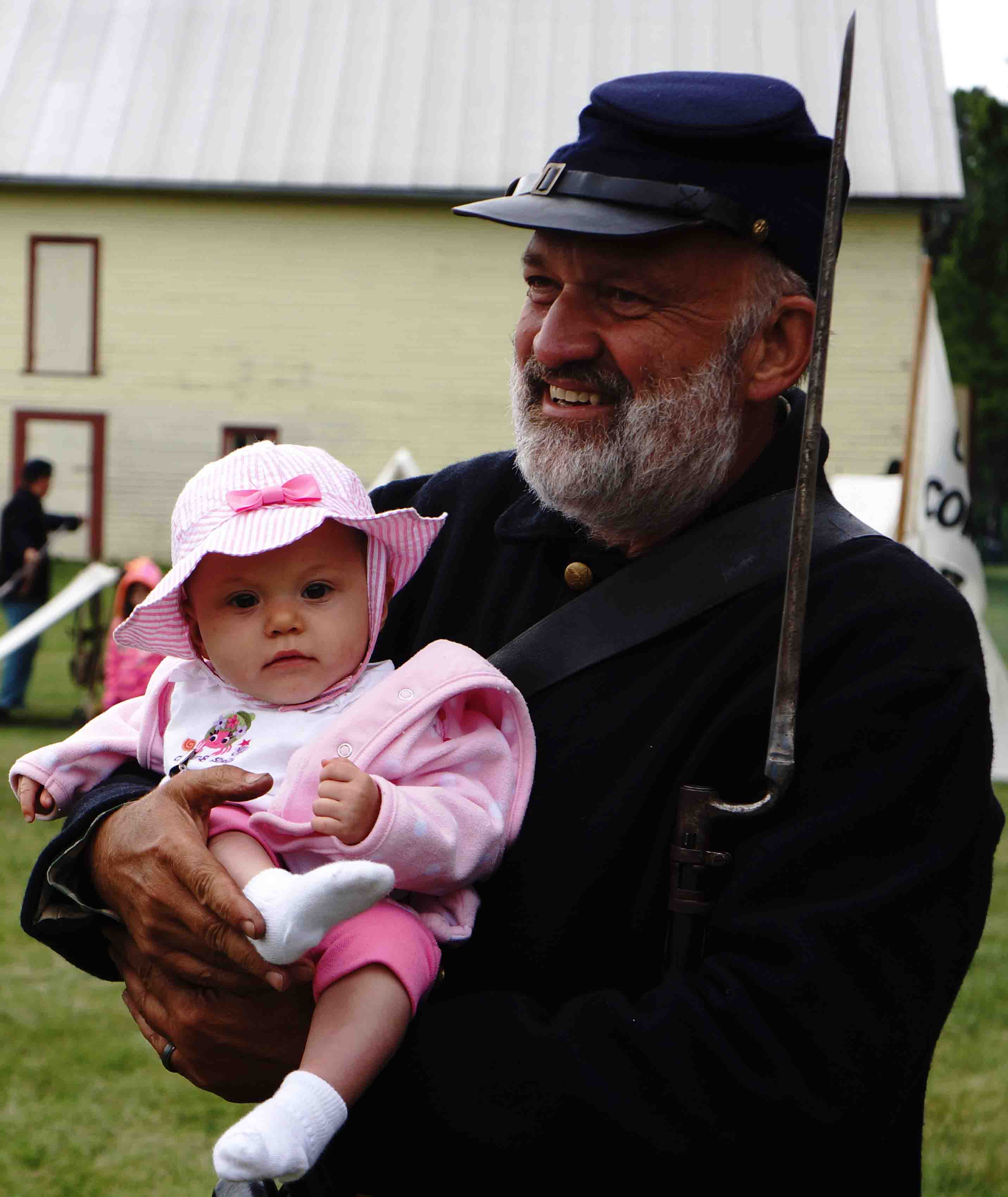
Just doing your job is isolating—especially when you think you have mastered it and have nothing left to learn. Inviting others into the thinking behind the job is incorporating. Yes it takes time and can be a mess, but in the end it is our connections that pull us forward.
How do you incorporate others into your work?
###
Image credit: Kirk Livingston
Bill Moyers: Serving “News” like the Butler Serves Tea on Downton Abbey
Do Not: Do Not Disturb the Master Class
All of us can stand a bit of disruption from time to time.
David Uberti wrote recently in the Columbia Journalism Review about PBS pulling ads from Harper’s Magazine as retribution for an article critical of PBS. PBS exists as a non-commercial, educational media channel. But the critical Harper’s article by Eugenia Williamson pointed out
And so, a fit of ad-pulling ensued. But it was this candid, PBS-critical quote from the patron saint of public broadcasting that caught my ear:

Tea is served at the Pittock Mansion
Wherever you land in your organization, there is some grand narrative at work that guides all involved. That grand narrative is often a good thing and useful. It is often laden with meaning that helps us do our jobs. But it is not a perfect narrative—never is—and parts call out to be challenged by practitioners.
After all, it is the disruptive conversations that lodge in our brain pans. Those conversations we cannot forget sometimes actually open our clam shell brains to something new. And that is the way of both innovation and truth-telling.
Many of us—especially the people-pleasers among us—are careful to assemble conversations that do not disturb the people around us. I am guilty of this. But truth-telling must necessarily veer from the party line.
If only because sometimes the party line veers from truth.
###
Image credit: Kirk Livingston
Square Lake: An Abundance of Divers
A Bounty of Lakes to Explore–Even in October

Square Lake is a diving destination because of the clear water. That water is also very cold.
More on “bountiful” here.
###
Rob Moses & the People of Calgary
“Have you ever ridden a horse?”
If you’ve had the pleasure of going to Calgary you’ll know it is truly a western city. Situated not far from Banff and Jasper National Parks, it is also quite spectacular. And rich, fueled by oil and gas money flowing into the city.
Rob Moses is a photographer based in Calgary. I follow his blog because of the extraordinary portraits he takes of complete strangers. His method is to approach someone, have a conversation, and shoot the photo. The endearing thing about this process is the conversation he has. He records it verbatim —or so it seems. His written text includes nervous laughter, indecision, and ricocheting answers. His recorded conversations sound like real conversations to my ear.

Stopping complete strangers is not easy in the best of situations. Asking to take their picture sounds like a scam, but Mr. Moses pulls it off with what seems to be a fair bit of joy. And he always asks if his subject has ridden a horse—critical information for Calgarians, evidently.
The optimism of sharing his talent with photography is not lost on me here. It’s kind of an amazing way to self-promote and, well, bless people. And for those lucky enough to find their way into his lens, they come away with a phenomenal view of themselves. Scroll through his blog and be amazed at the composition, lighting and the ease written on the faces of his subjects. If you’ve ever asked to take someone’s photo, you know it typically ends badly. Unless you are Rob Moses.
May there be more of his talented tribe.
###
Image Credit: Rob Moses
How to Make Your Message Permanent
A tip from a prehistoric consultant
First: Forget about it. Nothing is permanent—at least not in the way advertising mavens augur.
Second: OK—if you insist—make your message about someone else. Make your message give back more than it takes in. “GE” branded on a rock would never last. Even the Apple logo will be chiseled away by Microsoft rebels. But a man with jointed wings, well, who can resist that story?
![Who can resist the story about the “Thunder Being”?]](https://conversationisanengine.space/wp-content/uploads/2014/10/birdman-2-10022014.jpg)
Who can resist the story about the “Thunder Being”?
Prehistoric peoples stopped by these ancient rocks to tell their version of the human condition. So they carved/picked/incised/abraded their messages into the exposed Sioux quartzite outside Comfrey, Minnesota long before there was a Comfrey or a Minnesota or a U.S. of A. Maybe before the pyramids and Stonehenge. Ancients left messages here to direct and entertain passers-by.
Why make your message permanent? We understand marketing communications for companies—it’s about keeping the wheels of commerce turning. But you personally—what messages do you have to communicate? And why would you make them permanent? I argue that your take on the human condition comes out in the way you do your work, the way you interact with family, friends, colleagues, and even the way you see/refuse to see the homeless guy at the end of the exit ramp. And all these daily interactions amount to a carving and incising that is far more permanent than any of us imagine.

The Jeffers Petroglyphs tell a story that became a destination.
Our conversations have an enormous (cumulative) effect on the people around us. An effect that may move through generations.
What exactly is your message, anyway?
###
Image credit: Kirk Livingston
How Buzzwords Prey on the Unsuspecting (DGtC#24)
Speak up to reclaim your humanity
They’re there. Circling overhead in the hallways between C-suites.
They move in a dense cloud between boardrooms and conference rooms.
They are those words of the moment that seem scalpel-sharp. But when you stop to define them, meaning vanishes. These are the words Dilbert makes fun of most every day.
That is the way of buzzwords and lingo of the moment. Whether you are a business or a church (wait—what’s the difference?) or a university or a think tank: you have a set of words insiders use to show they are insiders. And especially in our early meetings with new clients or the new VP, we trot out these words to show we really, frankly, know our stuff.
The problem with buzzwords is how easily they come to mind. Just like any cliché, buzzwords pop to mind free of conscious thought. And to your conversation partner those words give the appearance of a genuine thoughtful reaction. But any SEO specialist will tell you that tossing a buzzword into a headline ups your clicks. Same with conversations: say the thing you heard the CEO say and, presto, you are in the club.
Do buzzwords make you less human? No. They just make you sound robotic.

Please point us back toward connection
Frequent talks with clients move toward “dumbing-down” versus “simplifying.” Those are not equivalent concepts. Dumbing-down takes out gradation and difference and nuance to present a black-and-white version of something. Simplifying hints at gradation and difference and nuance to make a piece of the complex easier to grasp. Mark Twain simplified complex stuff and generations talked about it.
Dumbing-down does not respect the audience. Simplifying recognizes that smart people are smart in different disciplines. And smart people can understand all sorts of stuff.
Buzzwords are a kind of dumbing-down that takes concepts off the table by hinting that we all know this so it is beyond discussion. Because of buzzwords many useful conversations never happen.
What if we consciously worked toward vulnerability in our business interactions? It’s scary, this notion of revealing you have no clue what the boss just said, but could she explain it again using words like other humans use?
Be the thorn in the side today, the vulnerable fool who insists on clarity.
It’s a way of ordering the chaos of your workplace.
###
Image credit: Kirk Livingston
My tree dances like no one is watching.
This year I caught it. One day at a time.
###
Image credit: Kirk Livingston
Audio credit: Cat Stevens, Oh Very Young
I’ve Already Forgotten Your Main Course
Savory sides stay in memory
Your big-name plenary speaker is the draw to your conference—certainly. But will she deliver the memorable moments your participants will take away and actually use?
Probably not.
What’s more likely is that the interactions your attendees have with new acquaintances from neighboring departments/cities/industries will leave a more durable impression. These are the folks that swap stories and shop talk and contacts. Street-level talk makes an impression that is actionable because the stories relate to our everyday experience.
A very smart client did this very thing recently. My client invited rising industry stars to be part of a conversation round-table. My client scheduled their executives to speak—but not to dominate with sermons and monologues. Instead—and this is the bit of genius I most appreciated—the executive talks were conversation-starters. And these executives actively shared their authority out. That is, they invited participation during their allotted time.

Do your thoughts invite listeners in?
And, most amazing, they paused to wait for responses.
Responses came. Too many responses which all took too much time. Time slots overran. But that was the whole point: the conversation. And true to form, sparks of insight came as the rising industry stars reacted. I left with pages of notes from the conversations and I’m certain the participants left with brand new knowledge lodged in their brain pans. That new knowledge came not because the speakers’ messages were so good, but because the participants actively connected those messages with others and their own experiences.

May it ever be so with all professors and pastors and executives and professional pulpiteers: let them stay open for the conversation to follow.
###
Image credit: Kirk Livingston

 conversation is an engine