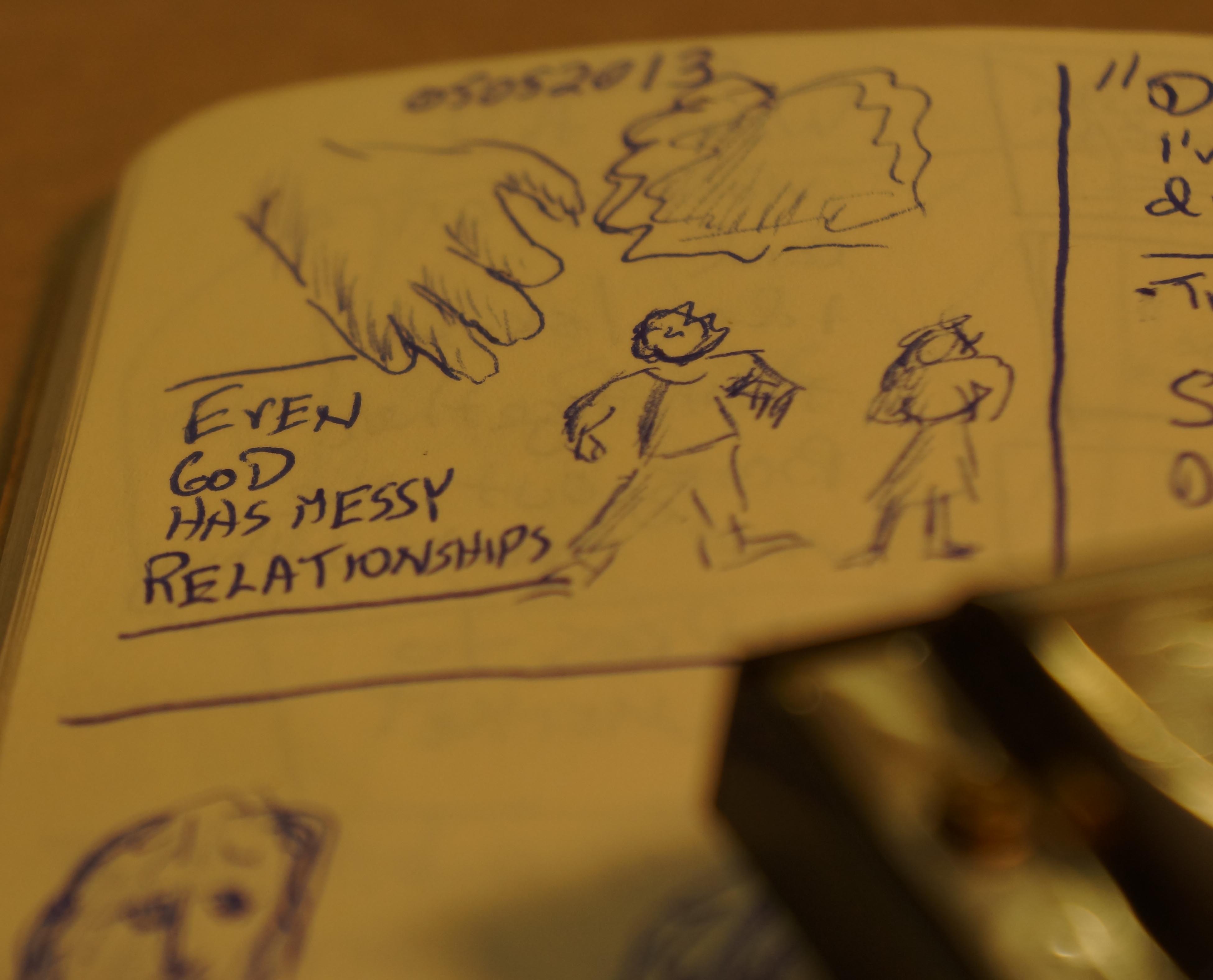
JC Penney and Advertising for the Brave
Honesty as a marketing technique? Nah—that’ll never catch on.
They say desperate times call for desperate measures. That might explain why when some wiseacre proposed honesty as a communication tool, the JC Penney marketing honchos bit.
The result is memorable.
###
Via AdFreak

Writing for Pretty Not Petty
Seth Godin: Designing Our Ideas to be Spread
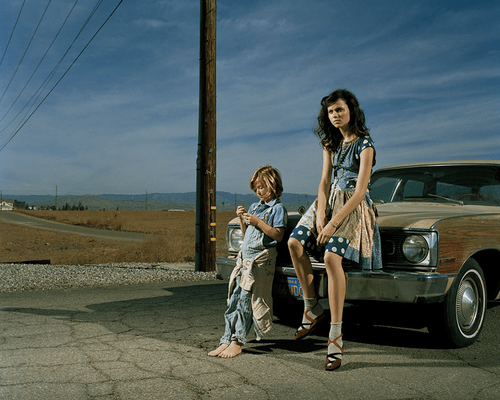 I’ve always been utilitarian–not overly concerned with fashion. That’s not a boast, it’s a lament: I confess to being more preoccupied with ideas than the various forms atoms take. But I’m coming around. I’m starting to think more about what is sharable. Pretty things matter because pretty things move around in our culture: photos, design, elegantly packaged ideas. Unexpected videos. Things that are well-lit or unusual. Baubles attract and hold the attention of babies and today’s adults alike. Visual simplicity and elegance are part of what helps an idea stick.
This is sort of a big deal. It is something we know for others but not so much for ourselves. Because we think our own ideas are inherently interesting. Seth Godin talked about this in his post yesterday and the day before. He talked about doing the work whether or not you get picked for fame. And making things sharable. Those posts are worth reading.
If I have some message to deliver, just plopping out the linear logic on paper pulls in only the most interested and committed insiders. Everyone else keeps walking thinking “nothing to see here.” Old school marketing was all about setting features into bullets for the interested reader to scan. But the interested reader was buried in the local cemetery years ago: only distracted readers walk the earth today. I’ve said over and again that blocks of copy scare people away—even people who self-identify as readers. Too much to read. Too slow.
But an image…now that is sharable. An image intrigues in a very different way.
So—today’s writer must sort out how to engage with a visual generation. Sure, we’ve known this for forever and those who have taken it to heart for the messages they need to deliver are the ones being heard today. One of our daughters feels that getting rid of the ugly in the world is part of her life work. As a writer I’m thinking about adopting that stance—I’m becoming more intent on locating images and simple analogies to help me tell the deep story that I need to tell.
###
Day Jobs of the Poets
What’s that? You plan on writing poetry for a living?

###
Image credit: Grant Snider via this isn’t happiness
The Riddle of the Difficult Person
Run Away Vs. Run Toward
My instinct says run. Or at least avoid. Either way, get out of the line of fire.
And my instinctual response to the difficult client/boss/colleague/family member is completely wrong. Entirely and utterly misguided. That is because avoiding the difficult person gives them a kind of power over you that will come to no good. Not only is avoiding the difficult person impossible (for such people will always and forever show up in your life), it is not smart. There is something you are to learn from this difficult person. Some hard life-lesson.
One of the ancients spoke of iron sharpening iron and his words describe precisely the mechanism of action with the difficult person. Something about this person grates on us: she is too bossy. He is too passive. He only thinks of himself. Everyone knows she is mentally unstable.
To be present with the difficult person we must step out of our usual ways and do something different. Perhaps we start by biting back the caustic retort. Maybe we stand up and against the sudden wrath which is our difficult person’s typical communication pattern. Perhaps we need to force a clear “Yes” or “No” from the mouth of our difficult person. Perhaps we offer the solution to them in the form of a question so they can take credit for the idea.
 We all have these people in our lives and there are as many different types as shades on the color wheel. That’s because our interactions are dynamic and each of us constantly responds to a bevy of moment-by-moment inputs and impulses.
So take heart: there is some opportunity to move forward in the difficult encounters that hang like a cloud around this person. Learning to say no. Learning to clarify. Learning to probe for what is bothering this person. Learning to probe and learn from our own responses. These are all life lessons that sometimes come at a dear price.
And there is more: there may be something deeper going on. When you choose to show up with the difficult person, it’s with your physical and mental presence. And your emotional presence—all these can help inform your response to the difficult person. And one more: your spiritual presence. No, I’m getting all religious here, but wouldn’t you agree that some of the people you meet during the day need far more than you could ever provide?
Sometimes running toward the difficult person looks like an internal prayer offered to God on behalf of a conversation that is about to happen.
###
Image credit: red-lipstick via 2headedsnake, Wikipedia
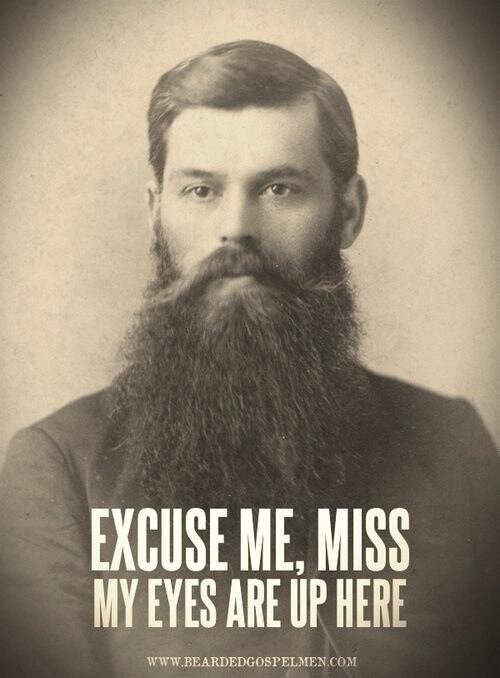
Philosophers Make Uncomfortable Pastors
Sermons built on questions only inflame the faithful
 It’s the philosopher’s job to ask uncomfortable questions. They don’t take ideology as a given. They question ideology—that is forever the philosophical task. Some philosophers reading this would say “Yes, and what do you mean by ‘pastor’ and who/what is ‘God’”? That’s fair and a reasonable line of questioning. Certainly worth examining.
But say a philosopher has satisfied herself there is a God. And say that philosopher has a commitment to the God revealed in the Bible (yes there are such people). Can she pastor others? Can he serve as a shepherd? Can she speak sermons that have questions rather than answers?
No. At least not to our typical congregations. People come to church for comfort and to be told they are going the right direction. To offer the food of questions is to deny parishioners the happy holy feeling they paid for when the offering plate passed by.
But honestly, can a pastor be anything less than a philosopher? Because the claims of Jesus (to start there, for instance) are so wildly outlandish as to call into question the threads of daily existence. For instance, this notion of turning the other cheek to the one who just slapped you—it’s completely nutty stuff. Unless it is actually meant to be worked out in daily life. Unless it says something crazy deep about each and every interaction we have. To treat Jesus’ words as ideology only—as some exalted religious state—and to not examine them further in the crucible of daily life is step forward with 75% of your brain shut off.
And that’s no good. That’s no way to live.
It’s also true that most philosophers don’t abide the preacher’s art of packaging things in tidy simple packages that are easily understood. Questions don’t often fit those boxes: they bump against corners and lids with their labored back story and brief histories of how others have asked them. That’s tedious stuff that rarely fits into three alliterative points.
Which is not to say philosophers should not pay attention to packing their thoughts so they become mind-ready. They should and many do. But philosophers mostly cannot escape the orbit of the questions themselves.
I think philosophers don’t make good pastors. But I hope to stumble on such a being at some point in my existence.
###
Image credit: 4tones via 2headedsnake
Glen Stubbe: “I did this thing. Let me show you.” (Shop Talk #7)
When Photojournalists Gather: MNPA Shop Talk
I’d like to see more. And better.
Photography, like sketching, is another way of interacting with what is right before us. Both photography and sketching present opportunities to see differently—both are a kind of active seeing. As a writer, I have an ongoing project of learning to see more and better and differently. Seeing better helps me write better.

Glen Stubbe Photography [@gspphoto]
That desire prompted me to show up at the Minnesota News Photographers Association last Saturday at Murphy Hall at the University of Minnesota. I wanted to hear how news photographers talked about—and thought about—their work.
What I heard was talk of technique: details about exposure and how to layer different exposures in a single photo, when to wait and when to move when stalking the photo they have already seen in their mind. Several times I heard how photographs were once merely an accompaniment to the article and how that is quickly changing. Glen Stubbe cited an example of his photo of Michelle Bachman escaping a pointed question went on to start a national story thread.
The photographers were exactly right about this last point: as we move to a post-literate culture, visual content moves to the primary spot. How long do stories stick around in any media you consume without some compelling visual anchor? Not long. I’ve often thought readers either fear blocks of copy or simply find them off-putting. But this is nothing new, we’ve know this for some time. As a writer, visual storytelling is a must.
The photojournalists talked about the increasing role of social media and the blurred lines between reporter and photographer. But three things stood out from the panel between Ben Garvin (Pioneer Press), Glen Stubbe (StarTribune) and Jeffrey Thompson (MPR):
- “Tweet Every Assignment.” Ben Garvin said this and I think it could be true for anyone finding their way into social media. Whatever your work (or vocation or avocation), those things that are top of mind are the very things of (potential) interest to others. The premium here is on immediacy.
- Develop and Feed a Personal Vision. There are some things (photos, thoughts, words, quotes) that land outside of our daily work. There is a place for that top-of-mind content—a public place. Ben Garvin feeds that vision at his blog. For Glen Stubbe , it’s his Instagram account. I believe this personal vision is the necessary counterweight to daily work. My respect for the people I work with and read grows as I see the parameters of their thinking outside their primary work.
- Share what is remarkable. It was Glen Stubbe’s quote that helped me see the emotive content that makes something remarkable—a question I’ve wondered for some time. Something is remarkable when it makes us step out of our routine and remark, out loud, to someone else. To Mr. Stubbe, it was photographs he just had to share. The making and sharing of the photos remains a prime driver for him. What amazes us is the very stuff we share with our spouse, our kids, our friends, total strangers. It is good when we can capture what amazes us.

Ben Garvin [@bengarvin]
###
Image credit: Glen Stubbe, Ben Garvin

 conversation is an engine