Posts Tagged ‘dumb sketch’
Sometimes only a dumb sketch will do
Show. And (perhaps) tell.
My client has a subset of curious employees who love detail. They work with detail all day, design with deep specificity and get impatient with any glossed-over, highlights-only story. They want the details and don’t weave in that marketing hooey.
These curious employees regularly talk with their customers who also want detail. One curious employee told me a story about a conversation with a customer. The customer didn’t get how this product could work—the benefits simply did not register. Then the employee showed the customer a cut-away drawing. The customer did the mental work and could instantly see the benefits of the product. The customer needed to do the work himself, and that work opened the door to the benefits.
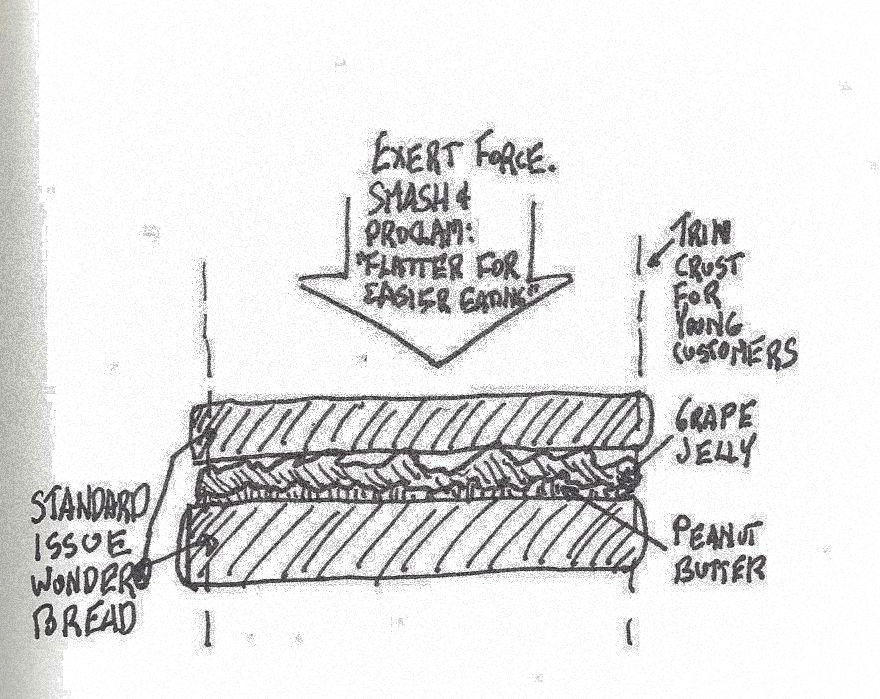
Flatter for easier eating
Moral: Images can go where words fear to tread.
###
Dumb sketch: Kirk Livingston
Catalyze This! (Dummy’s Guide to Conversation #26)
What to do: Engage colleagues or just put up with them?
 Between David Rock and David Bohm there is a lot of good advice about helping people have productive conversations. Rock’s “Quiet Leadership” is all about helping your friend find the answer she already knows, which is particularly useful for folks with leadership responsibilities. Bohm, on the other hand, was an omni-thinking physicist with deep curiosity about ordinary life connections. Bohm (and Rock, for that matter) are two of my conversational heroes.
Here’s Bohm on how it is that something new gets created between two people (italics added):
Consider a dialogue. In such a dialogue, when one person says something, the other person does not in general respond with exactly the same meaning as that seen by the first person. Rather, the meanings are only similar and not identical. Thus, when the second person replies, the first person sees a difference between what he meant to say and what the other person understood. On considering the difference, he may then be able to see something new, which is relevant both to his own views and to those of the other person. And so it can go back and forth, with the continual emergence of a new content. That is common to both participants. Thus, in a dialogue, each person does not attempt to make common certain ideas or items of information that are already known to him. Rather, it may be said that the two people are making something in common, i.e., creating something new together.
–David Bohm, On Dialogue (New York: Routledge, 1996)
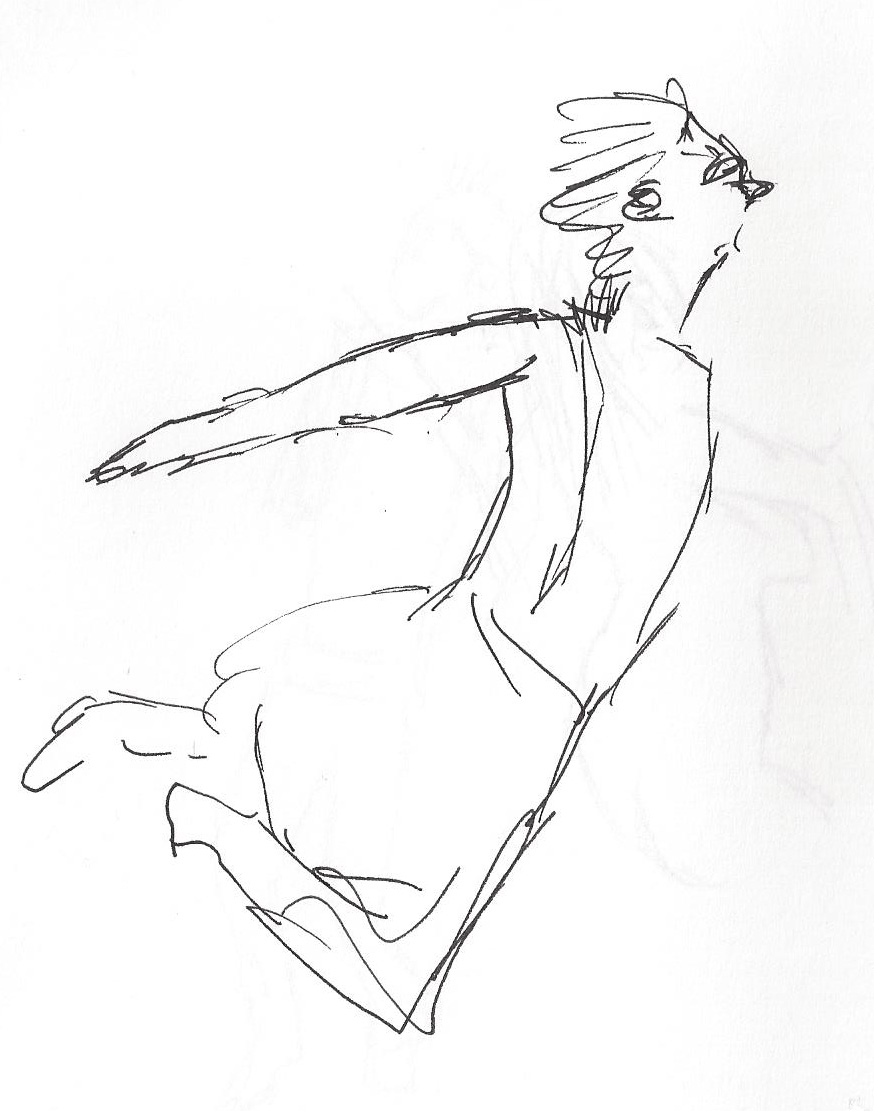
Every day affords some catalyzing opportunity, often hidden in a very ordinary exchange.
How will you leap in to catalyze today?
###
Dumb Sketch/Timed Gesture: Kirk Livingston
The World Needs You—Ms./Mr. Verbal Processor—Annoying As You Are
Silence can be nice sometimes, too
I know a few people who process life verbally. I’m not naming names, but to be with them is to sit before an open window through which you hear internal debates, sharp intakes of breath in response to a new stimulus, and general narration about turning left or standing up or “I think I’ll eat a jelly bean.”
People process life in all sorts of ways, of course. I don’t know what I think until I write it down. Others might sketch a response to a life event. Others process a life event over the course of a three-hour bicycle ride. James Thurber could hold 1000 words in his head as his eyesight failed, processing and editing in his brain-pan and seeming to spit out a fully-formed essay or story.
And some talk it out: declaring boldly and then backing up to change direction. And then boldly declaring the opposite. They settle on a position over time (often). Sometimes it’s fun to engage in their internal debate. Sometimes it is maddening to witness the ebb and flow.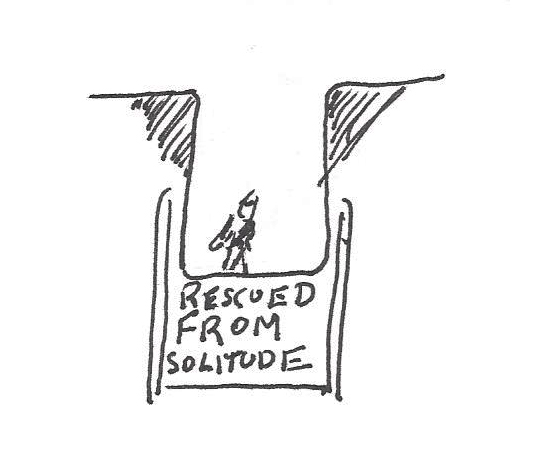
The ways we process life are not mutually exclusive, we might each do all of the above to figure out what is going on. It may take many conversations and many bike rides and many sketches to, say, process a larger than expected tax refund (ha), or a job loss. Or a death.
But the verbal processor plays a unique role among us. They are the ones who quickly spout a response to a question. They tend to be more comfortable in a group, or , perhaps this: for the groups they are comfortable in, they are even more verbal. The things they say become a sort of conversational/processing rudder against which we agree or disagree. But it is something nearly tangible (as tangible as words ever get) we can react to. The verbal processor does everyone a service by putting something out there for the rest of us to respond to. Their initial, fast response is a word that can rescue us from our solitude. Their quick work can help us avoid sitting passively while inside we are furiously yelling to get our heads around some new situation.
Kudos to the verbal processor.
Their out-flowing attempts to sort things pull the rest of us in as well.
###
Dumb sketch: Kirk Livingston
Let’s Talk: Will You Fly This Plane into a Mountain?
Listening-Rhetoric and Public Conversations Gone Private
To the casual news-reader, it’s looking more like the German copilot purposely flew into the side of a mountain. Given that, it’s not hard to imagine last week’s conversations between airline human resource vice-presidents and corporate lawyers:
- How do we screen for lethal depression?
- Let’s get serious about that two-people-in-the-cockpit rule.
- Is there an intention-detector we can employ before anyone—pilots included—steps into an airplane?
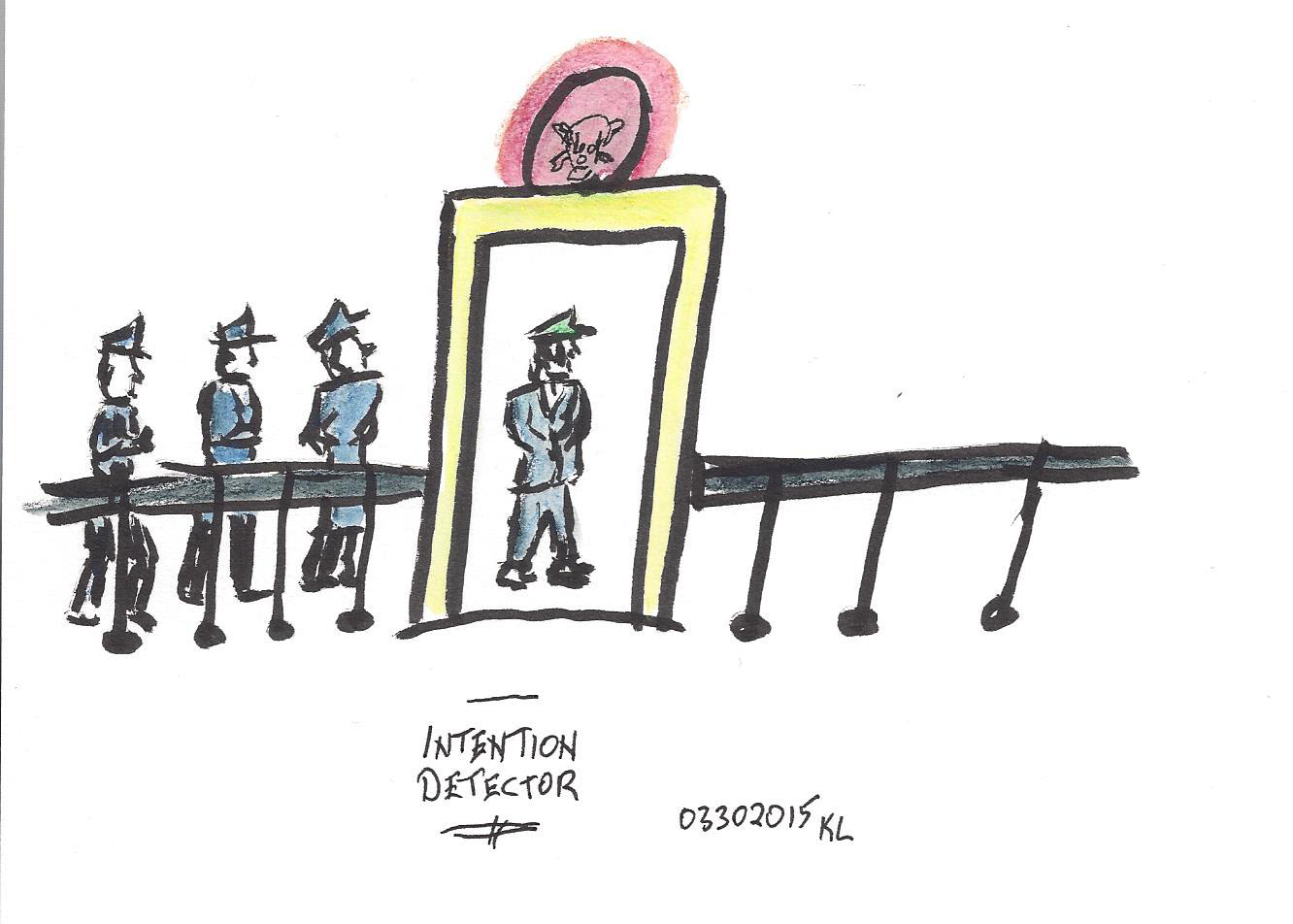
Intentions frame how we talk and how we listen. Wayne Booth posited that sometimes we come into a conversation with the intent to win—to bash our conversation partner into submission with whatever way we can. Sometimes we come with the intent to bargain, and so we are ready with a list of conciliations. Sometimes we come to listen and learn. Booth called that “listening-rhetoric” and recommended it as an antidote for stupidity, partisanship and as a way to “pursue truth behind our differences.”
People will speculate for a long time on the pilot’s intentions and actions—which we will never fully know. But as lawyers and HR talk I hope they will also examine the role of relationship-building conversation as an antidote to isolated suffering. Suffering that may become lethal.
###
Dumb Sketch: Kirk Livingston
What does fresh hope sound like for cynical colleagues? (How to Talk #3)
A credible word spoken boldly
Constant cynicism is a downward spiral that saps energy, like the dome light on all night—little by little wasting energy for no reason. Eventually the car will not start. Have a conversation with a cynic and the world looks a shade or two darker.
Offering fresh hope to a cynical colleague is not about squatting at the other end of the emotional spectrum, babbling like a Pollyanna. That is quickly seen as fanciful.

No.
Fresh hope is a word of the moment that is credible and believable. A word about where we are going or what we are doing that becomes meaningful. If not meaningful right now, meaningful later. Fresh hope has a way of stopping the cynic, if only momentarily. But even the cynic finds herself meditating on a word spoken yesterday or the day before. The cynic happily shoots down the platitude, but his trigger-finger falters at a contextual insight from a conscious person processing a shared experience.
Fresh hope requires a bit of courage. Cynicism and general world-weariness is always in style.
But hope? Not so much.
But what’s the point of conversation if not to speak up boldly about what is important?
###
Dumb sketch: Kirk Livingston
Can 78 bad sketches change your life?
Don’t stunt your growth by reaching for fame
It’s funny we gauge personal success by numbers of followers. It’s as if we’ve adopted the business transaction as a model for every area of our lives.
Business wants more eyeballs for more attention for more revenue for more profit. And that makes perfect sense for our business goals.
What’s problematic is when we confuse business with what humans need to move forward: Doing what attracts attention and gathers “Likes” is often very different from the stuff our souls need to grow.

Your business factory is not a solid model for personal growth
One thing I’m learning from the artists and photographers I’ve been interacting with at Dumb Sketch Daily (currently at bad drawing #78) is that while today’s drawing is (clearly) imperfect, there is always tomorrow’s drawing. And I know what I’ll do different in that drawing. I know I’ll try this technique, or that view, or this topic. I’ll do it again and create yet another imperfect representation of the world.
And that’s OK.
Because the pursuit is about learning to see, learning how to draw, learning how to write. Learning how to tell the truth. Learning how to interact with each other. Learning how to be human. Perhaps even learning how to interact with God.
The goal is not fame, unless you really want to turn this pursuit into a business. But learning itself—whether crowds acknowledge you or whether you plod silently and alone—learning is its own reward.
But I still argue your growth is also a benefit to the humans around you.
And while I don’t think 78 bad sketches have changed my life, I can say with certainty that I see things differently than I did 78 days ago.
###
Dumb Sketch: Kirk Livingston
When Buildings Dream
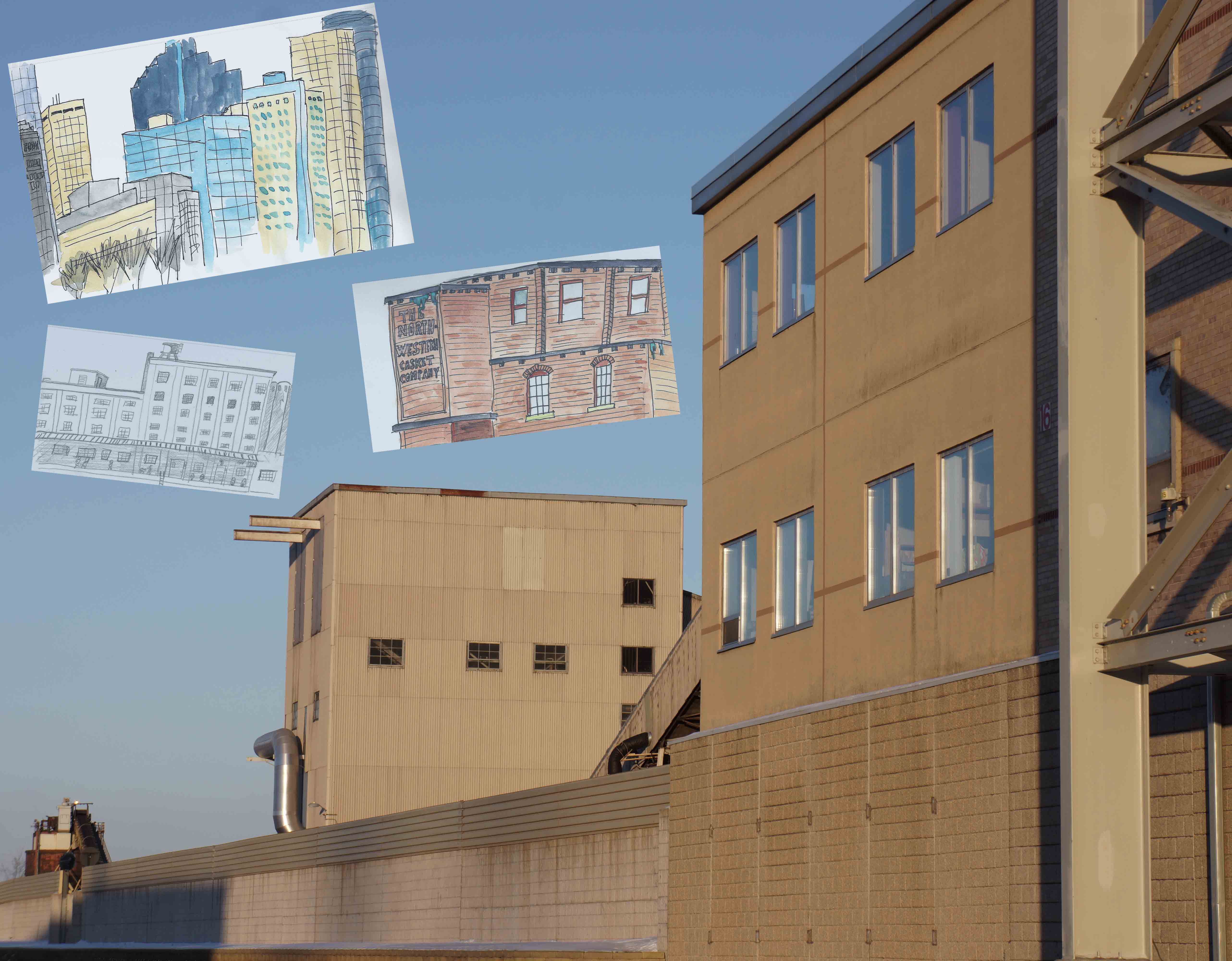
###
Image Credit: Kirk Livingston. Dumb Sketch Credit: Kirk Livingston
3 Lessons I Learned Hanging With 70 Artists
See. Do. Share.
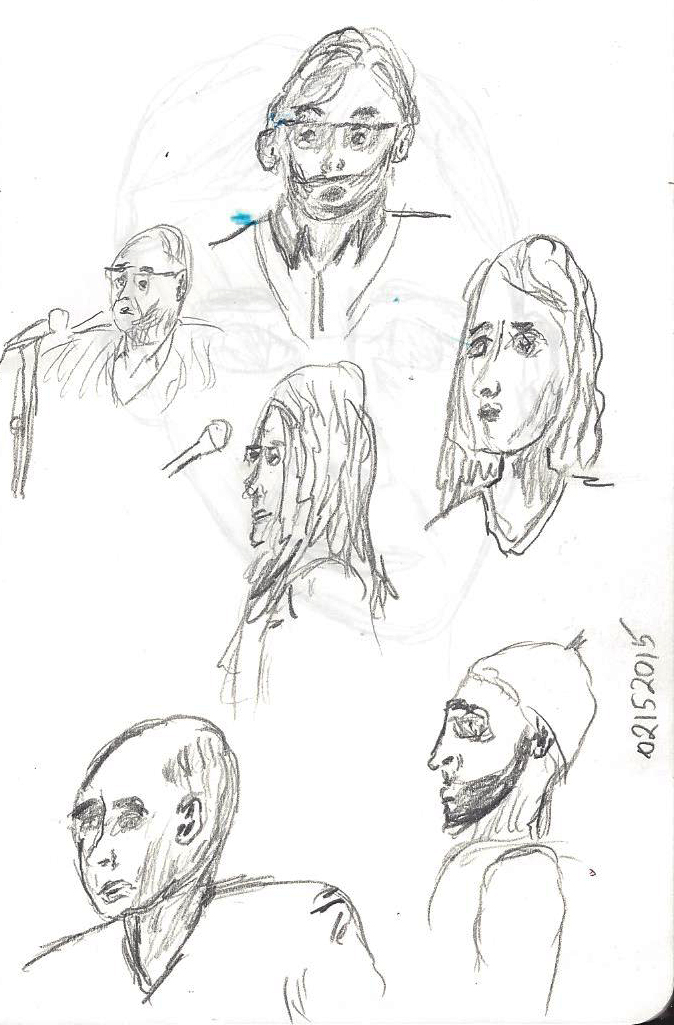
A group of artists in the Minneapolis-Saint Paul area gathers monthly to sketch. They call themselves MetroSketchers. These are talented people with facility for capturing life on a page. Yesterday I showed up to sketch alongside them at the Como Zoo in Saint Paul.

- Look To See. It’s easy to spot these sketchers in the crowds at Como. They are the ones balancing a sketchbook, and possibly watercolors or an arsenal of color pencils. They are the ones looking up and down and up and down at the very scene I dismissed with a quick glance. It’s the lingering look with an intent on capturing what they saw that was meaningful to me. Sketchers linger far longer than the causal passer-by. They must.
- Do It. Right now. That’s it—just get it on paper. Whatever you can. This is a lesson that carries over for me from writing. Do it badly, but just get one good stroke on the paper. One good mark among many bad marks. My great contribution to the day’s artistry was the Polar Bear Butt (the only animal who insisted on posing). Bad as it is, it is still a move toward representation.
- Share It. These uniformly talented people were also great encouragers. To a person they were all about what you saw and the marks you made in response. They found good stuff to say even when good stuff was pretty well hidden behind lots of not-good stuff. They also loved to talk about paper weight, the best inks to use, how small they can pack a watercolor kit and, “…here, let’s just walk through my sketchbook together.”
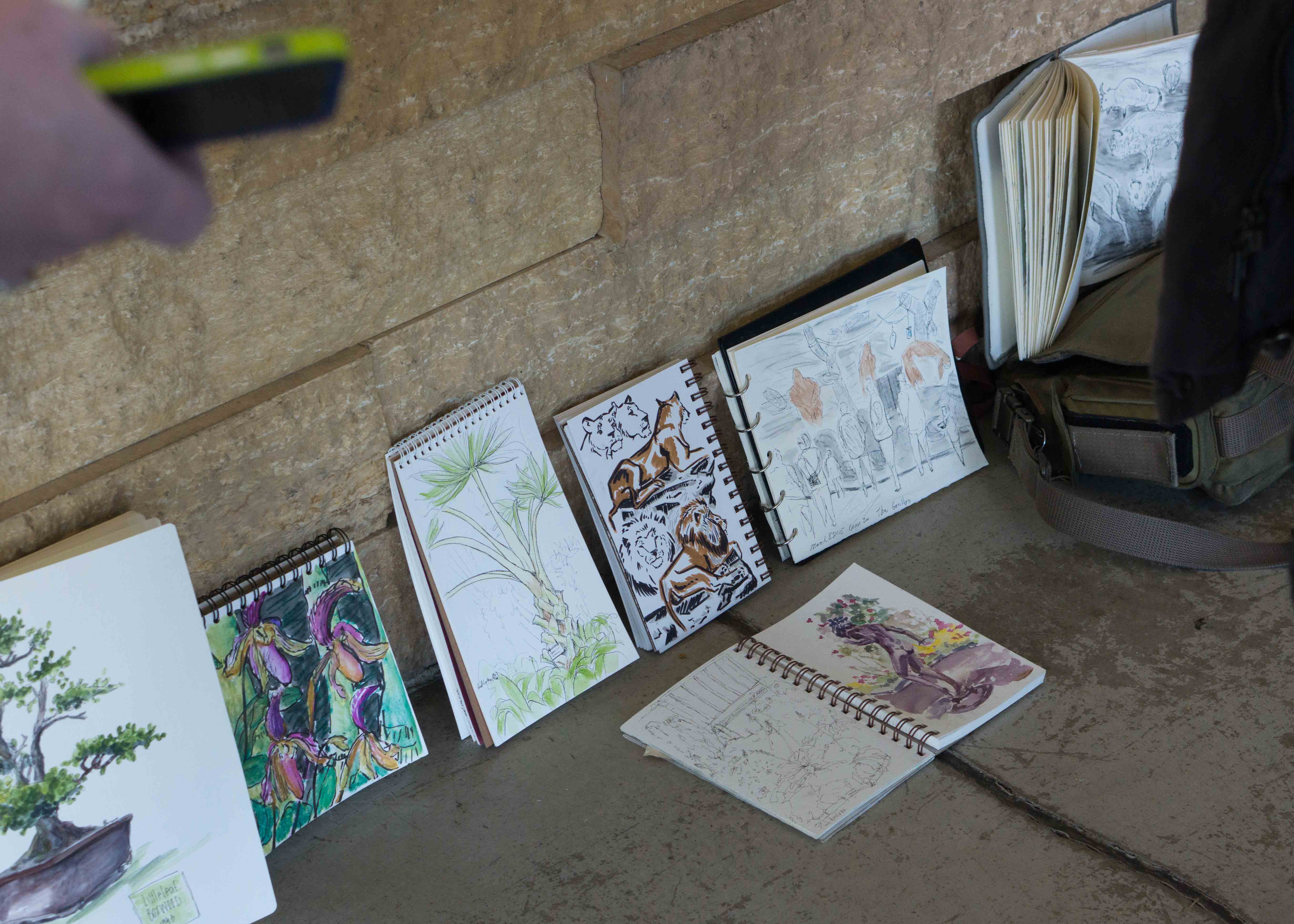
I spoke with many during the sketching and they were more than happy to show what they were doing, to describe how they were seeing and to talk about the difficulties in representation.
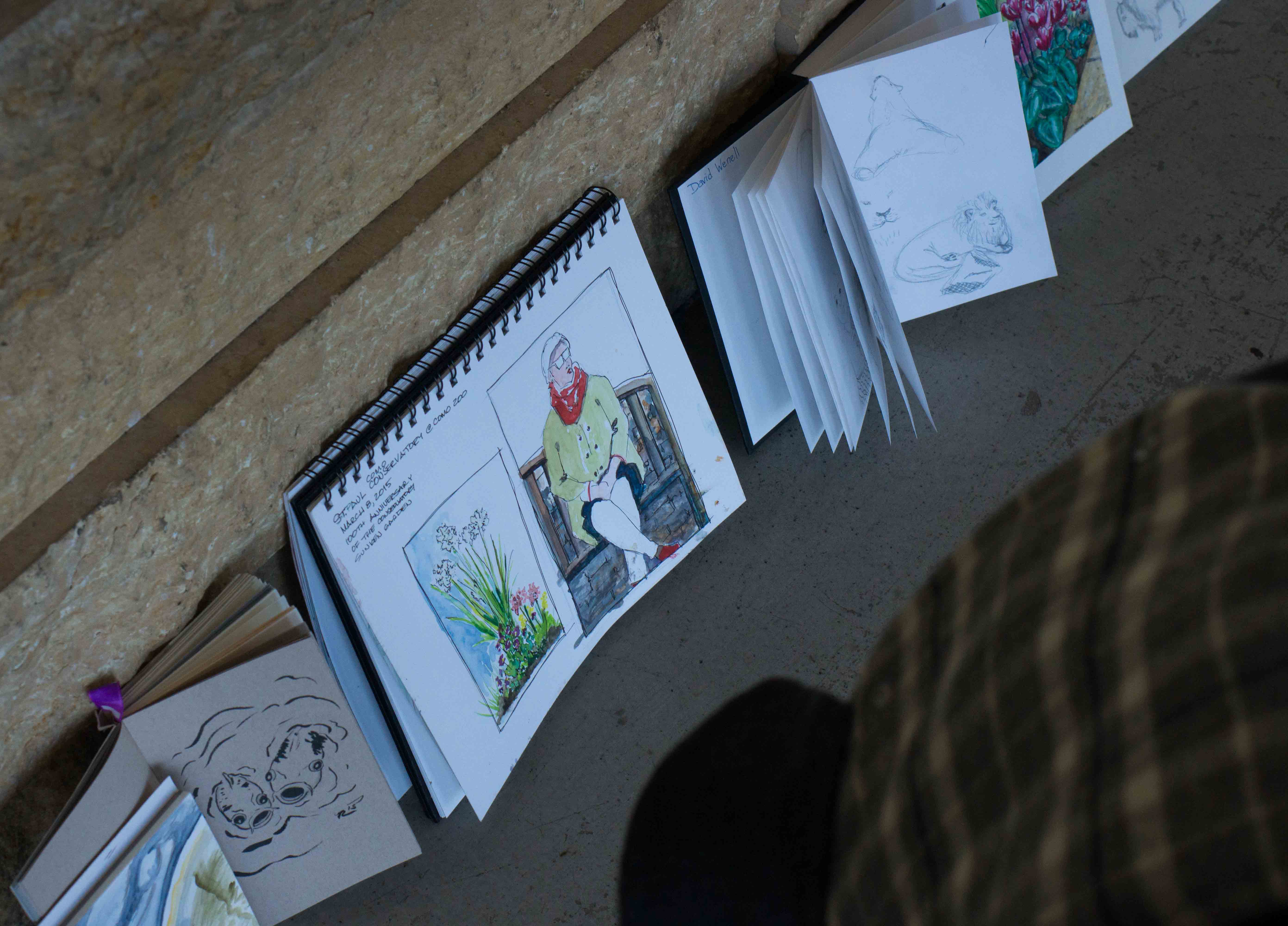
More than one sketcher expressed delight in what they were seeing—and if that is not a perfect reward for the interaction between drawing and seeing, then I don’t know what is.
###
Image credit: Kirk Livingston
Seeing Past Childish Symbols
Step 1: See the Template You’re Working from
I’ve been trying to learn to draw and Betty Edwards’s Drawing on the Right Side of the Brain has been particularly helpful. Edwards looked at why it is so many adults say they can’t draw, which is especially odd since nearly every child loves to draw. How did we move from love to incompetence? Edwards answers that by tracing our development as artists, and here is one milestone:
By around age five or six, children have developed a set of symbols to create a landscape. Again, by a process of trial and error, children usually settle on a single version of a symbolic landscape, which is endlessly repeated. (73)
As we age we become dissatisfied with those symbols but we have not worked out new ways to put on paper what we see. And so we give up, and our drawing gets stuck in that old symbolic system. Edwards provides a much richer discussion, but at least one result is that we must set aside our childish system of symbols to begin to see.
Which is not so simple.
I still start with a circle.
Not so simple because of the confusion that sets in as we try to translate real world scenes into a two-dimensional representations. To set aside the sun as a happy face in the upper right corner means I must look at how the sun reflects off, well, everything. To look at a face and see that—no, there is no outline—is off-putting. How to draw a face without starting with an oval?
This is why Edwards starts with learning to see as a precursor to learning to draw. In my 70+ days of drawing daily, learning to set aside my childish symbolic language has proved difficult. But the answer to seeing better and especially to seeing past the old symbols is to do things badly. And maybe do them badly for a long time. To do things so bad they are cringe-worthy. But that is the price one pays to learn.
I cannot help but think this life lesson and applies across the board. Learning to see and hear, and learning to form your own opinion and make your own representation applies universally. Growth from child to adult means you find new ways to interact with parents, so you set aside some (not all) the old relational cues. The ways we interact with colleagues and bosses must change as we take ownership for our work. Even the childhood symbols that directed our understanding of life purpose and how one knows God must be rejiggered. There is a template for romance we would do well to look at again. Nearly every part of life is helped by reexamination.

“Cutie Pie” + “Let’s Read” seems like a good place to land.
But make a deal with yourself : be patient and give yourself time to move beyond the immediate confusion.
###
Image credits, including dumb sketch: Kirk Livingston

 conversation is an engine