Posts Tagged ‘photography’
How to Tell Yourself the Truth (Hint: Start with an insult)
Where’s John the Baptist when you need him?
John’s task was to prepare the way of the Lord. That looked and sounded like insults to a crowd already well aware of the law and prophets and how to navigate the ancient texts. It’s just that the crowd’s navigation allowed them to do what they wanted while ignoring the invigorating spirit of the texts.
Thus John’s insults.

It’s easy and natural to take insults as insults (that is the intention, after all). But to see them as opportunities? That actually happens to most of us: insults become opportunities…ten years later. It takes ten years, or maybe twenty, to see the truth of what that busybody meddler said. And then in conversation with a friend or your grown-up kid or spouse you find yourself saying, “They were actually spot-on, though I denied it at the time.”
A few days ago an acquaintance called me out on one my typical innocuous and benign conversations about copywriting and communication—he resisted my assertions and would not back down. His insult landed wide of the mark and made no sense to anyone else either, but it got me thinking about my approach to a particular set of clients I work with. In fact, my acquaintance’s sharp barb started to reveal a truth about my approach that has since proved quite useful.
This is atypical.
I usually spend a decade stewing on an insult and devising comebacks and elaborate retributions. But what would life be like if I/we could be more open-handed about criticism?
That might help us grow beyond our blind spots—which might prove useful.
###
Image credit: Kirk Livingston
Counterintuitive: Listening Beats Talking?
Persuader Vs. The Persuaded

The Russian polymath Mikhail Bakhtin—one of the titanic minds of the twentieth century, though too neglected now—believed that in a dialogue the position of primacy is with the person who listens rather than the one who first speaks. After all, he said, we do not speak unless we anticipate a response; and we shape what we say in light of possible reactions.
–Alan Jacobs, The Pleasures of Reading in an Age of Distraction (NY: Oxford University Press, 2011) 55
Without some listener—you see—there would be no words launched.
###
Image credit: Kirk Livingston

Stone Arch: Extraordinary, Historic Power
Flowing constantly beneath our heels

Day in. Day out. Always changing.
Do you notice?
###
Image credit: Kirk Livingston
Find Work Where You Can Draw Your Own Lines (Shop Talk #10)
Color inside your own lines
I’ve had several conversations lately with people looking for ways to bring writing into the rest of their lives. Some want to make a living as writers. Others want to flesh out a particular passion that been dormant behind the demands of their day job.

In each case I suggest drawing their own lines.
What I mean is to look for opportunities where you can define the problem yourself (or in collaboration with a few). When you define a problem yourself, you set the focus and you begin to take ownership. Then your brainpan starts spinning in a fresh orbit that lets you locate resources to help solve that problem. Defining the problem is a way of looking at the topic of your passion and finding what about it that excites you and where that might be a problem/solution for others. Inevitably you want to send your topic out so others can begin to care as well—or perhaps you send it out to find those other few who care.
Writing something is a way of drawing your own lines.
I know this from (literally) drawing lines of definition: over at Dumb Sketch Daily (currently at dumb sketch #152) I’ve been trying to learn to draw. I’ve found that an ink pen does a kind of definition work that my eye longs for. Sometimes I wonder if ink is a crutch: outlining before filling in detail with color or graphite. Do I really need those lines? But then I think
I don’t care.

I’ve got your precious Brussels Sprouts right here.
Because there is something about the crisp line that yields a bit of loony joy. Yes, it is true, that line does not exist on the edge of my Brussels Sprouts. Not really.
Still.
Seeing something clearly feels worth that particular fiction.
What definition work will you do today?
Where will you draw lines?
###
Image credit: Kirk Livingston
Dumb sketch: Kirk Livingston
See also: “Can 78 bad sketches change your life?”
Cemetery Graffiti
That’s just not right.
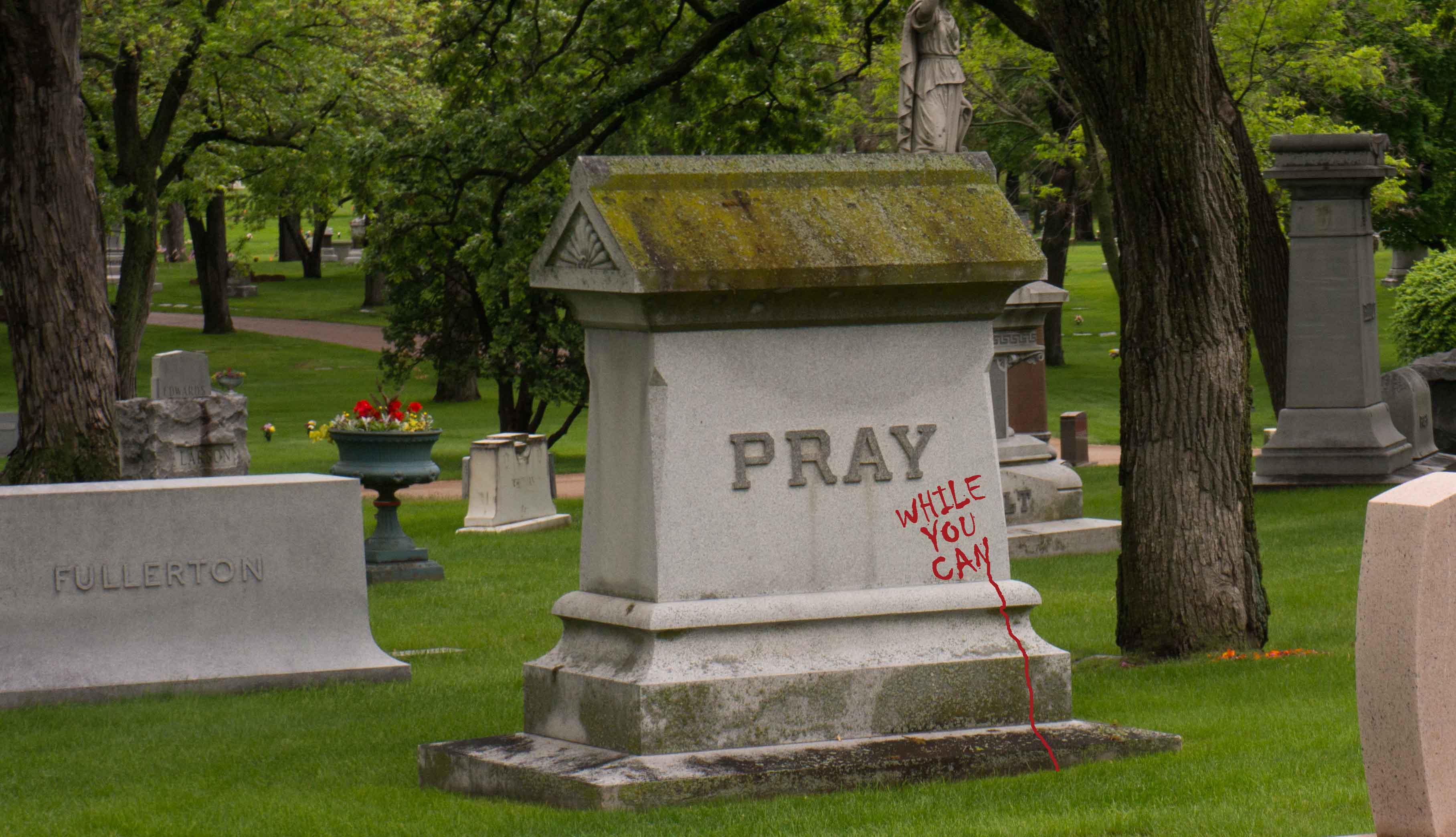
Or is it?
###
Image Credit: Kirk Livingston
Mommy, why do we electrify grandfather’s sarcophagus?
Xcel Energy Tips for Dead Wood
Dear WOOD,


You used less than average, but 100% more energy than your efficient neighbors:

Tips for conserving electricity:
- Turn off lights when you leave the room.
- Turn off lights IF YOU ARE DEAD.
Please update your mailing address, as invoices mailed to LAKEWOOD CEMETERY have been returned as undeliverable.
Find more energy-saving tips at Xcel Energy.
###
Image credits: Kirk Livingston
If I had a hammer.
I’d put it away for the weekend.
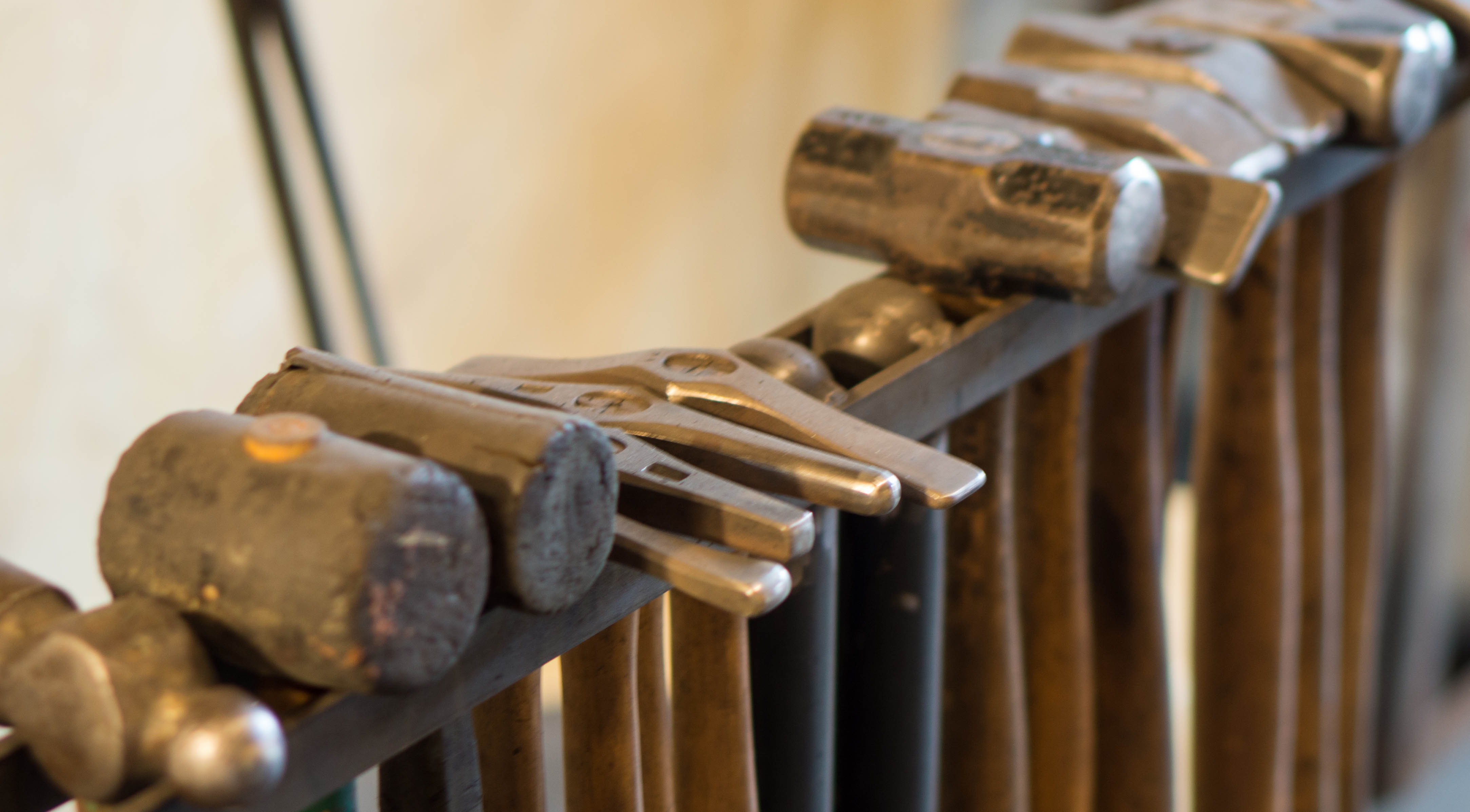
Seen while walking in Northeast Minneapolis.
###
Image Credit:Kirk Livingston
DBT: When Does Talk Become Therapy? (Shop Talk #9)
Can a conversation save your life?
I recently met a therapist who practices dialectical behavior therapy (DBT). She and her team work with clients who may struggle with a number of issues including borderline personality disorders and thoughts of suicide, among other things. As we talked it seemed to me that her practice was very much focused on, well, talking. Her practice of therapeutic talk has a pretty good track record of helping people find ways through each scary personal wilderness.
In Doing Dialectical Behavior Therapy: A Practical Guide (NY: The Guilford Press, 2012), Kelly Koerner describes some pieces of how this therapy works:
Emotion dysregulation is the inability, despite one’s best efforts, to change or regulate emotional cues, experiences, actions, verbal responses, and/or nonverbal expression under normative conditions.
Gaining control is a matter of recognizing biologically-based contributing characteristics, focused regular therapeutic conversations, skills training, self-monitoring and a host of other strategies and tactics.

As a non-therapist outsider, I am simply curious as to how far conversation can go to help people become well again. And I am very curious as to what a therapeutic conversation looks like. While we may or may not suffer the particular illnesses that Koerner notes, I am reasonably certain anyone reading this can testify to the clarifying power of a conversation with a good friend and the long-term impact conversations have on keeping us…sane.
In ListenTalk: Is conversation an Act of God? I try to show what happens in our simple and ordinary conversations. I found a few philosophers to talk with some ancient texts (pre-order ListenTalk here), and what they ended up saying together continues to surprise me. It’s a book that will be interesting to people of faith, but the big idea is that since people matter, our talk together matters. And more than that, we actually come alive in tiny ways when in conversation.
I’ve begun tracing the different paths where conversation is truly an engine for some particular outcome. I’ve noted the product place of conversation in many business settings. I’ve wondered about the role of conversation in connecting any/all of us to God. And now here is another example of using the ordinary tool of talk to uncover and possibly address deep-seated need.
Talk. It’s a marvel.
Other Shop Talks you may find interesting:
- Writing with Sheet Metal (Shop Talk #2)
- Is Your Job Fulfilling? (Shop Talk #3)
- Power Distance Vs. Skunkworks (Shop Talk #8)
###
Image credit: Kirk Livingston


 conversation is an engine