Archive for the ‘Brand building’ Category
We Landed a Medtech Account—Now What? 3 Understandings
Bollixed and castrated and then we begin
Advertising agencies and marketing firms are eager to land medical device accounts. These prestigious accounts are much desired and would seem to enlarge the status of an agency because of the exacting, rigorous work that helps the human condition. It doesn’t hurt that they seem to pay on time. But having worked with a number of ad agencies once they land such an account, there are a few common threads that surprise principals and employees:
- You’ll need experts: people who know how to work within a regulatory framework (“Claim this.” “Never claim that.”). People who know the words that soothe lawyers while still making sense to humans. And especially people who know their sinus node rhythm from their rhythm method. You will stay on message and every claim must be neatly tied to an article from a respected (first or second-tier) journal.
- Your creatives are (already) wringing their hands. That’s because creative solutions lie on the other side of a legal/regulatory/corporate culture grinder.
- Yes: the company has come to you for creative solutions.
- No: they cannot/will not back-off their own internal legal/regulatory controls. Their own internal machinery will bind and castrate many of those solutions you have used in the past. What a great beginning point!
- There will be rounds of changes. Many rounds. Way more than you are used to. Far more than you can reasonably put in your bid. They will seem…unmanageable. Taming revisions will take your best customer service manners and may take you deep into the internal relationship structure of the firm. But that is exactly the kind of partnering that is needed
If your agency can come to grips with these three understandings without imploding or driving sane people mad, you’ll begin to build a reservoir of expertise.
###
Image credit: Kirk Livingston
How LinkedIn Helps Before You Are Between Jobs
Generate The Thing Between
LinkedIn is a powerful tool for connection. But lots of people, once they land the job, put connection on the back burner. Some take it off the stove entirely—and that is a mistake, especially in this economy. I know this because many friends and colleagues are on radio silence most of the time. Until rumors of layoff float by. Then it’s connections galore.

Don’t let connections go dormant.
Connection is something that happens long before you have a need or want to generate a sale. In fact, connection is not about the need or the sale, it is something entirely different. And we make LinkedIn frenemies when we mistake connection for a sale.
For those who understand the importance of connections outside immediate work and building relationships widely, there is a great joy in getting to know people and simply seeing what might happen. It’s not even an introvert/extrovert thing. It is a possibility thing. Maybe it is a thing for dreamers, but I think not. It is for anyone who starts to wonder what is possible outside the structure that encases their days.
This openness to others—this beckoning to others, this waving them close—is the early move toward collaboration. It is the ordinary conversation that starts to generate new things between you, seemingly by magic. It is the beginning of finding common ground that eventually leads to “Wait—what could we do together?”
Curiously, openness to others has a way of working backward into our present job so that we start to see new ways of working, collaborating and connecting.
When teaching college students about professional writing, I try to help them understand that the best jobs are the ones not advertised. The best jobs open and shut before ever posted on a web page or printed as a classified ad. Those jobs are available only to connections. Those jobs are almost incidental to the connection: friends see what you do, how fun you are to work with. Their synapses fire and they say to themselves, “She might be perfect for this need we have.”
Maintaining and growing connection is not for a someday need or someday sale. It is a piece of being human and carries a glory all its own.
###
Image credit: Kirk Livingston
Italian Telecom Wind: Engage + Remind – Shill
Still selling, of course. But they pulled me in.
Lots of great “dad” moments in here.
What about those decades-long conversations we have with the people in our lives?
###
Where does loyalty come from?
Gift Economy and Loyalty Programs
This is a tale about where loyalty comes from. It involves making a garbage man very sad.
The second home we purchased was left with all sorts of furniture by the previous owners. We called them and put the furniture in the yard. But they never returned and their furniture sat in our new yard for too long. Rain and sun and more rain—these people never came.

But Ace Solid Waste came. And they took it all for free. And they won our loyalty. Is this a commercial for Ace Solid Waste? Maybe, although I am not employed or directed or in any communication with Ace Solid Waste. In fact, I pay them. On time (mostly).
Their gift of removal (you might say Ace blessed us with the absence of a soggy couch and other wet furniture), is easily and quickly remembered by Mrs. Kirkistan and I, still, to this day.
In The Gift (NY: Vintage Books, 1983), Lewis Hyde described how a gift economy works: people give gifts to each other as a sort of payment. But not in the transactional way most of us expect today. One gift was not given in exchange for another gift. No, Hyde described how gifts move on. Or, you might say, moved forward. The gift you gave me, I gave to someone else, and so on in an endless cycle of giving. In the gift economies Hyde cited, trade was greased by gifts.
Of course, gifts carry with them an obligation: a sort of unwritten sense that I must pay this back, or “I owe you one.” Gifts also carry a sense of relationship. We give gifts to friends or relatives. It is a way of saying, “Hey buddy!” or “I’m thinking about you.”
One long-time strategy for business is to give gifts to woo loyalty. I buy plumbing supplies at Beisswengers because they are patient with my simplistic plumbing questions. They provide answers along with the new drain. The answers are even more valuable than the drain. All sorts of free apps become so indispensable we finally buy them. We frequent the vendor who gives away their knowledge.
A competing garbage gentleman stopped at our door with an offer of savings. When I said I wasn’t interested, he probed:
Why?
I told him my story of the furniture that wouldn’t go away and how Ace helped us out.
Will you be in debt to Ace for the rest of your life?
And here is the surprise: as I listened to my own words, I wondered at the strength of the feeling and the depth of loyalty for this good deed done to us—and the longevity. Maybe our retelling of our furniture story kept giving fresh reasons to continue.
Maybe.
And so the man of seeming excellent garbage-manship walked away sadly.
So that’s one way to build loyalty: help someone with a need. And as you help, try not to see the gift as a transaction.
###
Image credit: Kirk Livingston
Melted Crayons: What Writing Collaboration Looks Like
Not yours. Not mine. But a new thing created between us.
Years ago we took our kids on the consumerist hajj to Florida’s Disney. We’re more national park vacationers but we resolved to make the best of it. So we battled through the hucksters and scam artists on every corner in Orlando and made our way to the magic kingdom.
It was…ok.
Some of our kids were scared of the rides. Some were thrilled at points. Others (including parents) grew weary of the constant stimulation. I would not be a good spokesperson for Disney.
The most memorable part of the trip was post-Disney, on a drive through the orange groves. At one point we left the rental car for not too long a time to see some Florida oddity. We came back and found crayons melted on the back seat. It gets hot in a Minnesota summer, but I don’t recall crayon-melting hot.

Turn up the heat.
Melted crayons are not any one color. They are a new color that has no name.
Recent writing collaborations got me thinking about those crayons again. Some of my favorite clients invite me into the process by explaining what they want to accomplish with their target audience. They outline the main messages but do not hold those main messages too tightly. They point out the content and invite me to organize and hone the argument so it makes sense. They invite me to retell the main messages. When I come back to my client with something they can react to, we talk and the work gets better and more solid.
The thing is, what we create is not totally mine and not totally theirs. It’s a melted melding of motifs, which we continue to sharpen and fit to the purpose.
It’s a process I enjoy very much.
And it’s a process that is not that much different from our best conversations, where we generate some surprising new thing between us, beyond what either of us set out to say. A sort of intentional, verbal, melting of crayons right before our eyes.
###
Image credit: Kirk Livingston
Joe Lueken: The Grocer With Something To Teach CEOs About Leadership
Joe Knew Where His Success Came From
Are you one of those poor souls who does not read the obituaries?
Pity: so many memorable stories.
Like the story of Joe Lueken. A couple years ago Mr. Lueken turned down the opportunity to make buckets of cash by selling his Bemidji-based grocery store chain. Instead, as he retired, he set up an employee stock ownership program and transferred the company to his workers.
He was a philanthropist who stocked shelves and took his break with the other workers in the break room. And—most telling for me—the people who worked for him had great respect for him. He was a guy whose work ethic and his caring demeanor touched lives. And it seems—at least from my reading of a couple of articles—he did so with joy.
Mr. Lueken died on July 20 after a long battle with cancer.
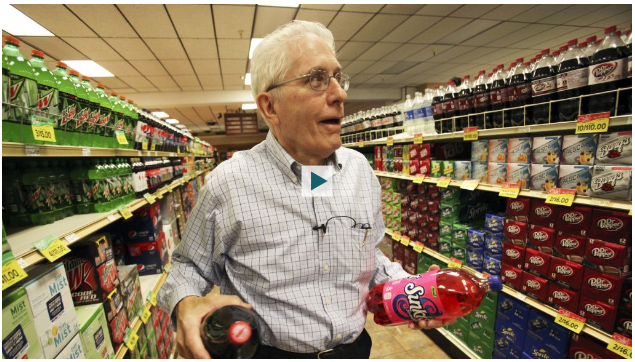
As we watch the explosion of CEO salaries and look with wonder on the board members who agree to these ridiculous payouts, it’s hard not to wish many of the current batch of muckety-mucks had worked for Joe. Maybe his humanity would have rubbed off.
###
Image credit: StarTribune
Ratcheting Expectations in World that Demands Viral
Again: what does success look like for my project?
Do you have outsized notions of what is important?
Of course you do.
We all do, because we assume (wrongly) that what is important to me is important to everyone. Turns out that is not the case. For all the videos or stories or songs that go viral, there are countless that arrive stillborn—at least as far as numbers go.
What shadow will your project cast?
It’s easy enough to see that not everyone shares our passions and drives. Not everyone is fascinated by Star Wars or Wes Anderson films, for instance. Not everyone longs to spend hours tinkering with their lawn, or building perfect pectorals or diagramming the stars in the night sky. Not everyone asks “Why?” Not everyone asks “How can I do that myself?”
So if we are looking for our idea to go viral, we had better negotiate together what we consider viral. Will my idea get 3 million views? 3000? 30? And which am I satisfied with? What can we be satisfied with? That’s worth talking about before a project goes out the door.
I’m reminded of that bit of faith that writing will find its audience. As we prepare to launch our idea, and as we talk about who is open to hearing/acting on the idea, some frank talk about what success looks like will help immensely. Realistic expectations at the beginning of the project will help set the stage for the eventual self-scourgings or pats on the back, in a week or month or year, when you see how the project did or did not do.
And for the artist or writer—just doing the work may be enough.
And maybe that is not a bad place to dwell.
###
Image credit: Kirk Livingston
Martin Weigel: Go to give. Don’t go to take.
Even advertising people are human.
In the spirit of “What is remarkable?” I offer Slide #43 from adman Martin Weigel’s excellent Slideshare on how brands fool themselves into thinking they matter in the grand scheme of real life.
They don’t.
Not when it comes to real human interaction.
No sir.
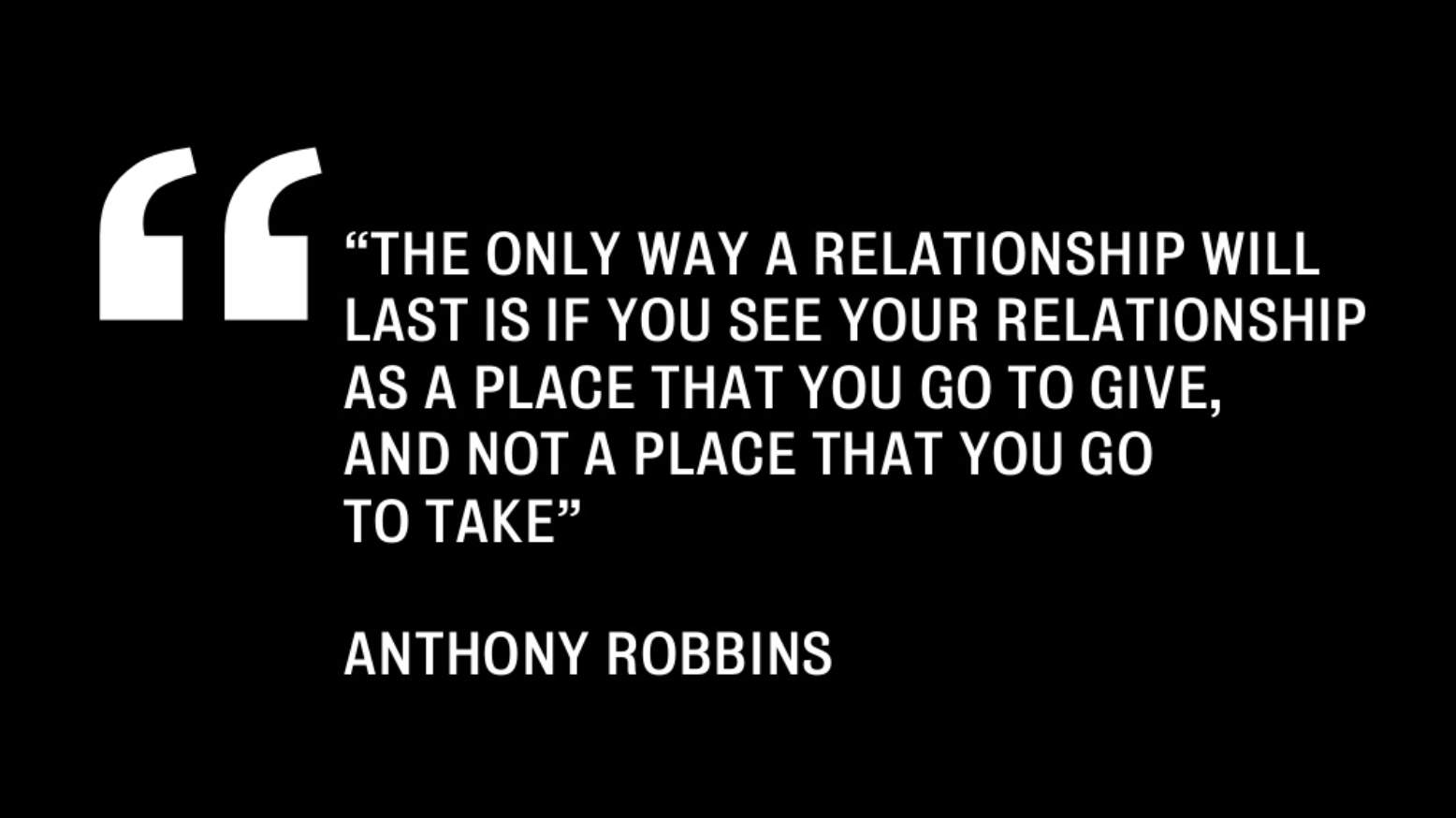
Can a brand serve? Yes. And I will argue that is the profitable space to explore.
I’m not generally an Anthony Robbins fan, but this quote has been stuck in my brainpan since I first reposted these slides. And that is remarkable.
###
Can we finally reject being defined as “Consumers?”
How about “citizens” or “persons”? Maybe not “fleshists.”
Must everything in U.S. life be about ingesting?
Eating. Watching TV. Shopping. Listening to music. Watching movies. Amassing tablets and apps that allow us to consume more and faster and on-the-go. Talking about what we are eating/watching/buying. These are our pastimes. These are the things that define us. None are bad, many are necessary, but should they be at or near the core of our essence?
Is this why we landed on the planet?
I like all these things as much as anyone, if not more. But I wonder if my rush to consume has blinded me to other definition-inducing activities? Consuming is good for brand managers because they can play on this emotive, definitional piece of life and squeeze money from our attempts to be a certain kind of person. We buy this car or those dungarees or those shoes (or watch that show) because of certain aspirational desires. If we own that property, then we become that person. Yes?
In Cognitive Surplus, Clay Shirky makes the cogent point that watching TV is very like a full-time job for many of us. It consumes our hours outside of work like nothing else. I understand why: many of us are so busy at work, spending so many hours, stressed about so much that all we can muster—all we can look forward to—are those blessed, mind-numbing moments on the couch before the screen.
I’m right there. That’s me, too.
Shirky’s book goes on to point out example after example of people banding together in groups small and very, very large to accomplish things that would not otherwise exist. Wikipedia comes to mind, along with open-source software. As social media allows us to connect, I wonder if our collaborative selves will beckon us from the couch more and more often. It’s not some new magic of social media I’m talking about, it’s the very old and known quantity of human connection. Relationship stuff has always motivated our species.
But we’ll need to step away from constant movement and blessed numbness to get back to seeing ourselves as co-creators and collaborators. Relationship-builders rather than consumers.
###
Image credit: Kirk Livingston

 conversation is an engine