Archive for the ‘Communication is about relationship’ Category
Think “Plant” Not “Preach” (Dummy’s Guide to Conversation #18)
Monologue is dead. Long live dialogue.
You’ll be much more effective if you give up telling people what to do and instead invite them into an idea.

It’s more work on your part, of course.
Inviting your conversation partner into an idea has the advantage of letting the notion grow in their native cerebral soil versus boxing them about the ears and head with your command.
Planting seeds can also change the shape of your internal discourse. And that can become a fresh, personal beginning point.
Check out the other 17 tips from the Dummy’s Guide to Conversation.
###
Image Credit: Kirk Livingston
Love: A Working Definition
Congratulations Paul and Lindsey!
Isaac: Have you sorted out the meaning of love?
Paul: I can tell you I have a working definition.

###
Image Credit: Kirk Livingston
Try “Yes, and…” Today
Let there be a Science of Deep Collaboration
When I hand out a group project in my writing class I hear audible groans.
It’s because we’re trained to work at things on our own—that’s how scholarship and schoolwork and academics have worked for a long time. The groans come from all the extra work of communicating and all the expectations around not knowing if others in the group will keep their end of the group-work bargain. The groans come from the anxieties that hover around roles and responsibilities and knowing you’ll have to sell your ideas.
I am eager for new and deeper research into collaboration. Let’s call it a Science of Collaboration. Maybe it is a social science. People like Keith Sawyer and Edgar Schein are moving this science forward—along with many others. I am fond of the work Patricia Ryan Madson has done around Improv, which seems the perfect gateway for anyone to learn the fun of collaboration. And Keith Johnstone seems to have spawned many thinkers along these lines.
 I’d like for this science to do (at least) two things:
- Invite people in who have been working alone for forever. But gently, and independent of the introvert/extrovert divide. I want the invitation to show the fun of the process. I want that invitation to promise more aha moments and then to quickly deliver on that promise.
- Show next steps to working together. What can an ad hoc team do to quickly get grounded enough to toss ideas that build on each other? There are techniques out there, certainly, but I’d like this to be second nature, part of our emotional intelligence, something we come to expect. Something we’ve grown up with.
“Yes, and…” seems a perfect place to start. This is the old improv notion of building directly on what the last person just said. And quickly, without lots of deliberation. It requires a certain fearlessness.
What if “Yes, and…” was built into our educational DNA from grade school up?
###
Image credit: Kirk Livingston
Of Course Money Is Speech
More money = More articulation = More influence
As I read Dollarocracy by John Nichols and Robert W. McChesney, I cannot help but think about the biases we bring to any topic or any text.
The authors make no bones about their stand on the free flow of money into our political system and the corrosive effects for everyone touching that money. The authors are also clear about how our media is complicit in helping form story arcs and shaping mythic-sounding conflicts that might just serve the media best by training viewers to stay tuned. Fox News has not cornered the marketing on training viewers to panic—it seems to be the purpose of most news shows these days. And why not? Advertisers love those vulnerable audiences and there are fortunes to be made, after all.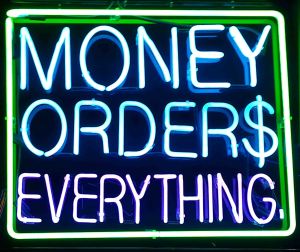
I cannot yet agree with the authors that our representatives are simply “bought” by Super PACs and big lobbying firms and corporate interests. I think there are connections between the money they need for reelection and the ways they vote. But I’m not sure it is a one-to-one correspondence. It’s more complicated and nuanced, but common sense tells me that if some set of powerful organizations has contributed millions of dollars to a reelection campaign, the person seeking reelection will vote favorably to the interests of those organizations.
That is the nature of gifts.
That’s why I like OpenSecrets.Org: they try to trace where the money comes from and where it goes. Especially dark money, which is typically hidden for a reason. Because money is not given to political campaigns out of altruism. People buy influence with what seems to be a gift.
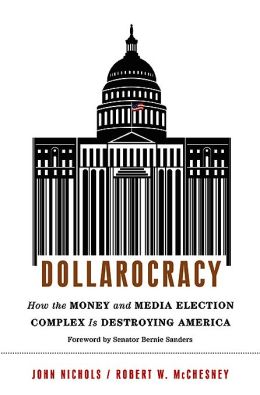 Nichols and McChesney bring a bias to their writing of expecting to see our representatives being bought by corporate interests. I don’t blame them—they’ve written several books on the topic and have seen what they have seen. For myself, I just want to begin to train my eyes to turn from entertainments once in a while to see which of our representatives are being influenced by which Super PAC/lobbying firm/corporation.
We cannot end the flow of money into our political system. But we must become aware of what that money is buying—and what it is costing the citizenry.
Best if we could say out loud to each other where we’ve seen influence purchased.
###
Image credit: Kirk Livingston. Neon by Patrick Martinez via Public Functionary
The Silence of the Protocols (Miss Manners)
“He then falls silent.”
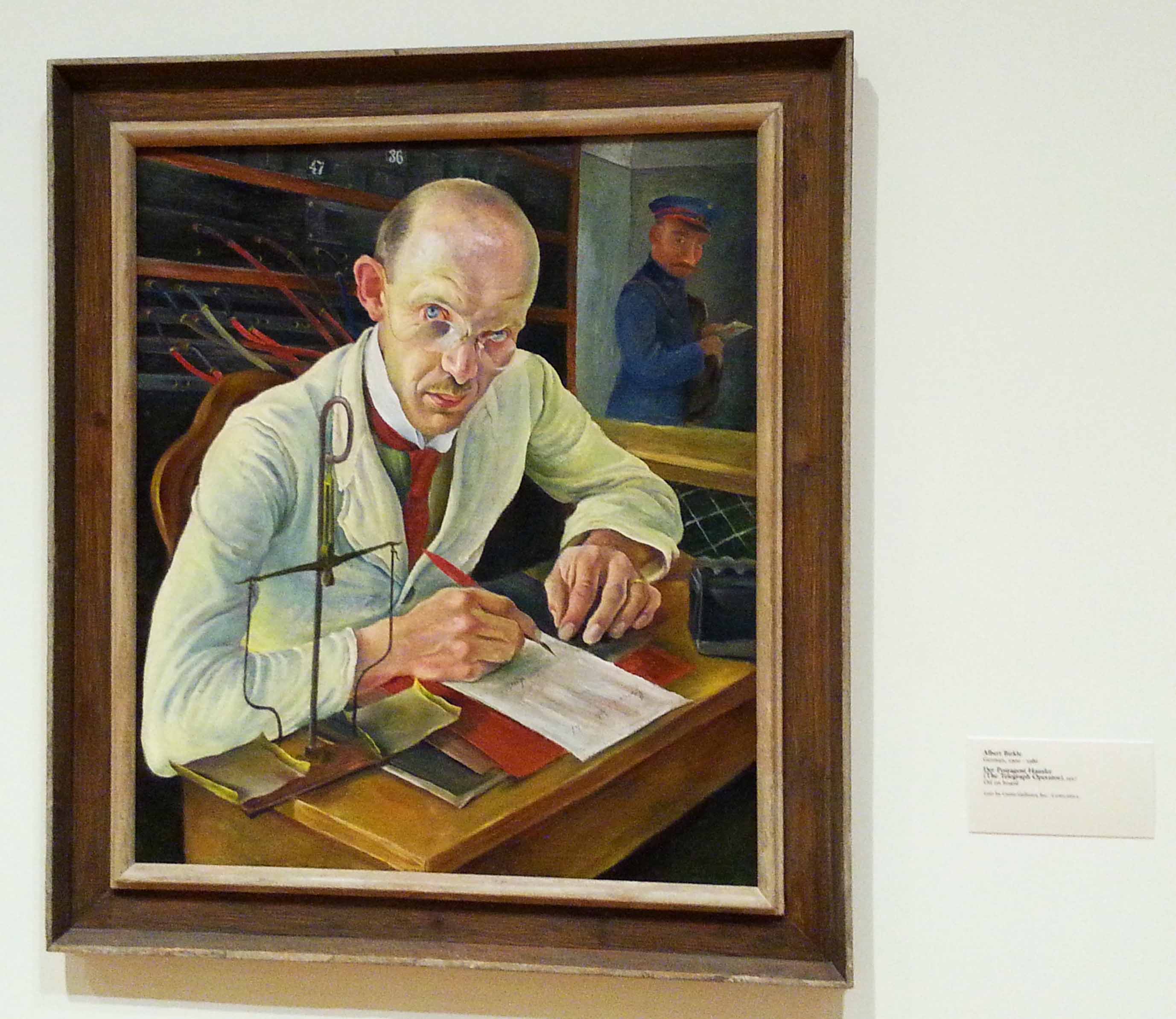
I have an ongoing disagreement with my husband regarding telephone etiquette.
Yes? Please continue.
When he calls me, I pick up the phone and say “Hello” and he responds with “Hi.”
He then falls silent, expecting me to respond to his “Hi” with a “Hi” of my own.
I feel that, since he called me, and I have greeted him, it is not necessary to then respond to his greeting, as it would be redundant. So I just wait for him to tell me what he called about.
This irks him no end….
–Miss Manners, via The StarTribune, 13 May 2014
Image Credit: Photo–Kirk Livingston. Albert Birkle: Telegraph Operator, via the Minneapolis Institute of Arts
Martin Weigel: Go to give. Don’t go to take.
Even advertising people are human.
In the spirit of “What is remarkable?” I offer Slide #43 from adman Martin Weigel’s excellent Slideshare on how brands fool themselves into thinking they matter in the grand scheme of real life.
They don’t.
Not when it comes to real human interaction.
No sir.
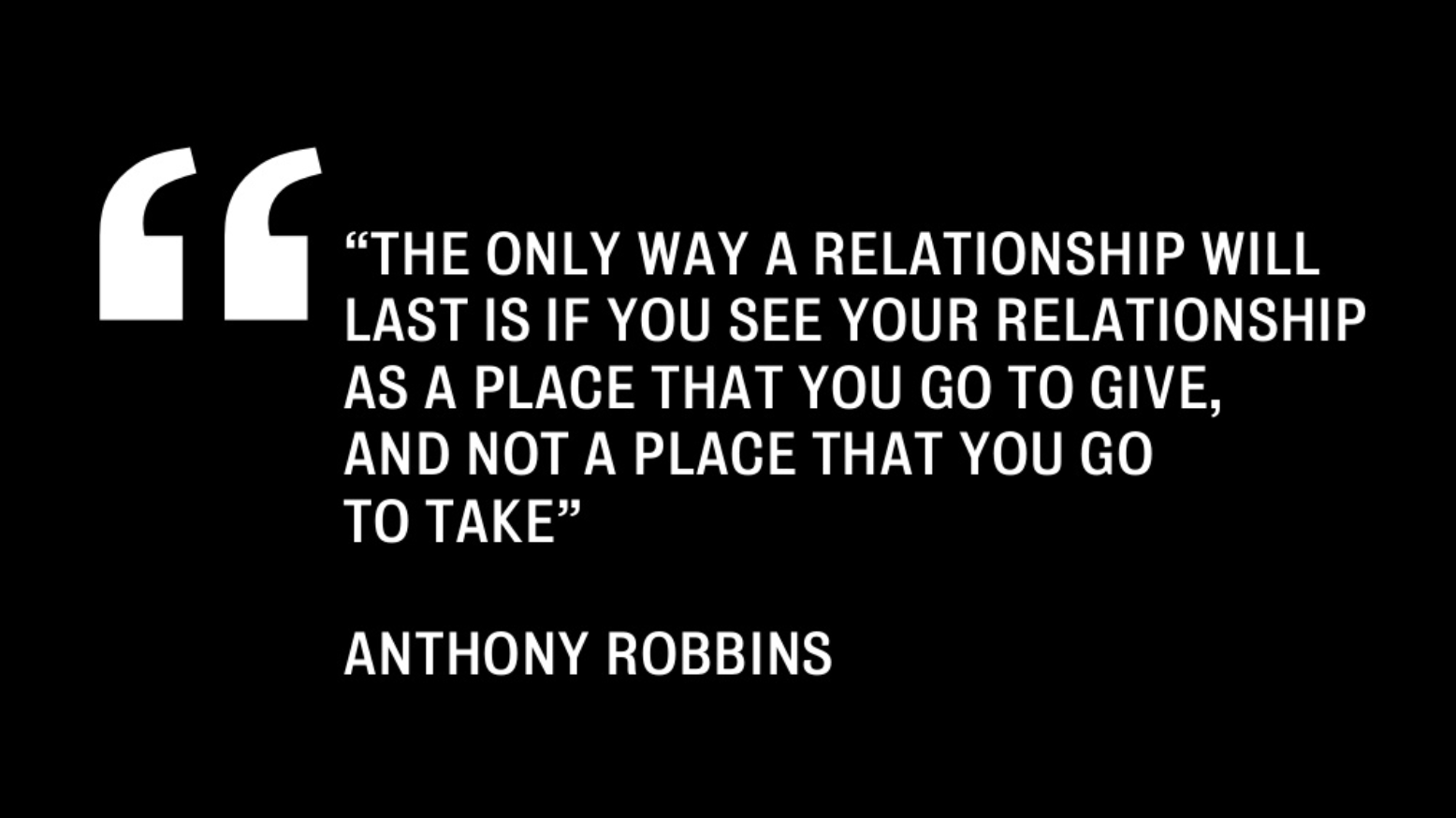
Can a brand serve? Yes. And I will argue that is the profitable space to explore.
I’m not generally an Anthony Robbins fan, but this quote has been stuck in my brainpan since I first reposted these slides. And that is remarkable.
###
Why I Don’t Listen To Christian Music
Short Answer: No One Likes Being Manipulated
On Conversation is an Engine I mostly write about communication and conversation and copywriting and how business interacts because I am fascinated by what happens when people talk. But undergirding this sense of wonder is a faith in God that makes me see much of life in theological hues. The fallout from that theological saturation means I want to approach the work of communication and persuasion from an ethical perspective—as best I can.
Lots of music labeled “Christian” does not do that.
 The college I occasionally teach at has a radio station that spins out Christian music. I stopped listening years ago when I realized my emotions were being manipulated by music that was nearly content-free. It had a veneer of faith, but seemed much more about living a good life and having positive feelings.
Especially positive feelings.
I’m not against positive feelings. Happy is good in my book. Happy makes sense to me. But if happy comes from a sugar-like high that dissipates as quickly as it formed, was it real? And is happy the point of faith in God?
I argue: No.
Happy is good. Joy is better and depending on how you define things, joy lasts longer. And true is best.
And really, what is Christian music? I might argue Tom Waits has a lot more truth to offer than whatever contemporary Christian band is currently famous. The Talking Heads seemed to provide many glimpses of truth—so do many of the folk musicians I listen to. Certainly Mr. Bach and Mr. Mozart and Mr. Telemann and Mr. John Adams and even Philip Glass provide more soaring and more depth and more truth.
Of course, music is a very personal thing and there is no right or wrong. We like what we like and I don’t want to disparage anyone’s choices—really I don’t. But if I sense I’m being manipulated by sentimental lyrics, I move on.
###
Image credit: Kirk Livingston, in response to on the move
Can we finally reject being defined as “Consumers?”
How about “citizens” or “persons”? Maybe not “fleshists.”
Must everything in U.S. life be about ingesting?
Eating. Watching TV. Shopping. Listening to music. Watching movies. Amassing tablets and apps that allow us to consume more and faster and on-the-go. Talking about what we are eating/watching/buying. These are our pastimes. These are the things that define us. None are bad, many are necessary, but should they be at or near the core of our essence?
Is this why we landed on the planet?
I like all these things as much as anyone, if not more. But I wonder if my rush to consume has blinded me to other definition-inducing activities? Consuming is good for brand managers because they can play on this emotive, definitional piece of life and squeeze money from our attempts to be a certain kind of person. We buy this car or those dungarees or those shoes (or watch that show) because of certain aspirational desires. If we own that property, then we become that person. Yes?
In Cognitive Surplus, Clay Shirky makes the cogent point that watching TV is very like a full-time job for many of us. It consumes our hours outside of work like nothing else. I understand why: many of us are so busy at work, spending so many hours, stressed about so much that all we can muster—all we can look forward to—are those blessed, mind-numbing moments on the couch before the screen.
I’m right there. That’s me, too.
Shirky’s book goes on to point out example after example of people banding together in groups small and very, very large to accomplish things that would not otherwise exist. Wikipedia comes to mind, along with open-source software. As social media allows us to connect, I wonder if our collaborative selves will beckon us from the couch more and more often. It’s not some new magic of social media I’m talking about, it’s the very old and known quantity of human connection. Relationship stuff has always motivated our species.
But we’ll need to step away from constant movement and blessed numbness to get back to seeing ourselves as co-creators and collaborators. Relationship-builders rather than consumers.
###
Image credit: Kirk Livingston
“The readiest way of working on understanding is often through talk…”
Douglas Barnes on Exploratory Talk
The readiest way of working on understanding is often through talk, because the flexibility of speech makes it easy for us to try out new ways of arranging what we know, and easy also to change them if they seem inadequate. Not all kinds of talking (or writing) are likely to contribute equally to working on understanding. A great deal of the writing that goes on in school is a matter of imitating what other people have said or written, and the same is true at least in part of the talk.
–Douglas Barnes, “Exploratory Talk for Learning” in Exploring Talk in Schools, edited by Neil Mercer and Steve Hodgkinson (Thousand Oaks, CA: Sage, 2009) 5
###
Image Credit: Kirk Livingston
Listening has an Ugly Step-Sister: Waiting
Surprise: She Has a Lot to Say
The problem with listening has always been the other person talking. When will they stop talking so I can talk about myself and my interests? You know—the important stuff.
And so we wait.

Turns out there are lots of opportunities to wait in life. Beyond waiting for our turn to talk or the sheets to dry, there are lines at the grocer, lines for on-ramps, waiting for Netflix to load, waiting to get a job/spouse/house/liver/reprieve/break/two-bedroom spot in the nursing home.
What we do while we wait—that’s key. Some say stay busy. Some say pray (seems a good strategy to me). Some say stay curious. Some say pursue your passion.
And then there is listening
Listening while you wait.
Intently.
Deep in the spinning cogs and meshed gear-works of waiting there is a mechanism that also tunes interest. If I listen intently I may just see my desire shift ever so slightly. I scraped and saved for years for a new car but when I had the money, I realized desire shifted: I didn’t want to spend it on the new car. A used car does fine, and I’ll spend that savings for the other thing that became important in the meantime.
Is this partly how prayer works: deep desire and constant asking followed by shifts in desire and asking that turns to listening?
When we wait we are ripe for deep listening.
What are you hearing while you wait?
###
Image credit: Kirk Livingston

 conversation is an engine