Archive for the ‘copywriting’ Category
Edward Bernays and Jolly Manipulation
Gather round, kids: here’s how you sway public opinion
Edward L. Bernays is called the father of public relations and his book Propaganda (NY: Horace Liveright, 1928) shows why. Bernays is absolutely jolly as he lays out the psychology of manipulation. He doesn’t just talk about the formulas, he gleefully demonstrates them in paragraph after paragraph. Much like one might describe building a shelter to a group of boy scouts, Bernays is positively beaming as he writes about how to pull self-interest into the equation to get publics to do your corporate bidding.
The modern propagandist studies systematically and objectively the material with which his is working in the spirit of a laboratory. (48)
Edward L. Bernays is the ur–flack.
If you can influence the leaders, either with or without their conscious cooperation, you automatically influence the group which they sway. (49)
Reading Propaganda today, it is clear Bernays thought corporations and government leaders and those in power would certainly use his manipulation techniques for good.
How could it be otherwise?

Look through here. You’ll see what you’re supposed to see.
But World War II was just around the corner and every nation developed their own propaganda machines. In the US, we still react viscerally to the imagery and code words used by Nazis. Today old Stalinist imagery has it’s own unique draw. The US had powerful PR apparatus as well. We continue to feed that machine. And since, then, of course, unending sets of military skirmishes/wars, each equipped with God-given reasons for why we must respond. Then Watergate and totalitarian despots revealed and deposed, and, well, it’s a long list of fails that contribute to today’s cynicism and “Question Authority” stance. People found their voice and collected it to push back with outrage at corporations and governments and to call attention to wrong doing when it appears.
Eighty-six years later, the entire population of the US—possibly the planet—is wise to Bernays’ techniques. Not that we’ve studied them: those techniques study us all day every day. Especially in countries like the US where consumption is our patriotic duty. We know manipulation from the inside out.
Bernays would be impressed were he alive to see it. I imagine him smacking his head and saying, “Wait—they know they are being manipulated, and …they still buy it? This is even better than I hoped.”
Why talk about manipulation? Not just because Bernays book is fun to read and easy to contrast with today. In particular, why would a copywriter talk about manipulation? Isn’t that secret sauce you trade in all day? Why pull back the curtain?
As a copywriter my goal is to tell my client’s story in the best possible light. I continue to argue that persuasion is a natural piece of how people interact with each other all day long. It’s part of the human condition. But I argue our efforts at manipulation damage actual conversation. When we use words and techniques with manipulative technique, we shut off further conversation. At that point it is about winning not connecting. Maybe there is a fine line between persuasion and manipulation. Propaganda is the textbook for manipulation.
As a copywriter, I want my clients to engage in conversations not endless manipulative monologues. That seems a more human approach to communication. I continue to think conversation is what today’s market will bear.
###
Image credit: Kirk Livingston
What Photography Teaches About Writing
Look for what reflects light
With camera in hand I look first for what is reflecting the light.
And then I shoot that thing.

It’s all about catching some sort of reflected glory.
The best writing does that too.
###
Image credit: Kirk Livingston
Do your best ideas come in two stages?
Maybe that’s where collaboration fits: between.
A story: In second grade we all had to talk about what we did over the summer. I wrote a story that included lots of driving to far-away parts of the U.S. I wrote about camping and swimming and mountains and lakes and trees.
When finished, I read it to myself and thought, “This is boring.”
So I went back at it and remembered mishaps along the way. Flat tires and people falling into lakes and instances of poor judgment from my brothers. Especially instances of poor judgment from my brothers. Then I started inserting instances of poor judgment all over the story and it got very, very interesting.
When I gave my speech to my second grade class, the instances of poor judgment got the biggest laughs.

Share that raw thought with a clear-eyed friend.
Today I write stuff for a living, so I think in terms of drafts: There’s the rough draft, with all its heartache, hollering and hoopla just to wrestle a topic onto my screen. There’s the review with a stakeholder/client/colleague. Then there is the excellent revision. The goal is the excellent revision. But few people can begin with the good stuff that came out of the revision.
But you need not write stuff to realize that first ideas can often be improved by a clear-eyed, objective second glance. And often that clear-eyed glance, especially from someone hearing it for the first time, can tell you a lot about where the idea needs to go next. What your reviewer sees or doesn’t see, what causes them to pause, what causes them to guffaw, what causes them to restate or reread—all this is grist for the revision. And revisions are potent parts of the process.
With my clients I am very up front about wanting them to review a draft on the way to the final. And that is how I present it—I’ll write this thing and then you’ll look at it and give me your scathing criticism. And together we’ll move toward what we wanted all along. And the final will be that much better.
That’s what collaboration looks like to me: at least a two-stage process.
###
Image credit: Kirk Livingston
We Landed a Medtech Account—Now What? 3 Understandings
Bollixed and castrated and then we begin
Advertising agencies and marketing firms are eager to land medical device accounts. These prestigious accounts are much desired and would seem to enlarge the status of an agency because of the exacting, rigorous work that helps the human condition. It doesn’t hurt that they seem to pay on time. But having worked with a number of ad agencies once they land such an account, there are a few common threads that surprise principals and employees:
- You’ll need experts: people who know how to work within a regulatory framework (“Claim this.” “Never claim that.”). People who know the words that soothe lawyers while still making sense to humans. And especially people who know their sinus node rhythm from their rhythm method. You will stay on message and every claim must be neatly tied to an article from a respected (first or second-tier) journal.
- Your creatives are (already) wringing their hands. That’s because creative solutions lie on the other side of a legal/regulatory/corporate culture grinder.
- Yes: the company has come to you for creative solutions.
- No: they cannot/will not back-off their own internal legal/regulatory controls. Their own internal machinery will bind and castrate many of those solutions you have used in the past. What a great beginning point!
- There will be rounds of changes. Many rounds. Way more than you are used to. Far more than you can reasonably put in your bid. They will seem…unmanageable. Taming revisions will take your best customer service manners and may take you deep into the internal relationship structure of the firm. But that is exactly the kind of partnering that is needed
If your agency can come to grips with these three understandings without imploding or driving sane people mad, you’ll begin to build a reservoir of expertise.
###
Image credit: Kirk Livingston
Mind-reading and the Perfectionist’s Dilemma
“Come here, you big, beautiful rough draft.”
You know what needs to be done.
You know how to do it.
But—given your schedule—you simply cannot attend the details. What you want is to jump to editing the rough draft—but who’s got time to create that rough draft?
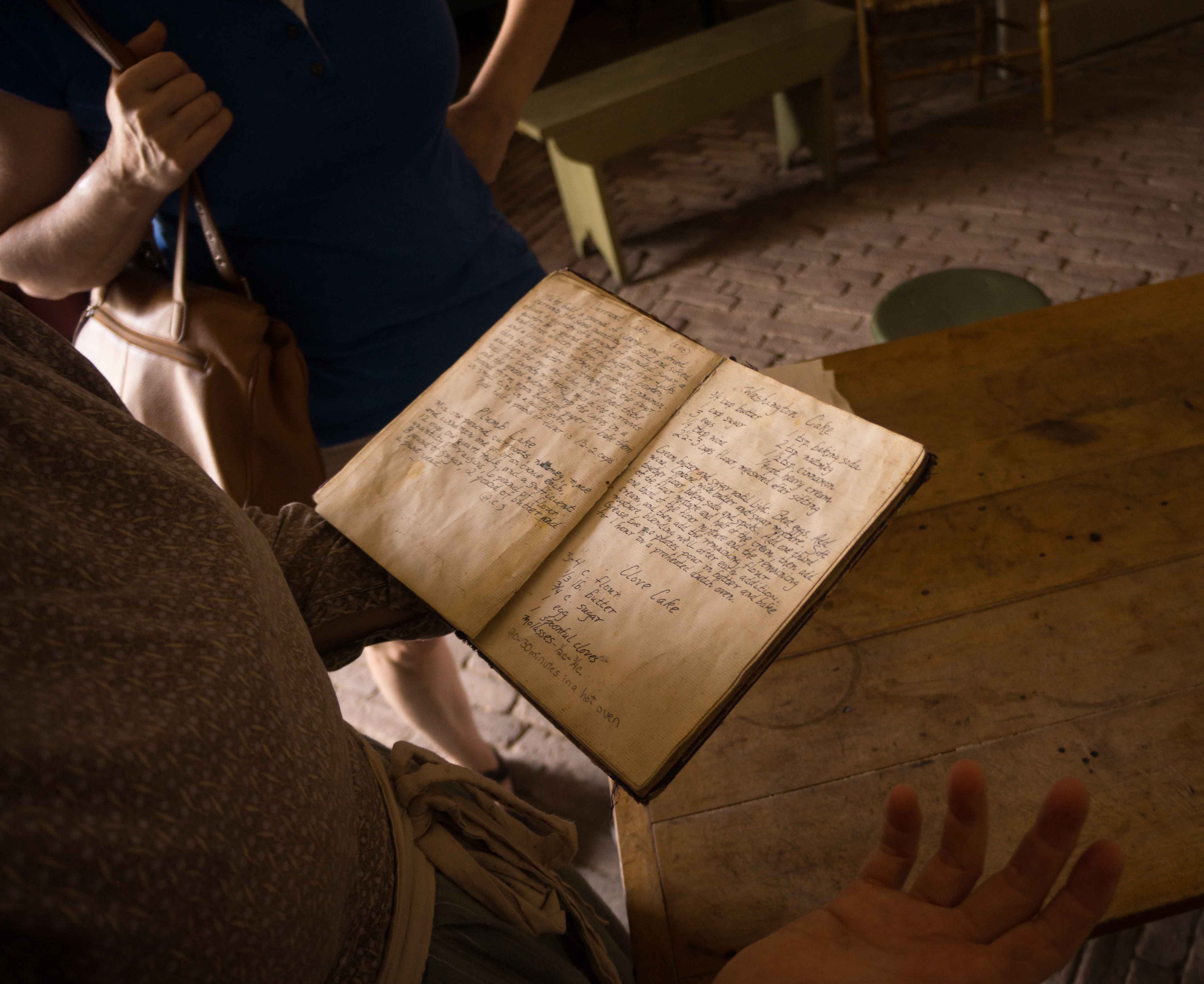
This is what I’m thinking….
We could be talking about drafting an email, an article or a chapter. We could be talking about a curriculum for a class or a seminar. We could be talking about writing a memo to employees or a letter to partners or a speech to stakeholders—anything that requires focused attention for a time so you can spin out and organize the details. We’re talking about anything you need to create from scratch to deliver to others. Any communication that solves a problem you’ve noticed.
Now is when you need an assistant who can move forward without hand-holding. Now is when you need someone who knows what you know without you telling them. Now is when you need a mind-reader.
But there are no mind-readers.
Are there no mind-readers?
I won’t say copywriters are mind-readers. I will say I find myself in situations every week where my client has provided 15-25% of the details but expects our project to organize 100% of the content in a coherent, compelling fashion.
Sometimes I wonder if our close friends, colleagues and collaborators serve as near-mind-readers. With them we feel free to spit out the raw bits of what we know. And as we say it, we realize what we need to do next. To tell someone what is on our mind is the first step to accomplishing a task. Those conversations are a kind of verbal rough draft.
Don’t be intimidated by the blank page. Embrace the notion of doing something mostly wrong and partly right, which is to say, embrace the rough draft.
It is much easier to change words on a page than it is to put words on a page.
###
Image credit: Kirk Livingston
Melted Crayons: What Writing Collaboration Looks Like
Not yours. Not mine. But a new thing created between us.
Years ago we took our kids on the consumerist hajj to Florida’s Disney. We’re more national park vacationers but we resolved to make the best of it. So we battled through the hucksters and scam artists on every corner in Orlando and made our way to the magic kingdom.
It was…ok.
Some of our kids were scared of the rides. Some were thrilled at points. Others (including parents) grew weary of the constant stimulation. I would not be a good spokesperson for Disney.
The most memorable part of the trip was post-Disney, on a drive through the orange groves. At one point we left the rental car for not too long a time to see some Florida oddity. We came back and found crayons melted on the back seat. It gets hot in a Minnesota summer, but I don’t recall crayon-melting hot.

Turn up the heat.
Melted crayons are not any one color. They are a new color that has no name.
Recent writing collaborations got me thinking about those crayons again. Some of my favorite clients invite me into the process by explaining what they want to accomplish with their target audience. They outline the main messages but do not hold those main messages too tightly. They point out the content and invite me to organize and hone the argument so it makes sense. They invite me to retell the main messages. When I come back to my client with something they can react to, we talk and the work gets better and more solid.
The thing is, what we create is not totally mine and not totally theirs. It’s a melted melding of motifs, which we continue to sharpen and fit to the purpose.
It’s a process I enjoy very much.
And it’s a process that is not that much different from our best conversations, where we generate some surprising new thing between us, beyond what either of us set out to say. A sort of intentional, verbal, melting of crayons right before our eyes.
###
Image credit: Kirk Livingston
But Can You Outsource Imagination?
Consider cultivating time to consider
One persistent problem in today’s workplace: no time to think.

Frank Lloyd Wright re-imagined this windmill in Spring Green, Wisconsin.
Open floor plans contribute to constant interruptions, as do the barrage of meetings we file into and out of most days. Projects have fast timelines, which do not lend themselves to fully consider ramifications—so we default to action.
And as Curtis White might say: our deep involvement in (what seem to be) sacred institutional processes precludes us from using our imagination. The way we get things done—all those guidelines and guardrails—also serve as blinders, shuttling us down the same paths again and again. We stop seeing other ways to do things. Maybe we stop seeing that there are other things worthy of our attention.
As freelance copywriter, I see this all the time: friends and colleagues embroiled in their system so deeply they forget to imagine the larger issues having just as much impact. One of the great privileges of my work is to come alongside friends and colleagues to think through an issue from a different perspective. Of course, no one hires me to think (thought that sounds like the perfect job). They hire me to write stuff. But in the process of systematically going through their marketing campaign or explaining how a product works or working through the medical literature, new perspectives pop up. Things my client has not yet considered. Small tweaks to a product or presentation that make a huge difference in the outcome.
Though your workday may seem too tight to think through an opportunity or problem, isn’t it in your best interest to carve out the time to do just that? You can off-load many project tasks, but it takes fresh imagination—possibly sparked by an hour away from your desk—to see things differently. A fresh take can make all the difference in the world.
###
Image credit: Kirk Livingston

Here’s a note to excuse my absence
I’m sorta here and please carry on without me
It’s Monday so I’m sitting in my work chair.
But honestly, I’m sorta still sketching tombstones in the peaceful, cool graveyard. And I’m sorta still walking Dayton’s bluff above the Mississippi thinking how little control we exert over this force of nature overflowing the boundaries we set.

I’m sorta still at the party commemorating an 83-year-old’s deeply human connections and I’m sorta still cycling through Northeast Minneapolis marveling at the fancy systemic alternative to internal combustion. I’m sorta still reclining in an armchair sorting through Robert Sokolowski’s argument for how little time we’ve spent exploring the notion of absence.
So—yes—I’m here.
Just put your post-it reminder on my forehead. And when I return I’ll send you that copy you wanted yesterday.
Or was it tomorrow?
###
Image credit: Kirk Livingston
Today I’m Listening
What can you hear between the lines—and where will it take you?
I’ll start by listening to a set of phone conversations my medical device client fields constantly. I want to hear the questions. I want to hear the responses. But I especially want to hear the tone of the questions. I’m listening for urgency and for actual language used. I’ll write down the words and note the flow and capture quotes. These notes and my listening will guide the communication that takes place next.

Listening goes places.
I’ll spend the balance of the day listening between the lines for another client. But this time I’ll be listening to the text I am creating for them. And I’ll listen to the process they use to serve their customers. Listening and revising and re-jiggering and re-listening.
Listening is required to know where to go next
What—or who—are you listening to today?
###
Image credit: Kirk Livingston

 conversation is an engine