Archive for the ‘Opportunity’ Category
Are Doctors “Ethically Obligated” to Tweet?
No.
Although Wendy Sue Swanson, MD (@SeattleMamaDoc) feels that way about her social media presence (as demonstrated in this clip).
There is one piece of the Hippocratic Oath that calls for casting a wider net in “all my acquirements, instructions, and whatever I know” to those within the physician’s circle. The original oath also called all gods and goddesses to witness and observe, but these days the NSA serves that function (despite HIPAA).
Yesterday’s MedAxiom post by Ginger Biesbrock (“Has anyone seen my Dictaphone?”) makes the excellent point that any new technology adopted should make taking care of patients easier. New technology should not get in the way of treatment, it should not be another hurdle to jump. Instead, technology should simplify meeting the patient’s need. That’s why I’m pleased with the movement to hire medical scribes to complete the electronic medical records in the moment—freeing doctors to treat patients versus keyboarding.
Dr. Swanson’s strong feeling about casting a wider net is likely shared by many if not most physicians. And it just so happens that putting correct information out where regular folks might read it may also be a way to grow your practice—which has been the capitalistic promise of social media from day one.
Sure: doctors are busy. But I cannot help but wonder if more and more physicians will make outward communication (blogging, tweeting, connecting) a priority as they work to free themselves from some routine tasks.
Many already are.
###
Image credit: Kirk Livingston
If a Customer Shouts in the Forest and No Customer Service Rep is Around to Hear it…
Should she post a comment on Yelp?
Nancy Beiersdorf of Medtronic’s e-Commerce and global strategy hinted (in this SAP talk) at the medical device company’s evolution from a product company to a solutions and service company. One important ingredient in this new recipe will be hearing from the people with problems (people in need of a solution) and helping them solve those problems (that is, service).
But hearing from customers is not easy—even for other customers.
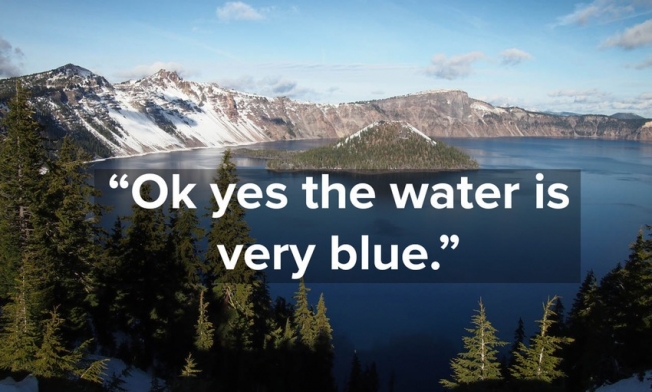
If you’ve ever used Yelp to locate a restaurant while traveling through a new city, you know to toss 30-50% of the comments as someone having (a) evil intent or (b) a bad day. Even our favorite national parks suffer from poor Yelp reviews:
Sorting fact from fiction has been a traditional problem with hearing from the customer. Customer service must wade through long, rabbit-trail narratives to finally get to the actionable item. That is the way of human conversation—sometimes it takes a while to get to the point. All this unquantifiable blather plays havoc with our quality systems. Surely customer service will soon chart a metric like “Time to actionable issue” and pay employees accordingly.
Hearing from customers is an inherently messy business. Especially for Medtronic: where reps once talked only with cardiologists and electrophysiologists now there will be all sorts of real people on the phone (or more likely, placing orders and comments on a web site).
All this conversation cannot help but change things upstream and downstream. In particular I expect at least two results:
- Increasing masses of consumer-to-company interactions will train consumers over time to use certain words and press certain buttons to get what they want. Much in the same way we are conditioned by repetition to bypass our bank’s introductions to get to a real human.
- Corporations may grow more sensitivity toward customer voices–the very thing Ms. Beiersdorf advocates. By that I mean conversations have a way of working backward into the machine-gears of a corporation. As solutions and service show up more clearly on the P&L sheets, people will start to pay more attention to human interaction.
At least that is what I hope.
Let there be more advocates for the customer voice.
###
Image credit via Adfreak
Talk With Those Who Talk With You (DGtC#25)
Humans just want to connect
Social media, like sales, seeks an ever-expanding public. All tweeters want more followers. All bloggers—same thing. Just like the TV networks of yore, where Nielsen Media Research rated efficacy by numbers (and types) of viewers they brought in. Which just happened to coincide with increasing amounts of cash they could wring out of a sponsor for a 30 second span of monologue.
How to measure audience (and collect cash) continues in today’s social media world as various metrics are embraced and/or disgraced: clicks, views, comments, engagement, time spent on a site.
But real humans in earnest conversation don’t care about size of audience. They care about connecting with a person to tell the important thing they have to say or to hear the important thing a friend or colleague has to say. They want to remark on what is remarkable.
Call me a mystic (please!), but I still embrace the notion that the people peppered through our lives are there for reasons beyond our understanding. And those talking to you—today, right now—have something you need to hear and they need to say. Those people right beside you are worth attending to. For their sake. And for yours.
It’s not wrong to widen your audience.
Just don’t lose sight of this moment with those right before you.
Also see:
- Listen to other people’s stuff (#6)
- Dialogue is a scenic bypass (#12)
- “Good to know” and a failure to communicate (#23)
###
Image credit: Kirk Livingston

Big Data Will Never Write a Poem
Art & Craft in a Data-Driven Age
Big Data FTW.
With all the information we collect from you (and Bob and Carol and Ted and Ciley), we know when you’ll buy beer, buy steaks, invest in a crock pot, buy an engagement ring, get married, get pregnant, get divorced, get pregnant again, get diabetes, get congestive heart failure and, well, pretty much any of the human conditions. We know what kind of coffins people in your neighborhood buy. We know this because we track it.
We track everything from mouse clicks to toilet paper purchases.
Because we track things we can make offers you cannot resist because you just thought of it yourself. You just thought of what we already knew you’d think about.
This kind of knowing is the goal of the big-data wranglers embedded in most any marketing group these days, whether an ad agency, a car manufacturer, a hospital or my city leaders. Knowing all means better decisions—at least that’s the promise.

Years ago all this tracking would have set in motion a web of fears about being controlled. But since most of have agreed with Amazon and Netflix that we really should order this lens next and watch that movie next (because others did), we’re at peace with each day’s granular tracking.
Is there a place for the crafter in a world of analytics? I say “Yes” because despite all the predictive analytics, we still connect best with real people. Brands are not known for calling us back to our senses. As our buying and consuming gets easier and easier—which is not a good thing—we need the artists and the crafters and the writers and barista-poets to call us back to a life outside of consumption.
Big data is not likely to predict the veering humans are known for. Because, as they say: past performance does not guarantee future results.
Plus: big data will never write a poem—at least a good poem.
Long live the intuitives!
###
Image credit: Kirk Livingston
“Writer without permission.”
Write On Your Own Dime
A new LinkedIn friend in the Minneapolis/Saint Paul area has a job title “Writer without permission.” The genius of her title is to say out loud what most every writer is thinking—nobody asked for this, nobody gave me permission, and frankly, no one is waiting for me to finish it. The whole thing is entirely self-motivated.
Let there be more of her tribe.

Writers without permission may encamp here as needed–not that you need permission.
Writers often stop mid-sentence and think,
I am entirely unqualified to write this. When will someone knock on my door and say, ‘Hey—Stop it: You got no business writing that.’?
When those Philip Glass moments occur, whether real or imagined, the writer without permission pauses and then continues the sentence. And the next sentence. And so on—breezing past the “No Trespassing” signs posted around the perimeter of the topic.
If you are waiting for someone to say, “You should write about X.” You have a long wait. If you are waiting for a fat check to cover expenses while you draft your manuscript, well that isn’t likely. Although I did chat with someone two weeks ago who received a sabbatical from her job to write a book. So, miracles do happen… and all that.
New stuff happens when we start writing without permission. But the alternative is also true: maybe nothing will happen. Maybe it will fail. Given all the books and writing and words floating around today, failure is likely. Then again, what is success or failure? If just getting your story out is success (I happen to think it is), then start writing. If success is getting famous, well…miracles do happen (and all that).
But there is something more to the kudos and the paycheck—it is a kind of validation that you are doing a good thing, a worthwhile thing, an important thing. It’s as if we need someone else’s validation to gather gumption and move forward. But what if someone won’t even understand what you are doing until you are done—because you yourself are working out the details? And you don’t fully understand it. Not yet.
We celebrate the creative genius of long-dead writers. But how many knew they were writing some landmark story until much later—or ever? Most had to battle the “No Trespassing” signs and the missing fat paychecks. And they created anyway.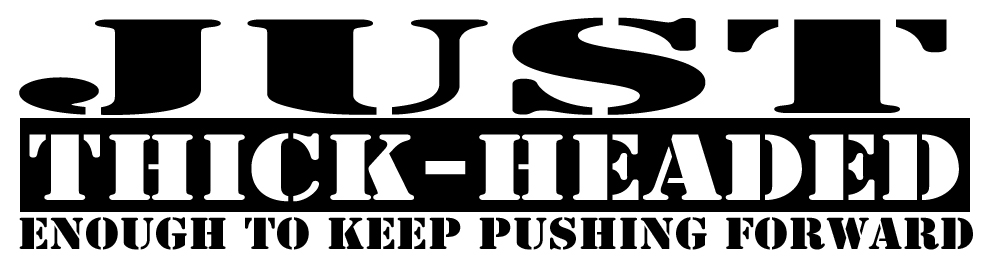
Do you need permission to create the thing you cannot stop thinking about? You have my permission, for whatever it is worth.
Don’t put off creating.
Start today.
###
Image credit: Kirk Livingston
Zumba: Create Your Own [Alternative Dance] World
Learning from “Let it move you”
Advertising’s great advantage is making images that dismiss the real baggage real people carry into the real world. And that’s why we buy the product: we want to be that person so in the zone we don’t realize we’ve been dancing on the conference table in the middle of a budget meeting.
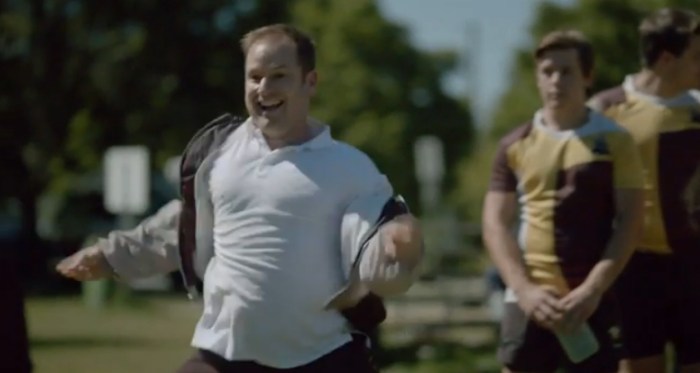
[Click to play at Creativity]
But is “dismissing real baggage real people carry into the real world” really so far-fetched? I’m starting to think not. We’re all marching toward some image of life that we’ve created or someone has created for us.
What are you marching toward?
What could you be dancing toward?
###
Via Creativity
Your Office Needs More “Yes, and…” Men and Women
How to Grow Collaborators 1-2-3
- Share your first thoughts as if they were dumb sketches.
- Wait for—look for—and welcome reactions.
- Then say “Yes, and ….”
- Rinse & repeat.

Clear a space for your team.
You model commitment to collaboration by sharing your first thoughts. This dumb sketch approach to life makes you vulnerable and open to criticism. And there will be criticism. But vulnerability + time creates serious ballast around the notion of getting full engagement from all those around.
Your “Yes, and…” is the other shoe that drops to indicate you are also taking your colleagues seriously. It doesn’t matter whether your colleagues are bosses or employees, “Yes, and…” works up and down the corporate food chain. “Yes, and…” is your go-to reaction to ideas. People will gradually come to understand you think the world needs more ideas with legs and feet, ideas that accomplish stuff.
As kids we taunted each other with how sticks and stones break bones but words, well…you know. But it turns out words have a more complicated existence. In many respects, words have far more power than we ever guessed. And in this growing of collaborators, our words can make stuff happen out in the world (a “speech-act,” one might say). It only takes one committed collaborant (I think I just made up a word or re-purposed a French word) to begin to clear a safe space for collaboration. That space will invite collaborators, who become a nucleus to change a team, a group, an organization—and more.
How will you encourage collaboration today?
###
Image credit: Kirk Livingston
We Landed a Medtech Account—Now What? 3 Understandings
Bollixed and castrated and then we begin
Advertising agencies and marketing firms are eager to land medical device accounts. These prestigious accounts are much desired and would seem to enlarge the status of an agency because of the exacting, rigorous work that helps the human condition. It doesn’t hurt that they seem to pay on time. But having worked with a number of ad agencies once they land such an account, there are a few common threads that surprise principals and employees:
- You’ll need experts: people who know how to work within a regulatory framework (“Claim this.” “Never claim that.”). People who know the words that soothe lawyers while still making sense to humans. And especially people who know their sinus node rhythm from their rhythm method. You will stay on message and every claim must be neatly tied to an article from a respected (first or second-tier) journal.
- Your creatives are (already) wringing their hands. That’s because creative solutions lie on the other side of a legal/regulatory/corporate culture grinder.
- Yes: the company has come to you for creative solutions.
- No: they cannot/will not back-off their own internal legal/regulatory controls. Their own internal machinery will bind and castrate many of those solutions you have used in the past. What a great beginning point!
- There will be rounds of changes. Many rounds. Way more than you are used to. Far more than you can reasonably put in your bid. They will seem…unmanageable. Taming revisions will take your best customer service manners and may take you deep into the internal relationship structure of the firm. But that is exactly the kind of partnering that is needed
If your agency can come to grips with these three understandings without imploding or driving sane people mad, you’ll begin to build a reservoir of expertise.
###
Image credit: Kirk Livingston

 conversation is an engine