Posts Tagged ‘conversation’
Custom Answers to Personal Perplexities
What does a good conversation look like?

###
Image Credit: Kirk Livingston
Collaborate is the New Black
Listening looks good on you
Work often looks like a flavor-of-the-month shop. Depending on which consultants get the ear of those with a budget for adjusting corporate culture, we could be talking about mindfulness, or total quality commitment or getting the right people on the bus—there is no end to the analogies and training seminars and tightly-packed sessions to buy.
Always these programs promise change. Sometimes they deliver.

Here’s why you should care.
But the constant impetus behind these attempts is employee engagement. The days of just showing up to stand on an assembly line or sit in a cubicle are long gone. Putting in hours is not enough—was it ever enough?
Engagement is tricky, of course. Employees work with BS filters set on high, which is why suggestion boxes rarely worked. Everyone knew putting a well-reasoned argument on a slip of paper and dropping it in a box went exactly nowhere.
No—the will to listen, which is near the heart of collaboration—must come from within rather than without. There must be a kernel of mission that speaks to listening to the good people you’ve brought in. The trick is to find that kernel. Engaged employees have done that work, usually on their own time.
I’m excited about a particular client of mine with a compelling, collaborative mission. They’ve invested millions in a particular process that is doing something brand new in the world. My client is lining up eager collaborators from industry and from academia. They are just now setting up systems to deepen their collaboration with researchers across the globe.
But how far are they willing to go with collaboration?
Working and learning together is the stated center of their mission—and this organization lives it out in countless ways. But are they willing to make messages that reach out and pull people in—even with ongoing research? Are they willing to set themselves apart as leaders willing to share knowledge in endlessly accessible research bites that are media and social media ready? After all, my client is partnering with an industry known for its secrecy, so what will collaboration and the inevitable transparency look like with these steely customers?
All that remains to be seen.
But one thing is certain: the will and gifts and curiosity of engaged, collaborative partners and employees is the only thing that will help this move forward.
###
Image Credit: Kirk Livingston
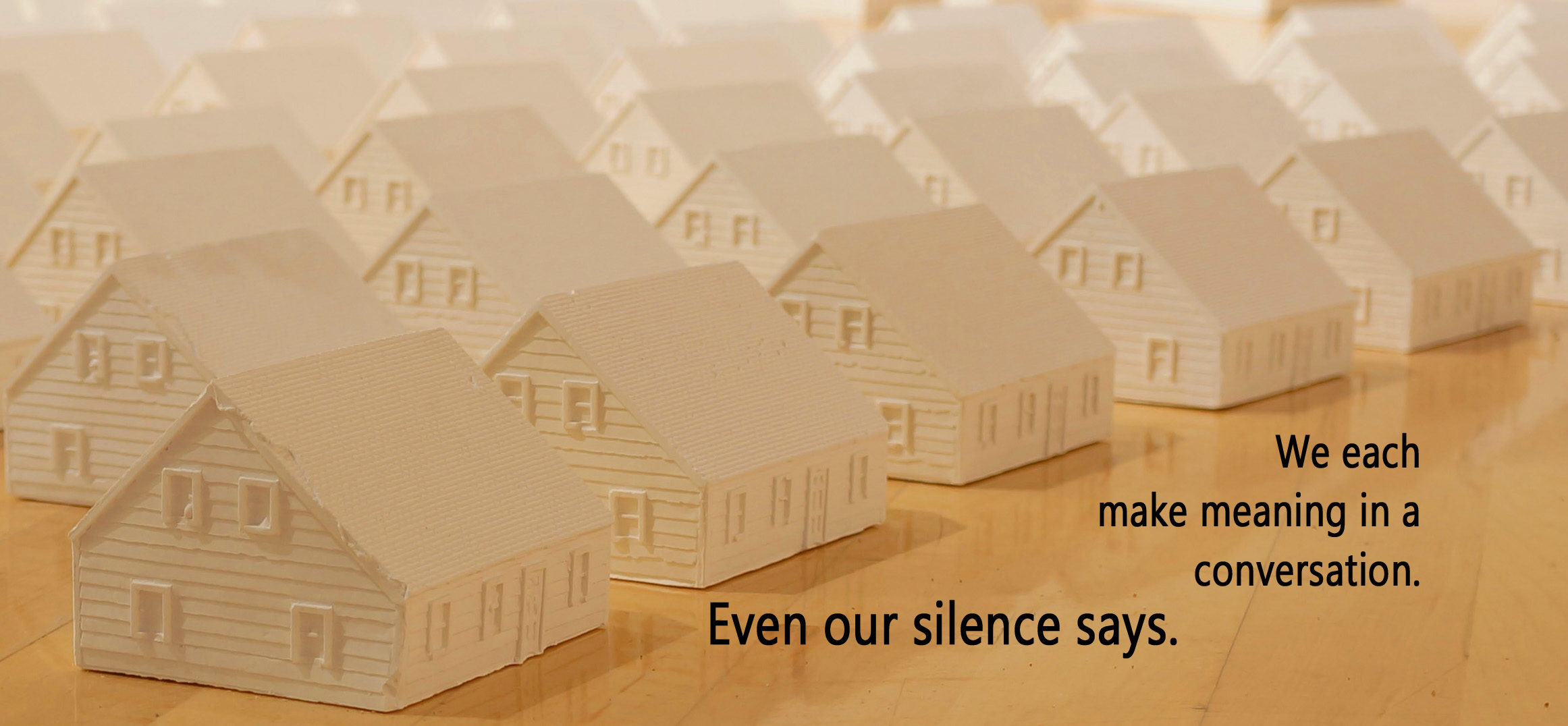
Dialogue 2.0: Can a Marketer Game a Conversation?
Yes. But maybe no?
Lots of us try to figure how to turn a conversation to our advantage.
Marketers increasingly slip us information just when we want it, like Google giving directions to the donut place on the way to my next meeting.
Bad Google.

Carefully observe, one must.
Carl Griffith, writing over at ClickZ, wants marketing websites to recognize and reengage with returning customers via their behind the scenes content management system. He wants websites to engage in dialogue like people do: no need for reintroductions. We know you—you know us—where did we leave off last time? Cookies help this happen, of course. Amazon is an example of picking up where you left off and adding suggestions for more purchasing joy. That is likely where all web properties are headed.
Mr. Griffith goes further: what if we programmed into our content management systems a way to pick up on non-verbals? He means those signals that pass between animate conversation partners (I wrote human first and then remembered how much non-verbal information dogs pick up): the open or closed hands, the orientation of shoulders or head toward or away from the speaker, the eye contact (or lack thereof)—all these bring depth and context to our conversations. That depth and context adds to the words exchanged or belies the words exchanged. Listen to Mr. Griffith:
You will be familiar with the throw-away lines in everyday conversations around the importance of non-verbal communication and what we have now in the world of digital are ways of understanding the more silent and less obvious conversations and dialogue we now have with our consumers driven by context and the insights we should derive from the sum of interaction and engagement.
As a consumer—or for anyone increasingly wary of how our own national security apparatus listens in at will—it’s easy to read sinister overtones into these marketing improvements. Marketers will want to be wary of any resemblance to the NSA, although all the players are starting to look like classmates from the same surveillance school.
But in a human conversation, we start to get the sense of when our partner is yanking our chain—or outright manipulating facts and/or lying. And we back away. Quickly. Perhaps the computer programs that touch our web conversations will go the way of 30 second TV spots—a chance for us to cognitively check-out because we know we’re being sold something.
Mr. Griffith’ vision of dialogue 2.0 is starting to sound like a return to monologue, only in shorter bits and micro-fitted and shoehorned into seemingly ordinary conversations.
Caveat emptor.
###
Image credit: Kirk Livingston (Weekly Photo Challenge: Street Life)
Edward Hopper: How to Talk to Yourself
Can a conversation result in art?
The answer can only be “Yes!”
Not every conversation, mind you. But some will.
Last weekend Mrs. Kirkistan and I (plus our art-student daughter) wended our way through the sketches and drawings by Edward Hopper currently on display at the Walker. As a nation we’re quite familiar with Mr. Hopper’s drawings and paintings—today they seem perfectly obvious explanations of life in America. But I was intrigued by how he got there. What was his process for producing such enduring images? How did he see what he saw?
His sketches look like conversations with himself. Look how he developed the frame for his (well-beloved, much parodied) Nighthawks at the Diner. His sketches add layer to nuance to layer. It’s almost as if he were explaining something to himself with one approximation and then another and then another. Sort of like conversations with our best friend where we allow each other to say it wrong even as we pursue saying it right.
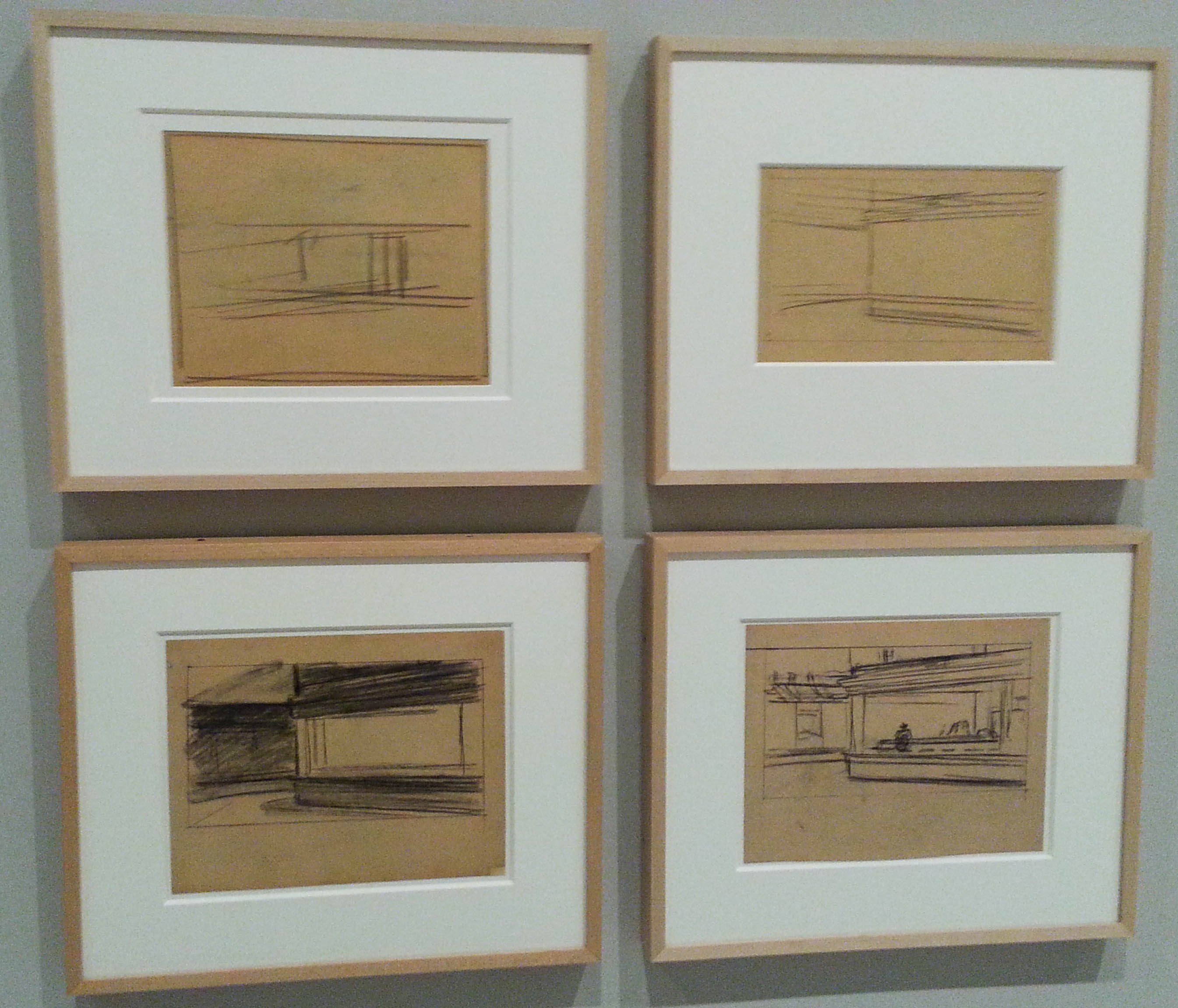
Hopper was a man given to observation and keen on interpreting detail. With quick strokes he captured form and mood and motion. And there’s no question he had an eye for the ladies:
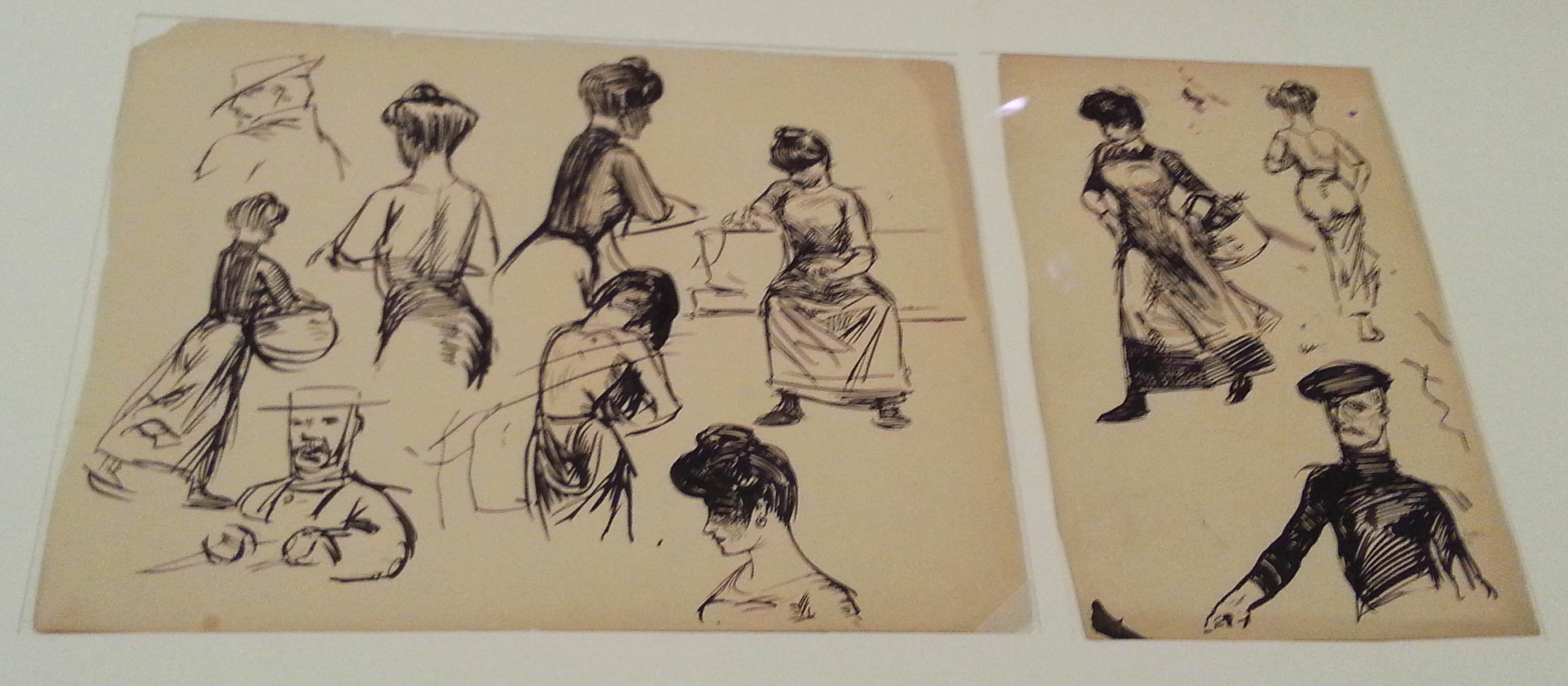
Hopper seemed to never stop observing and capturing. Again and again and again. He spent hours sitting at favorite locations and sketching and perhaps waiting. This quote from Mr. Hopper hints at his process:
My aim in painting is always, using nature as the medium, to try to project upon canvas my most intimate reaction to the subject as it appears when I like it most….
I’ve been a fan of sketches for some time because they give a behind-the-scenes picture into how someone’s mind works. The Hopper exhibit at the Walker does not disappoint. And I cannot help but think how sketches provide such a rich analog to our collaborative conversations.
###
Image credit: Kirk Livingston photos taken at Edward Hopper exhibit, Walker Art Center

Create a Conversation Zone Today in 3 Steps
Make Talk Work at Work
If it’s been a while since you’ve had a truly collaborative conversation at work, take some steps toward that today. Collaboration is starting to register on the radar of many leaders in organizations. Collaboration is the love-child of the free speech we tout in social media and the world of work. Collaboration is freed speech working its way backwards through organizations.
Create a conversation zone in 3 easy steps:
- Acknowledge the human in front of you. “What?” you may say. “That’s pretty obvious stuff.” Not so fast: how many times a day does your mind go dark when the janitor says something, or the clerk—or the boss? It’s the automatic assumptions that run ahead of those conversations that poison the water. Start with this basic thought and you may be able to strip away some of the power distance that ruins conversations before they even begin
- Listen with your eyes. Eyeball to eyeball. No listening happens when my eyes are focused on my Samsung Note II. Don’t fool yourself that you are listening—you aren’t. Not really. Multitasking does not count when it comes to human relationships. I’ve taught enough college students to know instantly who is paying attention, and 93.2% of that is eye contact (6.8% of students have mastered the art of eye contact while entirely absent).
- Expose yourself. Really: tell what you honestly don’t know and what you wonder. Stupidity is endearing when offered without guile. Be the stupid guy. Ask the dumb question. Let it be known that you don’t know.
Good things will happen if you take these three steps today.
Oh, and report back, will you? What happened in your conversation today?
###

 conversation is an engine
