Posts Tagged ‘conversation’
Listen Up: #2 in the Dummy’s Guide to Conversation
The problem with listening is the other people who keep talking
 You’ve opened your pie hole and made like a human: shaping experience into words that can be understood by the humans around you (though it’s still a bit fuzzy how anyone understands anything). You anticipate being stopped dead in your tracks with realization or wonder, right in the middle of a conversation.
But there’s a step to bridge the two: you’ve got to listen.
The traditional problem with listening is other people: they keep talking. When they are talking, you are not at the center and they keep uttering words that don’t refer to you. For instance: they rarely mention your name, which you keenly listen for. They keep talking about their own experience. Why, oh why, don’t they stop talking and ask me about me?
Let me introduce you to three friends who knew something about listening: Mortimer Adler, Alain de Botton and Jesus the Christ. I met Mortimer Adler when I read his book, “How to Read a Book.” Why read a book on how to read a book? Because of the author’s crazy fascination with understanding. He didn’t just read, he annotated, he outlined and he synthesized. He labored over passages in long conversations with the authors. Plus, he made it sound like fun (which it is!). Of course, there is not enough time to do that with every book, so Adler picked what he called the “Great Books.” His Great Books program has gone in and out of style over years, depending on your politics and your conclusions about who qualifies as worth reading.
Alain de Botton writes readable books that satisfy his curiosity and pull his readers into the vortex of questions he counts as friends. If you’ve ever wondered how electricity gets to your house or what is the process behind producing biscuits (that is, cookies) or why Proust is worth reading or why Nietzsche was not a happy-go-lucky guy, de Botton is the author you want.
Jesus the Christ knew something about listening, despite being both God and man. His human condition opened a limiting opportunity which in turn caused him to steal away for hours to converse with the God of the universe. I go into depth on this in Listentalk. But the point is that prayer, which is ultimately more about listening than talking, was a preoccupation of the man who was God.
Listening opens us to hearing—which sounds like “duh” except for when you examine your own listening practices and realize how often you are thinking of something else entirely when your spouse/child/boss/friend/neighbor appears to be talking. But to really hear, to be crazy to understand, to be curious and to be committed to connection opens us to the place where we can be stopped dead in our tracks.
###
Listentalk Chapter 3 Synopsis: Building Communities with Words
Words Can Accomplish Stuff Among Us
We spend ourselves in word-formation without giving it a second thought. Producing and delivering words is our daily task. Words are the currency of our social capital, and we cash them in on paper, orally and electronically. And yet even as we spend our words to persuade or motivate someone to action or even command (perhaps depending on the context of hierarchy to provide the whip missing from our voice), we sometimes bank up even more social capital. Words are the giving that keeps giving—sometimes for good. Sometimes for ill.
Our words can be deposits in a community-wide bank as we annotate a context that helps a group self-identify, clarify tasks and purposes and simply move forward. Our words can pinpoint the human condition in a way that names a common problem or promise and so frees others to tackle it. Our words often fly out in camouflage simply because they blend in so well with all the other words flying through the air.
The opportunity to let our words fly is changing on a monumental scale because of technology and because of new attitudes of who, what and how to hear from each other. The opportunity has opened a wide new vista for forming community. But this is no time to hold back. No. It is time to jump in.
###
Listentalk Chapter 1 Synopsis: The Preacher and the Farmer
Conversation can be a scattered affair or it can be strategic.
The street preacher tosses out words that may pull in a passer-by. The street preacher might even aim and deliver those words to his mobile audience, hoping to bring some casual listener to a full stop. The farmer also tosses out seed and hopes for the best. It’s just that the farmer plants systematically, knowing she has given her seed the best environment for growth by choosing the well-drained plot of rich loam and cultivating it before planting.
Is dialogue more like words scattered by the street preacher or like words systematically implanted for growth by the strategic communicator? The moving parts of a conversation are put on display by an overview of philosophers Martin Buber, Emmanuel Levinas, JL Austin and John Searle. Context, content, character and intention all play a role in how our conversations move forward. Finally, observations about what makes for a good conversation, including thoughts on control, disruptions, rhetoric and the place of whimsy/serendipity.
###
Hey buddy, can you spare a story?

Every Conversation Does Something
I’m writing a book called “Listentalk: how simple conversations change your life every day.” You can read the raw argument here and the beginning of the Dummy’s Guide here and see the larger picture here. The book currently has eight chapters and 85,000 words and I’m starting to market it. But I fear it is too esoteric.
So… this plea to you.
I need roughly three dozen stories about conversations that altered your life. I’m looking for those conversations where an innocent, even mundane exchange turned into something much larger. It’s usually in retrospect that we recognize these conversations. At the time they seem like nothing. But a decade (or three) later you remember the talk or the person or the exchange as transformative. The conversation was a turning point. Maybe your life today reflects something of that conversation.
Would you tell me your story? Would you tell me two stories? Contact me through the comments below and we’ll talk and I’ll listen. I’ll even listen if you tell me someone else’s story. But I’m looking for true stories.
Can you spare a story?
###
Open Your Pie Hole: #1 in the Dummy’s Guide to Conversation

Talking can feel like a leap.
Do you remember the conversations that changed your life?
Decades ago a guy gave a talk at our church. This guy had made a career change from working as a medical device executive to becoming a leader in the denomination. In a quick conversation after his speech, I mentioned my interest in the medical device industry. He gave me a name to call. I called the guy that week and caught him at a generous moment—despite being an executive himself he spent 30 minutes telling me what he loved about the industry, the company and how helping people provided meaning for his workday. Then he gave me Dave’s name, said I should call Dave and drop his name.
I did that.
Dave turned out to be the best boss on the planet.
The conversation followed by the conversation followed by the conversation turned into decades of writing for the medical device industry, starting with Medtronic. The point of the story is that conversations can take us places we might have wanted to go to but had no idea how do get there. Of course, conversations don’t always work like that, but it happens more often than we might realize. In fact, I think simple conversations change our life every single day. That’s my premise as I write “Listentalk: How simple conversations change your life every day.”
Those conversations start with the courage to share what is going on inside—sometimes deep inside. Using words. Out loud.
Can you remember a life-changing conversation? Tell me.
###
I’m Writing a Book called “ListenTalk”
I’m writing a book about talking and listening. I’ve become crazy about what happens in our best conversations: we come alive. We learn something about another person and in the spontaneous moment of creation as we frame up words to describe our own situation, we often suddenly learn something brand new about ourselves. Something we didn’t know before we started talking. I’ve begun to think that when we are in conversation, we are more truly ourselves. And the best conversations have a way of making us very present to each other.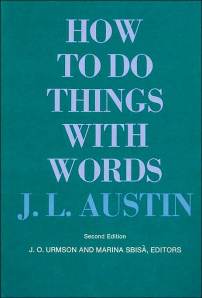
I call this book “ListenTalk: You’re Boring. Let’s Change That.” I think we were created to be in constant, deep, creative, spontaneous conversation. Not just with each other, but with God. That’s why parts of the book develop a theology of communication, starting with God’s act of creation, where His speech-act created dirt and air and giraffes and coffee beans and people, among other things. So you can see that with my book I hope to bring together something of JL Austin’s work on communication with a commitment to faith. Maybe I’m trying to do something impossible. I’m not sure. In a few days I’m scheduled to talk with a philosopher and speech-act theory expert at the University of Minnesota. I’m interested in his response to my notion of combining these things.
Two more pieces of this book project capture my attention in a big way.

Derrida and Welcoming the Other
One has to do with Derrida’s notion of welcoming the other. I recently finished James K.A. Smith’s “Jacques Derrida Live Theory” (Amazing: the book retails for $120! No wonder I cannot afford most of what I read) and was pleased to see a philosopher working from a faith perspective dealing with Derrida’s thoughts. I was impressed to see overlap between Derrida’s notion of welcoming the other into conversation and the God of the Bible’s commitment to welcoming the other. The Bible talks about reconciliation, and that definitely includes welcoming the other. What reconciliation does not mean (and here is where Derrida is particularly helpful in helping throw off some of my Christian cultural baggage) is making the other like me. We’re all tempted to make those around us like ourselves. But that effort misses the point of the kind of conversations that will sustain us.
Is Prayer a Model for Conversation?
Pulling more from theology than communication theory or philosophy on this last point, one of my chapters looks at prayer as the Bible talks about it and posits that we were meant to communicate with each other along these lines. Nothing really mysterious or unorthodox, I just wonder if the way we communicate with God (listening followed by moments of intense listening, and then very frank speech) is meant as a model for how we communicate with each other. Maybe listening is to take more of our effort than talking, which is a lesson advanced people of prayer seem to know.
Social Media is a Way Forward
This book ends with the notion that people of faith are currently presented with a rich opportunity to create and be in conversation. People of faith would do well to place ideas out in the public common areas, since there are far fewer gatekeepers, and see how people respond. This is part of the class I teach at Northwestern College called “Building Community using Social Media.”
What do you think? Would you read a book like this?
###

 conversation is an engine