Posts Tagged ‘dialogue’
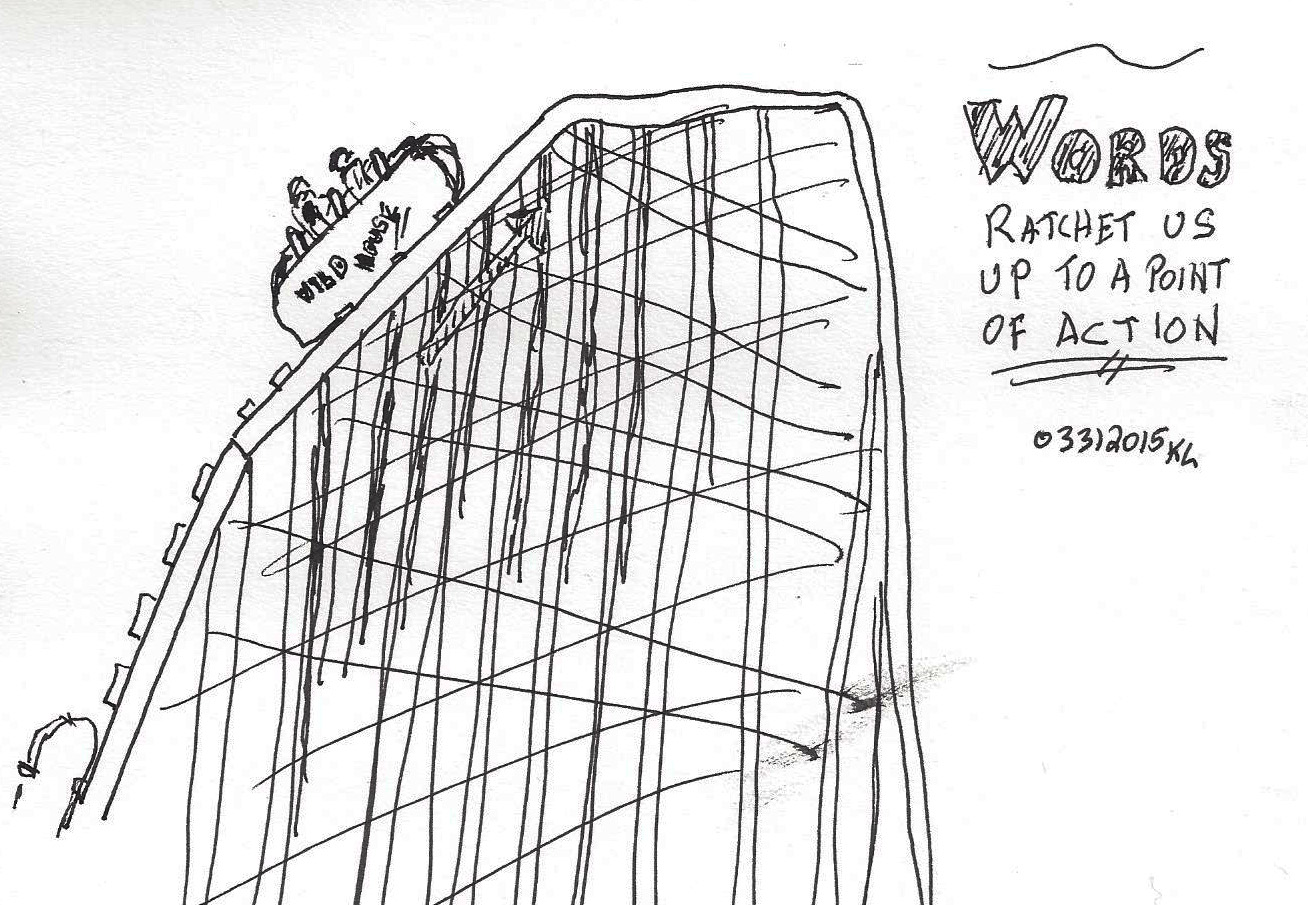
Let’s Talk: Will You Fly This Plane into a Mountain?
Listening-Rhetoric and Public Conversations Gone Private
To the casual news-reader, it’s looking more like the German copilot purposely flew into the side of a mountain. Given that, it’s not hard to imagine last week’s conversations between airline human resource vice-presidents and corporate lawyers:
- How do we screen for lethal depression?
- Let’s get serious about that two-people-in-the-cockpit rule.
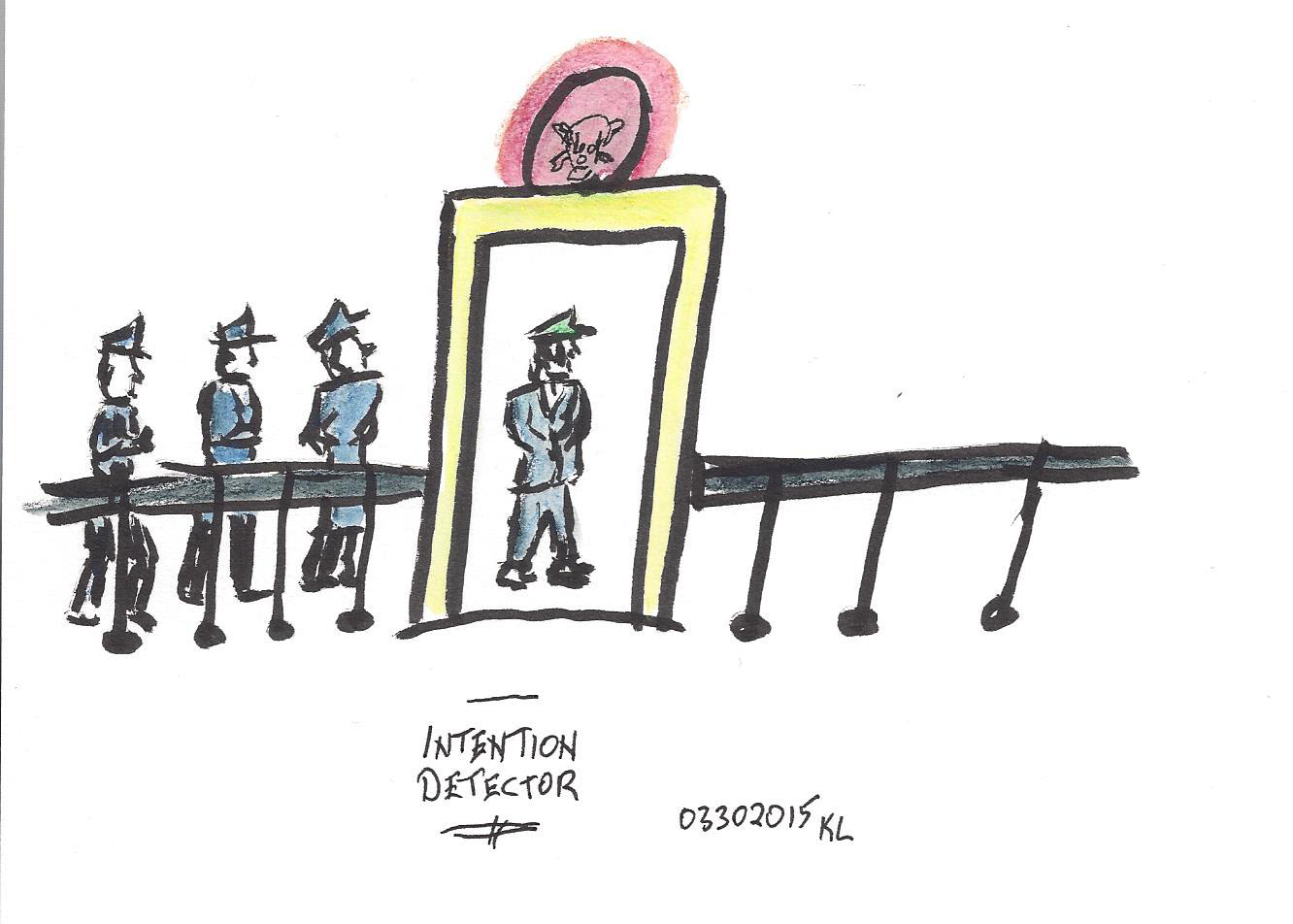
- Is there an intention-detector we can employ before anyone—pilots included—steps into an airplane?
Intentions frame how we talk and how we listen. Wayne Booth posited that sometimes we come into a conversation with the intent to win—to bash our conversation partner into submission with whatever way we can. Sometimes we come with the intent to bargain, and so we are ready with a list of conciliations. Sometimes we come to listen and learn. Booth called that “listening-rhetoric” and recommended it as an antidote for stupidity, partisanship and as a way to “pursue truth behind our differences.”
People will speculate for a long time on the pilot’s intentions and actions—which we will never fully know. But as lawyers and HR talk I hope they will also examine the role of relationship-building conversation as an antidote to isolated suffering. Suffering that may become lethal.
###
Dumb Sketch: Kirk Livingston
How to talk with someone who rarely finishes a….
You know what I mean

A: Are you one of those people who never finishes a….
B: Sentence? No.
A: Because sometimes I get near the end of a….
B: Sentence?
A: No. A thought. I just assume the other person, you, in this case already knows the word that comes….
B: Next?
A: Yeah. And I figure, “Why bother reaching for that last….”
B: Word?
A: Exactly. I’m just ready to move….
B: On?
A: No. Forward. I want to keep the conversation….
B: Going?
A: Well, more like moving forward. To some definitive….
B: End?
A: Some conclusion. Some well-developed notion. Something that has passed between us that we can agree with or….
B: Disagree with?
A: I’m just ready for the next ….
B: Big thing? Me too.
A: Yeah. I hate those people who go so painfully….
B: Slow?
A: Yeah. Those people who labor over every word, especially when you already know what they’ll….
B: Say?
A: Well, more what they are thinking. So you just sit waiting for the next….
B: Word? But you never really know how someone else will finish a….
A: [–]
A: Yes?
B: Sentence.
B: People can surprise you.
###
Image credit: Kirk Livingston
How to step into a conversation. And when to step out.
Can presence and distance live in peace?
The philosopher, the writer, the journalist—and many others—work at cultivating distance in relationship even as they stand in the present.
Why do that?
The work of analysis, of illustrating via story and reportage all require distance for the facts to sort themselves. Just like the passage of time has a way of revealing what was important ten, twenty and two hundred years ago. Just like the artist learns to imagine a two-dimensional plane to begin to make marks with/on their media.
Distance starts to open a way forward by helping us see differently. Presence demands attention—that’s the human piece of empathy and mercy. Sometimes we need to slip from present to distant and back again. All the while avoiding absence.

My conversation with the hospice chaplain reminded me of the help a bit of distance brings to sufferers and those in grief. The person slightly distant brings a perspective the sufferer may need to hear, though that perspective may not be immediately welcome. Best if that slightly distant perspective comes wrapped in empathy and mercy.
But even at work we can cultivate a bit of distance for the sake of clarity. When the boss pontificates it doesn’t hurt to ask why she does so and what rhetorical goals her sermon serves.
And even at home we can mingle distance and presence: staying present with family (versus attaching to whatever screen or podcast holds our attention) is the first order of business. But we bring perspective when we step back.
We need presence and distance to move forward.
Absence rarely aids progress.
###
Image credit: Kirk Livingston
We’re Bigger Than This
Helping Colleagues See the Larger Story
Bad manners and ill-treatment make headlines in personal conversations at most of the companies I’ve worked for. Just like in our newspaper or aggregated news sources online. People often say they wish the newspaper published good news, but they would not read it if it did. Good news—things going right for a change—few have time or interest for that.
Naturally this is so: stories of the people around us always take top billing in our conversations. Family, colleagues, neighbors, we love hearing what each other did and we love to relate a story about someone else, especially if funny or it has some emotional content that will get a reaction. It is the emotional content, whether funny, sad or repugnant that we really want to get across to each other.
It is our way of connecting: we want to stir a reaction.
It takes a concerted effort not to talk about the people who are not there. Leaders see personal interactions as an opportunity to steer interest toward something larger. But that larger thing is not the mission statement produced by the top brass or Human Resource, which is typically a lifeless bit of plastic. The real stories, the ones that make leaders out of ordinary citizens, are those stories where something of the corporate or group mission has made its way into and through an ordinary life.
One boss related a conversation she had with a far-away department. The department director praised specific people on the team and told of specific details that helped their group move forward. When our boss told this to the team in casual conversation, people blossomed.
We need more connection with larger mission—even if it seems hoky at the time. And we need less stories about how bad/abnormal/demonic are the people not present.
###
Image credit: Kirk Livingston
Electricity. All Around You.
Questions About Your Grid
How much connectivity do you lose by waiting for someone else to speak your language?

What would you gain if you reached out with what little you knew of a stranger?
###
Image credit: Kirk Livingston
Gadamer: A Tormented Relationship to Writing
The Best Writing Sounds Nothing Like Writing
Good writing is where you remember nothing about grappling with words but are instead transported with images and ideas that appeared in your brainpan. Effortlessly—or so it seems.
This kind of effortless reading is exceptionally rare with philosophers, who are well-known for obfuscation in their pursuit of parsing detail and cleaving difference from sameness. And yet Donatella Di Cesare, the biographer of philosopher Hans-Georg Gadamer, claims Gadamer’s writing style is “lucid” with “striking prose.”
We’ll see about that.
The lucid philosopher is the exceeding rare philosopher.

I’ve just picked up Gadamer: A Philosophical Portrait by Donatella Di Cesare (Bloomington, Indiana: Indiana University Press, 2007). In the introduction Di Cesare shared about her process:
There is a further difficulty that a monograph on Gadamer should not avoid, and that is his tormented relationship to writing. In order to get around his Socratic resistance to writing, he preferred the form of the lecture, the talk, or the debate. It is not an exaggeration to say that almost everything he wrote is based in dialogue.
She goes on to say Gadamer is “always careful to interrogate everyday language and to avoid rigid terminology,” so I am eager to see how his prose ends up as lucid and striking rather than simply tedious.
What piqued my curiosity was Gadamer’s alleged privileging of oral over written. It seems his inquiry was largely based in discussion, between people, rather than one man alone with a sheet of 20# bond and a pen. Again: I’m just at the beginning of reading Gadamer. I’ve got his big Truth and Method on order, but I know from my own writing that dialogue and conversation have a pull that abstract philosophizing rarely reaches.
The best writing sounds like a conversation with an interesting friend. I’m eager to see if Gadamer achieves that.
###
Image credit: Kirk Livingston
How to Anticipate a Thaw
Sometimes life mirrors fiction
My client needs a strategy for their online presence.
They know their presence appears text-heavy and pedantic, making them less attractive to the new audience they seek. My client’s online presence must quickly inform the querying audience why they should care, but this message needs to be packaged with a color palette and intuitive organization that say “Come in!” long before the audience gets to the headlines, let alone body copy.

All sorts of off-the-shelf tools can make that happen these days. WordPress has a number of themes that can invigorate tired old websites.
But what I’m interested in is the engagement-promises my client can make that are deeply true. The organization itself is on the cusp of change and their online presence is a first new thing to present a refreshed vision. As such, their presence needs to be aspirational (“Here’s who we want to be”) but also rooted in long-held values. Their new presence needs to reflect the hard-won, chiseled facets they have come to love—facets that may just present new ways forward.
When I get stuck writing a piece of fiction, I go back and see what my characters have already been saying and doing. And then I retrace their steps along a new trajectory. And that is exactly what my client needs.
This is a team effort situated in real life. And this team effort will retrace and map and begin to outline a new trajectory. This team hopes to generate a conversation that precipitates a thaw after a long winter. We hope this conversation will pull in those who have long been hibernating.
###
Image credit: Kirk Livingston
“6 things I learned after drawing 319 drawings in 4 months and 13 days”
Especially #6. Buy Why Does #2 Work?
I follow One Drawing Daily in my attempts to produce my own Dumb Sketch Daily. But whether you’ve made it a point to draw or paint or sketch or shoot photos (or write essays or verse or reflections) there are some curious things about developing and sharing daily habits.

Read One Drawing Daily’s whole post (please!) but I’m particularly interested in #6: “Draw whatever you feel like.” Much of art—like much of life—seems to be about absorbing the sensibilities of the taste-makers among us. Critics, media, famous artists. Famous people who are famous for being famous. There is a subtle pressure to like what they like and do what they do. But uniformity is not the great thing about the human condition. One of the great things about the human condition is that we all have a slightly different take on things. I love seeing different people’s perspectives. And developing your own perspective takes time and attention. But out of the habit of time and attention come a point of view.
And #2 still enthralls me: “Share everything you do!” How is it that the simple act of sharing something can have so much impact? It’s true with writing, true with making dumb sketches. It’s true with our ordinary conversations and when we confess some secret to someone else. It’s true with my clients: as they come to understand the power of sharing expertise and passion, all sorts of things start to happen in their business. It’s still shrouded in mystery for me, this sharing thing, but I’m pretty sure it triggers something in us that simultaneously wakes us up and fine-tunes consciousness.
What habits are you building?
###
Image credit: One Drawing Daily
George Saunders: How do you energize someone?
Sometimes it will be a word.

Bright bits among the ordinary.
George Saunders, on the odd little Zen parables he heard growing up. Told for laughs, they also carried deeper hints about how to live and what is important in life:
My whole childhood we lived next door to this family I’ll call the Smiths. We didn’t know them very well at all. At one point, Mrs. Smith’s mother, who was in her nineties, passed away. My dad went to the wake, where this exchange occurred:
Dad: “So sorry for your loss.”
Mrs. Smith: Yes, it’s very hard.”
Dad: “Well, on the bright side, I suppose you must be grateful that she had such a long and healthy life.”
Mrs. Smith (mournful, dead-serious): “Yeah. This is the sickest she’s ever been.”
My dad came home just energized from this. I loved his reaction.
–Mike Sacks, Poking a Dead Frog: Conversations with Today’s Top Comedy Writers (NY: Penguin Books, 2014), 241.
###
Image credit: Kirk Livingston

 conversation is an engine