Archive for the ‘Brand building’ Category
Ben Kyle: Hey—What if We Did a Living Room Tour?
The Dog Days of DIY
 There is no one on the other end of this telephone connection who can help set up my new smartphone. With my last several technology purchases I’ve found myself alone in the final fine-tuning that actually makes the device work. Oh—there is certainly tech support. But my questions seem to send the customer representative to their supervisor (>30 minutes on hold) for answers. Not because I’m so smart, only because I am the chief of my cobbled-together IT system and I seem to always demand awkward things of said system. This is my penance for pushing for non-standard capabilities.
But maybe do it yourself is not such a bad set of expectations.
And maybe do it yourself is the future of, well, everything.
A local artist I find myself listening to again and again—Ben Kyle of Romantica—seems to be doing this very thing. He’s taking his music into the homes of friends and strangers. Right into their living rooms. Pot-luck and BYOB. Sign up here and you’ll see Ben singing from the ottoman. Can this be literally true—have I got this right?
If so, I’m watching for other artists to do the same. Why not run a DIY art gallery (oh, wait, that’s been done for years). Why not bribe neighbors with brats and beer to come to my book reading? Why not summon an interpretive dance-off on my front lawn?
As a nation we’ve always been enamored by fame. Anyone’s definition of “making it” inevitably carries some component of fame. You’re a success when everyone knows your name. If everyone knows your name you are a success. How else to account for the seeming success of the Kardashians who are famous for being famous?
But this DIY future doesn’t look like mass audiences following influential taste-makers. At least not at first. Ben Kyle is on to something that real influencers have known for years, that building an audience is a person-by-person activity. This is the word-of-mouth model: generally slow but immensely effective.
And maybe anything worth doing is worth doing one-on-one, despite what our national psyche longs for. I’m with Mother Teresa on this one:
Do not wait for leaders; do it alone, person to person.
###
Image credit: Francesco Romoli via 2headedsnake
Why I Like the Dumb Sketch Approach to Life
The Lure of Rough Drafts, Quick Observations and Badly Drawn Lines
I made this dumb sketch when visiting our son working in Madison, Wisconsin. Madison holds lots of memories for Mrs. Kirkistan and I: we went to school and met at the UW, we met amazing people who remain friends today decades later and made big directional choices. It was a place for fiddling with and setting trajectory—it still is that today.
Like most summer weekends there was a concert on the Memorial Union Terrace. This jazz festival (see dumb sketch) was running all weekend. These days it seems all of Madison turns out at the Terrace.
 Yesterday I quoted photographer Henri Cartier-Bresson likening his camera to a sketchbook: it helped him instantly sort the significance of an event. And that is exactly what sketching does: it is an entirely imperfect representation (at least my sketches are) of what we all saw. Dumb sketches invite participation, which is why my colleagues and I often employ dumb sketches as we work through a direction with our clients.
One of the functions I relish as a copywriter is this responsibility to provide a rough draft. The rough draft is this work of writing out the position or power of my client’s product or service so others can respond. Or sometimes I’m summarizing and sharpening the science behind a product so we can see more clearly why it is important. Rough drafts are both right and wrong at the same time. The power of the rough draft is to set a thought out in the open where others can reach and tag it. After all, you can’t change something that doesn’t exist. The point is collaboration: how is this right? What do we know that can make this more right?
Saying aloud what we know and what we believe is the verbal equivalent of a rough draft. And saying aloud what we know is more than helpful. It is part of the human condition and not to be missed. Our conversations reveal who we are and what we know even as they and invite participation. Getting it wrong sometimes is part of the deal.
That seems like a good approach to life.
###
Image credit: Kirkistan
Care Guides: In Praise of Knowing Nothing
The better to listen
 Allina employs people to work the space between a physician’s prescriptives and the patient’s adherence to said advice and prescriptions. (May 6 StarTribune: Care Guides show another face of health reform)
Maura Lerner’s story shows a comical side to healthcare that should surprise no one. The comedy is not that hospital systems would employ people with little to no medical training (that makes good sense to me). The comedy is how many patients and physicians have learned all sorts of dysfunctional ways of interacting and not listening to each other.
Betsy Snyder, 23, never wears a white coat on the job. She wouldn’t want her patients to get the wrong idea.
Care guides make sense because they feed corporate efficiency objectives of moving physicians quickly from patient to patient, which serves to maximize those costly human assets. And certainly care guides will try hard to work within their contractual obligation to not practice medicine not matter how hard the kindly older woman pushes for such advice (especially since they’ll quickly be out of a job if they do).
The key common-sensical notion here is that the care guide becomes another interpreter of the physician instructions. And as they discuss prescriptions and compliance with the patient, they are another voice advocating for improvement. And since they arrive without the baggage of years of training they are free to listen.
And listening is the key. Listening and talking—such simple things—but these are the missing ingredients in treatment. Just because a physician prescribes doesn’t mean a patient complies. But talking it through, why, maybe it is actually a kind of therapy trigger.
Care Guides are a positive development as healthcare corporations try to relate to humans and their conditions.
###
Image credit: Courtney Perry via StarTribune
I hate you so much love from me to you
When to poke your target audience in the eye
My client needed to reinforce the why behind a clinical trial. We needed physicians to remember their tried & true therapies didn’t always apply under this particular set of calcified conditions. We hoped for a visceral reaction to help change fixed treatment habits toward a killer disease. The poster was both over the top silly and aimed at the gut of a largely intellectual audience.
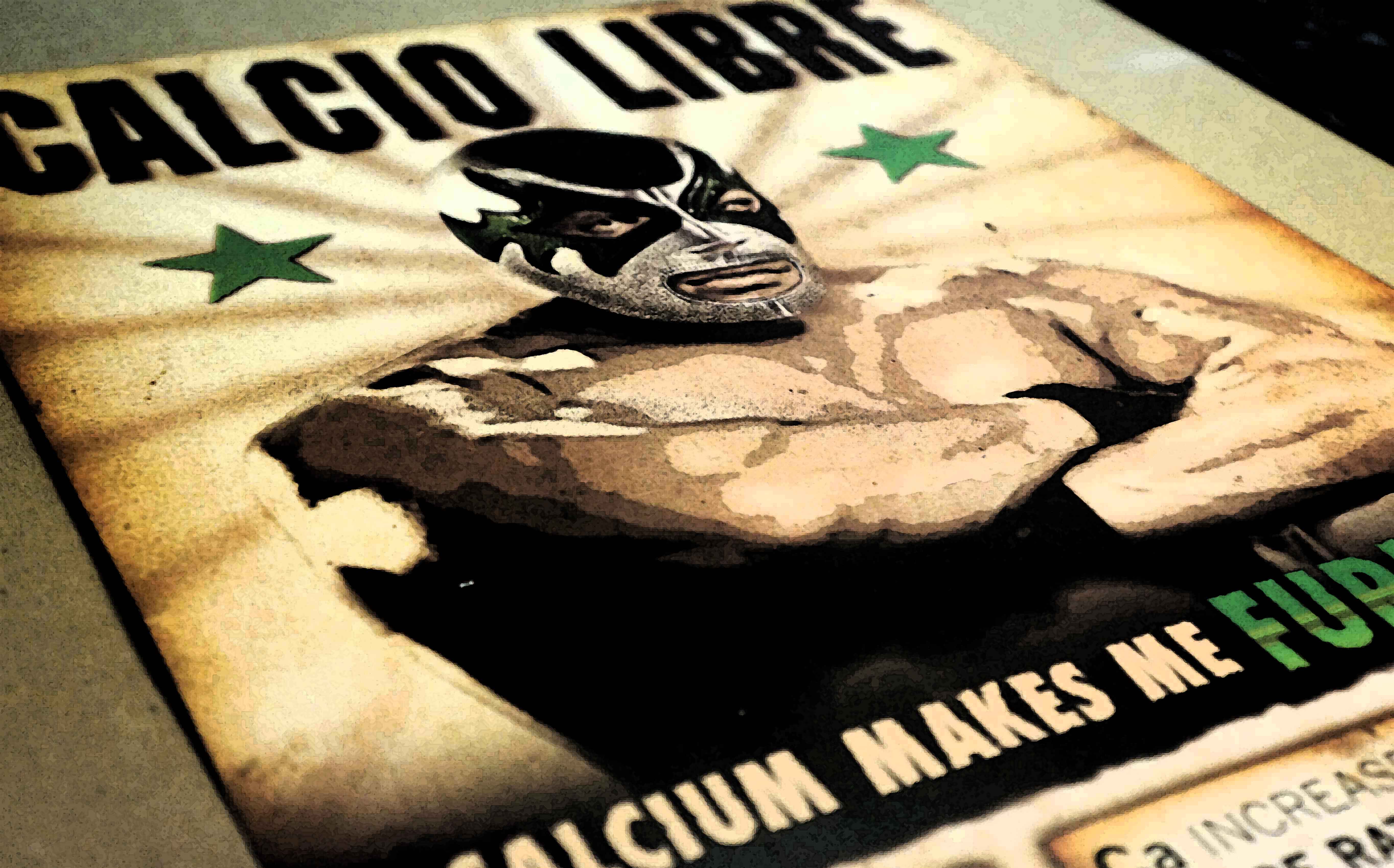
Some hated it. Some loved it. Some thought it went too far and was not appropriate for a clinical setting. Some found their rage against the disease. The poster polarized even as it got attention. And that was the point.
Not all our communication is meant to slip into the space between us like links in a chain moving meaning smoothly from your mouth to my brain. Sometimes you need to jar me from my stupor so I can really understand what you are saying. Because what you are saying is urgent and important and not business as usual. This is why teachers make students stand and move every 15 minutes or so—to restart the brain. This why street preachers are uncomfortable and often memorable.
Rather than automatically aim for consensus, challenge your team about the kind of reaction you want from your target audience. When does it make sense to provoke?
###
Your Product: Light of My Life
You Complete Me.
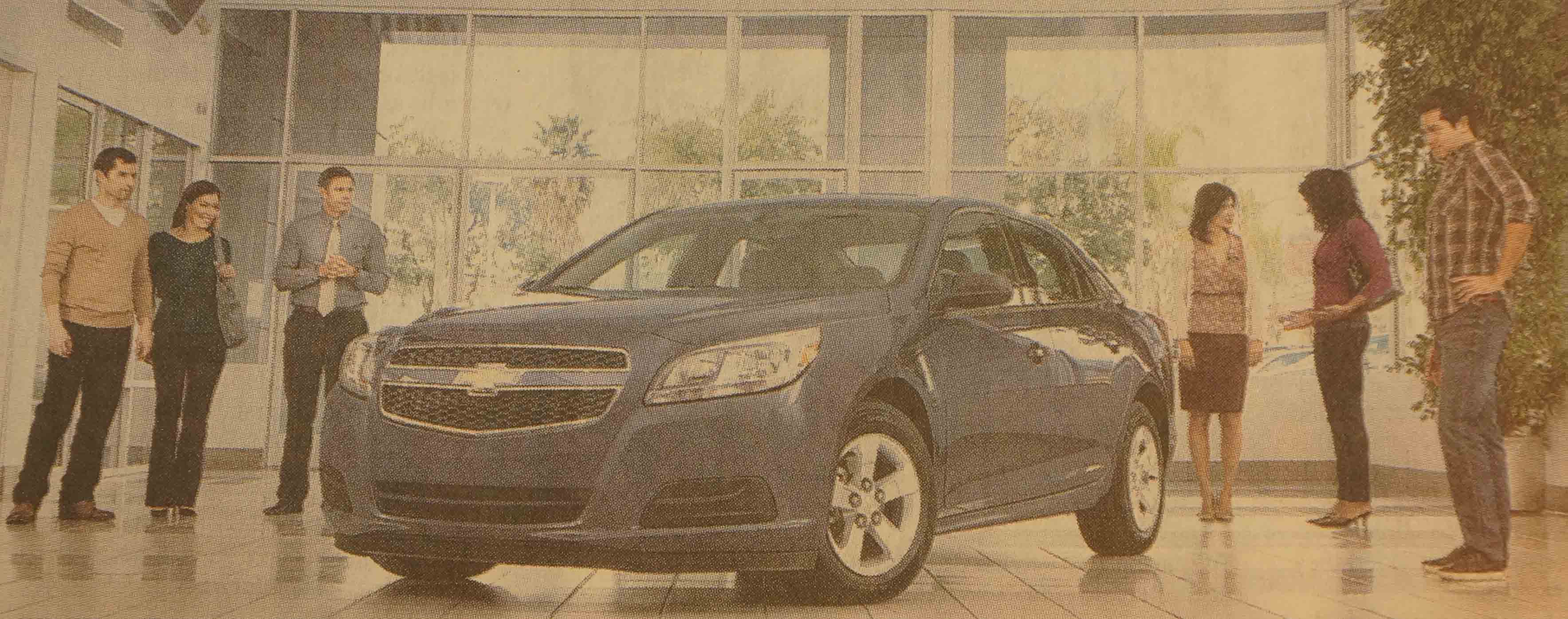 Am I right? The magnetic power to draw citizens off the street. The hushed tones in the presence of greatness. The loving gaze. This car will change your life—perhaps it already has?
The fawning devotee image is standard fare in our media diet. Models perpetually doing homage to the product at the focus of all attention. Chevy, Toyota, Cadillac—who doesn’t make ads like this? Product as hero. Forever. We see this everywhere.
Somersby recently turned the Apple experience on its head by grabbing the dead-earnest communication style to appropriately ridiculous ends. It is perfectly reasonable to poke fun at the high places certain brands have taken in our lives.
Can we get beyond product as instrument of life change? True: it is possible that some consumers (that is, those who have already chosen to purchase a car/beer/computer/whatever) may look with unbridled lust toward their purchase, this object of their desire. But is it possible to promote a product without making the (thoroughly ridiculous) promise that it will indeed change your life?
Maybe not. Because quickening desire has always been at the heart of selling, and nothing quickens desire (and loosens the wallet) like showing the person you will be once you buy this car/beer/computer/whatever.
Maybe so—and this may be what is behind the eventual victory of online advertising: product messages that follow our search patterns and interrupt us with the key to what we’ve already been seeking.
Maybe both. Because desire follows a need or want. And we want what promises to make us different. Better. Smarter. Hipper. Advertising will always make these promises and will find ever new ways to get the message to us. And because we self-identify as “consumers” we’ll probably never run out of the optimism that buying stuff will change our life
It’s just that the loving magnetism of the Chevy image seems, well, juvenile. It’s a credibility issue.
###
Stuffing Spinach and How Engagement Takes a Lifetime
Not page hits or likes, though comments get closer to true engagement

Anybody who has tried to communicate a message knows it takes time, effort and budget. Or if not budget, patience and persistence. But budget helps.
Our writers know this. Louise Erdrich in a recent talk at Concordia University about her National Book Award-winning “The Roundhouse” talked about how she incorporated themes that were important to her in a way that would still be read by readers:
“As a writer, I want to get this message across. But I’ll only do it if it is a suspense novel. I wanted to make a book that you could not put down.”
“And then I would stuff in the jurisdictional legal issues like spinach in a sandwich.”
Spinach stuffed in so you hardly realize it’s there. To get her message across, she had to write a story so compelling that a reader would willingly read on.
Today we talk constantly about apps and software and sites and techniques that allow a brand to engage with consumers. Paul Dunay writing for Forbes wonders if engagement advertising is the future of brand advertising. He thinks we are approaching a fundamental shift in brands talking with, not just at consumers. Dunay named innovative companies already pursuing dialogue over monologue using mobile platforms. Of course, we’ve been thinking about dialogue over monologue for quite a few years, but just now we’re starting to see technology that enables monologue with more ease and simplicity.
But it’s more than technology, of course. It is a firm’s willingness to listen. Listening is on the uptick. Listening is the new thing (which is so absurd it makes me laugh). It’s new because companies realize they left money on the table by constant monologue.
But getting people to care about the stuff you think is important: it’s the writer’s problem. It’s the brand’s problem. Both want to engage to such an extent that one actually takes action. Erdrich wants her readers to do something. Dunay wants to make it easier for all of us to buy the stuff we are thinking of right now.
I argue engagement takes a lifetime.
No brand manager wants to hear this, but writers in it for the long haul know this instinctively. They know they have to write to engage and inform, but engagement comes first. Teachers know this as well. Brands and their managers have yet to learn this. That’s because most engagement strategies still put the brand first, not what’s best for the consumer (though consumer need and desire rank high in engagement messaging). Those brands that have begun to succeed are learning to well, shut up and stuff the spinach inside.
###
Image credit: Street art by Nuxuno Xan via 2headedsnake
How to Close Your Believability Gap
Is Your Message Mind-Ready?
- North Korea threatens to turn Washington and Seoul each into a “sea of flames” with “lighter and smaller nukes.”
- Dennis Rodman says Kim Jong Un is a “great guy.”
Sometimes our words create a believability gap. You can see the believability gap between words spoken and the possible results. You can also see the believability gap between the words spoken and the credibility of the speaker. The two bulleted statements above both suffer results- and credibility-deficits, so we don’t believe.
Personally and corporately, we know that we have to speak and communicate in ways that build credibility. That usually means not over-promising. And it means delivering on the few promises we do make. Most of us understand this, even if we don’t always practice it perfectly.
Closing the believability gap involves looking inside (again, personally and corporately) to identify those skills, motivations and insights that can support the results we want our friends, clients and customers to know us for. Sometimes that look inside shows us we’ve been emphasizing the wrong things to the wrong people. It takes courage to step away from a wrong-headed direction, especially when that wrong-way seems to work, for the moment.
Making our messages mind-ready means making sure we have the skills, values, motivations, insights and practices to carry out what we say. Mind-ready messages are credible and result-oriented. People see through bluff and bluster.
But that doesn’t mean we should take threats from North Korea lightly. I guess we’re back to pouring food into their corrupt system again. And Rodman? Let’s make sure he always negotiates when traveling with the Harlem Globetrotters.
###
Image credit: Ali Gulec (Turkey) via 2headedsnake
Dustin O’Holloran & Wes Anderson & You
Art: To stop. To stare. To listen.
In the debate over art versus commerce (or fulfillment versus earning a paycheck), let me point out two bits of commerce guided by artists. Eric Harry Dustin O’Holloran wrote the score for this tourism commercial for Newfoundland & Labrador. The pacing of music and scene, from the first moments, present a different, irresistible world. I posted this commercial about a year again and have revisited it many times because it truly is a mini-vacation. The copy in the commercial is a let-down and a distraction: it’s expected and detracts from the persuasive work already accomplished by the score and visuals.
I’m a fan of Wes Anderson movies. Even his commercials are full of entertaining detail (Ad Age published a list of his great spots here). Here’s the famous American Express commercial, and then the Softbank commercial with Brad Pitt, which is itself an homage to another period of film-making. But it’s this Hyundai commercial that is chock full of detail in every frame. Anderson is known for his devotion to art direction and this commercial bears frame-by-frame examination to see the humor layered in: the kid in the cupboard. The kid in the white lab coat. The kid costumed for a Greek tragedy. I’m still puzzling over the dozens of robots that show up everywhere. I’m not sure this commercial sells cars, but it certainly fixed the carmakers name in my mind for a time.
If art is an invitation to reconsider what the world looks like, then Dustin O’Holloran and Wes Anderson have achieved art and were paid for it. Art is not about getting paid. But getting paid is not the worst thing in the world.
Check out this vimeo of Dustin O’Holloran inviting an audience to visit a different place, but without the pretty Newfoundland & Labrador visuals.
###
CEOs Who Blog
Training your CEO to blog
 Not every CEO is a born monologuist—but many are cut from that cloth. Training your CEO to blog means helping her or him get comfortable with the notion she or he will be joining a conversation, not delivering a sermon.
- In a conversation, self-revelation is the norm. We tell things about ourselves as a way to foster relationship.
- In a conversation, we tell what is remarkable. We talk about those things that catch our attention because we think the people we are in conversation with might also find it interesting.
That’s the tone your CEO needs when blogging: a personal voice connecting bigger things that are going on out in the world, bigger things that say something about the mission of your company or organization, but delivered in a personal tone.
This takes time. For many if not most CEOs, it takes too much time to blog. But the potential benefits are that customers and potential customers will join into the relationship building. Authentic relationship building will be a big part of commerce going forward—so it is worth your CEO’s attention.
###
Image credit: via 2headedsnake
Living On One—100 Pennies Per Person Per Day
How can I personally understand poverty and wealth?
 There is a fetching honesty to Living On One, the film from four documentarians out of the Claremont Colleges. These economics and film majors—all graduates within the year—set out to ask what it might look like to live on a dollar a day. “Living on a dollar a day” is one of those generalized statistics used to illustrate how a staggering number of people on our planet (over 1.2 billion?) live with so little.
The four friends set up shop (that is, a squalid camp) for a summer in a rural village in Guatemala and proceeded to shed pounds and acquire bug bites and diseases as they submitted to the economic rigor of making a life on the equivalent of 100 pennies per person per day.
Watching these friends sort out what to eat and how to eat it and how to cook it (firewood was a major draw on their 100 pennies) was a lesson in itself—especially when they realized that 1200 calories per person per day would not sustain them. They stepped over some invisible line the moment they bought their first bit of lard to cook in their daily ration of beans and rice—simply to get enough calories to keep lethargy partly at bay. They grew radishes, lusted after fresh fruit and longed for a chicken to nurture and then eat. The stories of the people who came to their aid and with whom they formed friendships are without question the most touching part of the film. All in all it’s an entertaining and affecting first-person account of trying to sort out the demands of poverty and wealth.
The honesty came in letting go of any pretense of actually being poor. They knew—and we the audience knew—they were choosing a particular limit. For a limited time. Resources were a phone call away, of course. But the thought experiment of trying to come to grips with a hand-to-mouth existence was compelling and begat practical lessons. The result was a kind of pragmatic knowledge that a textbook can never supply. I applaud their courage.
The Living On One bus stopped in Minneapolis a couple days ago. They played the film and took questions at the Bell Museum on the U of M campus, before a robust group of students and others. As they filmmakers took the stage I could see they were once again healthy people but also deeply affected by their experiment.
Their parting shot to the audience was to “Do something. Anything.” This final word was also an intrinsically honest call to action. The four friends had partnered with different micro-finance and poverty-fighting organizations, so they could and did recommend places to give cash toward the problem. But the big take-away was the struggle to personally understand this immense inequality.
That is a challenge that will stick with me.
###

 conversation is an engine